• KGS/USD = 0.01144 0%
  • KZT/USD = 0.00211 0%
  • TJS/USD = 0.10438 0%
  • UZS/USD = 0.00008 0%
  • TMT/USD = 0.28490 0%
  • KGS/USD = 0.01144 0%
  • KZT/USD = 0.00211 0%
  • TJS/USD = 0.10438 0%
  • UZS/USD = 0.00008 0%
  • TMT/USD = 0.28490 0%
  • KGS/USD = 0.01144 0%
  • KZT/USD = 0.00211 0%
  • TJS/USD = 0.10438 0%
  • UZS/USD = 0.00008 0%
  • TMT/USD = 0.28490 0%
  • KGS/USD = 0.01144 0%
  • KZT/USD = 0.00211 0%
  • TJS/USD = 0.10438 0%
  • UZS/USD = 0.00008 0%
  • TMT/USD = 0.28490 0%
  • KGS/USD = 0.01144 0%
  • KZT/USD = 0.00211 0%
  • TJS/USD = 0.10438 0%
  • UZS/USD = 0.00008 0%
  • TMT/USD = 0.28490 0%
  • KGS/USD = 0.01144 0%
  • KZT/USD = 0.00211 0%
  • TJS/USD = 0.10438 0%
  • UZS/USD = 0.00008 0%
  • TMT/USD = 0.28490 0%
  • KGS/USD = 0.01144 0%
  • KZT/USD = 0.00211 0%
  • TJS/USD = 0.10438 0%
  • UZS/USD = 0.00008 0%
  • TMT/USD = 0.28490 0%
  • KGS/USD = 0.01144 0%
  • KZT/USD = 0.00211 0%
  • TJS/USD = 0.10438 0%
  • UZS/USD = 0.00008 0%
  • TMT/USD = 0.28490 0%

European Investment Fund Commits Over $200 Million to Tajik Airline

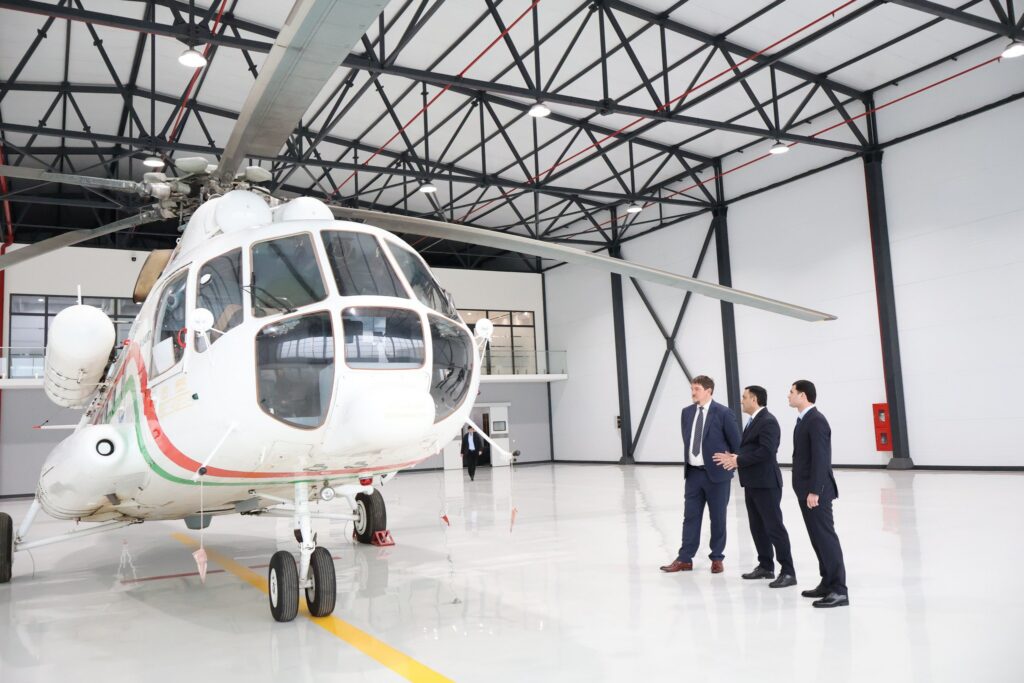
The European investment fund CFC s.r.o. plans to invest more than $200 million in the development of Tajikistan’s private carrier Shohin Airlines. The five-year agreement follows several months of negotiations between the parties.

According to Shohin Airlines, the final round of talks took place on March 10, 2026, in Dushanbe. The meeting was attended by the airline’s chief executive officer, Zafar Ahmadzoda, and the founder of CFC s.r.o., Guntars Selikovs.

One factor influencing the investor’s decision was the recent improvement in Tajikistan’s sovereign credit ratings by the international agencies Moody’s and S&P Global Ratings. This development has increased foreign partners’ confidence in the country’s economic stability.

The parties agreed that the investment will be directed toward expanding the airline’s fleet, developing operational capacity, and modernizing infrastructure.

“The signing of the investment agreement is an important milestone in Shohin Airlines’ development,” Ahmadzoda said, noting that the deal is expected to accelerate the company’s growth and expand its route network.

Selikovs stated that negotiations lasted more than six months and included meetings in Dubai and several European countries.

“This allowed us to thoroughly assess the company’s business model and market potential,” he said.

Shohin Airlines is a private carrier focused on developing regional aviation in Tajikistan and neighboring markets. At present, the company operates specialized helicopter flights.

The next stage of development will involve fleet expansion. In the near future, the airline plans to acquire an L-410 NG, a Czech-made turboprop aircraft designed for regional transport.

CFC s.r.o., a fund registered in the Czech Republic, operates across markets in Europe, the Persian Gulf, and Central Asia. Its investment strategy focuses on fast-growing industries.

The agreement with Shohin Airlines could become one of the largest private investments in Tajikistan’s aviation sector in recent years and may signal growing interest among international investors in the country.

Italy’s Eni Expands Energy Projects in Kazakhstan with Hybrid Power Plant

The Italian energy company Eni is accelerating the expansion of its projects in Kazakhstan. By the end of the year, the company plans to complete construction of a hybrid power plant in Zhanaozen, one of the country’s key oil and gas centers.

The 247-MW project combines three energy sources: solar, wind, and gas generation. The approach is expected to reduce the carbon footprint while providing a more stable energy supply in a region where strategically important production assets are concentrated

Construction is proceeding in stages. The first component is already operational. In September 2025, a solar power plant with 80,000 panels was commissioned.

Full completion of the complex is scheduled for the end of 2026, following the launch of gas and wind generation facilities.

According to the Ministry of Energy, the project is intended to strengthen energy security for major enterprises in the Mangistau region, including Ozenmunaygaz and the Kazakh Gas Processing Plant. In a region that regularly experiences power shortages, this is a significant development.

The project was discussed during a meeting between Kazakhstan’s Minister of Energy Yerlan Akkenzhenov and Italy’s Ambassador to Kazakhstan Antonello De Riu. Italian companies are gradually expanding their presence in Kazakhstan’s energy sector, from upstream production to processing and power generation.

Cooperation extends beyond electricity generation. In January 2026, QazaqGaz and Eni moved to the practical phase of exploration at the Kamenkovsky block in the Caspian Basin. Work is also continuing at the Yuzhny Shu-Sarysu and Bereke blocks.

Another major initiative is the gas-chemical complex under construction in the Atyrau region. The polyethylene project, with a planned capacity of 1.25 million tons per year and an estimated cost of $7.5 billion, has already entered the construction phase. The project is being implemented by KMG PetroChem, with Italy’s MAIRE group (through its subsidiary Tecnimont) serving as a key contractor.

At the same time, conventional power generation projects are advancing. Cooperation with Italian power engineering company Ansaldo Energia has enabled the installation of new gas turbines at Almaty CHPP-3, with equipment deliveries completed in January 2026.

However, this expanding cooperation is taking place amid legal uncertainty. Earlier, Eni and Shell, partners in the development of the Karachaganak field, lost a key stage of arbitration proceedings in London and may be required to pay Kazakhstan between $2 billion and $4 billion. While this could affect future investment decisions, it has not so far slowed the growth of Italian companies’ activities in the country.

Why Central Asia Cares About the Middle Corridor–South Caucasus TRIPP Route

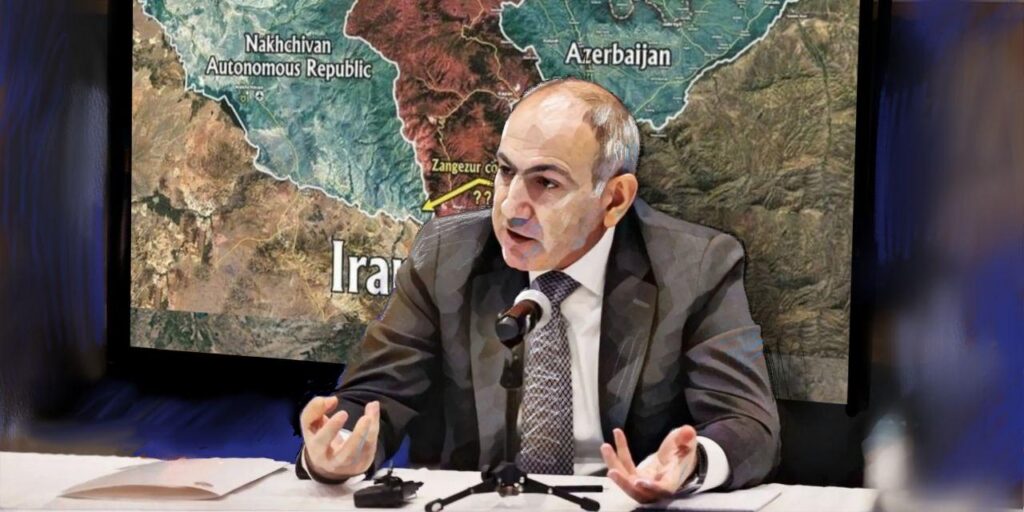
Armenia’s Prime Minister Nikol Pashinyan spoke to the European Parliament in Strasbourg on March 11 and said he has no intention of delaying TRIPP, the newly proposed South Caucasus route through southern Armenia to be integrated into the existing Middle Corridor. He described the project as being “in the crystallization stage,” said that the Armenia–U.S. implementation framework (signed on 13 January) was already in place, and added that the two countries will “[i]n the near future … sign the relevant agreements, and the practical implementation of the project will begin.”

While mentioning that developments in Iran and the wider Middle East could shade an otherwise positive regional picture, Pashinyan explicitly did not connect that to any actual delay in the corridor project. This accords with the view of the EU itself, which treats the Middle Corridor and its South Caucasus segment, as does the World Bank, as an increasingly necessary connection between Central Asia and Europe through the South Caucasus and Turkey. Pashinyan’s statement should thereby reassure not just European governments but also the investors and shippers that want and need the route.

From Declaration to Implementation

Pashinyan tied TRIPP to the Washington Declaration of August 8, especially to its provisions on reopening communications and establishing a U.S.-supported framework for unimpeded connectivity between mainland Azerbaijan and Nakhchivan through Armenian territory. The Washington meeting produced a joint declaration by Armenia and Azerbaijan and the text of the initialed peace agreement, while also making clear that signing and ratification still lay ahead.

In Strasbourg, according to Pashinyan’s own words, the Washington Declaration “essentially established peace” between Armenia and Azerbaijan. He also gave pertinent indicators. Pashinyan stated there had been eight months of complete peace on the border and that 2025 was the first full calendar year since independence without casualties or injuries from Armenian–Azerbaijani shooting. He also said that in November 2025, for the first time since independence, a train (carrying wheat from Kazakhstan) reached Armenia through Azerbaijan and Georgia after Azerbaijan lifted restrictions on that rail route. Azerbaijan has since sent fuel and other commodities through Georgia to Armenia. Such transits have now become a regular occurrence.

Since 2020, Armenia has turned toward Central Asia as part of its effort to reduce dependence on Russia. Kazakhstan has become the clearest practical partner in that effort as this turn has accentuated in recent months. During Pashinyan’s 21 November 2025 visit to Astana, the two sides upgraded relations to a strategic partnership and signed 15 intergovernmental and interagency documents, including a trade and economic roadmap for 2026–2030 that projects cooperation in agriculture, digitalization, healthcare, industry, science and education, and peaceful uses of atomic energy.

While the cooperation with Kazakhstan is a continuation of previous trends, the sharpest diplomatic change is with Uzbekistan. After Pashinyan’s 12 July 2023 telephone call with President Shavkat Mirziyoyev, stressing the need to convene the first intergovernmental commission to move practical projects forward, that commission met in Tashkent on 3–4 August 2023, with a modest but real result in foreign trade growth. Armenia’s outreach to Central Asia exemplifies how the country’s broader diplomatic profile under Pashinyan complements the country’s eventual participation in the Middle Corridor through TRIPP.

Why Central Asia Cares

The Middle Corridor is correctly seen as a source of resilience and route diversification for trade between Asia and Europe. The World Bank describes it this way, while EU materials frame the South Caucasus and Turkey as the bridge through which Europe’s links with Central Asia are to be strengthened. This is all the more the case now that Iran-crossing options from Central Asia to Turkey, for example through Turkmenistan, have receded from feasibility for the foreseeable future. The same is true of the route agreed between Azerbaijan and Iran in October 2023 for access to Nakhchivan through northern Iran, which was never completed. 

Kazakhstan, Uzbekistan, and other Central Asian states thus have an interest in maintaining the perception that the South Caucasus continuation of the Middle Corridor is viable enough to deserve policy attention, commercial planning, and further investment. In pursuit of cooperation from all interested parties, Kazakhstan has recently engaged in outreach to Gulf partners that point the same way, as Central Asian governments manage corridor risk diplomatically as well as commercially. Azerbaijan began its own programmatic connectivity outreach to the Gulf countries several years ago.

At issue is not just transit efficiency but strategic optionality. The westbound corridor through the Caspian and the South Caucasus has become perhaps the main instrument through which Central Asian countries widen their room for geoeconomic maneuver without pretending that older routes will simply disappear. An EU study released last month places this logic squarely in a Europe–Central Asia framework. The World Bank report makes a related point in more economic language, arguing that the Turkey–South Caucasus corridor can increase resilience and help reorient supply chains. 

In Strasbourg, Pashinyan reflected this logic, saying that Armenia was ready at once to provide road transit between Azerbaijan and Turkey, and between western Azerbaijan and Nakhchivan, using existing Armenian infrastructure. The problem here is that such a route through Armenia would currently be extremely circuitous and does not necessarily have guaranteed security. But at the same time, Pashinyan stressed that this expressed readiness was not meant to delay, disrupt, or replace the Washington understandings that undergird the future TRIPP. His purpose here appears to be to show that continuing momentum does not depend on a final diplomatic architecture and is indeed integrated within that larger framework.

Wider Strategic Consequences

The question for Central Asia is whether Iran’s shadow over the South Caucasus is strong enough to damage confidence in the westbound TRIPP route that major IFIs and other state actors now regard as strategically necessary. By the evidence Pashinyan offered on 11 March, the answer is no. When Pashinyan insisted that Armenia had no reason to delay implementation, he was defending the investment logic of the TRIPP segment at a time when external observers might begin to wonder whether the Iran crisis could freeze momentum. Even after current hostilities end, it is unlikely that Iran-crossing routes will function at full commercial scale due to insurance and payments constraints.

The political momentum behind TRIPP has thus not been overturned, not least because Central Asian states need supply-chain redundancy. The same goes for the broader Armenia–Azerbaijan normalization process that makes this segment of the Middle Corridor possible. This assessment emerges from Pashinyan’s first-person testimony, recent practical movement in Armenia–Azerbaijan normalization, and the fact that Europe and international financial actors now treat the South Caucasus bridge as part of a serious Europe-Central Asia connectivity project.

In addition to Armenia and Azerbaijan themselves, almost all external actors will benefit from TRIPP, although their strategic benefits differ. For the European Union, enhanced South Caucasus transit reinforces a connection to Central Asia that does not depend on Russia. For the United States, it moves forward the American diplomatic initiative to shape the region’s post-conflict order after the Washington breakthrough on the basis of mutual benefit. For China, any stable westbound connection across the Caspian and Caucasus adds redundancy to Eurasian transit without displacing Beijing’s other routes. Even Russia has come to support the TRIPP route, because it increases connectivity with Armenia, Turkey and Europe through existing Azerbaijani rail infrastructure. This configuration of interests represents the gradual consolidation of the route’s forward movement. Iran is objectively the only state or nonstate actor opposing the consolidation of this peace and prosperity in the South Caucasus, with benefits stretching from Central Asia to Europe. However, Tehran’s capacity for influence here is eroding as quickly as its military infrastructure.

Kazakhstan’s Domestic Trade Growth Slows as Consumer Demand Weakens

The growth of domestic trade in Kazakhstan slowed markedly in early 2026, reinforcing signs of weakening consumer activity and increased business caution.

According to the National Statistics Bureau, the trade sector expanded by only 3.4% in January–February, compared with 6% during the same period a year earlier. Growth slowed significantly, affecting both wholesale and retail trade.

Analysts at Halyk Finance believe the trend reflects deeper economic processes rather than a short-term fluctuation.

The dynamics at the start of the year point to a cooling of aggregate demand and economic activity,” Halyk Finance said.

Wholesale trade, a key indicator of business activity, showed the most pronounced slowdown. Growth fell to 3.8%, down from 6.6% a year earlier.

In the first two months of the year, the volume of wholesale transactions reached $9.6 billion. However, the structure of trade indicates a predominance of non-food and industrial goods, reflecting weaker corporate demand.

Experts also note that declining oil production has exerted additional pressure on the sector, directly affecting wholesale sales volumes.

The situation in retail trade remains mixed. Overall growth stood at 2.6%, driven largely by large retail chains.

Sales in organized retail increased by 3.7%, while turnover among individual entrepreneurs and traditional markets continued to decline, falling by 1%.

This trend reflects ongoing structural changes in the sector. The market is gradually shifting in favor of large retail players, while small businesses face growing competitive pressure.

Changes in consumer spending patterns are also evident. Sales of food products rose by 9.1%, whereas non-food sales increased by only 0.2%, despite accounting for the majority of retail turnover.

This suggests that households are becoming more cautious, focusing spending on essential goods and postponing purchases of more expensive items.

Another indicator of weakening demand is the rise in inventory levels. As of early March, inventories totaled approximately $2.5 billion, equivalent to around 77 days of sales.

Combined with slower turnover, this points to a softening of consumer demand.

Overall, analysts note that domestic trade continues to grow, but the pace of expansion is slowing and becoming less sustainable.

Business activity remains subdued, consumers are saving more, and the market is gradually shifting toward more formal retail participants.

The Times of Central Asia previously reported that the government is considering support measures for key sectors, including dairy and baking, in an effort to curb inflation and sustain demand.

Kyrgyzstan Moves to Expand Organic Farming but Certification Barriers Limit Exports

Kyrgyzstan is stepping up efforts to expand organic agriculture, but limited access to international certification continues to pose a major obstacle to export growth.

The country currently has nine agricultural cooperatives and 30 organic farmland plots covering about 61,500 hectares. Certified organic land accounts for just over 5% of total arable land.

Cooperatives operating under international standards produce crops such as cotton, herbs, apricots, and grains for export to more than 30 countries. Smaller farms, however, often rely on the Participatory Guarantee System (PGS), a low-cost, community-based certification model mainly used for domestic markets.

Despite strong potential for high-value organic products, including berries and vegetables, obtaining international certification remains costly and administratively complex for small producers.

To address these challenges, the government adopted a development programme for 2025-2029. The strategy aims to expand organic farmland to 200,000 hectares, transition the Issyk-Kul and Naryn regions toward predominantly organic production, and increase the share of organic products to 25% of both total agricultural output and exports.

Officials view organic farming as an important tool for sustainable rural development. However, further expansion of the sector will depend largely on improving access to internationally recognized certification systems.

Ecotourism Revenues More Than Double as Visitor Numbers Rise in Kyrgyzstan

Ecotourism in Kyrgyzstan is gaining momentum, with revenues from visits to specially protected natural areas more than doubling in 2025, according to the Ministry of Natural Resources, Ecology, and Technical Supervision.

Total revenue reached approximately $431,000, marking a 105% year-on-year increase.

The surge reflects growing interest in nature-based tourism. In 2025, more than 271,000 tourists visited Kyrgyzstan’s nature reserves and national parks, a 24% increase compared with the previous year.

Domestic tourism remains the main driver. Around 250,500 visitors were Kyrgyz citizens, while the number of foreign tourists also continued to rise steadily.

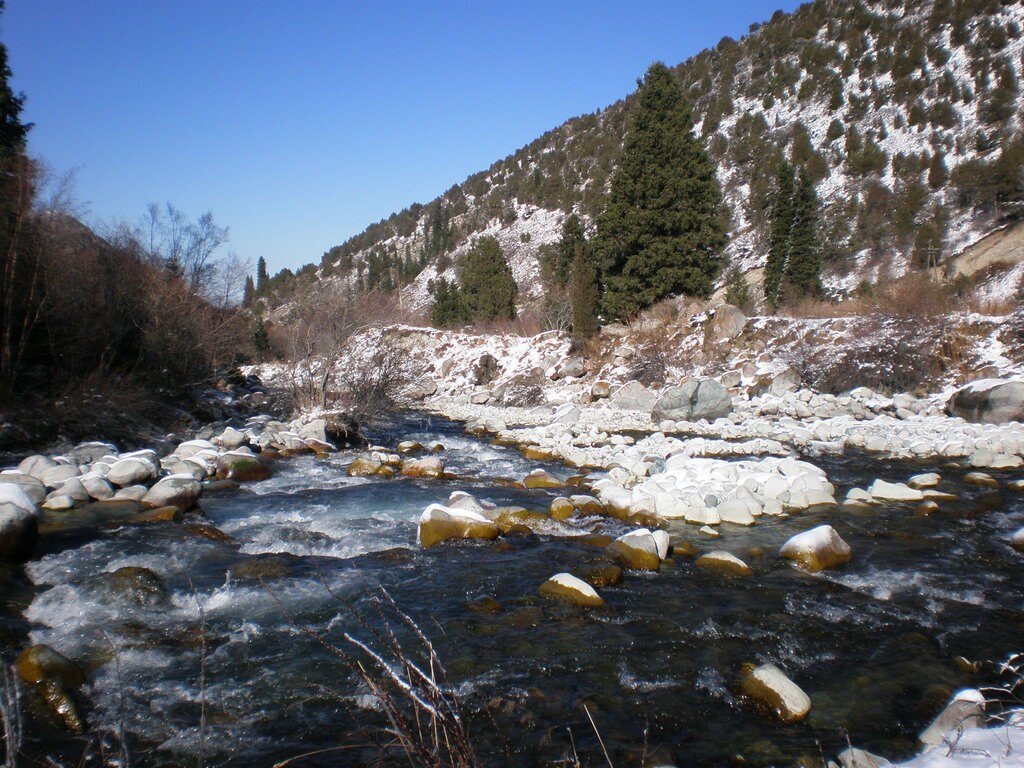
Protected natural areas now cover 7.38% of Kyrgyzstan’s territory. The system includes 10 state nature reserves, covering 509,900 hectares, and 13 state nature parks with a total area of 724,900 hectares. These areas are designated to preserve unique ecosystems, biodiversity, and rare or endangered species.

Among the most prominent sites are the Sary-Chelek Biosphere Reserve, a UNESCO-recognised area known for its alpine lake; the Issyk-Kul State Nature Reserve; and Ala-Archa National Park, located near Bishkek and popular with both local residents and international visitors.

In April 2025, Kyrgyzstan launched the Ak Ilbirs (Snow Leopard) Ecological Corridor in the Issyk-Kul region, a major conservation initiative aimed at protecting endangered wildlife.

The corridor spans more than 792,000 hectares and connects several key protected areas, including Khan-Tengri State Nature Park, Sarychat-Ertash Nature Reserve, and Naryn Nature Reserve.

The project is intended to provide a safe habitat for snow leopards and other vulnerable species, while promoting the sustainable use of natural resources.

Growth in ecotourism is being accompanied by broader environmental initiatives. Under the national “Jashyl Muras” (Green Heritage) campaign, Kyrgyzstan is implementing reforestation and landscaping programmes in protected areas.

In 2025 alone, more than 25,200 tree saplings were planted across 39 hectares, contributing to the restoration of natural ecosystems.

Officials say that efforts to expand conservation areas, improve tourism infrastructure, and promote sustainable travel are helping position Kyrgyzstan as an increasingly attractive destination for environmentally conscious travelers.