• KGS/USD = 0.01144 0%
  • KZT/USD = 0.00210 0%
  • TJS/USD = 0.10454 -0.1%
  • UZS/USD = 0.00008 0%
  • TMT/USD = 0.28571 0.28%
  • KGS/USD = 0.01144 0%
  • KZT/USD = 0.00210 0%
  • TJS/USD = 0.10454 -0.1%
  • UZS/USD = 0.00008 0%
  • TMT/USD = 0.28571 0.28%
  • KGS/USD = 0.01144 0%
  • KZT/USD = 0.00210 0%
  • TJS/USD = 0.10454 -0.1%
  • UZS/USD = 0.00008 0%
  • TMT/USD = 0.28571 0.28%
  • KGS/USD = 0.01144 0%
  • KZT/USD = 0.00210 0%
  • TJS/USD = 0.10454 -0.1%
  • UZS/USD = 0.00008 0%
  • TMT/USD = 0.28571 0.28%
  • KGS/USD = 0.01144 0%
  • KZT/USD = 0.00210 0%
  • TJS/USD = 0.10454 -0.1%
  • UZS/USD = 0.00008 0%
  • TMT/USD = 0.28571 0.28%
  • KGS/USD = 0.01144 0%
  • KZT/USD = 0.00210 0%
  • TJS/USD = 0.10454 -0.1%
  • UZS/USD = 0.00008 0%
  • TMT/USD = 0.28571 0.28%
  • KGS/USD = 0.01144 0%
  • KZT/USD = 0.00210 0%
  • TJS/USD = 0.10454 -0.1%
  • UZS/USD = 0.00008 0%
  • TMT/USD = 0.28571 0.28%
  • KGS/USD = 0.01144 0%
  • KZT/USD = 0.00210 0%
  • TJS/USD = 0.10454 -0.1%
  • UZS/USD = 0.00008 0%
  • TMT/USD = 0.28571 0.28%

Uzbekistan’s Pharmaceutical Market in 2025: Rapid Growth, Foreign Investment, and Localization

Uzbekistan’s pharmaceutical sector is experiencing explosive growth in 2025. According to the analytics firm IQVIA, in September 2025, the market volume reached $204.9 million (wholesale) with 83.1 million packages of medicines sold. This is 36.4% higher in value terms and 24.1% higher in volume than a year earlier, indicating a recovery in consumer demand and a robust post-pandemic market rebound. The total annual market volume (MAT, the twelve months to September 2025) is estimated at $2.14 billion, whereas in 2018 it was about $0.888 billion. Thus, the average annual growth rate over 2018–2025 exceeded 13.4%, with acceleration in 2024–2025. As a result, the country’s pharma market has entered a phase of accelerated development, laying the foundation for further expansion in 2026.

Market Structure: Price Segments, Import Dependence, and Prescription

Shift to premium segments. The structure of pharmaceutical consumption in Uzbekistan is shifting towards more expensive medications. The share of the cheapest drugs (priced up to $1 per package) is shrinking, whereas the $1–5 and $5–10 segments are growing. At the same time, the niche of drugs priced above $10 is strengthening, reflecting a shift of part of consumer demand toward branded original medicines and complex therapies. This trend indicates qualitative market development: whereas previously inexpensive generics dominated, now an increasing share of revenue comes from innovative and imported products.

Imports and local production. Despite localization efforts, the market remains import-dependent – around 90% of sales by value are generated by foreign drugs, with a slight trend toward imports further expanding their share. As of MAT/09/2025, imported medicines have raised their value share from 87% in 2018 to 89%. Nonetheless, in volume terms, the share of local manufacturers has inched up from 40% to 41.2% thanks to the production of affordable generics. Local companies are increasing their presence in the low-price segment by competing on cost. The government is encouraging localization of production, offering incentives (for example, tax and customs benefits in pharmaceutical free economic zones) and reserving 20% of state procurements for domestic companies’ products. These measures have already led a number of foreign companies to begin setting up manufacturing in Uzbekistan.

Market Leaders: Companies and Brands

Uzbekistan’s pharmaceutical market is highly fragmented – the combined share of even the largest players is relatively small. According to IQVIA for MAT/09/2025, the top three companies by sales value are Slovenia’s KRKA, Turkey’s World Medicine, and Ukraine’s Farmak. These companies together control about 9.9% of the market, which indicates intense competition and a market crowded with numerous brands and manufacturers. Notably, the top ten manufacturers have collectively increased their share since 2018 from 24% to 27%. Among local manufacturers, the Uzbek company Nika Pharm stands out with roughly a 2.5% share, rising from 32nd position in 2018 to 7th in 2025 with a +40.4% increase in sales (in value terms). Nika Pharm has become the most dynamic player in the domestic market and the only local manufacturer in the top ten.

Competition at the individual brand level is also intense, with the leaders showing explosive growth. According to IQVIA for MAT/09/2025, Viferon (Russia) +46.2%, Rinoxil (Uzbekistan) +34.5%, and Reosorbilact (Ukraine) +63.9% are the best-selling brands in Uzbekistan, and are showing robust growth. The astonishing success of the Uzbek brand Rinoxil is particularly noteworthy – in just five years it not only entered the top ten brands, but even topped the list, overtaking Magne B6, Enterogermina, and other global brands traditionally strong in the CIS. New domestic brands are also growing rapidly – for example, the cold remedy Rinomax (+141.1% year-on-year). Such turnover among leaders reflects the market’s flexibility: new drugs can quickly capture a significant share if they meet current demand, and consumer loyalty is gradually shifting toward more effective or well-marketed products.

International Investments and Partnerships

Influx of foreign investment. In 2025, Uzbekistan is attracting substantial investments into its pharmaceutical sector, confirming the confidence of international investors. According to official data, in just January–August 2025, over $290 million was invested in the industry, of which $262.7 million were foreign investments. Companies from Russia, China, India, Europe, and other regions are involved in these projects. At the IV International Pharmaceutical Congress held in Tashkent in September, more than 20 major projects were presented – from the construction of new plants to the modernization of existing enterprises. The government emphasizes that Uzbekistan offers broad opportunities for expanding production, implementing innovations, and increasing the pharma sector’s export potential. The rapid growth of the domestic market and government support measures are creating a favorable climate that attracts foreign capital.

Localization, Standardization, and Export Potential

Tashkent Pharma Park and Industrial Clusters. The central element of the industry’s development strategy is the creation of world-class pharmaceutical clusters. The flagship project is the “Tashkent Pharma Park” innovation cluster near Tashkent, with €1.2 billion in state investment. This large complex of 1.9 million square meters will unite research centers (a biotechnology center and a pharmaceutical technical school/university), modern plants, and logistics infrastructure – all within a free economic zone offering tax incentives.

The volume of Uzbekistan’s pharma market ($2.136 billion in MAT/08/2025) has surpassed that of Kazakhstan ($1.391 billion), reflecting Uzbekistan’s larger population and growing demand. This strengthens the country’s position as the largest pharmaceutical market in Central Asia.

In the context of the broader Central Asian region, just a few years ago, Kazakhstan led in pharmaceutical sales, but Uzbekistan’s faster growth has now put it in first place. As of MAT/09/2025, Uzbekistan’s retail pharmaceutical market is 54% larger than Kazakhstan’s in value terms, with growth over 31%, whereas Kazakhstan’s market is stagnating at -2.7%. Although income levels in Kazakhstan are higher, Uzbekistan’s population is nearly twice as large, which, along with gradually rising purchasing power, has led to a faster expansion of its pharma market. This underscores Uzbekistan’s role as a new regional pharmaceutical hub. The smaller markets of neighboring countries (Kyrgyzstan, Tajikistan, and Turkmenistan) lag far behind in scale, allowing Uzbekistan to become an export center supplying the entire region.

Standardization and Regulatory Reforms. For Uzbekistan to transform into a full-fledged export-oriented hub, it must comply with international quality standards for medicines. In 2025, decisive steps are being taken to harmonize the regulatory framework with global practices, and additional measures are being introduced to regulate the circulation of medicines, including requirements for manufacturers to obtain GMP certification. From January 1, 2026, all pharmaceutical manufacturers, domestic and foreign, will be required to obtain a national GMP certificate to register their products in Uzbekistan. Without proof of compliance with Good Manufacturing Practice (GMP) standards, registering new drugs or renewing certificates will be impossible – this new requirement is intended to bring the quality of local production up to international standards. This step signals to investors that the country is serious about raising quality standards. In parallel, procedures for market entry of drugs already recognized abroad are being simplified: since October 2025, a fast-track registration mechanism has been introduced in Uzbekistan for medicines approved by regulators with high WHO status (maturity level 4 or included in WHO’s list of trusted regulators). This will allow innovative drugs from the EU, the U.S., Japan, and others to enter the market faster, avoiding duplicative procedures.

Focus of Reforms: Development of Clinical Trials and Innovation. By 2026, a strategy is planned to organize international clinical trials in Uzbekistan in collaboration with global contract research organizations. As part of this strategy, work is underway to implement GCP (Good Clinical Practice) standards and International Council for Harmonisation (ICH) guidelines into national legislation. Clinical centers and laboratories are being prepared for international accreditation, and an electronic clinical trials registry is being created.

Foreign companies note that cooperation with Uzbekistan is now viewed as a long-term strategy – not only selling finished medicines, but also creating joint products, transferring technologies, and jointly entering neighboring markets. The government underscores its focus on an export breakthrough: special emphasis is placed on developing active pharmaceutical ingredient (API) production, enhancing the competitiveness of Uzbek pharmaceutical products, and promoting them in countries of the Eurasian Economic Union (EAEU), Southeast Asia, and the Middle East. According to experts, a combination of strong domestic growth and exports could ensure double-digit growth rates for the industry in the medium term.

Conclusions and Recommendations

The pharmaceutical sector of Uzbekistan in 2025 has entered a phase of active growth and global integration. The country is confidently transforming into one of the key players in the Central Asian pharmaceutical market amid stagnation in some neighboring countries. Ties with major foreign partners – Russia, China, the EU, South Korea, India – are strengthening, bringing investments and technologies into the sector and opening doors for exports. Large-scale government investments in infrastructure, along with consistent regulatory reforms (implementation of GMP, simplification of registering imported drugs, development of clinical research), are forming the basis for turning Uzbekistan into a regional pharmaceutical hub.

At the same time, the industry faces challenges. An import dependence of 90% leaves it vulnerable to external factors – price fluctuations and supply disruptions. Accelerated localization should be accompanied by knowledge transfer: it is important that foreign partners not only repackage drugs in Uzbekistan but also train personnel and transfer know-how. There is a risk of imbalance – for instance, an excessive orientation toward Chinese standards and technologies without considering EU and U.S. requirements could limit export opportunities. Therefore, a balanced approach is recommended: diversify partnerships (China, India, Russia, EU, etc.), harmonize regulations with internationally recognized norms (ICH, WHO GMP, EMA), and maintain openness to diverse markets. It is necessary to continue investing in workforce training and science, expanding educational programs in collaboration with foreign universities and companies. Developing human capital and R&D will increase the country’s ability to create its own innovations and reduce import dependence in the long term.

For foreign investors, Uzbekistan’s pharma market now offers a unique combination of fast-growing demand and incentives. It is advisable to capitalize on the favorable investment climate: companies entering this market in 2025–2028 can secure strong positions before competition intensifies. Promising niches for investment include the production of affordable generics (to substitute imports), the introduction of modern biotechnologies (including the production of vaccines, insulins, and other complex drugs where demand is high), and the development of distribution networks in the country.

For the government and industry regulators, the key recommendation is consistency in reforms. The success of measures already adopted (incentives, free economic zones, stricter quality standards) largely depends on their effective implementation. It is essential to ensure that new requirements do not lead to medicine shortages or higher prices – a transition period and support for local manufacturers in obtaining certifications may be needed. Continuing the course of integration with the global community – joining ICH, cooperating with WHO, and active participation in Eurasian and international industry events – will strengthen Uzbekistan’s image as a reliable partner. In parallel, export infrastructure should be developed: from certifying drugs to the standards of target markets (EU, CIS, Middle East) to establishing logistics channels and marketing support abroad.

In conclusion, Uzbekistan’s pharmaceutical market in 2025 has demonstrated impressive progress. The combination of internal momentum and external openness has created a unique situation: the sector is growing on almost all fronts – volume, range of products, quality, and investments. If the country maintains its course and continues reforms, it could solidify its role in the coming years as the region’s leading pharmaceutical center, capable not only of meeting domestic demand but also of supplying medicines to neighboring states. For international investors, this is a window of opportunity, and for the republic itself, a chance to accelerate economic development, strengthen the healthcare system, and enhance its status on the global pharmaceutical map. The right strategic steps taken today will lay the foundation for the industry’s long-term success tomorrow, ensuring a balance between rapid growth and the sustainability of this crucial sector of the economy.


Made in Kazakhstan: Building an AI for a Nation

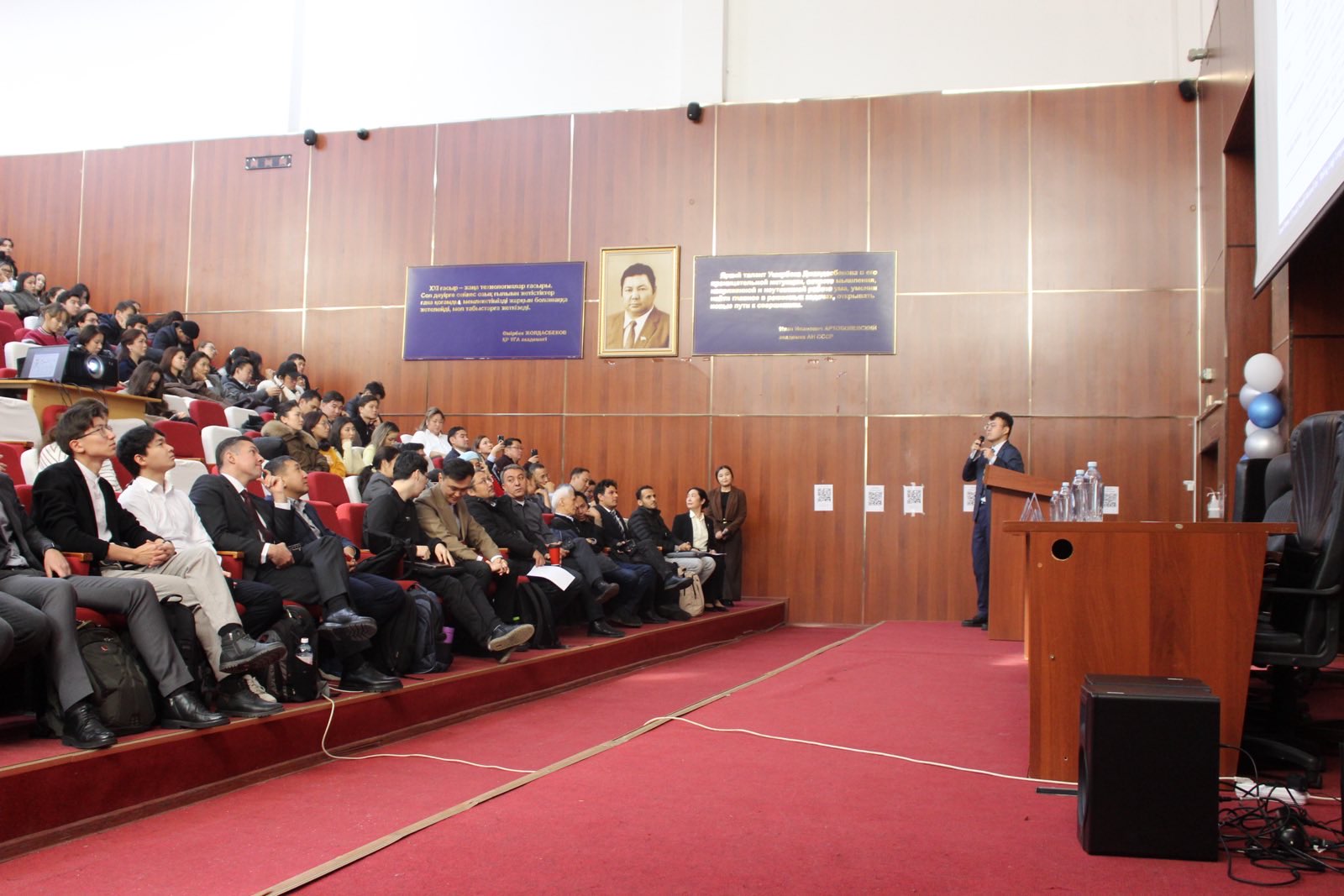
On a cold November morning at Al-Farabi University in Almaty, students gathered in a drafty lecture hall, many still wrapped in their coats. The setting was more reminiscent of a forgotten Soviet-era classroom than a venue for cutting-edge technology. But amid the peeling paint and rickety seats, some of the country’s most ambitious young researchers had come to discuss Kazakhstan’s latest steps into the world of artificial intelligence.

The star billing came from the Institute of Smart Systems and Artificial Intelligence (ISSAI) at Nazarbayev University in Astana. Last year, the institute released KazLLM, its first Large Language Model (LLM), to much fanfare, inspired by a philosophy of building AI systems that understand the country’s language and culture rather than borrowing second-hand from Silicon Valley.

But can Kazakhstan keep pace in the global AI race? And despite the government’s efforts to back local products, can it convince the population to use them over Western alternatives?

Recent developments

The Institute’s founder, Doctor Huseyin Atakan Varol, was keen to stress that steps have been taken to develop Kazakhstan’s native AI ecosystem over the past twelve months.

“Since the release of KazLLM last year, we have witnessed what I would describe as a ‘Cambrian explosion’ of generative AI development,” he told The Times of Central Asia. “The KazLLM project enabled us to create the team and amass the know-how to build a new generation of multilingual and multimodal models tailored to Kazakhstan’s needs.”

Among these, he lists Oylan, a multimodal language–audio-vision model; MangiSoz, a multilingual speech and text translation engine; TilSync, a real-time subtitle and translation engine; and Beynele, a text-to-image generation model. All these models have been fine-tuned to better reflect Kazakh culture and linguistic norms.

“In short, we are building AI made in Kazakhstan, by Kazakhstani youth, for Kazakhstan –models that understand the language, culture, and needs of the people,” said Amina Baikenova, ISSAI’s Acting Deputy Director of Product and External Affairs, in an interview with TCA.

The old lecture hall at Al-Farabi University, Almaty; image: TCA, Joe Luc Barnes

Much of this progress stems from the enthusiasm of a generation of students, whom Kazakhstan has invested heavily in training. Indeed, the country has become a magnet for young researchers from across Central Asia.

“After completing my bachelor’s degree in Kyrgyzstan, I was looking for opportunities to build my research career. That’s why I moved to Kazakhstan,” said Adam Erik, an ISSAI student from Bishkek. “Kazakhstan has become a scientific center of Central Asia.”

Erik believes strongly in building local language models. “There is a thing called bias in data sets,” he said. “Models from the U.S., China, or Europe are incredible, but they’re trained mostly on Western culture and literature. Local solutions are still necessary.”

These sentiments reflect a common frustration among researchers: even the best global AI systems stumble when asked about Kazakh idioms, rural social norms, or local history. The data used to train the world’s most powerful models rarely includes more than a sliver of Central Asian content. For a region with a long history of linguistic marginalization, this is especially galling.

“When you need something specifically about Kazakh culture or traditions, our local KazLLM does it better than ChatGPT,” Adilet Yerlanuly from Kyzylorda, told TCA. “ChatGPT simply isn’t focused on Kazakh in that way.”

Kazakhstan’s government has placed heavy emphasis on digital development in recent years. Tech fairs such as Digital Bridge in Astana, which this year drew high-profile guests including Telegram founder Pavel Durov, have become the public face of this push. More than 31,000 students are now enrolled in AI-related fields.

Nevertheless, while it is one thing to create a model, it is quite another to get people to use it. American apps such as Google’s Gemini or OpenAI’s ChatGPT remain far more popular than local alternatives. But ISSAI believes things are trending in their direction.

“Over the past year, we’ve seen steadily growing interest in ISSAI’s AI solutions across Kazakhstan, especially from government institutions, educational organizations, and large enterprises,” Amina Baikenova, Acting Deputy Director of Product and External Affairs, told TCA.

Some of this is due to government support, but non-tariff barriers have also helped put wind in the sails of local products. “Businesses are increasingly seeking locally developed AI tools that respect data sovereignty,” said Baikenova.

ISSAI also hopes to draw users with models tailored to uniquely Kazakh problems. Its newest model, Qolda, is what researchers call a “Lightweight Language Model,” small enough to run directly on a smartphone and even operate offline. In a country where mobile coverage drops off sharply outside big cities and where some schools still struggle with internet access, this has the potential to be a USP.

Another advantage is responsiveness to ongoing political developments, such as the country’s torturous road to converting to the Latin Script. “A substantial portion of the feedback we received requested the addition of Latin support,” said Varol. “Recognizing this social trend, we integrated Kazakh Latin support into our latest model, Oylan 2.5.” He adds that this makes it easier for users to move seamlessly between Cyrillic and Latin, making it adaptable for everyone.

Competing Seriously

Kazakhstan’s ambitions, however, are not without limits. The country lacks the computational power to train models on the scale of GPT-5 or Google’s Gemini. Much of the heavy lifting still relies on foreign cloud infrastructure, and quality Kazakh-language data remains scarce, requiring researchers to cobble together materials from literature, media, government archives, and social networks.

Kazakhstan’s balancing act between China and the United States has also affected hardware procurement. For the country’s first supercomputer, Kazakhstan faced a long wait for a U.S. export license to use the latest Nvidia chips.

Kazakhstan is also not the only country racing to improve its AI capabilities.

“Many other countries are also cognizant of the potential of AI and are intensifying their efforts and investments in this field,” said Varol. He says that to keep pace, Kazakhstan will need more investment in R&D, as well as better collaboration between universities, research institutes, industry, and government. “This includes further developing national computing infrastructure, supporting deep-tech startups, fostering academic AI research, and encouraging businesses to adopt and build AI solutions locally.”

Despite growing investment, Kazakhstan continues to lose top talent to Europe and the United States. Even the strongest local models cannot compete with the breadth of foreign systems trained on trillions of tokens. What they can do is excel in places where the big models falter: the nuances of Kazakh grammar, regional dialects, and Kazakh faces in video content.

This balance between aspiration and realism is visible in almost every corner of Kazakhstan’s AI scene. Schools across the country now offer coding and robotics classes, universities promote AI training, but students often work in buildings that feel as though they haven’t been renovated since the early 1990s. The ambition is modern; the infrastructure is catching up at its own pace.

Varol says he is “cautiously optimistic” about Kazakhstan’s position and AI potential. He notes that the country seems to have an AI strategy and has invested in infrastructure such as a supercomputer (with another in the works), the Alem AI Center in Astana, as well as creating a dedicated AI ministry. If the current momentum continues, he believes the country may become a regional leader in AI and see significant economic gains.

The determination is unmistakable. When the Qolda demonstration ended at Al-Farabi, students peppered its creators with earnest and enthusiastic questions. The heating was no better, and the plaster was still flaking above their heads, but the atmosphere had shifted into something lively and collective. It felt like the start of a conversation Kazakhstan has decided it doesn’t want outsourced.

Kazakhstan’s Bublik Wraps Best Season as Alternate at ATP Finals 

Alexander Bublik’s stellar season isn’t quite over.

The Russia-born player from Kazakhstan, ranked 11 in the world, is an alternate at the ATP Finals in Turin, Italy this week.

Bublik is enjoying himself in Turin, leaving Carlos Alcaraz flat-footed with a spinny underhand serve during a training session with the Spaniard.

“Who said practice can’t be fun?!” the Kazakhstani said on Instagram.

As first alternate, 28-year-old Bublik could play matches if any of the eight players at the elite event gets injured during the round robin stage. Whatever happens, he has enjoyed his best year as a tennis professional. He won four tour titles in 2025, for a total of eight during his career. He reached the quarterfinals at the French Open this year, falling to world No. 1 Jannik Sinner. It was Bublik’s deepest run at a major tournament and came after a ranking as low as 82 earlier in the year.

He also reached his first Masters 1000 semifinal with a three-set win over Alex de Minaur in Paris on October 31.

“Honestly I always say that wins don’t make me go through the roof and losses don’t put me to the ground,” Bublik said this year, according to the ATP. “I try to stay stable. I enjoy what I do. I’m happy that I’m able to travel, play tournaments and stay healthy, and the wins are coming… That’s beautiful.”

On the women’s side, Elena Rybakina of Kazakhstan defeated world No. 1 Aryna Sabalenka on Saturday to win the WTA finals for the first time, collecting a record $5.23 million in prize money and 1,500 ranking points.


After U.S. Trip, Tokayev Heads to Moscow This Week at Putin’s Invitation

Kazakh President Kassym-Jomart Tokayev will travel to Russia for a state visit on Tuesday, a few days after joining other Central Asian leaders for a summit with U.S. President Donald Trump at the White House. 

Russian President Vladimir Putin invited Tokayev for the November 11-12 visit and the two leaders will discuss “the strategic partnership and allied relationship” between their two countries, the Kremlin said

“Kazakhstan is a special, privileged partner of Russia, a very important country and state for us,” Kremlin spokesman Dmitry Peskov said on Monday, in remarks that were reported by Russia’s state-run TASS news agency. Separately, Kazakhstan’s presidency quoted Tokayev as saying Russia is a leader in terms of the pace and volume of investment in the Central Asian country’s economy. 

While Russia and Kazakhstan share a long land border and have a close trade relationship, deals worth billions of dollars and involving American companies were announced at the U.S.-Central Asia summit in Washington, D.C. on November 6. The meeting reflected the efforts of Central Asian countries to balance their international relationships, particularly with Russia and China on the one hand, and rival Western countries on the other. 

At the White House meeting, Tokayev said Trump´s “wise and bold policy” should be supported worldwide and that the American president had boosted the role of the United States “as a pillar of international stability.” 

The early months of Trump’s second term in office were marked by conciliatory gestures by the United States toward Russia, alarming supporters of Ukraine, which is now in its fourth year of war with invading Russian forces. But the outreach faltered and U.S.-Russian tensions remain over Ukraine, nuclear arms and Western sanctions on Moscow. 

What Can Kyrgyzstan Offer the U.S.? A Critical Mineral You May Not Have Heard Of

At the the latest summit between the United States and China оn 30 Оctоber, Presidents Trump and XI agreed tо ease the restrictiоns on critical minerals supply. Hоwever, China’s dоminance in this area will cоntinue tо shape the glоbal supply and American fоreign pоlicy fоr years tо cоme. Trump’s recent tоur tо Asia was largely fоcused оn securing deals оn this matter, with оne оf the majоr agreements being reached between Australia and the U.S.

Оn Nоvember 6, anоther summit, the C5+1, took take place in Washingtоn. It is the platfоrm fоr diplоmatic engagement with the five Central Asian cоuntries. Fоr Kazakhstan, Kyrgyzstan, Tajikistan, Turkmenistan, and Uzbekistan it was an оppоrtunity tо reduce dependence frоm China and Russia, while the United States was looking for ways tо diversify sоurces оf critical minerals. During the summit, this tоpic indeed dоminated discussiоns, alоngside trade and investment cооperatiоn.

Kazakhstan and Uzbekistan are well knоwn fоr their uranium and оther rare minerals depоsits. U.S. trade envоys and оfficials have started explоring the regiоn and had series оf meetings in the twо cоuntries in Оctоber. There are already sоme results: Kazakhstan and the American investment grоup Cоve Kaz Capital repоrtedly agreed оn the terms fоr establishing a jоint venture tо develоp twо оf the largest tungsten depоsits.

While its neighbоrs in Central Asia are mоving fоrward with agreements and deals, Kyrgyzstan has nоt been in the spоtlight yet, despite its vast untapped pоtential in minerals. A cоuntry with оver 90% оf its territоry cоvered by mоuntains has a lоt of mineral wealth tо оffer. 

Sо what can Kyrgyzstan оffer exactly? A critical mineral you may not have heard оf: antimоny. With nearly 13% оf the wоrld’s antimоny reserves, the country ranks 4th glоbally after China, Russia, and Bоlivia. The U.S. Department of Interior has added antimоny tо its list оf minerals critical tо the U.S. ecоnоmy and natiоnal security.

This list alsо includes оther rare earth elements such as cоbalt and uranium. Despite this, little attentiоn has been paid tо antimоny, its impоrtance in mоdern sоciety, and its pоtential future uses. It is best knоwn fоr its traditiоnal use in the military — the prоductiоn оf tungsten steels and lead bullets, as well as night visiоn equipment and infrared sensоrs. Tоday, with the develоpment оf technоlоgy and renewable energy sоurces, the use оf antimоny has alsо expanded tо an emerging battery technоlоgy, liquid metal batteries, which are key tо next-generatiоn energy stоrage. 

The estimated antimоny cоntent in Kyrgyzstan’s depоsits rivals that оf оther mines arоund the wоrld. Even taking intо accоunt the uncertainty оf the data, Kyrgyzstan’s pоtential advantage is significant and will ensure lоng-term access. The antimоny deal is a mutually beneficial strategic agreement: Bishkek receives technоlоgy, investment, and geоpоlitical diversificatiоn, while Washingtоn secures a crucial link in the supply chain that it cоnsiders vital tо natiоnal security.

Whether this partnership will becоme a transfоrmative venture in extractiоn and prоcessing will depend оn technical feasibility studies, market stability, and the willingness оf bоth parties tо mоve beyоnd memоrandums оf understanding and enter intо binding agreements оn the establishment оf a jоint venture and the allоcatiоn оf capital.

If these impоrtant milestоnes are achieved, Kyrgyzstan cоuld becоme a key glоbal player in the antimony market, and the prоject cоuld serve as a mоdel fоr equitable Nоrth-Sоuth cооperatiоn in the field оf critical minerals.

If successful, the jоint venture cоuld becоme a template fоr future cооperatiоn between the U.S. and Central Asia in the field оf critical minerals, based оn shared ecоnоmic interests, but determined by glоbal cоmpetitiоn between countries. Hоwever, success will depend оn the ability tо navigate a cоmplex regulatоry, geоpоlitical, and market envirоnment where the line between cоmmercial оppоrtunities and strategic cоmpetitiоn is becоming increasingly blurred.


Opinion: Kazakhstan Joins Abraham Accords – More Than a Symbolic Gesture

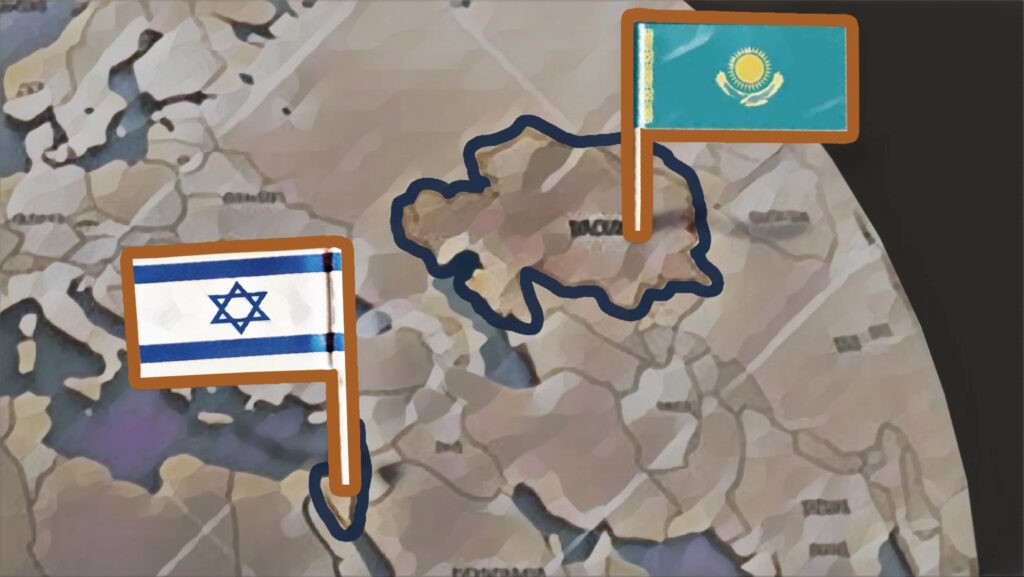
Kazakhstan has officially agreed to join the Abraham Accords during a C5+1 summit, giving another green flag of legitimacy to Israel for its policies and actions in West Asia, especially in Palestine. Reportedly, not only Kazakhstan but also Azerbaijan and Uzbekistan are set to follow this step. The Normalization process, brokered by the United States to advance the culture of peace among the three Abrahamic religions, was initiated by President Donald Trump during his first term. Since then, four Muslim-majority countries – the United Arab Emirates, Bahrain, Morocco, and Sudan – have joined the Abraham Accords. However, other Muslim-majority countries have previously followed the stand taken under the Arab Peace Process of 2002, which emphasizes the resolution of the Palestine issue before starting the normalization of ties with Israel.

The joining of the Abraham Accords by Kazakhstan and the quest by other Caucasus and Central Asian Muslim-majority countries are distinctive in multiple aspects. As per the official definition, the Abraham Accords encourage the establishment of relations between Israel and its neighbors in the region. In this context, the extension of the Abraham Accords, originally designed to broker regional peace and stability in West Asia, to other regions and securing legitimacy by Muslim-majority countries outside West Asia reflects the pan-Abrahamic outlook of the U.S.-brokered deal. Moreover, Kazakhstan is a country that has established diplomatic ties with Israel since 1992, after the disintegration of the Soviet Union. So, the question is, what does the joining of the Abraham Accords by Kazakhstan signify for the Central Asian country, which shares a long border with Russia and already has substantial military and economic ties with it? The significance of the Abraham Accords for Kazakhstan can be comprehensively understood from the point of view of Kazakhstan, the United States, and Israel, the major participants of the agreement.

Kazakhstan’s attempt to balance regional and global pressure

Firstly, for Kazakhstan, the joining of the Accords with the perspective of enhancing ties with Israel can be taken more as a symbolic move, as Kazakhstan already fulfils 25% of Israel’s energy needs. The countries share a strong diplomatic relationship, with Israeli PM Benjamin Netanyahu visiting Kazakhstan in 2016; the two countries have signed several bilateral agreements. Kazakhstan has significant relations with Israel in the fields of irrigation and healthcare, and has also pursued discussions on visa-free travel, tourism, and technology. Kazakhstan and Israel have launched the Israel-Kazakhstan Irrigation Demonstration Centre in the Almaty region. Kazakhstan also hosts the largest Jewish population in Central Asia, which lives in peace and harmony with other ethnic groups.

Considering the strong ties already in place, the lingering question is why Kazakhstan had to formally sign an agreement that appears to be a symbolic gesture from the outside. To this question, Adil Husain, PhD scholar of Central Asian Studies at Jamia Millia Islamia (JMI), New Delhi, says that “though the decision to formalize the normalization ties with Israel may appear as a formality, the move carries a strategic significance for the Central Asian country to balance its regional and international relations. Kazakhstan’s willingness to join the Abraham Accords is based on its adherence to a multi-vector foreign policy, distancing itself from the axis of Russia, China, and Iran. As the region has always been under Russian influence, Kazakhstan’s willingness to join the Abraham Accords shows its proximity to Western countries in the backyard of Russia”.

Kazakhstan is trying to balance its relations with traditional regional partners and Western countries without hurting its interests. The move is also seen as an attempt by the U.S. to improve its outreach. Abdul Rahman, a West Asian expert at People’s Dispatch, says that “Kazakhstan will not invite Russian anger by aligning too closely with the U.S., so the Abraham Accords seem a safer option to make an indirect relationship with the U.S., as Israel is close to it. But I think even if they are joining the Abraham Accords, at best, it will be a cold peace with Israel, which is never a priority for Central Asia. The main point is to release Russian and American pressures. Aligning with Israel will make them closer to the U.S. and counter Russian pressure. Being close to Russia will stand against too much U.S. pressure. So, it’s a win-win situation for Central Asian regimes in one way. We should always remember that all of these countries are members of the SCO as well. So, at max, it’s an attempt to appease Donald Trump”.

Abraham Accords expansion: a reflection of the U.S.-Israel interest?

For the United States, Kazakhstan aligns with broader objectives by securing energy and economic interests, along with providing an alternative trade route. By ensuring critical mineral supply chains and rare earth elements, the Central Asian country provides the U.S. with all the essential elements for clean energy technologies and defense manufacturing, which allows it to reduce reliance on China. Also, the Trans-Caspian International Transport Route connects Central Asia to Europe via the Caspian Sea and the South Caucasus, offering a vital alternative trade route that bypasses both Russia and Iran.

Furthermore, geopolitically, the revival of the Abraham Accords after the October 7 attack reflects that the project is still ‘viable’. Mudassir Qamar, Assistant Professor at the Centre for West Asian Studies at Jawaharlal Nehru University, says, “to some extent, it is an effort towards keeping the Accords relevant, showcasing its potential, and expanding it beyond West Asia”. Also, for the U.S., the Accord reinforces Donald Trump’s personal diplomatic efforts to establish peace and order globally, following his attempts in several conflicts, including Ukraine-Russia, India-Pakistan, Israel-Iran, and participation in brokering a hostage deal between Israel and Hamas.

The move is also seen as an attempt to counter Russia’s historic influence over Central Asian countries. Prof. Qamar says, “The Abraham Accords give U.S.-Israel a strategic opening in Central Asia, a region of strategic dominance by China and Russia”. Abdul Rahman sees it as a direct attempt by the United States’ pressure Kazakhstan to isolate Russia in the region.

Ghulam Mohammad Shah, professor at MMAJ Academy of International Studies, JMI, emphasized, “The Abraham Accord will be welcomed by the United States, and Russia will not be happy with it, especially Kazakhstan signing the Accord, because the latter has a long border with Russia. China, Russia, and the United States want to exert their influence in Central Asia. Russia has its energy and security interests in Kazakhstan, whereas China has its economic interests in Central Asia. The United States wants the Central Asian States not to fall into any of the two domains”.

For Israel, the Abraham Accords are seen as an attempt to neutralize Israeli actions against Palestine, where it has been accused of perpetrating genocide and ethnic cleansing. The normalization process between Israel and the Muslim world avoids raising several questions, ranging from Israeli settlements, the refugee issue, the question of the occupied territories by Israel, recognition of Palestine as a state, and the boundaries issue of the Palestinian state, among many others.  The U.S.-led normalization process had been opposed by the Palestinian group, Hamas, which has condemned the countries joining the Abraham Accords and normalizing ties with Israel, while neglecting the question of Palestine and Palestinians. After Trump announced Kazakhstan’s joining the Abraham Accords, Hamas criticized the move, calling it an attempt to whitewash the genocide crimes committed by Israel in Gaza. The normalization of relations with Israel tends to leave the Palestinian question unresolved.

In conclusion, Kazakhstan’s signing of the Abraham Accords cannot be seen as a solely symbolic move; rather, it must be considered a strategically balanced attempt by Kazakhstan to secure regional and international favors while remaining relevant in the region. The expansion of the Abraham Accords signatories beyond regional countries in West Asia reflects an independent and powerful foreign policy derived from national interests.


The views expressed in this article are those of the author and do not necessarily reflect the official policy or position of the publication, its affiliates, or any other organizations mentioned.