• KGS/USD = 0.01144 0%
  • KZT/USD = 0.00192 -0%
  • TJS/USD = 0.10849 0%
  • UZS/USD = 0.00008 0%
  • TMT/USD = 0.28571 0%
  • KGS/USD = 0.01144 0%
  • KZT/USD = 0.00192 -0%
  • TJS/USD = 0.10849 0%
  • UZS/USD = 0.00008 0%
  • TMT/USD = 0.28571 0%
  • KGS/USD = 0.01144 0%
  • KZT/USD = 0.00192 -0%
  • TJS/USD = 0.10849 0%
  • UZS/USD = 0.00008 0%
  • TMT/USD = 0.28571 0%
  • KGS/USD = 0.01144 0%
  • KZT/USD = 0.00192 -0%
  • TJS/USD = 0.10849 0%
  • UZS/USD = 0.00008 0%
  • TMT/USD = 0.28571 0%
  • KGS/USD = 0.01144 0%
  • KZT/USD = 0.00192 -0%
  • TJS/USD = 0.10849 0%
  • UZS/USD = 0.00008 0%
  • TMT/USD = 0.28571 0%
  • KGS/USD = 0.01144 0%
  • KZT/USD = 0.00192 -0%
  • TJS/USD = 0.10849 0%
  • UZS/USD = 0.00008 0%
  • TMT/USD = 0.28571 0%
  • KGS/USD = 0.01144 0%
  • KZT/USD = 0.00192 -0%
  • TJS/USD = 0.10849 0%
  • UZS/USD = 0.00008 0%
  • TMT/USD = 0.28571 0%
  • KGS/USD = 0.01144 0%
  • KZT/USD = 0.00192 -0%
  • TJS/USD = 0.10849 0%
  • UZS/USD = 0.00008 0%
  • TMT/USD = 0.28571 0%
11 December 2025

Uzbekistan Performs First Liver Transplant on Seven-Month-Old Infant

Uzbekistan has successfully performed its first liver transplant on a seven-month-old infant. The operation was carried out at the National Children’s Medical Center, with the child’s mother serving as the donor, a technically demanding procedure rarely performed worldwide.

Medical specialists at the center emphasized that liver transplantation in infants under one year of age requires advanced surgical capabilities and extensive pre-operative assessment. Both mother and child underwent comprehensive evaluations prior to the operation. Surgeons transplanted a segment of the mother’s liver into the child, and the procedure was completed without complications.

The mother has already been discharged in stable condition. The infant remains under close medical supervision, with doctors describing the child’s condition as stable and satisfactory. Preparations for discharge are currently underway.

The Ministry of Health hailed the operation as a milestone for Uzbekistan’s healthcare sector, highlighting the increasing ability of domestic institutions to carry out high-complexity medical procedures.

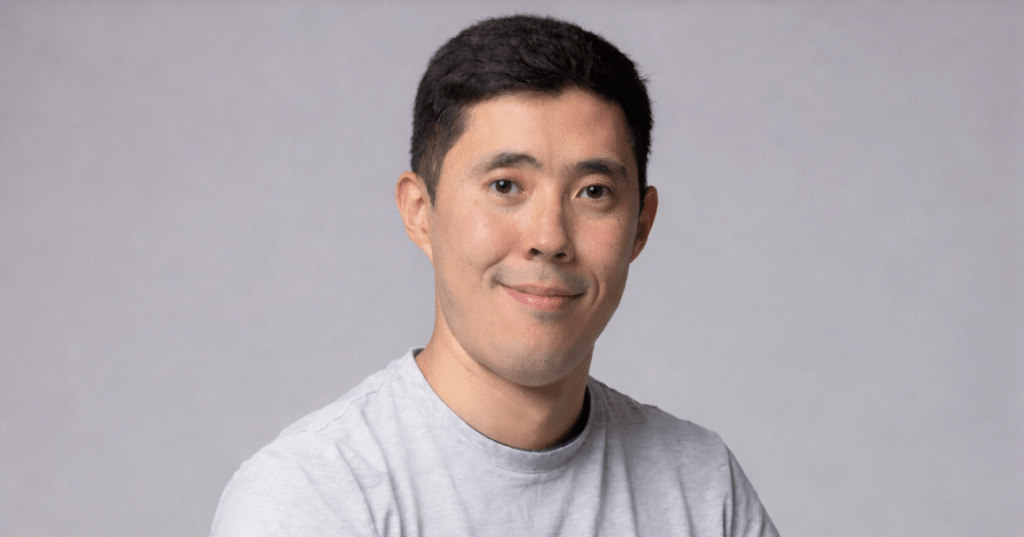
In a related development, the ministry also noted recent advances in orthopedic surgery. In October, during the “Days of Kazakh Medicine in Uzbekistan” event, surgeons from Kazakhstan conducted robotic-assisted joint replacement surgeries in Tashkent. The team, led by orthopedic surgeon Timur Baidalin from Kazakhstan’s Batpenov National Scientific Center, performed one knee and one hip replacement using the MAKO robotic system. The technology enables precise surgical planning and reduces the risk of complications.

Kobyz Musical Instrument and Karakalpak Yurt Added to UNESCO Heritage List

At the 20th session of the UNESCO Intergovernmental Committee for the Safeguarding of the Intangible Cultural Heritage, held in New Delhi from December 8-13, Uzbekistan’s nominations for the kobyz musical instrument and the Karakalpak yurt were officially approved for inclusion in the UNESCO Intangible Cultural Heritage List.

As part of the application process, researchers documented the historical and cultural significance of the zhyrau (oral storytellers), whose performances are traditionally accompanied by the kobyz. A documentary film was also produced in Karakalpakstan, an autonomous republic within Uzbekistan, highlighting the craftsmanship involved in making the kobyz. The nomination emphasized the urgent need for preservation, citing a steady decline in the number of artisans who know the tradition.

The kobyz is an ancient, bowed string instrument originating among Turkic peoples, with historical roots dating back to the 5th-8th centuries. Its haunting sound traditionally accompanies zhyrau performances and remains prevalent in both Karakalpakstan and Kazakhstan.

Kazakhstan Seeks Foreign Investors for Fourth Oil Refinery Project

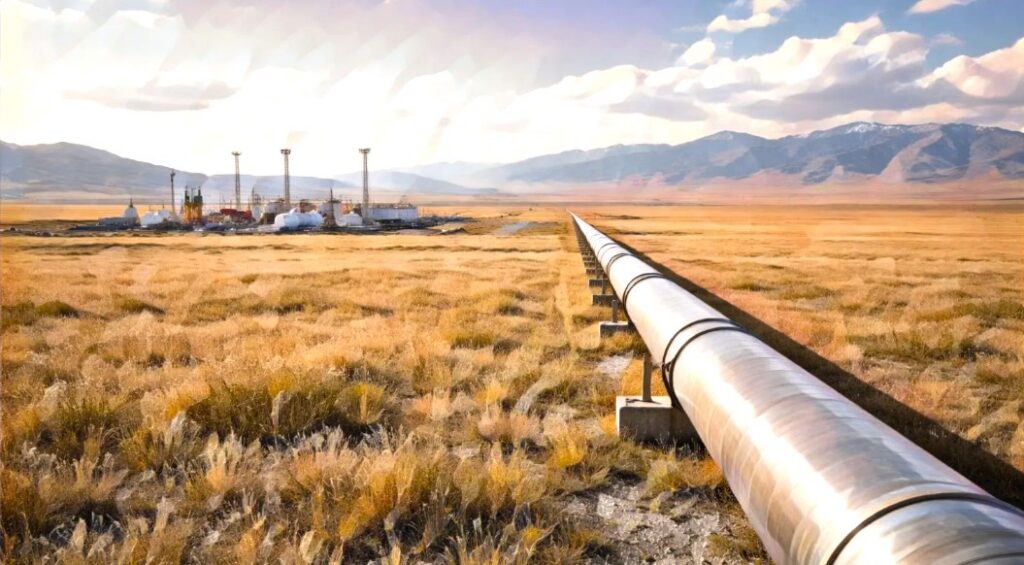
Kazakhstan is intensifying efforts to launch its fourth major oil refinery and is actively seeking international investors for the project. The Ministry of Energy has confirmed that expanding oil refining capacity remains a top priority in the country’s long-term energy strategy.

According to the ministry, Energy Minister Yerlan Akkenzhenov participated in a recent meeting of the KAZENERGY Association Council, an umbrella organization uniting leading players in Kazakhstan’s oil, gas, and energy sectors. He reiterated that the national Concept for the Development of the Oil Refining Industry for 2025-2040 includes both the modernization of the country’s three existing refineries and the construction of a new facility with a projected processing capacity of up to 10 million tons of oil per year.

To help secure funding, Akkenzhenov proposed that KAZENERGY organize a dedicated roadshow to attract potential investors, particularly from OECD member countries.

Kazakh Prime Minister Olzhas Bektenov recently confirmed in response to a parliamentary inquiry that the proposed refinery, with a capacity of 10 million tons annually, could be completed by 2040. One likely location is the Mangystau region, close to key oil production sites. However, this is just one of four options under consideration. The final decision will depend on factors such as the growth of electric vehicle adoption, shifting fuel consumption patterns, and long-term export forecasts.

The planned refinery would produce aviation fuels including TC-1 and Jet A-1. Demand for jet fuel is expected to surge with the development of an international aviation hub in Mangystau, where consumption could rise from the current 35,000 tons to 120,000-130,000 tons per year.

Currently, Kazakhstan produces between 650,000 and 700,000 tons of jet fuel annually, while domestic demand hovers around 1 million tons. To bridge the gap, the country imports approximately 350,000 tons, roughly 30-35%, from Russia, highlighting the strategic importance of boosting domestic refining capacity.

As previously reported by The Times of Central Asia, the updated industry roadmap envisions increasing national oil refining volumes from 18 million to 39 million tons per year. The expansion will require between $15 billion and $19 billion in investment.

Kazakhstan’s three largest refineries are located in Pavlodar, Atyrau, and Shymkent. In March, the Agency for the Protection and Development of Competition (AZRK) recommended partially privatizing the Pavlodar and Atyrau facilities to enhance operational efficiency and attract private investment.

Analysts say that constructing a new refinery is critical not only for reducing Kazakhstan’s reliance on fuel imports, but also for enhancing its export capabilities amid intensifying competition in the global energy market.

Turkmenistan Marks 30 Years of Neutrality

On December 12, 2025, Turkmenistan marks the 30th anniversary of a UN decision granting Turkmenistan the status of a neutral country.

Defining what “permanent neutrality” means for Turkmenistan is impossible, as it is a flexible term used to justify a range of policies, both domestic and foreign. This vague special status has not provided many benefits, but has helped Turkmenistan’s leadership isolate the country and create one of the most bizarre and repressive forms of government in the world today.


Last Item on the Day’s Agenda

On Tuesday, December 12, 1995, the UN General Assembly’s (UNGA) 90th plenary meeting reconvened at 15:20 to consider items 57 to 81 on its agenda. Item 81 was the draft resolution on “permanent neutrality of Turkmenistan.”

The UNGA president at that time, Freitas do Amaral, noted to the Assembly that the draft resolution “was adopted by the First Committee without a vote,” and asked if the Assembly wished “to do likewise.” The Assembly did, and after a few brief remarks about the next Assembly meeting on December 14, the session ended at 18:05.

That is how the UN officially granted Turkmenistan the status of neutrality.

A Great Event

The passing of the resolution on Turkmenistan’s neutrality status might have been a case of going through the motions at the UN, but it was a huge event in Turkmenistan.

Turkmenistan’s first president, Saparmurat Niyazov, had been campaigning internationally for his country to have “positive” neutrality status since 1992. After this was accomplished, Niyazov often proclaimed this special UN recognition as a great achievement for the country and for himself personally.

Ashgabat’s Independence Square, previously known as Neutrality Square and originally as Karl Marx Square; image: TCA, Stephen M. Bland

December 12 was quickly announced as a national holiday. On the first anniversary of the UN decision in 1996, the former Karl Marx Square in Ashgabat was renamed “Neutrality Square.” Shortly after, an olive branch motif was added to Turkmenistan’s national flag, symbolizing the country’s neutral status.

In 1998, on the third anniversary of UN-recognized neutrality, the 75-meter-high Arch of Neutrality was unveiled in Ashgabat. A 12-meter gold statue of Niyazov that rotated to face the direction of the sun crowned the structure.

Niyazov died in December 2006, and in 2010, the Arch of Neutrality was moved from the city center to the outskirts of the Turkmen capital and unveiled again on December 12, 2011. It has been undergoing renovation and will be unveiled yet again on the 30th anniversary of neutrality.

Former-President Niyazov’s likeness atop the Arch of Neutrality; image: TCA, Stephen M. Bland

In 2002, Niyazov pushed through a law changing the names of the months of the year and days of the week. December became “Bitaraplyk,” the Turkmen word for neutrality, and continued to officially be called that until 2008, when Niyazov’s successor finally revoked the changes and restored the traditional names.

That successor, Gurbanguly Berdimuhamedov, embraced the special permanent neutrality status and, in 2016, ordered it to be enshrined in the new version of the constitution.

Just after Neutrality Day that year, President Berdimuhamedov reprimanded the minister of culture, two deputy prime ministers, and the head of the state committee on television, radio broadcasting, and cinematography for “failing to control the quality” of the holiday concert dedicated to Neutrality Day that was shown on state television.

Neutrality plays a large role in shaping the country.

In late 1996, Turkmenistan published its new military doctrine, which stated that, as a neutral country, Turkmenistan would not enter into any military alliances, would refrain from using force in international relations, and would not interfere in other countries’ internal affairs.

Niyazov used neutrality to avoid attending summits of the Commonwealth of Independent States (CIS) if cooperation in military or security issues was on the agenda.

Another facet of Turkmenistan’s neutrality involved screening the country from the problems of the outside world. The easiest way to avoid becoming entangled in other countries’ internal affairs and preserve Turkmenistan’s neutrality was to limit contact with citizens of other states and their views of world affairs.

The Turkmen authorities gradually increased restrictions for foreigners to enter the country and cut off, as much as possible, access to foreign media outlets and other sources of information emanating from outside Turkmenistan.

State media is the only officially approved source of media inside Turkmenistan. These outlets, including the newspaper Neutralny (Neutral) Turkmenistan, which rarely reports on major world events, focusing instead on the president’s purported wise leadership in managing domestic affairs and the alleged prosperity of Turkmenistan.

Both these claims have always been questionable to the world outside of Turkmenistan.

In the case of Turkmenistan’s relations with its southern neighbor, Afghanistan, neutrality has proven a useful policy. When the Taliban first came to power in Afghanistan in the late 1990s, Turkmenistan’s government was in contact with the Taliban and their opponents. Afghan peace talks were held in Turkmenistan in 1999.

Turkmenistan did not officially recognize the Taliban, but did allow the Taliban to open a representative office in Ashgabat. While the other Central Asian states were preparing for the worst when the Taliban reached the Central Asian border in the late 1990s, Turkmenistan cited its principle of non-interference in the domestic affairs of another country and took no special measures, despite sharing a 744-kilometer border with Afghanistan.

This policy made it easy for Turkmenistan to maintain a dialogue with whoever was ruling Afghanistan.

There is one other noticeable benefit to Turkmen authorities’ reverence for neutrality. Every year, as Neutrality Day approaches, there is an amnesty given to several hundred prisoners, and many of those released should probably never have been put in prison to begin with. This year, 231 “convicted citizens… who acknowledge their guilt and show sincere remorse” will be freed.

An International Occasion

This year’s anniversary celebration should feature some prominent guests, though an official list has not yet been released.

Books on display in the Turkmenistan Pavilion at the Osaka Expo 2025; image: TCA, Stephen M. Bland

Gurbanguly Berdimuhamedov is now Chairman of the Halk Maslahaty, or People’s Council, having essentially handed over the presidency to his son, Serdar, in March 2022. Both will host an event dedicated to the 30th anniversary of the UN’s official recognition of Turkmenistan’s permanent neutrality, and Serdar has managed to publish his latest book, Turkmenistan’s Neutrality: A Bright Path to Peace and Trust, just ahead of the commemoration. Iranian President Masoud Pezeshkian is confirmed to attend. Russian President Vladimir Putin is scheduled to be in Ashgabat. The other four Central Asian presidents are expected to be there also. Other leaders might be on hand.

It is a grand celebration to mark something that happened in the course of a few minutes 30 years ago, but it has taken on a significance for Turkmenistan that no one could have predicted on December 12, 1995.

Face Pay, Palm Scans, and AI Cameras: Inside Kazakhstan’s Digital Transformation

Daily life in Almaty, Kazakhstan’s largest city, increasingly resembles scenes from a futuristic film. Subway fares can be paid with a glance, schoolchildren enter campuses by scanning their palms, and traffic flows are monitored by an expansive video surveillance system. With just a smartphone, citizens can apply for a marriage license, open a business, or access official documents within seconds.

Kazakhstan has embraced rapid digitalization, positioning itself as a regional leader in GovTech and fintech. Authorities promote this trajectory as a means to create a secure and efficient environment, and the public has largely welcomed it. The country now boasts one of the world’s highest penetration rates for cashless payments and digital services.

Yet the swift adoption of emerging technologies has brought new challenges. The digital infrastructure is evolving faster than the country’s legal frameworks can adapt, raising concerns among experts about how to balance technological convenience, public safety, and the right to privacy.

Biometric Security or Overreach?

Kazakhstan’s biometric systems are being integrated into a growing ecosystem of everyday services. A prominent example is the Alaqan system in schools, which replaces traditional entry cards with palm-scanning technology. Currently in a pilot phase at nearly 300 schools, the government plans to expand the system nationwide within the next two to three years, should it prove to be successful.

Supporters argue this enhances child safety by preventing unauthorized access. Critics, however, warn that it also involves building a vast biometric database of minors, requiring unprecedented security protocols.

Simultaneously, the Ministry of Digital Development is rolling out a national video surveillance network powered by artificial intelligence. The system, which integrates citywide cameras into a unified platform, will enable real-time facial and license plate recognition and detect incidents such as fights, large gatherings, or abandoned items. Minister of Artificial Intelligence and Digital Development Zhaslan Madiyev described the system as a tool to monitor public safety 24/7.

Equipment Dependence and Strategic Risk

Much of Kazakhstan’s surveillance infrastructure relies on equipment from major Chinese companies such as Hikvision and Dahua. Their products are favored for their cost-effectiveness, but concerns have been raised internationally over cybersecurity vulnerabilities and potential data access “backdoors.” Several U.S. and EU countries have imposed restrictions on these firms for national security reasons.

In Kazakhstan, which pursues a multi-vector foreign policy, the issue is viewed more as technical than political. Experts recommend diversifying suppliers and enforcing strict data encryption protocols, regardless of the origin of the equipment.

Kazakhstan’s exposure to cybersecurity risks became clear in February 2024, when a leak involving the Chinese firm iSoon compromised databases belonging to local telecom operators and targeted government institutions, including the Unified Pension Fund. The incident prompted an urgent reassessment of data security practices. Centralized data hubs, experts noted, can only function securely if accompanied by significant investment in cybersecurity infrastructure.

Legislation Lagging Behind

While Kazakhstan has a law on personal data, experts argue it is outdated, particularly given the rapid integration of artificial intelligence into public systems. Recent legislative amendments now allow biometric identification to be used for public safety and crime prevention. However, civil society groups are calling for clearer protocols outlining who can access biometric data, under what conditions, and with what level of oversight.

A promising development is the drafting of a new Digital Code intended to unify existing regulations and bring Kazakhstan closer to international standards on data protection.

The Road Ahead

Kazakhstan is now widely recognized as Central Asia’s digital hub, showcasing how technology can streamline government services and enhance everyday life. But digital leadership also comes with heightened responsibility. Public trust hinges on the state’s ability to safeguard the personal data it collects and establish transparent legal mechanisms for its use.

The challenge for Kazakhstan is clear: to demonstrate that digital security and personal privacy can and must coexist.

Rare Antonov An-124 Cargo Plane Makes Brief Stop in Tashkent

A rare sight drew the attention of aviation enthusiasts in Tashkent this week as an Antonov An-124-100M Ruslan, one of the world’s largest serially produced cargo aircraft, landed at Islam Karimov International Airport. According to Tashkent Sky News, the aircraft arrived from Urumqi and was registered as UR-82027. Notably, it bore the inscription “Be brave like Kharkiv”, a tribute to the resilience of the Ukrainian city under Russia’s invasion.

The An-124 remains a global leader in transporting oversized and heavy cargo. Capable of carrying between 120 and 150 tons, it features a cargo hold with a volume of approximately 1,050 cubic meters. The aircraft is equipped with both nose and tail cargo doors, each with built-in ramps, allowing simultaneous loading and unloading from either end, an advantage for complex logistics operations involving large or irregularly shaped equipment.

Its robust design includes heavy-duty, multi-wheel landing gear, enabling it to land on less-developed airstrips. This operational flexibility makes the An-124 especially valuable in situations where access to major international airports is limited.

Members of the Uzbekistan Spotters Team gathered at the airport to capture images of the aircraft during its brief stay. For local aviation enthusiasts, the visit offered a rare opportunity to photograph an iconic aircraft and share the experience with the global spotting community.