• KGS/USD = 0.01144 0%
  • KZT/USD = 0.00193 -0%
  • TJS/USD = 0.10866 0.55%
  • UZS/USD = 0.00008 0%
  • TMT/USD = 0.28490 0%
  • KGS/USD = 0.01144 0%
  • KZT/USD = 0.00193 -0%
  • TJS/USD = 0.10866 0.55%
  • UZS/USD = 0.00008 0%
  • TMT/USD = 0.28490 0%
  • KGS/USD = 0.01144 0%
  • KZT/USD = 0.00193 -0%
  • TJS/USD = 0.10866 0.55%
  • UZS/USD = 0.00008 0%
  • TMT/USD = 0.28490 0%
  • KGS/USD = 0.01144 0%
  • KZT/USD = 0.00193 -0%
  • TJS/USD = 0.10866 0.55%
  • UZS/USD = 0.00008 0%
  • TMT/USD = 0.28490 0%
  • KGS/USD = 0.01144 0%
  • KZT/USD = 0.00193 -0%
  • TJS/USD = 0.10866 0.55%
  • UZS/USD = 0.00008 0%
  • TMT/USD = 0.28490 0%
  • KGS/USD = 0.01144 0%
  • KZT/USD = 0.00193 -0%
  • TJS/USD = 0.10866 0.55%
  • UZS/USD = 0.00008 0%
  • TMT/USD = 0.28490 0%
  • KGS/USD = 0.01144 0%
  • KZT/USD = 0.00193 -0%
  • TJS/USD = 0.10866 0.55%
  • UZS/USD = 0.00008 0%
  • TMT/USD = 0.28490 0%
  • KGS/USD = 0.01144 0%
  • KZT/USD = 0.00193 -0%
  • TJS/USD = 0.10866 0.55%
  • UZS/USD = 0.00008 0%
  • TMT/USD = 0.28490 0%
10 December 2025

Tajikistan Gives Afghan Refugees 15 Days to Leave

Tajikistan has launched a large-scale campaign to detain and deport Afghan refugees, giving them just 15 days to leave the country. The move, reported by Afghanistan’s Khaama Press and confirmed by the UN refugee agency UNHCR, has sparked fear and confusion among thousands of Afghans in Tajikistan, including many with valid residency permits or official asylum documentation.

According to Khaama Press, detentions have intensified in recent days, particularly around Vahdat township and Rudaki district near the capital, Dushanbe. Afghan men are reportedly being arrested in large numbers, often directly from their workplaces, with little to no warning or opportunity to contact family members.

The deportation order is believed to affect thousands of Afghans, including individuals legally residing in Tajikistan while awaiting resettlement to countries such as Canada. Many are former civil servants, military personnel, or others affiliated with the pre-Taliban Afghan government who fled after the Taliban’s return to power in August 2021. Human rights advocates warn that forced repatriation could expose them to immediate danger

UNHCR Condemnation and International Concerns

The UN High Commissioner for Refugees has expressed deep concern over Tajikistan’s actions. In January 2025, UNHCR urged Dushanbe to cease deportations after confirming that at least 80 Afghan refugees were forcibly returned in December 2024, despite holding UN-issued refugee documents.

UNHCR stated that these deportations violate international protection obligations and risk exposing vulnerable individuals to persecution, detention, or violence in Taliban-controlled Afghanistan.

As of late 2024, approximately 9,000 Afghan refugees were officially registered in Tajikistan. With the new 15-day ultimatum and ongoing arrests, many more are now at risk. Refugee advocates report that detentions are being carried out indiscriminately, often without regard for legal status.

Part of a Wider Regional Crackdown

Tajikistan’s campaign mirrors broader regional trends. In recent months, both Iran and Pakistan have undertaken mass deportations of Afghan nationals. Human rights organizations have documented widespread reports of abuse, intimidation, and even killings of returnees by Taliban forces.

Observers warn that options for Afghan refugees are rapidly diminishing. Resettlement programs remain slow, and few countries have opened new asylum pathways. As a result, thousands of displaced Afghans across Central and South Asia face a stark choice: live under constant threat of arrest and expulsion or return to a homeland where persecution may await.

Anthrax Outbreak Reported in Northern Kazakhstan

An outbreak of anthrax has been confirmed in the Akmola region of northern Kazakhstan. According to official data, at least seven people have been infected after coming into contact with contaminated livestock.

Kazakhstan’s Minister of Agriculture, Aidarbek Saparov, identified the source as unvaccinated and unregistered animals grazing near an old cattle burial ground located approximately seven kilometers from the villages of Magdalinovka and Novomarinovka. Ten infected cattle have been identified and culled.

“There are many questions for the owners of these animals. They were not registered anywhere,” Saparov said at a press briefing.

Authorities have imposed a quarantine, carried out disinfection procedures, and restricted access to the affected pastures. Sanitary measures have also been intensified in nearby settlements.

The Ministry of Health reported that 19 individuals underwent medical examinations, with seven cases confirmed in laboratory tests. One patient is in serious condition, while the remaining six are in stable condition. Four of these cases had been previously reported.

Saparov also dismissed speculation that contaminated meat had entered Astana’s markets.

“We checked everything, even the door handles. All samples tested negative. Suspicious meat was immediately seized,” the minister stated.

The outbreak in the Atbasar district has exposed long-standing deficiencies in Kazakhstan’s veterinary oversight and livestock registration systems. Although the country maintains an electronic livestock registration system, its usage is inconsistent, particularly in remote regions where many farmers fail to register or vaccinate their animals.

In response, the government has pledged to tighten regulatory enforcement. Inspections will begin in the affected areas, with violators facing increased fines. Authorities also plan to target so-called “dealers,” middlemen trading in unregistered livestock.

“This is not just about private property. It is a threat to public health,” Saparov added.

The quarantine in the outbreak zone will last a minimum of 15 days. Authorities will assess whether to lift the restrictions following additional inspections.

Anthrax is a dangerous bacterial infection transmitted from animals to humans, primarily through contact with infected meat or contaminated soil. Outbreaks occur periodically in Kazakhstan, particularly in areas where Soviet-era cattle burial sites remain unregistered and unmapped.

Regional veterinary officials have warned that many of these burial grounds have not yet been properly identified, posing a continuing risk to grazing livestock.

In recent days, Minister Saparov proposed introducing criminal liability for the sale of meat that bypasses veterinary and sanitary controls.

Kyrgyz Anti-Corruption Crackdown: Officials Arrested During Live Meeting in Osh

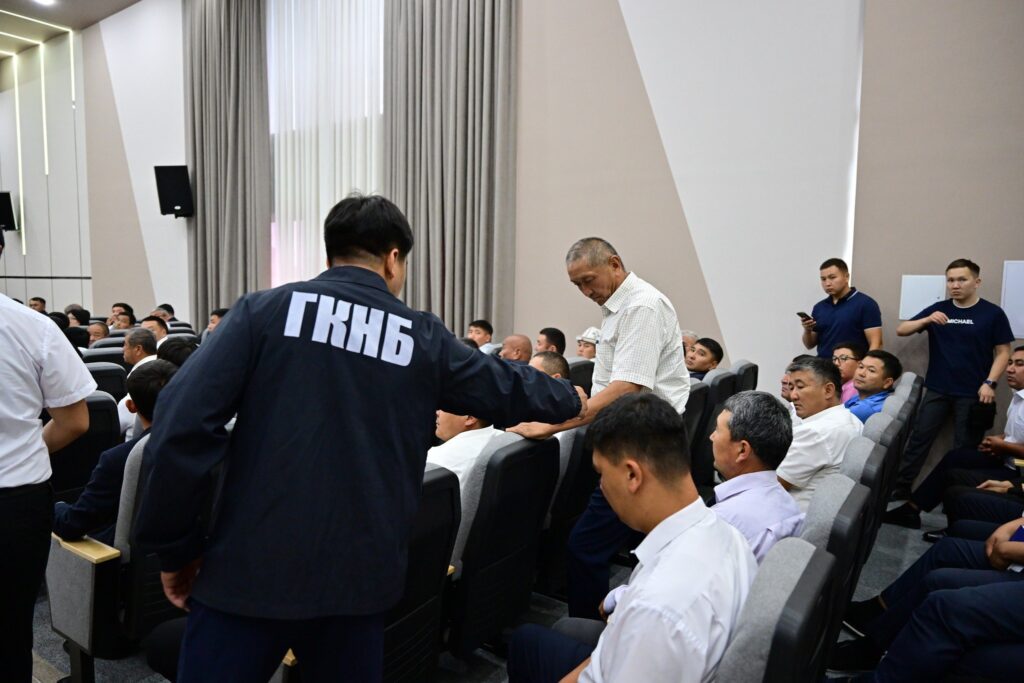
Several officials were arrested during a high-level government meeting in the southern Kyrgyz city of Osh, as part of an ongoing anti-corruption campaign led by the State Committee for National Security (GKNB).

Kamchybek Tashiev, chairman of the GKNB, ordered the arrests during a gathering with the heads of state agencies. Six civil servants were detained on the spot after Tashiev accused them of embezzling state funds and providing false information. Among those taken into custody were the head of the Tax Service in the Uzgen district and the deputy head of the Tax Service in the Kara-Suu district.

“Take him out, he’s lying!” Tashiev said, pointing to the deputy head of the Kara-Suu Tax Inspectorate. He also stated that the head of the service had already been transferred to the GKNB’s central office in Bishkek for interrogation.

The detentions extended beyond the tax authorities. According to local media reports, two employees from the Cadastral Service in the Nookat district, a representative of the judiciary, and a passport office staff member in Uzgen were also arrested. All face allegations of corruption and misappropriation of public funds.

These events in Osh follow a series of high-profile detentions in northern Kyrgyzstan. Over the past month, at least three mayors and several senior officials have been arrested in the Chui and Issyk-Kul regions. They are accused of abuse of office, illicit enrichment, and orchestrating corruption networks.

During the meeting, Tashiev reiterated the GKNB’s commitment to combating corruption at all levels of government. He referenced the arrest of former State Tax Service head Altynbek Abduvapov in late 2024 as a prominent example. Investigators claim Abduvapov accumulated approximately $55 million in assets through illegal means.

“He never had a business of his own. Employees say they gave him bribes ranging from $50,000 to $100,000 every month. We are confiscating everything. Altynbek Abduvapov will now be a poor man,” Tashiev declared.

Political analysts suggest the crackdown indicates both an intensification of anti-corruption efforts and a recalibration of power dynamics between Kyrgyzstan’s northern and southern regions. While critics have accused the authorities of selective justice, GKNB officials maintain that the arrests are supported by solid evidence and reveal systemic governance failures.

Kyrgyz President Visits Tajikistan, Opening New Era of Friendship

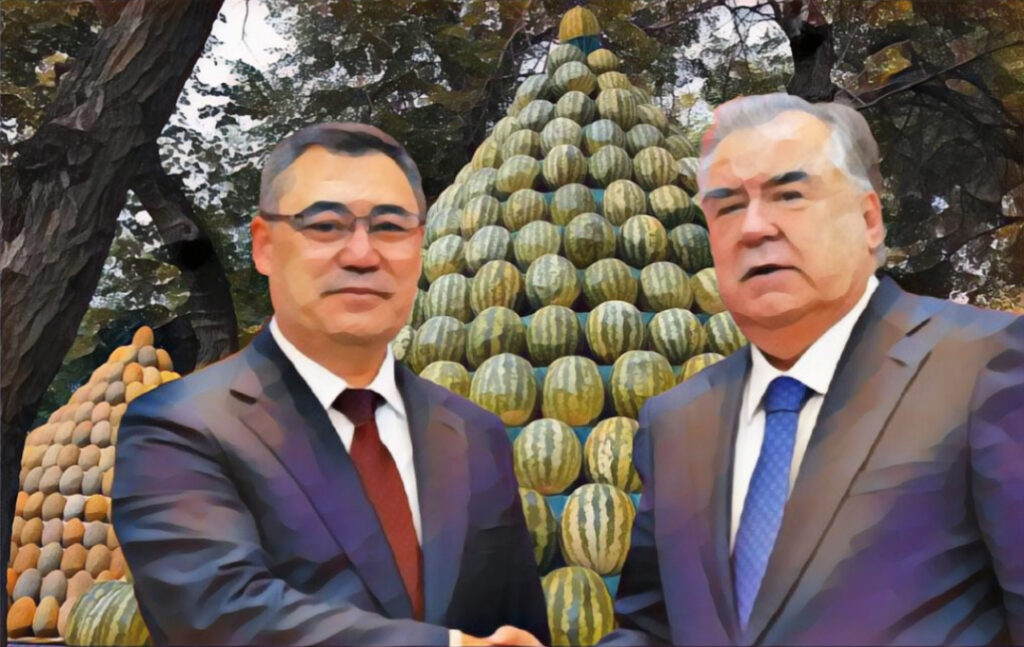
Kyrgyzstan’s President Sadyr Japarov just concluded a two-day visit to Tajikistan.

Rarely has the visit of one Central Asian leader to another Central Asian country been as welcome as Japarov’s trip to Tajikistan was. The two countries engaged in brief, but intense and devastating conflicts in late April 2021 and mid-September 2022, the only clashes between the militaries of the two Central Asian countries since the five Central Asian states became independent in late 1991.

Judging by Japarov’s warm reception in the Tajik capital Dushanbe, the worst of times have passed in Kyrgyz-Tajik relations.

A Year of Firsts

Japarov, who has been in power in Kyrgyzstan since late 2020, was making his first state visit to Tajikistan on July 8-9. Japarov traveled to Tajikistan in June 2021, nearly two months after the first outbreak of hostilities along the Kyrgyz-Tajik border, to speak with Tajik President Emomali Rahmon about easing tensions along their common frontier.

That June, a meeting was hastily arranged as an exercise in damage control, not a state visit, and in any case, the talks between the two presidents failed to head off even worse fighting in September of the next year.

This first state visit by Japarov followed President Rahmon’s visit to the Kyrgyz capital in March 2025, the first state visit by Rahmon to Kyrgyzstan in nearly 12 years. During Rahmon’s meeting in March, Kyrgyzstan and Tajikistan signed the agreement delimiting the final disputed sections of their border, which both sides hope will end more than a decade of violence and destruction in the border area.

That agreement led to the first-ever summit of the presidents of the three Central Asian countries that share the Ferghana Valley. Uzbek President Shavkat Mirziyoyev joined Japarov and Rahmon on March 31 in the northern Tajik city of Khujand to celebrate the agreement on all three countries’ borders and talk about future cooperation.

Pomp and Ceremony

Rahmon was at the Dushanbe airport to meet Japarov when the latter arrived on July 8. Tajikistan’s Honor Guard played the national anthems of both countries, followed by a 21-gun salute for Japarov, before the two presidents made their way to the Tajik capital to hold talks.

The two leaders also visited a Kyrgyz-Tajik trade exhibit and attended a concert featuring performers from both countries dedicated to “Eternal Friendship.”

Moving Forward

Ahead of the Japarov-Rahmon meeting, The Times of Central Asia reported that trade between the two nations is starting to increase again. The figure for January-May trade between the two countries this year was a modest $6.35 million, but that is 15 times more than the meager $405,100 of bilateral trade during the first five months of 2024.

Less than a decade ago, there were years when Kyrgyz-Tajik bilateral trade topped $50 million.

Following the border agreement in March, two border crossings were reopened along the western sections of the Kyrgyz-Tajik frontier. During the meeting between the two presidents, it was announced that a third crossing had opened, the Tajvaron-Karamyk post connecting Kyrgyzstan’s Chong-Alai and Tajikistan’s Lakhsh (formerly Jirgatal) districts. This area is far from where the fighting in 2021 and 2022 took place, but residents of this region were affected when the border between the two countries was closed.

The Tajvaron-Karamyk crossing is important for the people living in this sparsely inhabited, remote region, as connections to the rest of their countries are tenuous through the mountain roads. The ability of communities to trade in the limited goods of the area helps provide basic sustenance when snow, rain, or rockslides impede deliveries from reaching one or both sides of the border.

Kyrgyz and Tajik representatives signed 14 agreements during Japarov’s visit. Most were cooperation agreements in areas such as agricultural research, television and radio broadcasting, and tourism, or agreements on cooperation between local administrations, and the two countries’ health and labor ministries.

Rahmon and Japarov also discussed the creation of free economic zones along the border, which could greatly benefit communities on both sides financially and encourage positive interactions between Kyrgyz and Tajik villagers.

But perhaps the most important topic in their talks was about mining.

Kyrgyzstan and Tajikistan are the two poorest countries in Central Asia, but that could soon change. Both countries have sizeable deposits of critical minerals in their mountains, and both foreign governments and companies are already looking into potential deals.

Japarov suggested coordination and possibly joint work between Kyrgyzstan and Tajikistan in developing some of these sites, as well as in ensuring mining operations did not cause environmental damage.

Japarov also met with other Tajik officials, including Rustam Emomali, the chairman of Tajikistan’s upper house of parliament. Rustam Emomali is the son of the Tajik president and seems to be the heir apparent when his father leaves office, so Japarov had an opportunity to take stock of Tajikistan’s presumptive future leader.

From Bombs and Bullets to Fruit and Fashion

Tajikistan and Kyrgyzstan are alike in many ways. They are the two smallest countries in Central Asia in terms of territory, and both countries are more than 90% covered by mountains. Tajikistan’s population is more than 10 million, whilst Kyrgyzstan’s is more than seven million.

During Tajikistan’s 1992-1997 civil war, more than 40,000 Tajik citizens found refuge in Kyrgyzstan, though admittedly, the majority were ethnic Kyrgyz.

Disputed areas of their border poisoned what should have been a natural friendship.

Photos of Rahmon and Japarov touring the trade fair, admiring produce – including the melon pyramids that are mandatory when the Tajik leader meets with important foreign leaders – and textiles are a sign the relationship is headed in a better direction.

Since the first conflict in 2021, the two countries have spent their scarce resources on arms and military equipment, funds which would have been better utilized on social infrastructure and energy security. The sight of the two presidents standing together with businessmen rather than individually with their military generals and security chiefs, therefore, is a welcome development.

How Climate Change Is Damaging Agriculture and Food Security in Tajikistan

Over the past 30 years, cotton production in Tajikistan has dropped by a staggering 56%. Among the many contributing factors are a lack of investment, outdated agricultural technology, and, notably, climate change. While humanity is not yet capable of stopping climate change, there are ways to adapt, prevent or mitigate the consequences of natural disasters, glacier melt, droughts, and to preserve biodiversity.

Agricultural GDP is growing — but slowly

The agricultural sector is among the most vulnerable to climate change, yet it remains the cornerstone of food security in Tajikistan. Moreover, a significant portion of the population depends on agriculture for their livelihood.

According to official statistics, Tajikistan’s population exceeds 10 million, with more than 7 million living in rural areas. Of the total population, 60% are engaged in agricultural activities, while the official unemployment rate stands at 7.9%.

Data from the Agency on Statistics under the President of the Republic of Tajikistan shows that agriculture contributes approximately 25% of the country’s GDP and accounts for a similar share of exports. The sector also generates 35% of national tax revenues. Beyond food production, agriculture supplies raw materials to various industries, meaning that the livelihoods of countless small and medium-sized enterprises depend directly on its productivity.

Despite modest growth in gross agricultural output, the pace remains slow. At the same time, food prices continue to rise on domestic markets, making it increasingly difficult for families to afford a balanced diet. Local farmers and entrepreneurs often attribute price hikes to fluctuations in the U.S. dollar exchange rate, especially given the sector’s reliance on imported fertilizers, machinery, and packaging

Food Security at Risk

When measured in U.S. dollars, agricultural income has remained relatively stagnant—indicating a lack of real progress and underscoring the need for urgent reforms. Compounding the issue is Tajikistan’s annual population growth rate of 2.7%, which places additional strain on the food system. Without strategic investments in irrigation, land expansion, and climate-resilient technologies, the country risks facing a systemic food shortage in the coming decades.

According to the Food and Agriculture Organization (FAO), 60% of Tajikistan’s population suffers from food insecurity—meaning they lack sufficient access to the calories and nutrients needed for a healthy and active life.

An Idea in Need of Investment

Matlub Rakhmonov, an agricultural specialist, analyzed the impact of climate change on Tajikistan’s agrarian sector, particularly in horticulture.

“For more than ten years now, in several regions of Tajikistan, some small and medium-sized business owners involved in horticulture have not only failed to secure a full harvest, but have also incurred losses,” says Rakhmonov. “The reason for this is increasingly due to unusually warm days at the end of winter, which cause fruit-bearing trees to bloom prematurely. Then, in late April and early May, sharp cold snaps hit, the blossoms fall, and the resulting crops are destroyed.”

Moreover, climate change has led to frequent natural anomalies, causing some traditional tree species to stop responding to seasonal changes. In the past, Tajikistan made widespread efforts to implement intensive orchard farming, but some regions refrained, fearing low yields similar to previous years.

Today, many of those traditional trees have adapted and no longer rely on strict seasonality. As a result, they can now be used to establish intensive orchards at higher elevations—between 2,000 and 2,500 meters above sea level—a practice that was previously considered unfeasible.

Rakhmonov’s idea is quite promising, but likely not yet fully viable for Tajikistan, as such initiatives require significant investment. Innovative orchards are complex systems based on modern technology and include interactive elements.

Overall, Tajikistan has around 500 varieties of agricultural crops. The total area suitable for agriculture is 7.2 million hectares, most of which is used as pastureland for livestock. Arable land for crops amounts to just 675,000 hectares, of which only 470,000 hectares are irrigated. About 180,000 hectares of this land are devoted to orchards and vineyards.

Changing Hydrometeorological Conditions: A Growing Challenge for Agriculture

Climate change is already reshaping the structure of agricultural production in Tajikistan. A comparison of land use between 1991 and 2024 reveals significant shifts: cotton production has declined by 56%, while the area under grain cultivation has increased by more than 60%. These changes reflect not only evolving economic priorities but also farmers’ responses to increasingly unpredictable weather patterns.

Professor Qaisar Saddiq of the Potsdam Institute for Climate Impact Research (PIK) explains: “In Tajikistan, 50–70% of arable land depends on irrigation, making it highly vulnerable to the projected reduction in river flow caused by accelerated glacier melt. This is particularly critical for water-intensive crops like cotton. Under high-emissions climate scenarios, we expect a moderate increase in extreme precipitation events and a significant rise in the number of hot days and tropical nights. These changes will likely lead to more frequent and intense droughts, directly affecting both the quality and quantity of agricultural yields.”

Three Key Vulnerabilities of Tajikistan’s Agricultural Sector

  1. Climate Risks Droughts, floods, soil erosion, and pest outbreaks are reducing crop yields and threatening biodiversity. Adapting to these risks requires the development of climate-resilient crop varieties, efficient water and soil management, and the adoption of modern agricultural technologies.
  2. Lack of Investment Limited access to credit, insurance, and modern markets hinders the sector’s modernization. Without adequate financial support, agriculture in Tajikistan struggles to remain competitive and expand its export potential.
  3. Technological Backwardness The sector still relies heavily on outdated traditional methods. A lack of mechanization and skilled specialists leads to significant losses in productivity, resources, and income.

A Complex Problem Requires a Comprehensive Solution

It is clear that climate change is not the only factor undermining the resilience of Tajikistan’s agricultural sector. A combination of environmental, economic, and institutional challenges continues to erode its competitiveness. In 2024, cotton production remains in decline—down by 56% compared to 1991—while food prices continue to rise. These trends underscore the urgent need for systemic and long-term solutions.

Professor Qaisar Saddiq of the Potsdam Institute for Climate Impact Research (PIK) offers several key recommendations:

  • Promote sustainable water resource management in agriculture, including the modernization of irrigation systems and the adoption of water-saving technologies;
  • Enhance climate literacy among farmers, agribusinesses, and financial institutions through training, advisory services, and access to climate data;
  • Ensure access to weather and climate information for seasonal and long-term planning by the Ministry of Agriculture, local producers, and agricultural consultants;
  • Support income diversification and risk-sharing strategies to strengthen the resilience of rural households and farming systems.

However, these recommendations must be accompanied by concrete state support. Many countries—both developed and developing—have already implemented such measures. For example, in 2023, the European Union introduced a new basic income support scheme for farmers, replacing previous greening and base payments. The average support was approximately €156 per hectare, while young farmers received up to €116 per hectare on land up to 120 hectares.

All of this points to a clear conclusion: climate adaptation must be approached holistically. Farmers cannot be left to face these challenges alone. Without coordinated financial, technological, and institutional support, Tajikistan risks not only losing its food security but also its historical status as a leading cotton producer in the post-Soviet region.

Torture in Tajikistan: A Systemic Problem Demanding Deep Reform

Despite recent legislative improvements and mounting international scrutiny, torture remains a persistent issue in Tajikistan. Experts warn that without comprehensive reform of law enforcement institutions and the establishment of independent oversight mechanisms, the problem is unlikely to be resolved anytime soon.

Legislative Progress Fails to Translate into Practice

Tajikistan has taken some legal steps in recent years to address the issue. Laws have been strengthened, more cases are being investigated, and several police officers have faced prosecution.

“In the past two to three years, there has been gradual progress both in legislation and in the review of torture cases,” said Khushbakht Isoev, a torture documentation specialist at the human rights NGO Mir Prava and a member of the Coalition Against Torture in Tajikistan.

However, Isoev notes that violent abuse by law enforcement officers, especially during detention, continues to be documented. Most cases never make it to court due to insufficient evidence or pressure on victims to remain silent.

25 Torture Complaints in 18 Months

According to data from the Coalition Against Torture, 25 complaints were filed against law enforcement agencies in 2024 and the first half of 2025. The majority, 17 cases, were directed at the Ministry of Internal Affairs, while others involved the State Committee for National Security, anti-corruption bodies, and drug control agencies. One complaint named employees of the General Prosecutor’s Office.

The geographic distribution of these complaints spans the country: 11 came from Sughd Province, six from Dushanbe, and the remainder from Gorno-Badakhshan Autonomous Oblast (GBAO) and other districts under direct central administration.

Human rights defenders assisted 11 victims in securing legal representation and provided legal consultations to 14 others. They also prepared over 70 procedural documents and issued more than 100 oral legal recommendations.

Yet, as Isoev points out, criminal charges are rarely pursued. “Torture is denied and rarely substantiated with evidence,” he said.

Since January 2024, only six cases involving law enforcement officers have led to criminal proceedings. One of these cases dates back seven years and was only reopened after the accused was located. Some trials have resulted in sentencing, while others remain under investigation. Still, the number of prosecutions remains disproportionately low compared to the volume of complaints.

Structural Barriers to Justice

In 2012, Tajikistan introduced Article 143(1) into its Criminal Code, criminalizing torture as a distinct offense. This allowed lawyers and activists to move beyond vague “abuse of power” charges and pursue more precise legal accountability.

“Introducing a specific article on torture was a critical step, but it has not addressed the systemic nature of the problem,” Isoev emphasized.

One of the key obstacles is the inherent conflict of interest in the investigation process: cases of alleged torture are typically handled by the very agencies whose officers are accused. This creates opportunities for evidence tampering, witness intimidation, and coercion of victims into rejecting legal representation.

Many detainees and their families are pressured not to file complaints or to forego legal counsel. Torture cases are often delayed without justification, and victims remain fearful of retaliation.

“All of this contributes to the continued existence of torture in the country,” said Isoev.