Turkmenistan Attracts Renewed Attention from Washington and Moscow Amid Regional Tensions

Turkmenistan has become the focus of intensified diplomatic engagement from both Russia and the United States, as geopolitical tensions in the broader region escalate, particularly following recent clashes between Iran and Israel.
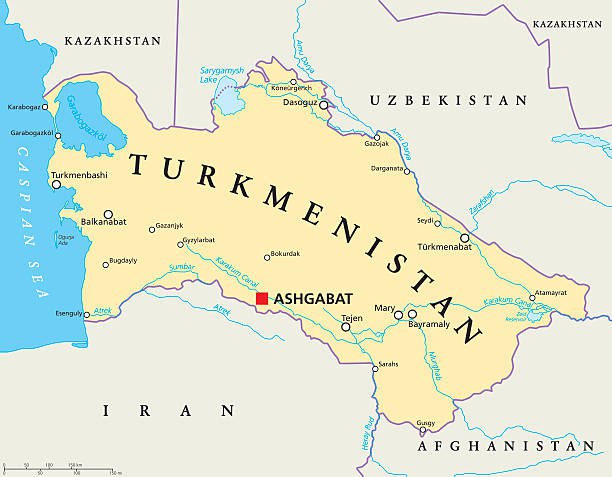
On June 25, Russian Foreign Minister Sergei Lavrov concluded a two-day visit to Ashgabat, where he emphasized expanding economic ties but also made clear Russia’s intention to preserve its cultural and political influence in Turkmenistan. Lavrov announced plans to open a joint Russian-Turkmen university and called for increased youth exchanges.
“We suggest expanding the productive interaction between the Institute of International Relations under Turkmenistan’ Ministry of Foreign Affairs and the MGIMO University under the Russian Foreign Ministry and developing ties between budding diplomats of the both countries with the assistance of our Council of Young Diplomats,” Lavrov said, according to a Russian Foreign Ministry transcript.
In parallel, Lavrov took aim at U.S. regional policy. While condemning U.S. strikes on Iranian nuclear infrastructure under the Trump administration, he nonetheless praised its “realism and common sense,” in contrast to what he termed the Biden administration’s “neoliberal hegemonic plans.”
U.S. Diplomatic Overtures
The United States has also stepped up its outreach. On the same day Lavrov arrived in Ashgabat, U.S. Secretary of State Marco Rubio held a phone call with Turkmen Foreign Minister Rashid Meredov. Two days earlier, Deputy Secretary of State Christopher Landau also spoke with Meredov. According to a State Department readout, Rubio thanked Turkmenistan for facilitating the transit of U.S. citizens out of Iran during the recent Iranian-Israeli crisis and expressed interest in expanding economic and commercial cooperation.
Though historically neutral and cautious in its diplomacy, Turkmenistan has shown recent signs of greater engagement with Western partners. Earlier this year, it launched a gas-swap deal involving Turkey and Iran to supply natural gas to the European Union, a move some analysts suggest may have raised concerns in Moscow.
Strategic Infrastructure and U.S. Interest
Adding to speculation over increased Western interest, on June 23, Nezavisimaya Gazeta reported the opening of a new airport in Jebel, near the Caspian Sea. The airport, built on the site of a former Soviet military airfield, features a 3,200-meter runway and modern navigation systems. The publication suggested that such infrastructure could be of interest to the U.S. military.
Despite recent overtures, Turkmenistan’s relations with Washington have faced challenges. As previously reported by The Times of Central Asia, citizens of Turkmenistan are among those affected by new travel restrictions under an executive order signed by President Donald Trump. The order, which took effect on June 9, aims to curb visa overstays and enhance national security. Critics argue that the measure is overly broad and risks being discriminatory.