• KGS/USD = 0.01144 0%
  • KZT/USD = 0.00194 -0%
  • TJS/USD = 0.10883 0%
  • UZS/USD = 0.00008 0%
  • TMT/USD = 0.28571 0%
  • KGS/USD = 0.01144 0%
  • KZT/USD = 0.00194 -0%
  • TJS/USD = 0.10883 0%
  • UZS/USD = 0.00008 0%
  • TMT/USD = 0.28571 0%
  • KGS/USD = 0.01144 0%
  • KZT/USD = 0.00194 -0%
  • TJS/USD = 0.10883 0%
  • UZS/USD = 0.00008 0%
  • TMT/USD = 0.28571 0%
  • KGS/USD = 0.01144 0%
  • KZT/USD = 0.00194 -0%
  • TJS/USD = 0.10883 0%
  • UZS/USD = 0.00008 0%
  • TMT/USD = 0.28571 0%
  • KGS/USD = 0.01144 0%
  • KZT/USD = 0.00194 -0%
  • TJS/USD = 0.10883 0%
  • UZS/USD = 0.00008 0%
  • TMT/USD = 0.28571 0%
  • KGS/USD = 0.01144 0%
  • KZT/USD = 0.00194 -0%
  • TJS/USD = 0.10883 0%
  • UZS/USD = 0.00008 0%
  • TMT/USD = 0.28571 0%
  • KGS/USD = 0.01144 0%
  • KZT/USD = 0.00194 -0%
  • TJS/USD = 0.10883 0%
  • UZS/USD = 0.00008 0%
  • TMT/USD = 0.28571 0%
  • KGS/USD = 0.01144 0%
  • KZT/USD = 0.00194 -0%
  • TJS/USD = 0.10883 0%
  • UZS/USD = 0.00008 0%
  • TMT/USD = 0.28571 0%
16 December 2025

Cholpon-Ata Launches First-Ever Centralized Sewage System Project

In a significant move toward sustainable tourism and environmental protection, Kyrgyz Minister of Construction Nurdan Oruntaev signed an agreement with firms from China, Turkey, and Uzbekistan to build treatment facilities, pump stations, and sewer collectors in Cholpon-Ata, a city on the northern shore of Lake Issyk-Kul.

The project is being financed by the Asian Development Bank as part of the national “Environmental Management of Issyk-Kul” program. It aims to improve ecological conditions and support sustainable tourism development by establishing a unified sewage system for Cholpon-Ata and nearby settlements, including Bosteri, Kara-Oi, and Baktuu-Dolonotu.

“The project aims to ensure balanced economic development with a focus on innovation and environmentally friendly technologies. Its key objective is to preserve the unique ecosystem of the lake,” the Ministry of Construction stated.

Environmental Measures Ahead of Tourist Season

Ahead of the 2025 tourist season, the Environmental and Technical Supervision Service has announced that resorts without sewage treatment facilities will be barred from operating during the summer months.

“With the start of the season, the load on the lake’s ecosystem increases dramatically, all sanatoriums and holiday homes begin operating, and the number of tourists surges. Issyk-Kul is a closed ecosystem and designated biosphere reserve that requires special protection. According to a presidential decree, facilities in the recreational zone without treatment infrastructure are prohibited from operating,” explained Kych Tentimishov, head of the regional department for environmental and technical supervision at the Ministry of Natural Resources.

Current Sanitation Status

According to ministry data, there are currently 1,127 accommodation facilities operating around Lake Issyk-Kul, including resorts, sanatoriums, and holiday homes. Of these, only 185 have their own sewage treatment systems, and another 208 are connected to a centralized system. The remaining facilities rely on septic tanks.

Authorities are currently conducting inspections to ensure all facilities meet environmental standards, as part of a broader initiative to safeguard one of Kyrgyzstan’s most treasured natural landmarks.


Kazakhstan’s Defense Ministry Confirms Russian Origin of Crashed Drones

Kazakhstan’s First Deputy Minister of Defense, Sultan Kamaletdinov, has confirmed that the unmanned aerial vehicles (UAVs) that crashed in the West Kazakhstan region earlier this year were launched from a Russian test site.

Since January, four unidentified drones have been found in the region. Speaking to journalists on the sidelines of a Senate session, Kamaletdinov shared the preliminary findings from an investigation conducted by the Ministry of Defense.

“More than 90% of the unmanned aerial vehicles discovered in the West Kazakhstan region were located within the boundaries of the 926th Main Flight Test Center of the Russian Federation,” he stated. “The airspace above this site is utilized by the center for UAV testing.”

When asked who had launched the drones, Kamaletdinov responded directly: “The Russian Federation, which is testing its UAVs.”

A String of Drone Incidents

The first reported drone was found on February 18 in the village of Ualy in the Bokeiordinsky district. A second was discovered near the village of Atameken in the Taskalinsky district on March 18. At the end of March, a third UAV was located near the border with Russia, followed shortly by the crash of a fourth drone in the Zhanibek district.

Russian Testing Grounds in Kazakhstan

Russia leases three military test sites in Kazakhstan, including those associated with the 929th State Flight Test Center. These facilities are located in the West Kazakhstan and Atyrau regions and are tied to Russia’s V.P. Chkalov State Flight Test Center (929 GLITS VVS), a key institution for military aviation and weapons testing.

The main base of the Chkalov Center is in Akhtubinsk, Astrakhan region, but its network of test ranges extends across Russia and Kazakhstan, spanning distances from 22 to 800 kilometers from Akhtubinsk.

While the use of Kazakh territory for foreign military testing has long been a sensitive topic, Kamaletdinov’s comments underscore the enduring presence of Russian military operations within Kazakhstan’s borders.

Kyrgyzstan Takes the Lead in Global Snow Leopard Conservation Efforts

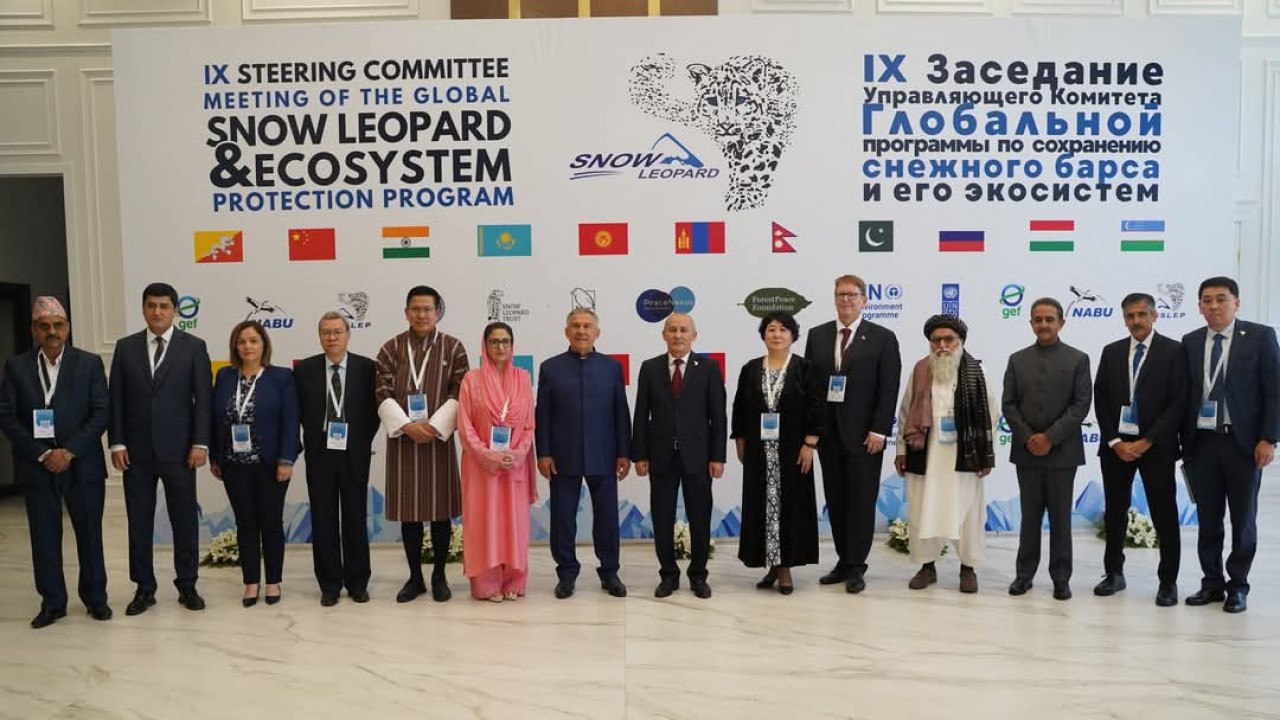
On June 5-6, the Kyrgyz resort city of Cholpon-Ata is hosting the 9th Steering Committee Meeting of the Global Snow Leopard and Ecosystem Protection Program (GSLEP).

The meeting brings together environment ministers from all 12 snow leopard range countries, Afghanistan, Bhutan, China, India, Nepal, Mongolia, Kazakhstan, Kyrgyzstan, Pakistan, Russia, Tajikistan, and Uzbekistan, along with representatives from conservation organizations and international financial institutions. Their goal is to advance conservation and climate action efforts in Asia’s high mountain regions through GSLEP, an intergovernmental alliance founded in Bishkek in 2013.

The snow leopard, classified as endangered, serves as a potent symbol of the ecological and cultural importance of Asia’s mountainous landscapes. Kyrgyzstan has long been at the forefront of international conservation efforts. At the 79th session of the UN General Assembly, the country spearheaded a resolution, supported by other range nations, designating October 23 as International Snow Leopard Day.

The GSLEP Steering Committee convened in Cholpon-Ata to assess ongoing conservation initiatives and define future priorities to protect snow leopards and mountain ecosystems.

Image: mnr.gov.kg

In his opening remarks, Kyrgyzstan’s Minister of Natural Resources, Ecology, and Technical Supervision, Meder Mashiev, said: “For us, the snow leopard is not just a species, it is part of our culture and identity. Its preservation is our common responsibility.”

Mashiev highlighted the country’s recent achievements in conservation, including the initiation of a national snow leopard census, the adoption of SMART monitoring tools, the creation of new protected areas, and the establishment of the Ak Ilbirs (Snow Leopard) Ecological Corridor, an approximately one million-hectare expanse in the northeastern Issyk-Kul region. This corridor connects the Khan-Tengri State Nature Park, the Sarychat-Eertash Nature Reserve, and the Naryn Nature Reserve, providing secure habitats for snow leopards and other endangered species while promoting sustainable resource management.

In December 2023, President Sadyr Japarov signed a decree formally recognizing the snow leopard as a national symbol of Kyrgyzstan.

In a welcome address to participants, President Japarov highlighted Kyrgyzstan’s pivotal role as a mountainous nation (over 90% of its territory consists of highlands) in safeguarding high-altitude ecosystems. He stressed that mountains are not only repositories of natural wealth but also engines for economic growth through green investments. However, he cautioned that these regions face growing threats from overgrazing, forest degradation, and climate change, especially in snow leopard habitats.

President Japarov also called for strengthening GSLEP’s institutional capacity and expanding cross-border conservation initiatives with the support of global environmental funds.

Film About Turkmen Poet Wins International Award in London

The film Magtymguly Pyragy, a collaborative production by filmmakers from Uzbekistan and Turkmenistan, has won the “Audience Recognition” award at the Eurasian Creative Guild (ECG) Film Festival 2025 in London.

The movie tells the story of Magtymguly Pyragy, an 18th-century Turkmen poet and philosopher, focusing on his ideals of peace, love for the homeland, and aspirations for national awakening.

The project was jointly produced by directors, actors, and creative teams from both countries. This collaboration has been widely praised as a powerful symbol of cultural dialogue and brotherhood.

Viewers and jury members commended the film for its compelling visuals, immersive historical atmosphere, and the strong performances delivered by its cast.

Organizers of the festival noted that the film goes beyond artistic achievement, serving as a cultural bridge that fosters mutual understanding and promotes universal values such as freedom, dignity, and humanity.

The ECG Film Festival annually gathers filmmakers from over 20 countries to celebrate and promote cinema from the Eurasian region.

In related celebrations, Turkmenistan hosted a summit of heads of government in October and a conference of culture ministers in May 2024 to commemorate the 300th anniversary of Magtymguly Pyragy’s birth.

Kazakhstan Under Pressure to Address Environmental Crisis

The United Nations Green Climate Fund (GCF) has pledged $280 million to Kazakhstan for environmental projects, underscoring the country’s increasingly urgent ecological challenges. Experts warn that Kazakhstan faces a widening crisis as environmental degradation accelerates.

Toward a “Green” Transition

Minister of Ecology and Natural Resources Yerlan Nyssanbayev announced that the GCF will allocate substantial funding to Kazakhstan to support initiatives in renewable energy, electric transport development, and the adoption of low-carbon industrial technologies. “These investments will accelerate the country’s transition to a sustainable, environmentally friendly economy,” Nyssanbayev stated.

The minister said that Kazakhstan prepared a national program for GCF funding in 2024, comprising seven major initiatives. These included reducing greenhouse gas emissions in the energy sector, strengthening rural water supply systems, modernizing livestock farms, and promoting private-sector green financing. The program’s total budget exceeds $1 billion, with $630 million potentially financed by the GCF.

Additionally, the European Bank for Reconstruction and Development (EBRD) continues to back renewable energy projects in Kazakhstan. Eleven projects with a combined capacity of 330 MW are planned by 2027; nine have already secured financing.

A Mounting Environmental Toll

Kazakhstan continues to struggle with serious environmental challenges, many rooted in the Soviet-era legacy, and others emerging from modern development pressures. The country faces desertification, flooding, frequent wildfires, and escalating urban air pollution, particularly in cities like Almaty, Pavlodar, and Karaganda.

On June 5, the government announced the formation of a Biodiversity Protection Fund at a forum in Astana. Akylbek Kurishbayev, President of the National Academy of Sciences, emphasized the urgency of regional collaboration in biodiversity conservation amid intensifying climate and anthropogenic pressures.

Deputy Minister Nurlan Kurmalayev highlighted biodiversity preservation as a key component of environmental security and sustainable land use, calling for cross-border cooperation.

In parallel, the national initiative “Green Kazakhstan” is advancing afforestation efforts across urban and rural areas, alongside waste management programs, ecosystem restoration, energy efficiency campaigns, and public education on environmental stewardship.

Environmental Disaster Zones: The Caspian and Aral Seas

Two of Kazakhstan’s most pressing ecological crises involve the shrinking Caspian and Aral Seas.

The Caspian Sea’s water levels are falling dramatically. According to the Ministry of Ecology and Natural Resources, levels in 2024 are expected to drop by 22 cm in the northeast and 29 cm in the eastern Kazakh sector compared to 2023. Scientists warn of continued decline due to reduced inflows from the Volga and Ural rivers and rising global temperatures. TCA has previously reported about mass die-outs of Caspian seals in recent years.

Vadim Ni, founder of the Save the Caspian Sea movement, described the crisis as triple-faceted, climate, ecological, and economic. “Its level is falling at an unprecedented rate, 2 meters over the past 20 years. By century’s end, up to one-third of its surface could be lost,” he said, warning that the shallow northern shelf, vital to the ecosystem, is especially at risk.

Pollution, overfishing, and unchecked oil extraction are cited as critical threats. In April 2025, Mazhilis Deputy Sergei Ponomarev addressed a parliamentary inquiry to Prime Minister Olzhas Bektenov, reporting a 31,000 sq km reduction in the Caspian’s surface area, equivalent to the size of Belgium, since 2005. Caspian seal populations have fallen from one million to 100,000, and sturgeon stocks have declined by 90% in four decades. Ponomarev warned that continued degradation could displace up to five million people by 2040.

Many fear the Caspian may follow the trajectory of the Aral Sea, which has endured catastrophic shrinkage since the mid-20th century. Once the world’s fourth-largest lake, much of the former Aral is now the Aralkum Desert. Kazakhstan has undertaken numerous efforts to mitigate desertification in the north Aral region.

Despite efforts to coordinate with regional neighbors like Uzbekistan, meaningful joint action has been elusive. Most support has come from international partners. Kazakhstan has launched a new phase in its long-term program to support affected communities and ecosystems in the Aral region.

Opinion: In Kazakhstan’s Nuclear Race, Financial Muscle Will Decide the Winner

The most closely watched development in Kazakhstan this June is the decision over which foreign company will be awarded the contract to build the country’s first nuclear power plant. According to earlier announcements, the Kazakh Atomic Energy Agency is expected to make its decision by the end of the month. Bidders from South Korea, France, Russia, and China remain in contention, although recent expert commentary suggests that earlier assumptions favoring Russia’s Rosatom may no longer hold.

Competing Interests Beneath the Surface

In Kazakhstan, there appears to be an internal struggle between two strategic camps with opposing visions for the project’s future. Each faction has its own backers, deeply embedded in the country’s nuclear ambitions.

One group, primarily composed of financial officials and economic policymakers, is advocating for the least expensive option. Their preferred bidder is China’s China National Nuclear Corporation (CNNC), which is offering the lowest project cost, backed by Chinese bank financing. This group is influenced not only by CNNC’s competitive pricing but also by China’s broader economic leverage over Kazakhstan.

The second group consists of nuclear professionals, scientists, engineers, and technicians, who prioritize reliability and operational familiarity. Their preference leans toward Rosatom, given Russia’s historical involvement and established presence in Kazakhstan’s nuclear sector. This technical camp is widely viewed as a de facto ally of the Kremlin, as Rosatom’s participation would extend Moscow’s long-term strategic influence in Central Asia. Given the 50-60-year operational lifespan of such reactors, this influence would be enduring.

Though this tension remains speculative, patterns observed over the past decade suggest a real and ongoing tug-of-war.

No Thermal Power, No Nuclear Power?

At the end of May, media in Kazakhstan reported that Russia might not fulfill its commitments under a 2023 memorandum signed during President Vladimir Putin’s visit to Astana. The agreement with President Kassym-Jomart Tokayev concerned the construction of three coal-fired thermal power plants (TPPs) in Kokshetau, Semey, and Ust-Kamenogorsk, with Russian energy giant Inter RAO designated as the turnkey builder. The total cost was estimated at $2.8 billion.

However, in April 2024, First Deputy Prime Minister Roman Sklyar acknowledged financial hurdles. While design and preliminary work continue, difficulties remain in subsidizing equipment interest rates. Sklyar noted that a change in investor may be considered, and the situation could be resolved within a month.

Oil and gas expert Olzhas Baidildinov has speculated that the nuclear power plant project may be bundled with the thermal plants as a “social burden”, a condition that CNNC might accept more readily than Rosatom. “If CNNC is chosen to build the nuclear power plant, the thermal plants could follow as part of the package,” Baidildinov suggested via his Telegram channel.

Sergey Agafonov, head of the Kazakhstan Association of Energy Supply Organizations, also sees the nuclear and thermal plant projects as interconnected, particularly with regard to financing.

Debunking the Price Myth

The technical community has responded swiftly to growing narratives about CNNC’s supposedly unbeatable offer to construct the nuclear plant for $5.5 billion, a claim spread via Chinese sources.

Nuclear physicist Sayabek Sakhiev, Director General of the Institute of Nuclear Physics, called these figures implausible. Citing global construction costs, he estimated a realistic price range of $10-15 billion for such a facility. He noted that even a Chinese-built plant in Pakistan, completed in 2013, cost $9.1 billion, equivalent to $12.5 billion today after adjusting for inflation.

“Announcing that China can build 2.4 GW of nuclear capacity in Kazakhstan for $5.5 billion is simply untrue,” Sakhiev emphasized.

A Decision Rooted in Financing Power

Ultimately, the decision may not hinge on technical reliability or long-term geopolitical considerations, but on which bidder can shoulder the heaviest financial burden. If Kazakhstan has indeed conditioned the nuclear plant contract on the simultaneous construction of three coal-fired TPPs, a deeply unfashionable investment globally, then the financially stronger Chinese side is likely to emerge victorious.

In the end, the race for Kazakhstan’s nuclear future may be decided not by reactors, but by balance sheets.


The views expressed in this article are those of the author and do not necessarily reflect the official policy or position of the publication, its affiliates, or any other organizations mentioned.