• KGS/USD = 0.01144 0%
  • KZT/USD = 0.00194 -0%
  • TJS/USD = 0.10877 -0%
  • UZS/USD = 0.00008 0%
  • TMT/USD = 0.28571 0%
  • KGS/USD = 0.01144 0%
  • KZT/USD = 0.00194 -0%
  • TJS/USD = 0.10877 -0%
  • UZS/USD = 0.00008 0%
  • TMT/USD = 0.28571 0%
  • KGS/USD = 0.01144 0%
  • KZT/USD = 0.00194 -0%
  • TJS/USD = 0.10877 -0%
  • UZS/USD = 0.00008 0%
  • TMT/USD = 0.28571 0%
  • KGS/USD = 0.01144 0%
  • KZT/USD = 0.00194 -0%
  • TJS/USD = 0.10877 -0%
  • UZS/USD = 0.00008 0%
  • TMT/USD = 0.28571 0%
  • KGS/USD = 0.01144 0%
  • KZT/USD = 0.00194 -0%
  • TJS/USD = 0.10877 -0%
  • UZS/USD = 0.00008 0%
  • TMT/USD = 0.28571 0%
  • KGS/USD = 0.01144 0%
  • KZT/USD = 0.00194 -0%
  • TJS/USD = 0.10877 -0%
  • UZS/USD = 0.00008 0%
  • TMT/USD = 0.28571 0%
  • KGS/USD = 0.01144 0%
  • KZT/USD = 0.00194 -0%
  • TJS/USD = 0.10877 -0%
  • UZS/USD = 0.00008 0%
  • TMT/USD = 0.28571 0%
  • KGS/USD = 0.01144 0%
  • KZT/USD = 0.00194 -0%
  • TJS/USD = 0.10877 -0%
  • UZS/USD = 0.00008 0%
  • TMT/USD = 0.28571 0%
16 December 2025

From Overtime to Downtime: Tracking Work and Leisure in Kazakhstan

Analysts at Finprom.kz have examined average working hours across different employment sectors in Kazakhstan, along with how people typically spend their leisure time.

Standard Hours and Overtime

As of the first quarter of 2025, Kazakhstan had 9.3 million registered employed citizens, a 1.3% increase compared to the same period last year. The majority, approximately 7.7 million people, work standard hours ranging from 36 to 40 per week, representing a 7.5% year-on-year increase.

Conversely, the number of people working overtime declined to 1.2 million, a 4.9% decrease.

On average, Kazakhstanis now work 39 hours per week, an increase of one hour from last year. Men work slightly more, averaging 40 hours weekly, while women work around 38. Employees are more likely to work overtime, logging an average of 41 hours per week, compared to 36 hours for the self-employed.

Most and Least Time-Intensive Sectors

Mining remains the sector with the longest working week, averaging 43 hours. Those in wholesale and retail trade, transport, logistics, and administrative services average 42 hours. Employees in manufacturing, water supply and waste management, construction, and hospitality work about 41 hours weekly.

At the other end of the spectrum, workers in agriculture, forestry, and fishing average 33 hours per week. Those in finance, insurance, and education work around 39 hours.

Professions with the Heaviest Workload

Among occupational groups, industrial, construction, and transport workers, as well as operators and drivers, top the list with an average of 42 hours per week. Trade and service sector employees follow closely at 41 hours. Farmers, fishermen, and unskilled laborers average 36 hours, while managers, civil servants, and technical staff work around 40 hours. Specialists average 39 hours weekly.

Approximately 332,800 Kazakhstanis work less than a standard week, half the number from the previous year. The most common reasons include lack of work (122,800 people), reduced hours (56,700), sufficient income (34,200), employer decisions (31,500), and flexible schedules (18,300).

How Kazakhstanis Spend Their Day

According to official 2024 statistics, the average Kazakhstani spends most of their weekday attending to personal needs such as sleep, hygiene, and meals, totaling 12 hours and 6 minutes on workdays and 13 hours and 57 minutes on weekends.

Sleep takes up the largest share: 8 hours and 48 minutes on weekdays and more than 10 hours on weekends. Meals and drinks occupy around 1 hour and 49 minutes during the week and 2 hours and 5 minutes on days off. Hygiene and self-care account for approximately 1 hour and 21 minutes on weekdays and 1 hour and 33 minutes on weekends.

Work ranks second in terms of daily time use, averaging 5 hours and 16 minutes on weekdays and just 36 minutes on weekends.

Leisure activities—including cultural events, sports, reading, and media consumption—rank third, taking up 2 hours and 40 minutes on weekdays and nearly 4 hours on weekends.

Kazakhstanis also devote considerable time to household responsibilities, especially on weekends, spending about 3 hours and 32 minutes on unpaid domestic work and family care.
Iraq Seeks Alternative Gas Import Routes Through Turkmenistan Amid Sanctions Challenge

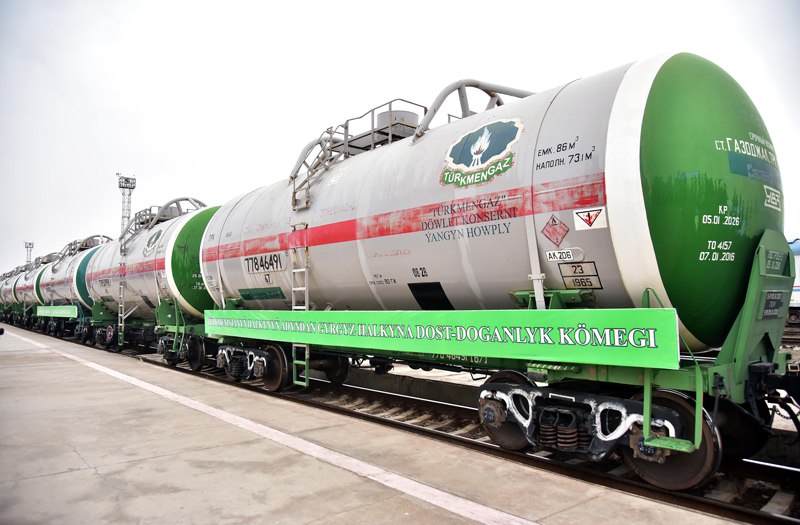
Iraq is intensifying efforts to implement a long-discussed agreement on natural gas imports from Turkmenistan, seeking to stabilize its energy sector and diversify supply sources. According to Ahmed Musa, spokesperson for Iraq’s Ministry of Energy, the plan involves importing around 20 million cubic meters of gas per day through pipelines connecting Turkmenistan and Iran.

The route is intended to offset a shortfall caused by reduced gas flows from Iran, which currently supplies approximately one-third of Iraq’s energy needs.

However, the implementation of this deal has faced significant hurdles. Chief among them is the issue of payments: the Trade Bank of Iraq (TBI) has been unable to issue a letter of credit due to U.S. sanctions on Iran, through whose territory the gas must transit.

In an effort to resolve the deadlock, Iraqi Energy Minister Ziad Ali Fadel visited Turkmenistan to explore potential mechanisms to bypass the sanctions and operationalize the agreement.

The foundations of this partnership were laid in 2023, when Iraq and Turkmenistan signed a memorandum of understanding, agreeing to continue negotiations on the logistics of fuel transit via Iran. Progress followed in November 2023, when both sides signed a protocol outlining the key commercial terms. Under the deal, Iraq is set to receive 45 billion cubic meters of gas over five years, equivalent to 9 billion cubic meters annually.

The arrangement is structured as a swap: Turkmenistan will deliver gas to Iran, which in turn will transfer an equivalent volume to Iraq.

Further advancing bilateral ties, Turkmenistan’s President Serdar Berdimuhamedov discussed gas supplies and the potential opening of an Iraqi embassy in Ashgabat with Iraqi Prime Minister Mohammed Shia Al-Sudani in March 2025. The talks underscored the growing strategic importance of energy cooperation between the two nations.

A Strategic Energy Lifeline

Iraq’s reliance on natural gas to power its electricity grid makes securing reliable fuel sources a national priority. Given the country’s frequent power shortages and its current dependence on Iranian gas, diversifying suppliers is seen as crucial for both energy security and political autonomy.

Turkmen gas is viewed as a strategically vital resource that could help stabilize Iraq’s energy sector and reduce vulnerability to geopolitical disruptions. The five-year agreement with Ashgabat aims to establish predictable, long-term supplies.

Nevertheless, full-scale gas deliveries have yet to begin. The main obstacle remains the inability to process payments due to U.S. sanctions on Iran. Baghdad must either secure exemptions or devise alternative payment mechanisms to activate the contract.

Simultaneously, technical discussions continue among Iraq, Iran, and Turkmenistan on ensuring reliable transport and infrastructure under the swap scheme. If these issues are resolved, Iraq could gain a dependable new energy partner, while Turkmenistan would expand its reach into a key southern market, strengthening both nations’ strategic positions.

Tokayev Backs Expansion of UN Security Council for Greater Global Representation

Kazakhstan’s President Kassym-Jomart Tokayev has called for expanding the United Nations Security Council to better reflect contemporary global dynamics. Speaking at the Astana International Forum (AIF), he emphasized that reforming the UN’s most powerful body is essential to restoring trust and maintaining international peace and security.

The Security Council currently consists of 15 members, five permanent (the United States, China, Russia, France, and the United Kingdom) and ten non-permanent members elected for two-year terms by the UN General Assembly.

“Kazakhstan supports the expansion of the UN Security Council to include broader regional representation,” Tokayev stated. “This year, we celebrate the 80th anniversary of the United Nations. Founded in 1945 by 51 states in the aftermath of a devastating global war, the UN envisioned a more peaceful and secure world. Today, it has grown to 193 member states.”

Tokayev criticized the Council’s structure as outdated. “The gap between institutional design, frozen in the post-World War II era, and modern realities undermines both trust in the UN and its effectiveness. Critical decisions affecting billions should not rest in the hands of only a few,” he argued.

He called for a structural overhaul of the Council to ensure its continued relevance, emphasizing that major powers must recommit to the foundational principles of peace, security, and respect for the territorial integrity of all nations.

Highlighting the scale of current global unrest, Tokayev noted that 52 countries were in active armed conflict last year. The economic toll from these hostilities reached an estimated US$19 trillion, approximately 13.5% of global GDP.

“Beyond the staggering numbers lies a more troubling reality,” he said. “Modern conflicts are becoming longer, more complex, and increasingly involve non-state actors. Many are rooted in deep historical and structural contradictions.”

Tokayev emphasized the growing role of so-called “middle powers” in shaping a fairer and more inclusive world order. “Middle powers must be ready to assume greater responsibility in rethinking global governance,” he concluded.

As previously reported by The Times of Central Asia, the 2025 Astana International Forum, themed “Uniting Minds, Shaping the Future,” gathered global leaders, international organizations, investors, businesspeople, and policy experts in Kazakhstan’s capital.

Tashkent-Moscow Flight Diverted to Kazan Following Drone Attack Near Russian Capital

A Tashkent-Moscow passenger flight was forced to make an emergency landing in the Russian city of Kazan early Tuesday morning after a drone attack near Moscow led to a temporary closure of all the capital’s airports. The incident was reported by the Russian Telegram news channel Ostorozhno, Novosti.

Aeroflot flight SU1871 departed Tashkent at approximately 3:00 a.m. (local time) on May 28. Unable to land in Moscow due to the shutdown of the capital’s airspace, the plane was diverted to Kazan, arriving there at 4:55 a.m.

Passengers told Ostorozhno, Novosti they remained confined inside the aircraft for hours with no updates on when they would be allowed to continue their journey. “We were not given snacks, and no one told us what was going on,” said one passenger. “We heard the airspace is now open, but we’re still waiting.”

Initially, there were reports that passengers would disembark in Kazan, but airline staff later instructed them to stay onboard pending further guidance. Eventually, travelers were informed their flight would be delayed for at least 12 more hours.

Aeroflot representatives claimed crew fatigue as the reason for the delay, noting the crew had exceeded their regulated working hours and required rest. Additionally, Kazan airport authorities reportedly refused to permit passenger disembarkation due to overcrowding, causing further delays and confusion.

A Broader Pattern of Risk

The diversion follows another major aviation incident in the region just five months ago. On December 25, 2024, an Azerbaijani Embraer 190 aircraft traveling from Baku to the Russian city of Grozny crashed near Aktau, Kazakhstan, during what authorities suspect was a drone-related incident. The crash killed all 38 people on board, including both pilots.

Russia claimed that Ukrainian drones were active in the area at the time. Although Russian President Vladimir Putin offered condolences and apologized to Azerbaijani President Ilham Aliyev, he did not acknowledge that the aircraft may have been struck by Russian fire.

Kazakhstan is leading the investigation, supported by experts from Azerbaijan, Russia, and Brazil, the aircraft’s manufacturer. The International Civil Aviation Organization (ICAO), a United Nations agency based in Canada, is also participating.

Preliminary findings from the crash investigation align with early witness accounts and include data recovered from the plane’s black boxes, which were analyzed in Brazil.

Mounting Safety Concerns

These incidents have heightened concerns about the safety of civilian aviation in the region, particularly as drone warfare intensifies in areas adjacent to Central Asia. Both airlines and passengers are urging governments to adopt stronger safety protocols and to be more transparent in communicating risks and responses during emergencies.

Two More Grandmasters for Kazakhstan, an Emerging Chess Power

A 14-year-old boy from Kazakhstan is awaiting confirmation that he is the country’s youngest chess grandmaster after he improved his rating at a tournament in the United Arab Emirates this month. Also, a 21-year-old woman is poised to become Kazakhstan’s second female grandmaster after the same contest.

The international results come as Kazakhstan pushes to develop homegrown chess talent and impart intellectual skills to young people, introducing chess into the curricula of hundreds of schools, training chess teachers and even supporting chess federations in some Asian countries, including Oman, Nepal, Cambodia, Jordan, Bhutan, Sri Lanka and Pakistan.

“Trainers, methods, equipment for chess classes – all this has become an export product of Kazakhstan,” the Kazakhstan Chess Federation said Wednesday as its congress of 50 delegates met in Astana to review 2024 accomplishments and plan for the future.

Kazakhstani player Edgar Mamedov, who turns 15 on June 18, achieved a rating of more than 2500 because of his results at the Sharjah Masters International Chess Championship, according to the federation. The 2500 rating is one of the requirements to secure the grandmaster title.

“All that remains is to wait for the official confirmation of the title,” it said.

Confirmation would come at the next meeting of the presidential council of FIDE, the Switzerland-based governing body of chess. The last meeting was held in April.

A 16-year-old player from Kazakhstan, Aldiyar Ansat, was close to grandmaster status at the start of the year and was touted as the frontrunner to become the Central Asian nation’s youngest GM. But Mamedov got there first.

The tournament in Sharjah also featured a woman from Kazakhstan who secured the grandmaster rating after a strong performance. Like Mamedov, Bibisara Asaubayeva is awaiting official confirmation that she has the title. She will be Kazakhstan’s second female grandmaster after Zhansaya Abdumalik.

Asaubayeva had the best result among women in Sharjah, beating Chinese player Zhu Jiner, the winner of the Women’s Grand Prix of the 2024–25 season, by one point, and Divya Deshmukh, the winner of the 2024 Chess Olympiad as part of the Indian team, by one and a half points, according to Kazakh chess officials.

“Finally, GM,” Asaubayeva wrote on Instagram after she got the grandmaster rating. She added a smiling emoji with sunglasses.

Kazakhstan currently has nine confirmed and active grandmasters, according to FIDE. One of them, Rinat Dzhumabayev, also participated in the May 17-25 contest in Sharjah. A total of 64 grandmasters and 17 international masters competed.

Player Nurassyl Primbetov, born in Kazakhstan in 2013, played the match of his life at a tournament in Astana last year. The young boy lost to former child prodigy and world No. 1 Magnus Carlsen.

Reflecting on his country’s chess accomplishments, Timur Turlov, president of the Kazakhstan Chess Federation, said the federation organized 92 tournaments in 2024, a threefold increase compared to the previous year. Chess players from Kazakhstan won 160 medals, including 55 gold, in 2024, Turlov said in a January post on the Medium platform.

“Chess plays a significant role in connecting countries and even continents, and I am happy to see Kazakhstan emerging as a leading country in this process,” Turlov said.

Kazakhstan’s Diplomatic Dance: Securing Power in Turbulent Times

For Kazakhstan, strengthening ties with neighboring Central Asian states – as well as with Russia, China, and the West – is a top foreign policy priority. That, however, does not mean that the energy-rich nation is not also seeking to build stronger relations with other actors on the international stage.

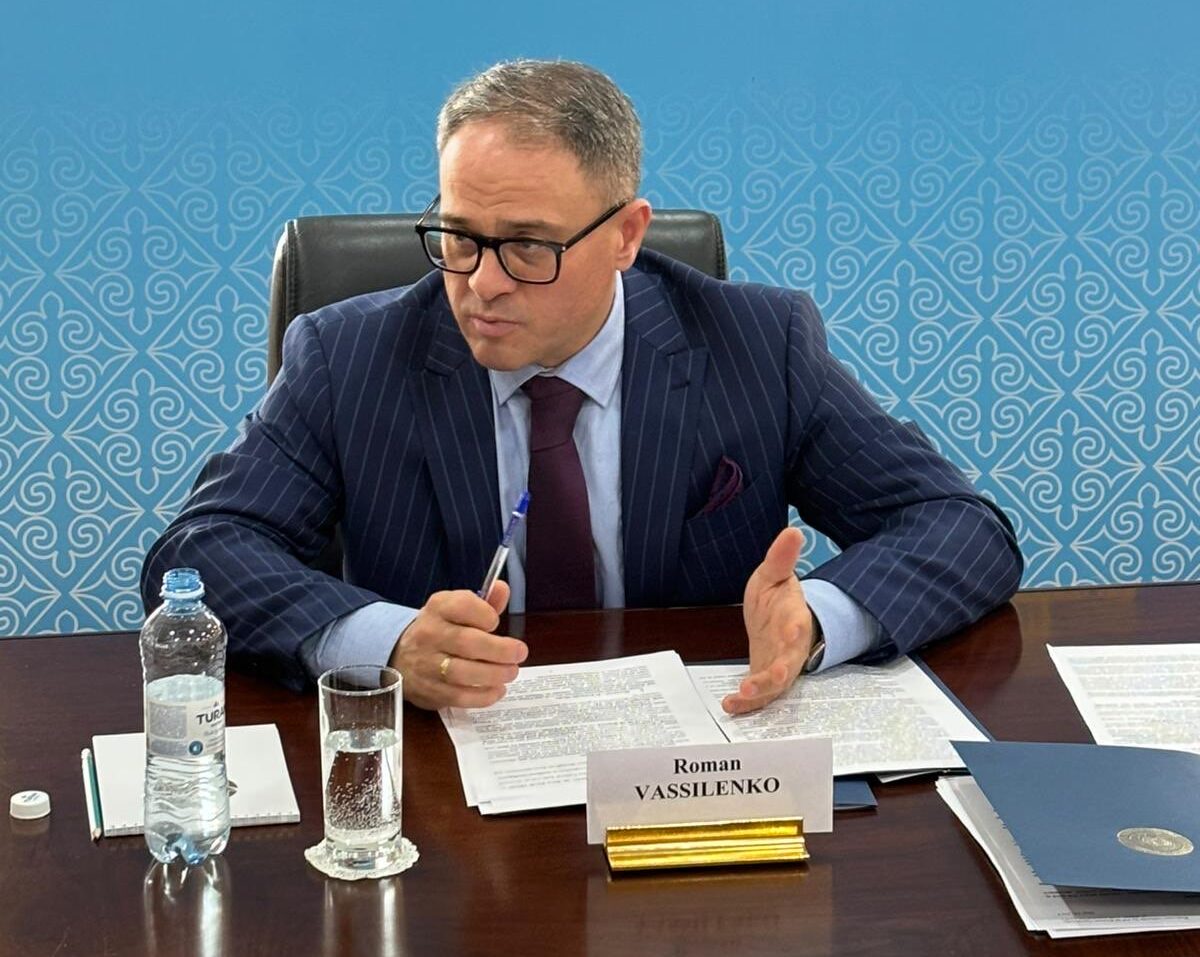
The largest regional country views itself as an aspiring middle power. As such, it intends to continue pursuing what Roman Vassilenko, Kazakhstan’s Deputy Foreign Ministry, describes as a “balanced, constructive and pragmatic foreign policy.” Yet, in an increasingly turbulent world, this approach comes with its own sets of challenges. One of them is undoubtedly the construction of the nation’s first nuclear power plant.

Kazakhstan’s President Kassym-Jomart Tokayev has repeatedly stated that an international consortium with participation by companies from China, France, Russia, and South Korea should be responsible for that. But how realistic is that under the current geopolitical circumstances?

“No decision of the composition of the consortium has been made yet, although we are actively negotiating with the companies interested in the construction,” Vassilenko told The Times of Central Asia, emphasizing that Tokayev has stressed that Kazakhstan will need more than one nuclear power plant.

That is why, in Vassilenko’s view, there will likely be different types of consortiums building different types of nuclear plants. Such an approach perfectly illustrates the Central Asian nation’s “multi-vector” foreign policy.

“As the ninth largest country in the world, with only 20 million people, and neighboring such superpowers as Russia and China, we can naturally depend only on the best diplomacy we can deploy,” Vassilenko stressed.

For that reason, Kazakhstan has initiated the Astana International Forum (AIF) – an event that reflects today’s interconnected global challenges, ranging from energy security and the climate crisis to technological innovation, sustainable development, and geopolitical cooperation. This year, the AIF – taking place in the Kazakh capital on May 29-30 – will host leaders from nations such as Rwanda, Qatar, Albania, Croatia, and North Macedonia, among others.

The fact that Astana will host leaders from several Balkan countries clearly suggests that Kazakhstan plans to strengthen ties with this part of Europe. According to Vassilenko, Kazakhstan’s policymakers view the Balkans as a “promising market” which is why the Central Asian nation plans to establish direct flights to Serbia later this year.

“We already have direct flights to Montenegro, and we aim to connect Kazakhstan with other European countries as well,” Vassilenko said, adding that his nation has recently opened embassies in Albania and North Macedonia.

This approach demonstrates that Astana sees not only the European Union but also the EU candidate countries as potential partners. Still, for Kazakhstan – a major oil and gas producer – energy plays an important role in its foreign policy strategy. Given that the Central Asian state supplies large quantities of crude oil and petroleum products to Europe via Croatia, it’s no surprise that the Prime Minister of the former Yugoslav Republic, Andrej Plenkovic, is among the major speakers at the Astana International Forum.

Italian Prime Minister Giorgia Meloni’s visit to Kazakhstan, which coincides with the Astana International Forum, also signals that Astana is eager to expand its business ties with the European Union. That, however, does not mean that it will neglect its relations with its giant neighbors – Russia and China.

According to Vassilenko, foreign direct investment in Kazakhstan also reflects the country’s foreign policy priorities. Last year, China replaced Russia as Kazakhstan’s biggest trade partner, although Russia became the top investor in the Kazakh economy. The Central Asian nation’s policymakers, therefore, cannot afford to ignore geography, as it plays a possibly crucial part in their foreign policy.

Roman Vassilenko; image: TCA, Nikola Mikovic

Having participated in multiple summits with major global players such as the European Union, the United States, China, the Gulf countries, India, and others, Kazakhstan is seeking to strengthen its role as a middle power in the international arena. In other words, by continuing to leverage its energy resources while embracing innovation and international cooperation, Kazakhstan is aiming to reinforce its position as a key player in Central Asia and beyond.

“If we use analogies from the realm of medicine and health, while great powers can be seen as bones holding the carcass of our world, the middle powers can be termed as cartilages without which bone rotations would be impossible,” Vassilenko concluded.

The problem, however, is that in the current tense geopolitical environment, both Kazakhstan and other middle powers are not immune to global economic shocks, including inflation and investor uncertainty. Overcoming these challenges will be critical for maintaining stability and fostering long-term growth.

Finally, by strengthening regional cooperation and exploring new markets, Kazakhstan will likely aim to ensure stability and continue its growth, solidifying its role as an important player on the world stage.


Follow our special coverage on the Astana International Forum here.