• KGS/USD = 0.01143 -0%
  • KZT/USD = 0.00192 -0%
  • TJS/USD = 0.10820 0.19%
  • UZS/USD = 0.00008 0%
  • TMT/USD = 0.28575 0%
  • KGS/USD = 0.01143 -0%
  • KZT/USD = 0.00192 -0%
  • TJS/USD = 0.10820 0.19%
  • UZS/USD = 0.00008 0%
  • TMT/USD = 0.28575 0%
  • KGS/USD = 0.01143 -0%
  • KZT/USD = 0.00192 -0%
  • TJS/USD = 0.10820 0.19%
  • UZS/USD = 0.00008 0%
  • TMT/USD = 0.28575 0%
  • KGS/USD = 0.01143 -0%
  • KZT/USD = 0.00192 -0%
  • TJS/USD = 0.10820 0.19%
  • UZS/USD = 0.00008 0%
  • TMT/USD = 0.28575 0%
  • KGS/USD = 0.01143 -0%
  • KZT/USD = 0.00192 -0%
  • TJS/USD = 0.10820 0.19%
  • UZS/USD = 0.00008 0%
  • TMT/USD = 0.28575 0%
  • KGS/USD = 0.01143 -0%
  • KZT/USD = 0.00192 -0%
  • TJS/USD = 0.10820 0.19%
  • UZS/USD = 0.00008 0%
  • TMT/USD = 0.28575 0%
  • KGS/USD = 0.01143 -0%
  • KZT/USD = 0.00192 -0%
  • TJS/USD = 0.10820 0.19%
  • UZS/USD = 0.00008 0%
  • TMT/USD = 0.28575 0%
  • KGS/USD = 0.01143 -0%
  • KZT/USD = 0.00192 -0%
  • TJS/USD = 0.10820 0.19%
  • UZS/USD = 0.00008 0%
  • TMT/USD = 0.28575 0%
13 December 2025

EDB Evaluates Environmental Projects to Combat Air Pollution in Bishkek

The Bishkek municipality and the Eurasian Development Bank’s (EDB) Fund for Digital Initiatives are considering two major environmental projects to tackle air pollution and enhance the quality of life in Kyrgyzstan’s capital.

The proposals were reviewed during a meeting on May 21 between Bishkek Mayor Aibek Junushaliyev and Tigran Sargsyan, Deputy Chairman of the EDB Management Board and head of the EDB’s Fund for Digital Initiatives.

According to the municipal government, the first project involves establishing a comprehensive air quality monitoring system based on a digital platform. The system is designed to address the city’s chronic air pollution by providing government bodies with real-time data on key emission sources. It would also enable assessments of contributions from industrial activities and natural background pollutants.

The second project envisions an intelligent transport monitoring system aimed at improving traffic flow modeling and management. The goal is to optimize the city’s public transport network, reduce congestion, and enhance urban mobility, all while improving environmental conditions.

Transport and Air Quality: Pressing Challenges for Bishkek

Traffic congestion and outdated public transport are among the most pressing issues in Bishkek, a city undergoing rapid population growth. According to the Ministry of Natural Resources, Ecology, and Technical Supervision, motor vehicles are responsible for 27% of the city’s air pollution. With over 600,000 registered vehicles, nearly double the city’s road infrastructure capacity of 350,000, Bishkek’s air quality continues to decline.

More than 333,000 of these vehicles are over 15 years old, contributing significantly to emissions. Nonetheless, the city has taken steps to modernize its public transport fleet, including replacing aging diesel-powered buses with larger, eco-friendlier models powered by liquefied petroleum gas (LPG).

Air pollution is especially severe during the winter months when coal burning for household heating, accounting for 40% of the city’s emissions, surges. As a result, Bishkek frequently ranks among the world’s top 10 most polluted cities on IQAir’s global air quality index.

The proposed EDB-backed projects represent a potential turning point for Bishkek’s environmental management strategy, offering digital tools and policy solutions to address longstanding public health and urban planning challenges.

How the Welfare of Kazakhstani Citizens Has Changed Over the Past Five Years

While official data shows that the monetary income of Kazakhstani citizens has nearly doubled over the past five years, many citizens report that their day-to-day experiences do not align with the statistics. Analysts at Ranking.kz conducted a study comparing official income data with real purchasing power, highlighting a complex and often uneven picture of economic well-being across the country.

Average vs. Median Income: A Growing Gap

According to the National Statistics Bureau, the average annual per capita income in 2024 exceeded 1.3 million KZT (approximately $2,600), up from 692,000 KZT ($1,384) in 2019, an almost twofold increase. This translates to an average monthly income of 110,700 KZT ($221). However, this figure includes more than just wages: pensions contribute 16.6%, entrepreneurial income 9.2%, and social support less than 4%.

Median income, which more accurately reflects the economic position of the “typical” Kazakhstani, tells a more modest story. In 2024, the median monthly income stood at just 93,300 KZT ($186), and in half of the country’s regions, incomes fell below this level. For example, in the populous Turkestan Region, the median income was just 69,600 KZT ($139). In contrast, major urban centers like Almaty and Astana recorded median incomes more than a third higher than the national average, above 126,000 KZT ($252).

Rising Nominal Wages, Stagnant Real Gains

Over five years, the average nominal monthly wage grew from 186,800 KZT ($374) to 402,600 KZT ($805). Yet, in real terms, after adjusting for inflation, income growth has been subdued. Between 2022 and 2024, real income rose by only 2.7%, compared to 9.1% in 2019.

Inflation has been the primary factor undermining purchasing power. In 2023 alone, inflation surged to 14.5%, effectively eroding most wage gains.

Sectoral Disparities and the Modal Wage

Finance, mining, and IT remain the highest-paying sectors. In 2024, financial sector professionals earned an average of 857,200 KZT ($1,714), followed by mining specialists at 853,100 KZT ($1,706) and information and communications professionals at 715,900 KZT ($1,432). These sectors also saw real income increases, 19.4% in IT and 14.2% in finance.

At the other end of the spectrum, agriculture, water supply, and cultural sectors continue to be among the lowest-paying. Salaries in these fields range from 262,000 to 278,000 KZT ($524-$556). Despite nominal wage increases, the income gap with higher-paying sectors remains substantial. The education sector saw marginal improvement, but real wages declined by 1.2% in 2024.

Notably, the most commonly earned (modal) wage in 2024 was just 97,600 KZT ($195), only 12,600 KZT ($25) above the national minimum wage. This figure represented just 24.2% of the average nominal wage, underscoring a wide disparity between statistical averages and the reality for most workers.

Do the Numbers Reflect Reality?

On paper, Kazakhstan’s income statistics appear encouraging: rising wages, a reduction in social vulnerability, and steady economic indicators. Yet, when inflation, regional inequalities, and the uneven structure of earnings are considered, a more nuanced picture emerges.

The core challenge remains unchanged, ensuring a sustained increase in purchasing power, not just nominal income figures. For many Kazakhstanis, true economic well-being is still a work in progress.

M360 Eurasia Opens in Tashkent with Emphasis on Digital Growth

The GSMA M360 Eurasia conference officially opened on May 21 in Tashkent, marking the event’s first ever appearance in Uzbekistan. The gathering brought together telecommunications leaders, digital experts, and policymakers to explore how mobile technologies can fuel economic development and enhance quality of life across Eurasia.

A key highlight of the opening day was the launch of the GSMA Mobile Economy Eurasia 2025 report. According to the findings, mobile services and technologies contributed $220 billion to the Eurasian economy in 2024, equivalent to 7.7% of the region’s GDP. That figure is projected to rise to $270 billion by 2030, comprising 8.3% of GDP.

GSMA Director General Vivek Badrinath addressed the opening ceremony, underscoring the economic impact of connectivity. “Connectivity is a powerful engine of economic growth and a catalyst for transforming businesses and public services across the region,” he said. Badrinath emphasized that mobile technologies are already driving efficiency across Eurasia and will play an even greater role in the years ahead.

Bridging the Digital Divide

The first day’s sessions focused on mobile internet expansion, 5G deployment, and the application of artificial intelligence (AI) in daily life. Speakers presented data and personal stories illustrating both achievements and obstacles.

A recurring theme was the disparity between mobile coverage and actual usage. While mobile internet now reaches two-thirds of the population (164 million people), approximately 80 million individuals still do not use it, despite living in areas with available access. The gap, experts noted, stems from issues such as affordability, digital literacy, and lack of awareness.

John Giusti, GSMA’s Chief Regulatory Officer, stressed the urgency of inclusive digital policies. “How do we ensure digital transformation benefits everyone? We cannot afford to leave anyone behind,” he said. Giusti praised Uzbekistan’s Digital 2030 strategy as a model, citing the rapid expansion of 5G to all regional centers, enhanced internet bandwidth, and improved governance.

Uzbekistan has led the region in progressive spectrum policy, being the first to allocate the 700 MHz band for broadband and to distribute parts of the C-band at no cost, steps that accelerated the country’s 5G rollout. “Forward-looking policies like these enhance service quality and contribute to economic growth,” Giusti added.

Digital Reform in Uzbekistan

Sherzod Shermatov, Uzbekistan’s Minister of Digital Technologies, outlined the country’s transformation. “In 2017, internet access was limited, expensive, and unavailable in many areas. Today, every school, hospital, and remote village has internet access,” he said. “Our focus is not just on availability, but also on affordability and quality.”

Shermatov detailed the government’s efforts to digitize public services, support IT businesses through tax incentives, and upskill the workforce. “We are creating an environment where digital businesses can thrive,” he said, adding that the number of tech companies per million people has more than tripled since 2017.

The minister also highlighted new services for persons with disabilities and the expansion of digital public services, reinforcing the country’s commitment to inclusive digital development.

Showcasing Innovation

A standout feature of the conference was the GSMA Foundry demo pod, which showcased cutting-edge tools and research in digital technology. Among the highlights was Kaz-LLM, a large language model that supports Kazakh, Turkish, English, and Russian. Developed by Kazakh institutions in partnership with VEON’s QazCode, GSMA, and the Barcelona Supercomputing Center, the project aims to promote linguistic diversity in AI and close regional technology gaps.

The Foundry also presented its collaboration with IBM’s Watsonx.ai platform, giving GSMA members access to advanced AI capabilities. In addition, participants explored GSMA’s work with the European Space Agency to enhance Non-Terrestrial Networks, using satellite and space-based systems to expand connectivity.

A Regional Vision for Inclusion

Azercell CEO Zarina Zeynalova spoke about the value of regional cooperation, drawing on the company’s experience hosting M360 Eurasia in 2023 and 2024. “Digital transformation is a collective endeavor. It requires collaboration, vision, and local partnerships,” she said. Zeynalova emphasized investment in infrastructure, next-generation networks, and most importantly, people.

“Digital inclusion is central to our mission. Everyone deserves access to the benefits of the digital world,” she added.

As the first day concluded, participants agreed that strong policy frameworks, international cooperation, and targeted investments are crucial to ensuring that the region’s digital transformation benefits all. While mobile technologies are spreading rapidly, sustained efforts are needed to close remaining gaps, especially in underserved rural and low-income communities.

The conference continues on May 22, with additional sessions on AI, policy reform, and the future of mobile connectivity in Eurasia.

Love and Politics: How the Wives of Alash Founders Sparked a Controversy

A controversy that may appear perplexing to outside observers has ignited debate across Kazakh society. The target of online backlash is journalist Maya Bekbaeva, known for her extensive work promoting Kazakh history, from the era of Khan Jochi, son of Genghis Khan, to notable Soviet-era figures.

Two years ago, Bekbaeva released a documentary highlighting the wives of prominent Kazakhs who fought for autonomy within the Russian Empire. A fragment of the film, selectively edited, surfaced on YouTube last week, triggering widespread public reaction.

A Controversy with Cultural Implications

The edited clip suggested that the founders of the Alash party routinely married Russian women because Kazakh women were “uneducated” and unable to compete, a claim that quickly drew backlash. The storm was fueled by a Facebook post from journalist Mukhtar Tumenbay, who encountered the clip and shared it with commentary that drew a flood of emotionally charged responses. Some commenters accused the film of inciting interethnic tension, implying that Alash leaders chose Russian partners due to the inaccessibility of “proud and chaste Kazakh women.”

Bekbaeva responded by clarifying that the excerpt had been misleadingly edited. She reiterated that the film was intended to inspire modern Kazakh women to pursue education and societal advancement. “You could always talk to [those women] about various things. That’s something we should remember when raising girls, don’t rush them into marriage; let them learn and prove themselves. Love prefers equals,” she said, emphasizing the film’s deeper message.

Revisiting Alash and Alash Orda

To understand the roots of this debate, one must revisit the early 20th century. Following its defeat in the Russo-Japanese War, the Russian Empire entered a period of upheaval. Peripheral regions, including modern-day Kazakhstan, began resisting colonial policies such as the Stolypin reforms, which facilitated the resettlement of Russian and Ukrainian peasants to Kazakh steppe lands, disrupting nomadic traditions and livelihoods.

A pivotal moment came on May 16, 1907, when Bakhytzhan Karataev, a descendant of Khan Abulkhair and a law graduate from St. Petersburg, delivered a speech in the State Duma defending the rights of the steppe people. His ideas eventually laid the groundwork for the formation of the Alash party in 1917.

Founded by Alikhan Bokeikhanov, Akhmet Baitursynov, and Mirzhakip Dulatov, the Alash movement advocated for autonomy and reform. That same year, the All-Kazakh Congress in Orenburg approved the creation of the Alash Orda Provisional People’s Council, a precursor to the modern Kazakh state.

The Wives Behind the Leaders

Among the Alash founders, two were indeed married to Russian women. Akhmet Baitursynov’s wife, born Alexandra Ivanova, converted to Islam and adopted the name Badrisafa. She supported Baitursynov through exile, imprisonment, and repression, becoming one of the first women deeply involved in the national movement.

Alikhan Bokeikhanov married Elena Sevostyanova, daughter of an exiled Narodnik. Despite his mother’s opposition, Elena was Christian, the couple remained together until her death. Some speculate that Bokeikhanov may have converted to Christianity for her, as she was buried with Orthodox rites.

Political analyst Daniyar Ashimbayev notes that until 1918, interfaith marriages in the Russian Empire required one spouse to convert. “Russian wives rarely changed their religion,” he points out.

Bokeikhanov and Sevostyanova’s daughter, Elizaveta, later married writer Smagul Sadvakasov, another prominent figure in Kazakh cultural life who died of typhoid in 1933.

Cultural Intersections, Not Conformity

While these individual cases are well documented, most Alash leaders married Kazakh or Tatar women, who demonstrated equal fortitude during Soviet repression. The notion of a “tradition” of marrying Russian or European women is not supported by broader historical evidence.

During the Soviet era, geologist Kanysh Satpayev, founder of the Kazakh SSR Academy of Sciences, married Taisia Koshkina, a Russian mineralogist who worked closely with him and remained devoted through his political persecution. She played a pivotal role in preserving his legacy.

Writer Mukhtar Auezov also had a Russian wife, Valentina Kuzmina, whom he met at Leningrad State University. But his most enduring relationship was with his fourth wife, Fatima Gabitova, a Tatar intellectual who had previously been married to other leading Kazakh poets. She is credited with preserving the works of her late husband Ilyas Jansugurov, some of which survived due to her ingenuity during Stalinist purges.

These stories underscore not a trend, but rather the complexity of personal relationships shaped by the region’s multicultural fabric. Far from suggesting the inferiority of Kazakh women, these marriages reflect the cultural blending that has long defined Eurasia.

The Turkic World in the Heart of Europe: OTS Leaders Discuss Economy, Transport, and Unity

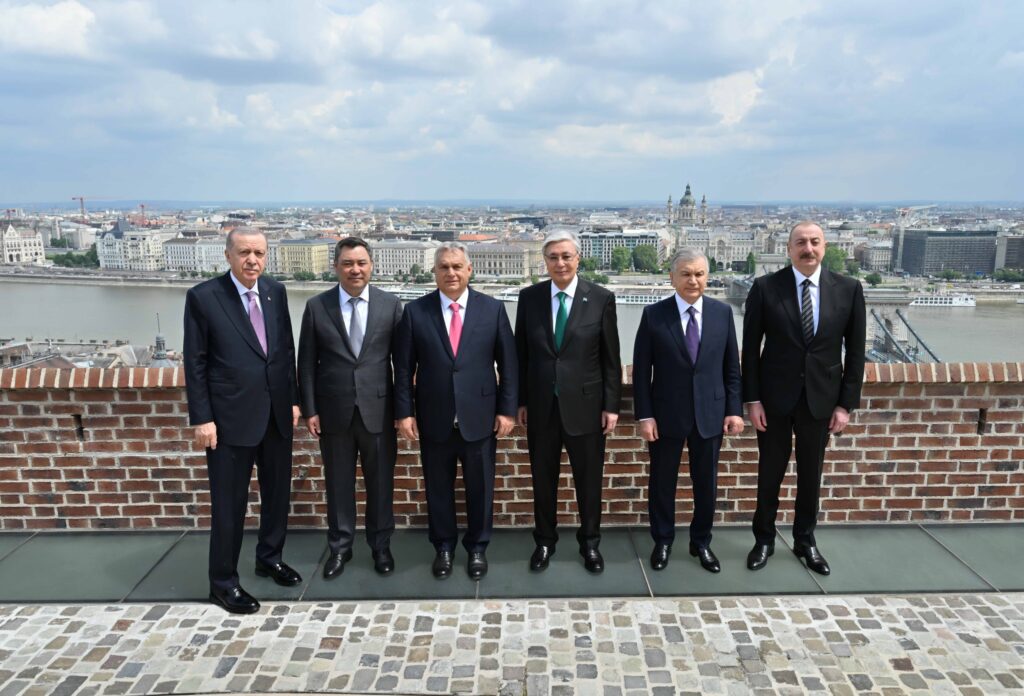
On May 21, 2025, an informal summit of the Organization of Turkic States (OTS) convened in Budapest, uniting leaders of member countries and observers in the symbolic heart of Europe. The heads of Kazakhstan, Turkey, Azerbaijan, Uzbekistan, and Kyrgyzstan, along with Hungarian Prime Minister Viktor Orbán, discussed key areas of cooperation, including the economy, transport, digitalization, and adherence to international agreements. The summit was held under the motto “Meeting Place of East and West.”

Tokayev: Uniform Standards Could Boost GDP by 1% Annually

Kazakhstan’s President Kassym-Jomart Tokayev emphasized the need for deeper economic integration among Turkic states and advocated for the rapid adoption of a model law to streamline exports among OTS members. “Uniform standards will ensure annual GDP growth of about 1%,” Tokayev said, highlighting that the collective GDP of OTS countries stands at approximately $1.4 trillion, with mutual trade already exceeding $22 billion. According to him, the potential exists to increase this figure by 1.5 times.

Tokayev also stressed the importance of respecting existing agreements within the OTS framework. “The norms established in all agreements, whether procedural, political, or economic, must be strictly observed,” he said. He proposed intensifying joint infrastructure projects, particularly those aligned with the North-South and Middle Corridor transport routes connecting East and West. Kazakhstan, he noted, is modernizing border logistics with China, Kyrgyzstan, and Uzbekistan, including launching a new railway checkpoint.

In addition, Tokayev highlighted the need to expand supply chains for oil, gas, uranium, and other resources. He thanked Azerbaijani President Ilham Aliyev for facilitating increased Kazakh oil exports to Europe via Azerbaijan.

Unity and Vision from Member States

Kyrgyz President Sadyr Japarov described the summit as laying a “solid foundation for sustainable development,” linking it to the November 2023 summit in Bishkek. President Aliyev emphasized Azerbaijan’s emerging role as a Eurasian logistics hub, stating that Baku has invested over $20 billion in the economies of OTS member states.

An important development was the announcement that the Turkic Investment Fund, intended to foster economic cohesion, will begin operations soon.

Several key documents were adopted at the summit, including the Budapest Declaration, a statement by the Council of Heads of State on Afghanistan, the decision on Uzbekistan’s accession to the Turkic Culture and Heritage Fund, and the extension of Secretary General Kubanychbek Omuraliev’s mandate.

The Hungarian Dimension and Cultural Ties

Hosting the summit for the first time, Hungary underscored its unique position as an OTS observer. Prime Minister Orbán, who promotes the notion of Turkic roots among Hungarians, has championed closer ties with the Turkic world. Kyrgyz historian Tyntchtykbek Chorotegin pointed out that Hungarian shares structural and grammatical features with Turkic languages, such as suffixation and the absence of prefixes.

Cultural similarities extend beyond linguistics. Nomadic traditions persist in both regions, evident in culinary parallels like goulash and kuurdaq, shared housing styles, equestrian practices, and enthusiasm for folk games. European athletes’ growing participation in the World Nomad Games further illustrates strengthening cultural bonds.

The Budapest summit was more than a diplomatic gathering; it marked a significant milestone in the maturation of the OTS, showcasing the bloc’s readiness for deeper integration and its strategic orientation between East and West.

Kyrgyz Authorities Announce Crackdown on Illegal Migration

On June 10, Kyrgyzstan’s State Committee for National Security (GKNB) will launch a nationwide campaign titled Operation Illegal, aimed at identifying and deporting undocumented migrants. The initiative will involve joint efforts by the GKNB and other law enforcement agencies, with a focus on conducting mass checks of foreign nationals residing in the country.

The operation comes amid a sharp rise in the number of foreigners entering Kyrgyzstan in recent months. Speaking at a law enforcement coordination meeting, GKNB Chairman Kamchibek Tashiev outlined the scale of the influx: “Since the beginning of the year, 61,000 tourists, 30,000 foreign students, and 12,000 officially registered migrant workers have arrived in Kyrgyzstan. An additional 10,000 have entered for family, religious, or business purposes. The number of illegal migrants is estimated to exceed 5,000.”

Tashiev stressed that Kyrgyzstan’s simplified entry procedures are being exploited, with some foreigners misrepresenting the purpose of their stay. “Under the guise of tourism or education, some individuals are engaging in unauthorized labor activities,” he said. He also noted that host organizations, such as universities or private companies, often lose track of those they invite, leaving many foreign citizens to remain in the country with expired visas.

“This vulnerability can lead to a range of social issues,” Tashiev warned. “We are increasingly seeing cases of alcohol and drug abuse, breaches of public order, and even disrespect toward local customs and culture.”

Under Operation Illegal, authorities will carry out raids to verify the legal status of all foreign nationals. By June 10, all non-citizens must be able to prove their right to remain in Kyrgyzstan or prepare to leave. The government has allocated 280 million Kyrgyz soms (approximately $3.2 million) to fund deportation efforts.