• KGS/USD = 0.01144 0%
  • KZT/USD = 0.00212 0%
  • TJS/USD = 0.10456 0.19%
  • UZS/USD = 0.00008 0%
  • TMT/USD = 0.28490 0%
  • KGS/USD = 0.01144 0%
  • KZT/USD = 0.00212 0%
  • TJS/USD = 0.10456 0.19%
  • UZS/USD = 0.00008 0%
  • TMT/USD = 0.28490 0%
  • KGS/USD = 0.01144 0%
  • KZT/USD = 0.00212 0%
  • TJS/USD = 0.10456 0.19%
  • UZS/USD = 0.00008 0%
  • TMT/USD = 0.28490 0%
  • KGS/USD = 0.01144 0%
  • KZT/USD = 0.00212 0%
  • TJS/USD = 0.10456 0.19%
  • UZS/USD = 0.00008 0%
  • TMT/USD = 0.28490 0%
  • KGS/USD = 0.01144 0%
  • KZT/USD = 0.00212 0%
  • TJS/USD = 0.10456 0.19%
  • UZS/USD = 0.00008 0%
  • TMT/USD = 0.28490 0%
  • KGS/USD = 0.01144 0%
  • KZT/USD = 0.00212 0%
  • TJS/USD = 0.10456 0.19%
  • UZS/USD = 0.00008 0%
  • TMT/USD = 0.28490 0%
  • KGS/USD = 0.01144 0%
  • KZT/USD = 0.00212 0%
  • TJS/USD = 0.10456 0.19%
  • UZS/USD = 0.00008 0%
  • TMT/USD = 0.28490 0%
  • KGS/USD = 0.01144 0%
  • KZT/USD = 0.00212 0%
  • TJS/USD = 0.10456 0.19%
  • UZS/USD = 0.00008 0%
  • TMT/USD = 0.28490 0%

Kyrgyzstan Independence Day Marked by Celebrations

Kyrgyzstan marked the 34th anniversary of its independence on August 31 with large-scale celebrations across the country. For the first time, the central venue for the national festivities was the southern city of Jalal-Abad, the country’s third largest urban center. 

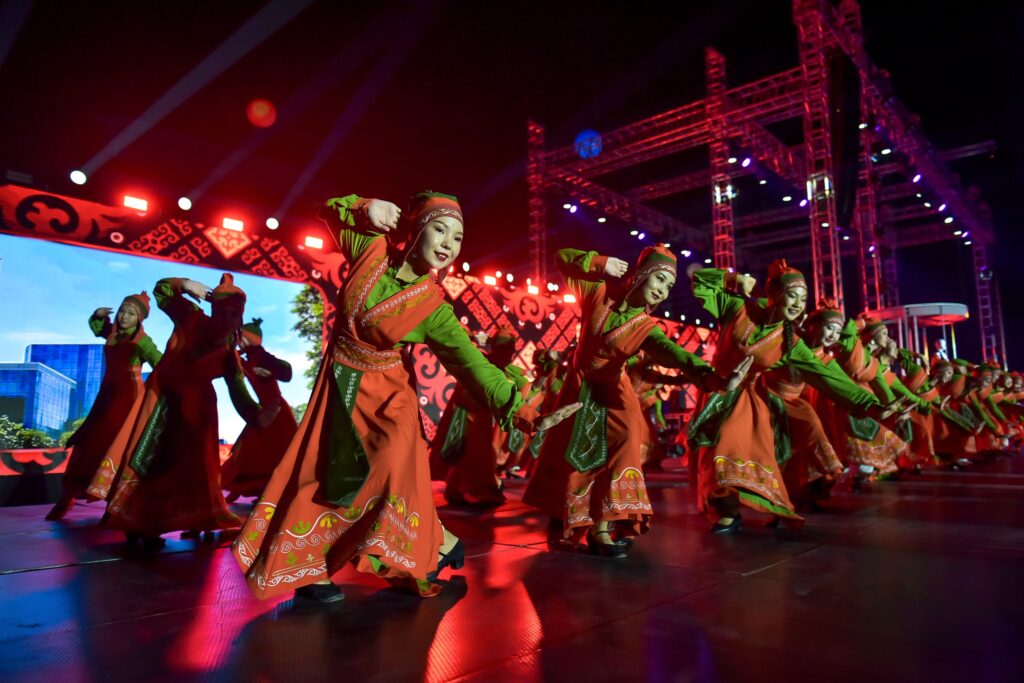
The official program featured cultural, social, and sporting events, including a large-scale choreographic performance titled Future Kyrgyzstan, involving 600 dancers in the city’s main square.

@president.kg

@president.kg

Celebrations Nationwide

Events were held across all regions. In Bishkek, several thousand people gathered in Ala-Too Square for a garrison parade by the Internal Affairs Directorate. In the Issyk-Kul region, festivities included traditional equestrian competitions and other national games.

Development and Investment

During the festivities, President Sadyr Japarov inaugurated 100 new social facilities and more than 60 industrial facilities via online launch. He also encouraged domestic and foreign investors to take advantage of the country’s ready-made industrial zones: “We invite all business structures, from small to large enterprises. We have ready-made industrial zones, we can provide land, help with infrastructure and documentation,” he said.

@president.kg

In Jalal-Abad, Japarov also opened a new art school and a 450-unit social housing complex.

Concluding his address, Japarov offered a metaphor for the country’s trajectory: “Kyrgyzstan is like a galloping horse,” he said. “Thirty-four years of independence is only the beginning of our long journey.”

Tajikistan Raises Minimum Monthly Wage to $110 Amid Broad Income Hikes

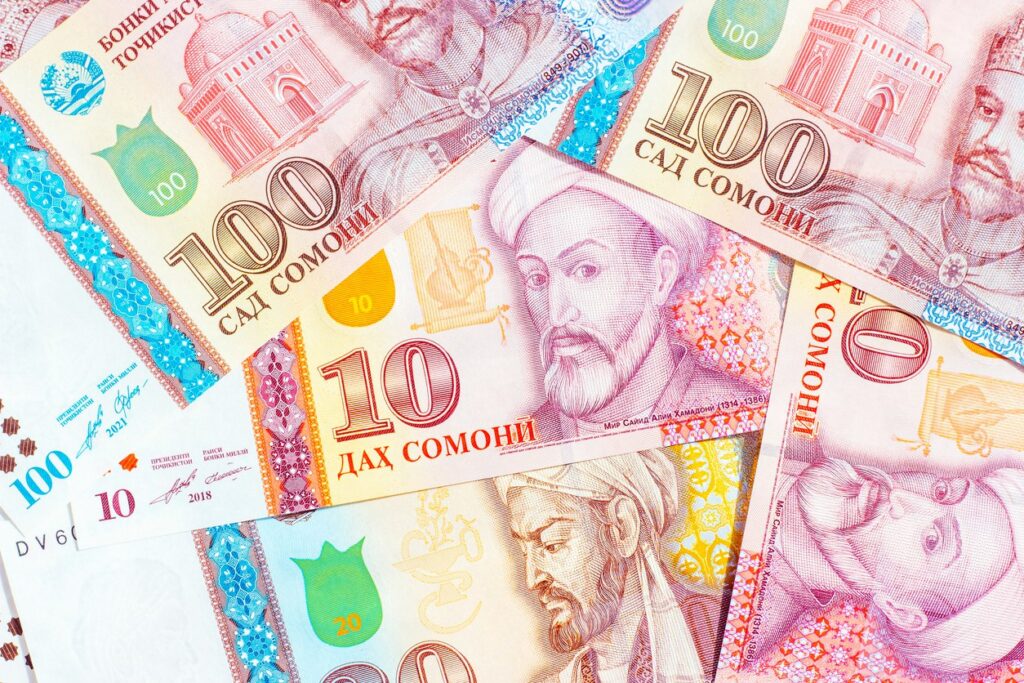
Effective September 1, Tajikistan has implemented a nationwide increase in salaries, pensions, and scholarships, ranging from 10% to 30% across various sectors.

The country’s minimum wage is now officially set at 1,000 Tajikistani somoni (TJS) per month, approximately $110. This marks a 25% increase from the previous rate of 800 TJS ($88).

“This means that from September 1, 2025, the monthly salary of employees of all institutions, organizations, and enterprises, regardless of ownership, must not be less than 1,000 TJS,” the official decree states.

The salary hikes apply broadly. Employees of kindergartens and general education schools will see a 30% increase. Teachers at universities and research institutions will receive a 20% raise, matching the increase granted to doctors, chief physicians, nurses, and other healthcare personnel.

The same 20% boost also extends to social workers, including staff at elderly care homes and facilities for people with disabilities, as well as to cultural sector employees, such as those working in theaters, libraries, museums, media, and public broadcasting.

Civil servants at all levels of government have also received a 20% salary increase.

In parallel, insurance, labor, and social pensions have been increased by 10%. Scholarships, including presidential scholarships and other academic grants, have also been raised, with the exception of stipends for cadets in military universities and the Academy of the Ministry of Internal Affairs.

The 2025 state budget includes provisions to finance these increases. Funding sources include surplus revenue collections, local taxes, free budget balances, the Social Insurance and Pension Fund, and reallocation of reserve and discretionary funds.

Total budget revenues are projected at TJS 49.6 billion (approximately $5.45 billion), with around 65% expected to come from tax revenues. The government forecasts a 20.8% increase in tax collections compared to 2024.

Spending on public sector wages, pensions, and scholarships now accounts for more than 35% of the national budget. In 2025, the total wage fund has reached nearly TJS 13 billion ($1.43 billion), marking a 35.7% rise year-on-year. Pension allocations total TJS 5.1 billion ($561 million), while benefits and scholarships are funded at TJS 350 million ($38.5 million) and TJS 280 million ($30.8 million), respectively, each reflecting a 25% to 26% increase over last year.

Despite the official wage growth, low salaries remain a persistent issue for many Tajik citizens. As consumer prices continue to rise, the increases are widely viewed as a form of income indexation rather than a substantial improvement in living standards.

Chinese Firm to Build Kazakhstan’s First Waste-to-Energy Plant in Almaty

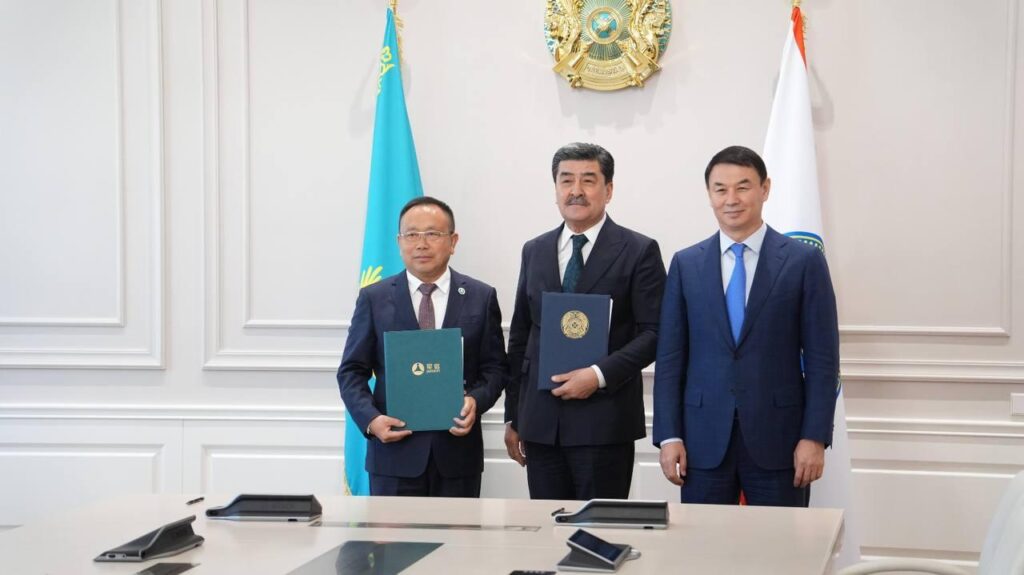
Kazakhstan has taken a major step toward modernizing its waste management infrastructure with the signing of a landmark investment agreement with China’s Hunan Junxin Environmental Protection Co. Ltd. On August 29, the Ministry of Ecology and Natural Resources announced that the company will build the country’s first waste-to-energy plant in Almaty.

The facility will be capable of incinerating at least 1,600 tons of solid municipal waste per day, generating 60 megawatts of electricity. The total investment in the project is estimated at 145 billion tenge (approximately $269 million).

The plant will utilize advanced waste-to-energy technology that complies with European Union emission standards. It will also be equipped with an automated system for continuous environmental monitoring. The project is expected to create around 700 jobs during construction and at least 120 permanent positions upon completion.

Hunan Junxin Environmental Protection has previously announced plans to invest up to $600 million in three waste-to-energy facilities across Kazakhstan.

Regional Expansion and Experience

The company is already active in neighboring Kyrgyzstan. In June, it began construction of a $95 million solid waste incineration facility in Osh, Kyrgyzstan’s second-largest city. That facility will generate both electricity and heat from municipal waste.

In Bishkek, Hunan Junxin is constructing a solid waste recycling facility at the city’s main landfill. The plant is initially expected to process 1,000 tons of waste per day, with capacity slated to increase to 3,000 tons by the time of its projected completion in December 2025.

In China, the company reported recycling 3.2 million tons of municipal waste in 2024, generating over 1.47 billion kWh of electricity.

Tianjin SCO Summit Signals a Shift: China’s Long Game and the Rise of a New Power Bloc

The notion of a bipolar world, once defined by the Cold War rivalry between the United States and the Soviet Union, is being reimagined.

At the recent Shanghai Cooperation Organisation (SCO) summit in Tianjin, China, signs emerged of a new geopolitical alignment centered around the so-called “Global South.” Chinese President Xi Jinping invoked this framing during the August 31 banquet, positioning the SCO as a counterweight to what he referred to as the “collective West.”

According to state news agency Xinhua, Xi expressed confidence that “with the concerted efforts of all parties, the current summit will be a complete success,” and that the SCO would play “an even more significant role” in global affairs. He framed the organization as a mechanism for uniting emerging economies in the Global South and for advancing “human civilization.”

Founded in 2001 by six countries, the SCO now includes 10 full members, two observers, and 14 dialogue partners, spanning Asia, Europe, and Africa. “Bringing together major emerging market economies and developing countries such as China, Russia, and India, the SCO represents nearly half of the world’s population and a quarter of the global economy,” Xinhua noted.

This framing signals that Beijing sees a new geopolitical pole coalescing around China, Russia, and India, a convergence of financial, technological, and military capacities within the SCO framework.

Symbolic Alignments on Display

Group photos from the summit offered a symbolic illustration of emerging alignments. In one image preceding the SCO banquet, Xi Jinping stands flanked by Russian President Vladimir Putin and Kazakh President Kassym-Jomart Tokayev, with other Central Asian leaders, including Shavkat Mirziyoyev (Uzbekistan), Emomali Rahmon (Tajikistan), and Sadyr Japarov (Kyrgyzstan), grouped closely behind. Another image, taken before the Council of Heads of State meeting, shows Indian Prime Minister Narendra Modi positioned directly behind Tokayev, reflecting the summit’s broader geopolitical weight.

Xi and Modi also met one-on-one, where they agreed to define China and India as partners rather than rivals. Xi reportedly called for both countries to “become good neighbors, good friends, and partners who contribute to each other’s success,” referring to the cooperation as a “dragon and elephant pas de deux.”

Modi, in turn, employed the term “Global South” during his address to the Council of Heads of State, urging reforms to global institutions such as the United Nations. “Constraining the aspirations of the Global South within an outdated framework is a gross injustice to future generations,” he said.

UN Secretary-General António Guterres, who attended the summit, was the implicit target of such reformist appeals. The presence of Tokayev, a former senior UN official, added another layer of diplomatic nuance. Some speculate that Tokayev could be put forward as a future UN Secretary-General by Global South nations.

Putin’s Narrative on Ukraine

In his address, Putin reiterated a narrative long promoted by the Kremlin regarding the war in Ukraine. He described the conflict not as an invasion, but as the result of a “coup d’état in Ukraine” supported by the West and claimed that NATO’s expansion posed a direct threat to Russian security.

While Putin’s framing reflects the official Russian position, it continues to be disputed by Western governments, international observers, and most independent analysts. The war, now in its fourth year, remains a central point of contention between Russia and the broader international community.

Notably, following the Council meeting, Putin was seen taking Modi for private talks in his limousine, another symbolic gesture in an event rich with diplomatic theater.

Tokayev’s Policy-Focused Agenda

Tokayev’s speech stood out for its detail and pragmatism. He endorsed China’s initiative to establish a SCO Development Bank and proposed hosting a regional SCO financial office at the Astana International Financial Center. He also backed the creation of a “Trans-Altai Dialogue” to link Kazakhstan, Russia, China, and Mongolia for infrastructure and trade coordination.

In digital policy, Tokayev supported the formation of a “Global Organization for Cooperation on Artificial Intelligence” and offered to host both the inaugural SCO AI Expert Forum and a 2027 high-level conference on AI in Astana. He also proposed a SCO Center for the Study of Water Issues in Kazakhstan.

The Larger Picture

The Tianjin summit underscored the SCO’s evolving ambition to present itself as a global platform for countries dissatisfied with what they perceive as Western-dominated institutions. Whether this bloc, anchored by China, Russia, and India, can sustain long-term cohesion and deliver on its promises remains to be seen. But as the summit made clear, Beijing is playing a long game, seeking to position the SCO at the center of an emerging multipolar order.

Watches Bearing Berdimuhamedov Portraits Become Unofficial Currency in Turkmenistan’s Security Sector

In Turkmenistan, wristwatches adorned with the images of President Serdar Berdimuhamedov and his father, former president Gurbanguly Berdimuhamedov, are increasingly being used as informal bribes by citizens dealing with law enforcement.

Chronicles of Turkmenistan reports that these timepieces, once symbols of official loyalty, have evolved into an unofficial currency within the country’s security apparatus.

Distributed primarily through the company Sagat Turkmenistan, the watches are embellished with silver-plated cases, gold accents, precious stones, and the emblems of various law enforcement agencies. Prices range from 3,000 to 5,000 Turkmenistani Manat (TMT), or approximately $870-1,450.

But few security officers reportedly pay for them out of pocket. Instead, citizens facing potential criminal prosecution are expected to offer the watches as “gifts” to investigators.

“If you are told that a criminal case will be brought against you, then you need to buy such a watch and go to the investigator. This does not mean that the case will be closed. But it is the first payment,” said a resident of the town of Bayramali who had prior dealings with law enforcement.

The standard version comes with a black leather strap, although a white version is seen as particularly luxurious. In some instances, investigators reportedly request a strap upgrade, an added cost that the briber must cover.

The practice is not limited to security services. In May 2024, The Times of Central Asia reported that in the Balkan region, heads of state institutions were required to purchase similar watches featuring the Berdimuhamedov portraits.

Prices ranged from 1,500 to 3,000 TMT ($435-870 at the official rate, or $75-150 on the black market), depending on the design and seniority of the buyer. Higher-tier models feature both Serdar Berdimuhamedov in a black tie and Gurbanguly Berdimuhamedov in a red tie, along with the Turkmen flag and a map of the country. Simpler versions show only one portrait, or a portrait combined with national symbols.

All public sector entities, including institutions in healthcare, education, communications, transport, and law enforcement, were reportedly compelled to participate. Senior officials were instructed to purchase the higher-end watches, while lower-level managers had to acquire less expensive models.

The use of personalized accessories as symbols of political loyalty is not new in Turkmenistan. Under former president Saparmurat Niyazov, watches featuring his image were widely distributed among schoolchildren and state employees.

“We saw watches with the president’s image during Niyazov’s time. It is not surprising that Serdar [Berdimuhamedov] has also started producing gift watches with his portraits. Now all that remains is for him to start erecting monuments to himself throughout the country,” remarked an employee of a state-funded organization in the city of Turkmenbashi.

What began as a tool of soft propaganda has now transformed into a transactional item, part status symbol, part bargaining chip, in the interactions between citizens, officials, and security services.

Karaganda Engineers Unveil Safety-Enhancing Drone Prototypes

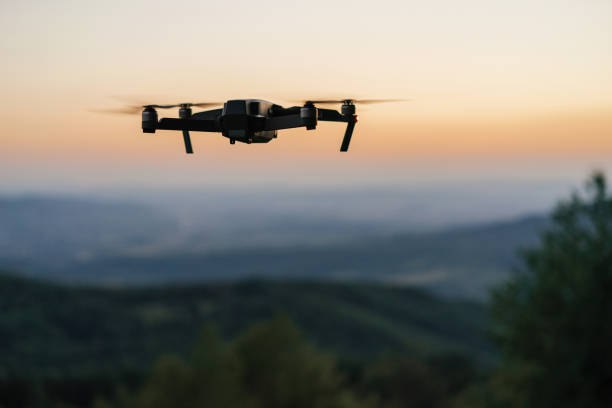
The Karaganda-based research and production association Perspektiva has unveiled three prototypes of unmanned aerial vehicles (UAVs) designed to enhance public safety across Kazakhstan. The drones are intended for a range of uses, including recording traffic violations, locating missing persons, and detecting fires. The company is currently assessing the feasibility of launching mass production.

The initiative is part of Kazakhstan’s broader effort to develop high-tech industries with a high degree of domestic localization. Among the newly developed UAVs are the Vista-7, a long-range drone; the compact Chimera-5, which is suitable for indoor use and operation in hard-to-reach areas; and the versatile Apex-7, designed for street patrols, mass event monitoring, and fire safety surveillance.

According to Maxim Kim, project manager at NPO Perspektiva, the drones integrate foreign electronic components with locally manufactured frames, which are low-cost and easily replaceable.

“Even if the body is damaged, it can be printed in 20 minutes and the existing electronics can continue to be used,” he explained.

Imported drones currently cost upwards of 12 million KZT (approximately $22,000), and their frames are often irreparable. By contrast, local production is expected to significantly reduce costs, making drones more accessible to both government agencies and private enterprises. Kim added that UAVs could serve as a cost-effective alternative to fixed surveillance cameras on highways and could also be deployed to monitor infrastructure such as oil pipelines.

Perspektiva previously developed the Argus-Pedestrian automated system, which captures violations at pedestrian crossings in Karaganda. According to developers, no pedestrian accidents have occurred in areas where the system has been installed. There are plans to expand the program to other cities across the country.

As The Times of Central Asia previously reported, members of Kazakhstan’s parliament have proposed introducing a mandatory remote identification system for drones weighing 250 grams or more, a regulatory step aimed at ensuring greater transparency and accountability in UAV operations.