• KGS/USD = 0.01144 0%
  • KZT/USD = 0.00212 0%
  • TJS/USD = 0.10456 0.19%
  • UZS/USD = 0.00008 0%
  • TMT/USD = 0.28490 0%
  • KGS/USD = 0.01144 0%
  • KZT/USD = 0.00212 0%
  • TJS/USD = 0.10456 0.19%
  • UZS/USD = 0.00008 0%
  • TMT/USD = 0.28490 0%
  • KGS/USD = 0.01144 0%
  • KZT/USD = 0.00212 0%
  • TJS/USD = 0.10456 0.19%
  • UZS/USD = 0.00008 0%
  • TMT/USD = 0.28490 0%
  • KGS/USD = 0.01144 0%
  • KZT/USD = 0.00212 0%
  • TJS/USD = 0.10456 0.19%
  • UZS/USD = 0.00008 0%
  • TMT/USD = 0.28490 0%
  • KGS/USD = 0.01144 0%
  • KZT/USD = 0.00212 0%
  • TJS/USD = 0.10456 0.19%
  • UZS/USD = 0.00008 0%
  • TMT/USD = 0.28490 0%
  • KGS/USD = 0.01144 0%
  • KZT/USD = 0.00212 0%
  • TJS/USD = 0.10456 0.19%
  • UZS/USD = 0.00008 0%
  • TMT/USD = 0.28490 0%
  • KGS/USD = 0.01144 0%
  • KZT/USD = 0.00212 0%
  • TJS/USD = 0.10456 0.19%
  • UZS/USD = 0.00008 0%
  • TMT/USD = 0.28490 0%
  • KGS/USD = 0.01144 0%
  • KZT/USD = 0.00212 0%
  • TJS/USD = 0.10456 0.19%
  • UZS/USD = 0.00008 0%
  • TMT/USD = 0.28490 0%

Underground Gold Mining Officially Launched at Kumtor

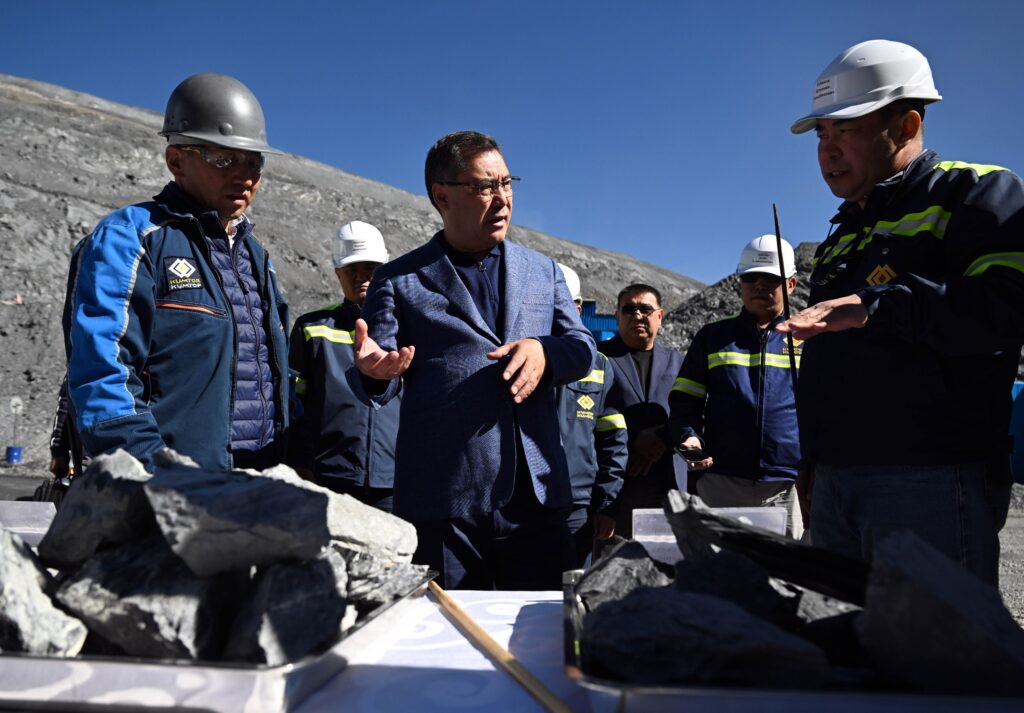
Kyrgyz President Sadyr Japarov has inaugurated underground mining operations at the high-altitude Kumtor gold mine during a working visit to the Issyk-Kul region.

According to Japarov, underground development at Kumtor should have started two decades ago. However, the mine’s former operator, Canadian company Centerra Gold, opted instead for open-pit mining, which was less costly but had serious environmental consequences. He said the dumping of waste rock onto the Davydov and Lysyi glaciers resulted in their degradation.

“The launch of underground gold mining at Kumtor is a crucial step toward environmental protection and glacier preservation,” Japarov stated. He reported that approximately 1,600 meters of tunnels have already been excavated, and ore with a gold content exceeding five grams per ton is ready for extraction. The underground operation is projected to continue for 17 years, with proven reserves estimated at 147 tons of gold.

While Centerra Gold had previously explored underground mining, low global gold prices over a decade ago rendered the project financially unviable. The open-pit method yielded between five and seven grams of gold per ton of ore, then considered the threshold for profitability. As gold content declined over time, the possibility of mine closure loomed.

That outlook changed with rising gold prices. Following the nationalization of Kumtor in 2021, the mine’s profitability increased substantially. According to Japarov, since May 2021 the mine has produced 54 tons of gold, generating $3.5 billion in revenue. Of that, $891 million was paid into the state budget through taxes and other contributions. By contrast, the president noted, Kyrgyzstan received just $100 million during the 28 years the mine was under foreign ownership.

Speaking to The Times of Central Asia, veteran Kyrgyz geologist Rozalia Djenchuraeva suggested Kumtor’s reserves may be even larger. “Even on Soviet maps, one can see that there is a lot of gold in this area. Gold-bearing veins run under the glaciers from the Kyrgyz-Chinese border through Kumtor and extend westward for many kilometers,” she said. Djenchuraeva added that with modern technologies, especially underground extraction, it is possible to mine gold efficiently while adhering to environmental standards.

Russian Organization Builds Amusement Park in Bishkek

On August 28, a new amusement park named Eurasia officially opened in Bishkek.

Covering approximately 10 hectares, the park offers free admission and features around 30 amusement rides, sports facilities, and a food court. The project began in 2024 as part of a collaboration between Kyrgyzstan’s Cabinet of Ministers and Russia’s non-profit organization for international cooperation, Eurasia.

Total investment in the park reached $35 million. The initiative commemorates the 10th anniversary of the Eurasian Economic Union (EAEU), a regional integration bloc comprising Armenia, Belarus, Kazakhstan, Kyrgyzstan, and Russia. All construction and equipment costs were funded by the Eurasia organization.

Expanding Russia’s Soft Power

Since 2024, Eurasia has been active in Kyrgyzstan through various social and humanitarian projects. In partnership with Russia’s Ministry of Education, the organization has deployed young Russian teachers to secondary schools across Kyrgyzstan to instruct in specialized subjects taught in Russian.

Eurasia has also donated 100 school buses to rural Kyrgyz villages and funded renovations of schools in Bishkek and Kyzyl-Kyya.

On August 26, the organization opened its first social store, also named Eurasia, in Bishkek. The store aims to support vulnerable populations, including pensioners, veterans, large families, and people with disabilities, by offering essential food items at reduced prices.

Uzbekistan Responds After Migrant Taxi Driver Insulted in Moscow

A video filmed in the Moscow region has sparked public outrage after a Russian man verbally assaulted a taxi driver from Uzbekistan, calling him a “slave of Russians.” According to Minval, the incident took place in the courtyard of a residential complex in the town of Khimki, where the resident told the driver that he was “not at home” and had come to Russia “because there is nothing in Uzbekistan.”

The footage has triggered a wave of discussion in both Russia and Uzbekistan, where labor migration remains a vital economic issue. In response, Uzbekistan’s Ministry of Foreign Affairs issued a statement, without directly referencing the video, reaffirming that all Uzbek citizens are under the protection of the state, regardless of their location.

“The Republic of Uzbekistan, in accordance with its Constitution, national legislation, and international obligations, has a duty to safeguard the rights, freedoms, and dignity of its citizens abroad,” the ministry stated.

Authorities also urged Uzbeks whose rights are violated abroad to immediately report incidents to local law enforcement and to seek assistance from Uzbek diplomatic missions or consulates. “Protecting the rights and interests of our citizens abroad is a key priority of our state policy,” the ministry emphasized.

The incident comes amid broader policy shifts in Russia concerning foreign nationals. Starting September 1, authorities in Moscow and the surrounding region will roll out a new digital monitoring system for migrants. According to the Multifunctional Migration Center in Sakharovo, citizens from Central Asia and other countries will be required to install a mobile application called Amina, which will manage functions such as residence registration, address changes, and work permit payments.

Kazakhstan Expands AI-Powered Video Surveillance Network

Kazakhstan has installed more than 19,000 street surveillance cameras equipped with artificial intelligence (AI), enhancing law enforcement’s ability to respond swiftly to incidents, the Ministry of Internal Affairs has announced.

The ministry stated that the country continues to expand its digital security infrastructure. The AI-enabled cameras are capable of facial recognition, detecting abandoned objects, and analyzing traffic patterns. “The integration of these systems with Operational Management Centers allows us to respond to incidents in real time,” it noted.

Police officers have also been equipped with tablets and smart tokens to improve mobility. For the public, reporting tools have been introduced through the 102 mobile app and the “Law and Order” service, accessible via eGovMobile and banking applications. Since the start of 2025, over 8,300 reports have been submitted through these digital platforms.

However, the digital transition has coincided with a rise in cybercrime, particularly online fraud. In response, the internal ministry has implemented early detection systems and mechanisms to block suspicious calls and transactions. “In recent months alone, we have prevented the theft of more than 2.6 billion tenge, confiscated over 88,000 SIM cards used by fraudsters, and blocked more than 67 million fraudulent international calls,” the ministry reported.

Despite the uptick in cybercrime, traditional crime rates have declined. Since the beginning of the year, more than 10,000 criminal cases have been solved, and nearly 10 million administrative offenses have been prevented. “Thanks to preventive measures, the overall crime rate has dropped by 13%, that’s 9,000 fewer cases compared to last year. We’ve seen decreases in murders, robberies, acts of hooliganism, theft, and livestock rustling. Crimes involving weapons, committed in public places, or by previously convicted individuals have also gone down,” said Minister of Internal Affairs Yerzhan Sadenov.

In the area of narcotics enforcement, more than 4,600 drug-related offenses were recorded between January and July 2025. Authorities dismantled 13 organized groups and seized over 11 tons of drugs and 23 tons of chemicals. The ministry also reported 44 extremist-related criminal offenses during the same period, 23 of which have been forwarded to the courts.

Addressing domestic violence, the ministry established a dedicated department at the beginning of 2025. In the first seven months, more than 8,000 criminal cases were registered, over 56,000 protective court orders issued, and more than 19,000 offenders detained.

As previously reported by The Times of Central Asia, the adoption of a new domestic violence law has led to a decline in crimes against women and children, though challenges remain.

Real Madrid to Play Kairat in Almaty in UEFA Champions League

Almaty’s Kairat will face European giants, including 15-time champions Real Madrid, in the UEFA Champions League group stage, marking a historic milestone for the Kazakh club.

Kairat has never before reached this phase of the competition. Earlier this summer, the club became only the second team from Kazakhstan, after Astana, to qualify for the group stage by overcoming four rounds of qualifiers. Prior to the August 28 draw, head coach Rafael Urazbakhtin expressed a wish to be grouped with Real Madrid, Barcelona, or Liverpool.

The draw delivered on one of those wishes: Kairat will now face Real Madrid, the most decorated club in European football history. Also in their group are Inter Milan, three-time Champions League winners, and Arsenal, a top English club with 13 domestic league titles but still seeking their first Champions League crown.

Kairat’s group stage schedule includes away matches against Sporting Lisbon and Copenhagen, while they will host Belgium’s Club Brugge, Greece’s Olympiacos, and Cyprus’s Pafos in Almaty. The group stage will be played between late September 2025 and the end of January 2026.

“We are delighted to be playing Real Madrid. It’s not often that such a club comes to Kazakhstan,” said Urazbakhtin. He acknowledged the disparity in skill levels but emphasized the importance of home support and maximizing their advantage in Almaty.

A total of 36 clubs are competing in this season’s group stage. Each team plays eight matches, four home and four away, against different opponents. The top eight teams overall will advance directly to the playoffs, while clubs ranked 9th to 24th will enter a playoff round in February 2026 to fight for the remaining spots in the round of 16.

As previously reported by The Times of Central Asia, Kairat earned their Champions League berth after a dramatic penalty shootout win over Celtic, with reserve goalkeeper Temirlan Anarbekov playing a decisive role in the victory.

Tokyo Steps Up: Iwaya’s Central Asia Tour Signals Japan’s Long-Term Commitment

Japanese Foreign Minister Takeshi Iwaya made a landmark trip to Central Asia from August 24–28, 2025, holding talks in Kazakhstan and Uzbekistan. Tokyo framed the visit as a bid to deepen bilateral ties and revive the Central Asia plus Japan leaders’ summits. The visit fulfilled commitments made by then-Prime Minister Kishida, who had planned a similar tour in 2024 before cancelling at the last minute due to a domestic earthquake alert.

Strategic Engagement

Iwaya’s visit reflects Tokyo’s long-standing, multifaceted approach to Central Asia. Analysts emphasized to The Times of Central Asia that Japan is pursuing “trust-building diplomacy” in the region, focusing on human capital, infrastructure, and governance rather than quick geopolitical wins. Tokyo inaugurated the Central Asia plus Japan Dialogue format in 2004, making it the first outside power to group all five Central Asian republics within a single framework. As Professor Timur Dadabaev of Tsukuba University told The Times of Central Asia, Tokyo is seen “not as a competing hegemon, but as a partner that invests in the region’s human capital, infrastructure, and governance in ways that reinforce independence.” This approach contrasts with what has been characterized as the transactional models of other powers.

On August 25, Iwaya met with Kazakhstan’s Deputy Prime Minister and Foreign Minister Murat Nurtleu in Astana, marking his first official visit to the country. The talks underscored both sides’ commitment to strengthening ties as strategic partners and in upholding a “free and open international order based on the rule of law.” The ministers welcomed active exchanges and pledged to expand cooperation in trade, investment, mineral resources, disaster prevention, and nuclear non-proliferation. They also announced plans to accelerate preparations for the long-delayed Central Asia plus Japan summit.

Japanese Foreign Minister Iwaya with Kazakh Foreign Minister Nurtleu in Astana after their meeting on August 25, 2025; image Japan MOFA

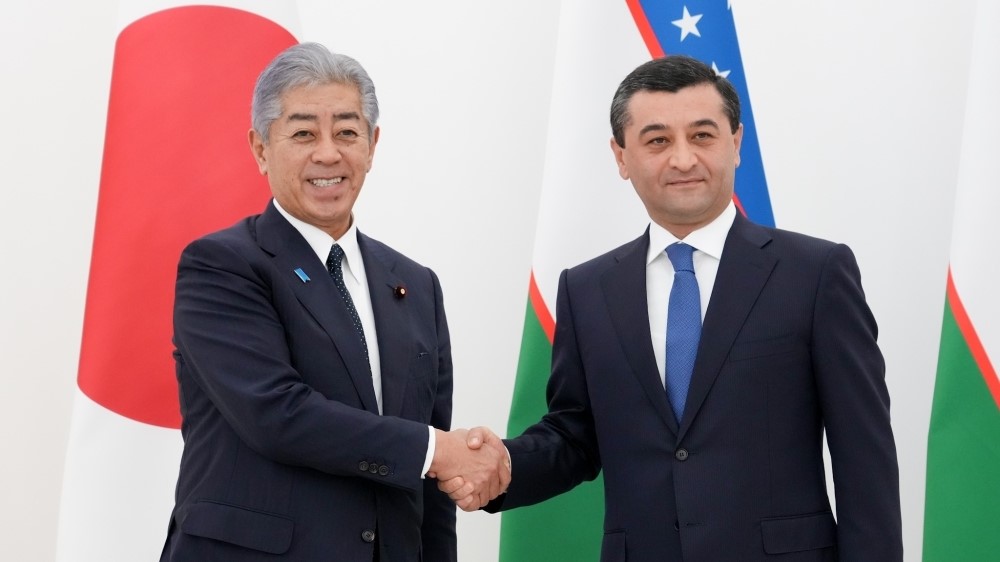
In Tashkent, Iwaya echoed this message, calling Uzbekistan “an important strategic partner,” and highlighting the first-ever foreign ministers’ strategic dialogue held there.

Japanese officials also stressed their policy does not aim to pressure Central Asian partners on sensitive issues. Characterizing Japan as a “catalyst to promote interconnectivity and inter-regional cooperation,” Foreign Ministry spokesman Toshihiro Kitamura stated that Tokyo does not see a zero-sum “competition between Japan and other countries. We would like to see Central Asian countries work together with other parts of the world.”

In Tashkent, Kitamura explicitly noted that while Japan condemns Russia’s invasion of Ukraine, it will not pressure Uzbekistan or others to take the same stance. “The relationship between Russia and the Central Asian countries is a very delicate issue. Each country should take into account the relations it establishes with other countries. Even if it is with Russia, such relations do not affect the relations of other countries with Japan,” Kitamura stated.

Bilateral Agreements

In Kazakhstan, Iwaya held high-level talks with President Kassym-Jomart Tokayev and Foreign Minister Nurtleu. Tokayev welcomed Japan as a “reliable and close partner in Asia” and said ties are “developing dynamically.” The sides agreed to arrange a Central Asia plus Japan summit as soon as possible, exchanged notes on Japanese grant aid for medical equipment for victims of nuclear testing, and announced a direct Tokyo–Almaty flight starting in March 2026. Kazakhstan also invited greater Japanese participation in energy and transit. “Kazakhstan already accounts for about 80% of overland freight traffic between Asia and Europe. We are ready to cooperate on the development of the Trans-Caspian International Transport Route and the introduction of digital technologies, including artificial intelligence, with the involvement of Japanese investors,” said Nurtleu.

In Tashkent, Iwaya and Uzbek Foreign Minister Bakhtiyor Saidov held the first Japan–Uzbekistan Foreign Ministers’ Strategic Dialogue, signed a joint communiqué, and showcased two grant projects: the Project for Human Resource Development Scholarship and an economic initiative for vulnerable groups, including Afghan returnees. The two sides agreed to hold the dialogue biennially and to schedule the Japan–Central Asia leaders’ summit at an early date, while expanding cooperation on economic security and supply chains.

Regional Implications

Iwaya’s August 2025 trip underscored Japan’s intent to remain a steady partner in Central Asia, balancing economic opportunity with respect for regional sensitivities. By advancing grant aid in Kazakhstan, launching new scholarship and development projects in Uzbekistan, and pledging to revive the Central Asia plus Japan summit, Tokyo is positioning itself as a constructive actor focused on connectivity, resilience, and trust-building. This “bridges not blocs” strategy comes backed by official statements from the Japanese Foreign Ministry highlighting a commitment to long-term partnerships. With strategic dialogue in Tashkent and new agreements in Astana, Japan has signaled that its presence in Central Asia is not episodic but a durable part of the region’s evolving geopolitical landscape.