• KGS/USD = 0.01144 0%
  • KZT/USD = 0.00196 -0%
  • TJS/USD = 0.10899 0%
  • UZS/USD = 0.00008 0%
  • TMT/USD = 0.28490 0%
  • KGS/USD = 0.01144 0%
  • KZT/USD = 0.00196 -0%
  • TJS/USD = 0.10899 0%
  • UZS/USD = 0.00008 0%
  • TMT/USD = 0.28490 0%
  • KGS/USD = 0.01144 0%
  • KZT/USD = 0.00196 -0%
  • TJS/USD = 0.10899 0%
  • UZS/USD = 0.00008 0%
  • TMT/USD = 0.28490 0%
  • KGS/USD = 0.01144 0%
  • KZT/USD = 0.00196 -0%
  • TJS/USD = 0.10899 0%
  • UZS/USD = 0.00008 0%
  • TMT/USD = 0.28490 0%
  • KGS/USD = 0.01144 0%
  • KZT/USD = 0.00196 -0%
  • TJS/USD = 0.10899 0%
  • UZS/USD = 0.00008 0%
  • TMT/USD = 0.28490 0%
  • KGS/USD = 0.01144 0%
  • KZT/USD = 0.00196 -0%
  • TJS/USD = 0.10899 0%
  • UZS/USD = 0.00008 0%
  • TMT/USD = 0.28490 0%
  • KGS/USD = 0.01144 0%
  • KZT/USD = 0.00196 -0%
  • TJS/USD = 0.10899 0%
  • UZS/USD = 0.00008 0%
  • TMT/USD = 0.28490 0%
  • KGS/USD = 0.01144 0%
  • KZT/USD = 0.00196 -0%
  • TJS/USD = 0.10899 0%
  • UZS/USD = 0.00008 0%
  • TMT/USD = 0.28490 0%
08 December 2025

Video: From Hardship to Accomplishment – Meet the Kazakh Woman Supporting Female STEM Students

Kalmakhanova Marzhan Seitkyzy is a young professor in Kazakhstan supporting female students in the fields of science, technology, engineering, and mathematics (STEM), offering guidance and helping them navigate the realities of research work. Watch her story:

Kazakhstan to Fund Health Insurance for Over A Million Unemployed Citizens

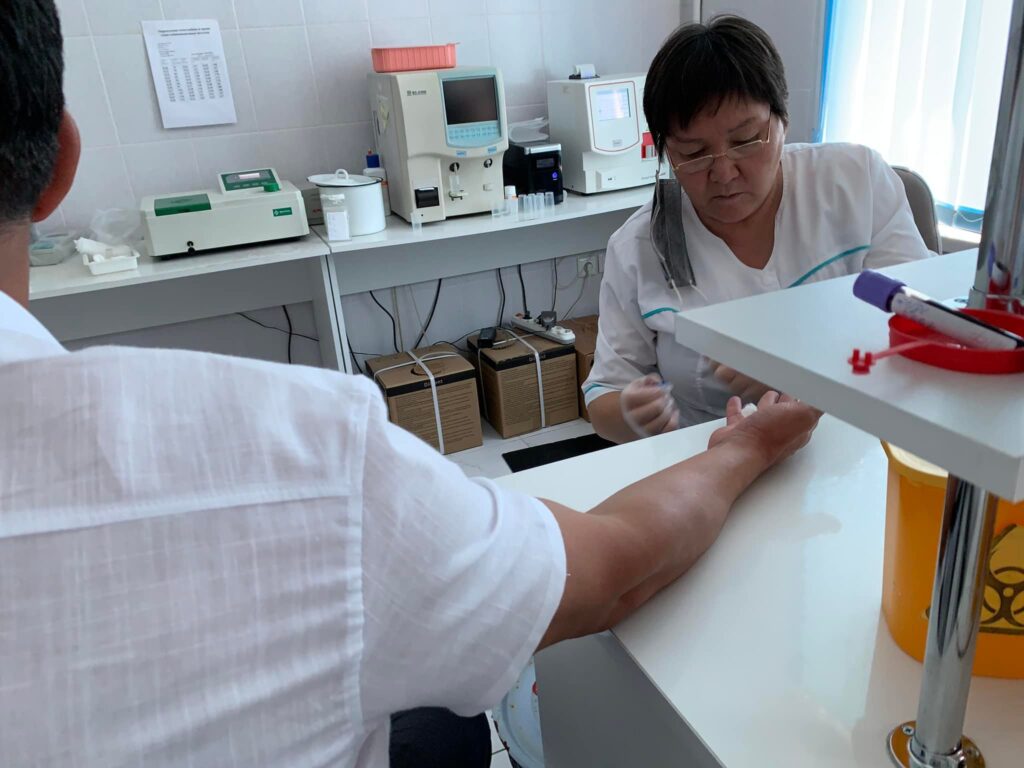
Beginning in 2026, more than one million unemployed and vulnerable citizens in Kazakhstan will be covered by the country’s compulsory medical insurance system (CMIS). Health Minister Akmaral Alnazarova announced that local and regional budgets will assume responsibility for insurance contributions on their behalf.

Expanding Access to Medical Coverage

Kazakhstan’s current health insurance model requires employed citizens to contribute 2% of their monthly salary, capped at 17,000 KZT (approximately $33), to the Fund for Social Medical Insurance (FSMI). Employers pay an additional 3% of each employee’s salary, while individual entrepreneurs contribute 5% of their income. However, unemployed citizens, even if officially registered, are presently excluded from the system.

In response to a directive issued by President Kassym-Jomart Tokayev in February 2024, the Ministry of Health has drafted legislation that would enable local governments to make insurance payments for unemployed and vulnerable groups. The bill was submitted to the Mazhilis, the lower house of parliament, for consideration.

“This is a step towards improving people’s health and quality of life,” Alnazarova said. “Local budgets will cover the contributions, and these individuals will receive insured status on a monthly basis, regardless of income.” The change is expected to extend coverage to over one million additional citizens, granting them access to scheduled medical care.

Systemic Reforms and Contribution Cap Adjustment

The ministry also proposes raising the upper limit for contribution calculations from 10 to 50 times the minimum monthly wage. As of 2025, one minimum wage is 85,000 KZT (approximately $165), making the new cap 4.25 million KZT (around $8,100). The adjustment would impact approximately 9% of employees, roughly 508,000 individuals, and their employers.

“In global practice, income limits are not applied. In our country, high-income earners currently pay proportionally less than others,” Alnazarova explained, justifying the reform as a measure toward fairness and sustainability.

Parliamentary Scrutiny of the Insurance Fund

The draft legislation has revived long-standing criticism of the FSMI’s governance. During recent Mazhilis debates, MP Murat Abenov accused the fund of lacking transparency and accountability.

“The SMIF checks itself, allocates funds itself, concludes contracts itself, and determines violations itself. Many infractions go unnoticed by both ministries and the public. If not for the Supreme Audit Chamber, we wouldn’t even know that billions are being embezzled,” Abenov stated during a parliamentary session.

This follows earlier opposition by several MPs to a proposed 10% tax hike on medicines and healthcare services during discussions surrounding the new Tax Code.

Kyrgyzstan Triples Blood Donation Compensation to Boost Supplies

The Kyrgyz government has tripled financial compensation for blood donors in a move aimed at securing adequate blood supplies for hospitals nationwide. The decision marks the first increase in donor payments since 2009.

According to a government statement, the new policy is designed to promote blood donation, enhance the quality of medical care, and ensure consistent availability of blood and its components for hospitalized patients. “Despite technological advances, donated blood and its components remain an indispensable national resource,” officials noted.

Under the updated compensation scheme, blood donors will now receive 800 Kyrgyz som, or approximately $9-10, in addition to a free meal on the day of donation. This represents a significant increase from the previous 300 KGS ($3-4). Double immune plasma donations will now be compensated at 1,600 KGS (about $18).

Meeting Demand, Especially in Emergencies

Representatives of the Republican Blood Center told The Times of Central Asia that while there is generally an adequate supply of blood across the country, occasional shortages occur, particularly with rare blood types and negative Rhesus factors. In such cases, hospitals may issue public appeals via media outlets to solicit donations.

“At the moment, we are meeting the needs of all patients. However, certain blood types remain in limited supply. These are usually rare groups with a negative Rhesus factor,” a spokesperson from the center said. “The increased compensation is not only to encourage more people to donate but also to support their health. Donors need to eat well on the day they give blood, and proper nutrition supports faster recovery.”

The center publishes up-to-date data on blood availability by region on its official website.

Funding for the enhanced donor compensation is being drawn from the state budget, with additional support from a dedicated special account for blood donation programs.

Kyrgyzstan Begins Construction of Border Fence with Tajikistan

Kyrgyzstan has launched construction of a border fence along its frontier with Tajikistan in the Batken region, according to a report by 24.kg. The project commenced near the village of Koshmolo in the Tort-Gul area, a strategically significant location where the borders of Kyrgyzstan, Tajikistan, and Uzbekistan converge.

An official ceremony marking the start of the project was held at a nearby border marker. Kyrgyz Deputy Prime Minister and head of the State Committee for National Security, Kamchybek Tashiev, addressed the event via video link. Other senior officials in attendance included Director of the Border Guard Service Major General Abdikarim Alimbaev and Aybek Shamenov, the presidential representative in Batken.

To facilitate the project, a field operations camp has been established, and specialized construction equipment has been deployed. Authorities report that all necessary logistical conditions have been prepared for personnel working on site.

“Today we are witnessing a significant event of great importance for the citizens of Kyrgyzstan and Tajikistan. The Border Service will make every effort to complete the development work within the established timeframe. Our goal is to create a zone of security and tranquility on the shared border,” said Alimbaev.

420 Kilometers of Fencing Planned in First Stage

In its initial phase, the project aims to install barbed wire fencing along 420 kilometers of the border. The entire border fortification is expected to be completed by the end of 2025.

The initiative follows a pivotal agreement between Kyrgyzstan and Tajikistan signed on March 13 in Bishkek. During a bilateral summit, the presidents of both countries reached a historic deal to fully delimit and demarcate the 1,006-kilometer border after years of disputes and sporadic clashes.

Turkmenistan Denies Torture Allegations in Case of Activist Mansur Mingelov

At the 82nd session of the UN Committee Against Torture, held on April 23-24 in Geneva, Turkmenistan’s Permanent Representative to the UN, Vepa Hajiyev, rejected allegations that human rights activist Mansur Mingelov was tortured while in detention.

Speaking in Geneva, Hajiyev stated that a domestic investigation found “no facts confirming such violations during criminal proceedings and during Mansur Mingelov’s stay in places of detention.” He also provided an official medical diagnosis for Mingelov, tuberculous arthritis in both knees, and denied claims that Mingelov was not informed of his medical status.

Background: Arrest and Allegations of Abuse

Mansur Mingelov, a member of the Baluchi minority, was first detained in June 2012 by officers of the now-defunct Turkmenistan Drug Control Service. According to human rights groups, he was beaten and sustained a broken leg during his arrest. Although initially released without charge, Mingelov later submitted formal complaints to the Prosecutor General’s Office and the Presidential Administration, alleging torture against himself and other Baluchi community members.

He compiled testimonies from at least 11 individuals who described being subjected to electric shocks, beatings with plastic bottles and chairs, and having bones broken with chisels. After attempting to deliver this evidence, including video and audio recordings, to the U.S. Embassy in Ashgabat, Mingelov was rearrested. Authorities subsequently charged him with drug smuggling, distribution of pornography, and involving minors in anti-social activities. He was sentenced to 22 years in prison.

Health Condition and Calls for Release

In 2018, Mingelov was diagnosed with tuberculosis, later complicated by osteomyelitis. Prison doctors recommended amputation of his leg, which he refused. In 2024, a commission led by Interior Ministry-affiliated physician Professor Elena Geldieva concluded that amputation was unnecessary and that his condition could be treated abroad.

A 2017 presidential decree in Turkmenistan permits the release of seriously ill prisoners. Despite Mingelov’s confirmed diagnosis, he has not received the requisite documentation for release, nor has any court ruled in favor of it.

The UN Human Rights Committee, several international organizations, and U.S. senators have all urged Turkmenistan to release Mingelov. However, activists claim the matter is stalled at the Ministry of National Security. At the Geneva meeting, Hajiyev asserted that a release requires a court decision based on a multi-agency commission’s findings, but did not clarify whether Mingelov’s illness qualifies under the existing criteria.

Mansur Mingelov remains incarcerated, as international watchdogs once again spotlight Turkmenistan’s human rights record.

Uzbekistan and Russia to Launch Joint Drone Production Plant by End of 2025

A new drone manufacturing facility is set to open in Uzbekistan by the end of 2025, as part of a joint project with the Russian company “Transport of the Future,” a developer of unmanned aerial systems. The announcement was made by the company’s Director General, Yuri Kozarenko, during the INNOPROM Central Asia industrial exhibition in Tashkent on April 28, according to TASS.

Kozarenko stated that his company had conducted a market analysis and identified robust demand for civilian drones across the region. “We believe that tens of thousands of drones can already be used effectively in the market,” he said. The joint venture is currently under construction and is expected to be fully operational by the end of this year.

In its first phase, the plant is projected to produce drones valued at over $100 million. Approximately 50% of production will be localized in Uzbekistan, encompassing design, assembly, and the development of systems for drone applications across multiple sectors.

Kozarenko also noted that the company is collaborating with Russia’s aviation regulator and Uzbekistan’s Civil Aviation Agency to ensure the safe and efficient deployment of drones. This includes the development of supporting infrastructure and regulatory frameworks.

Education and Innovation as Strategic Priorities

As part of the broader initiative, Kozarenko endorsed the creation of a joint scientific and technical council on unmanned systems. He emphasized the council’s potential role in shaping both current operations and long-term market development.

He further highlighted the importance of investing in education and skills development. “Businesses should understand the value of investing in human potential,” he said.

“Transport of the Future” plans to expand its cooperation with Uzbekistan through additional projects focused on technology sharing and joint development.

As The Times of Central Asia previously reported, the INNOPROM exhibition also featured an announcement on the launch of construction for Uzbekistan’s first small-capacity nuclear power plant.