• KGS/USD = 0.01144 0%
  • KZT/USD = 0.00210 0%
  • TJS/USD = 0.10523 0%
  • UZS/USD = 0.00008 0%
  • TMT/USD = 0.28571 0%
  • KGS/USD = 0.01144 0%
  • KZT/USD = 0.00210 0%
  • TJS/USD = 0.10523 0%
  • UZS/USD = 0.00008 0%
  • TMT/USD = 0.28571 0%
  • KGS/USD = 0.01144 0%
  • KZT/USD = 0.00210 0%
  • TJS/USD = 0.10523 0%
  • UZS/USD = 0.00008 0%
  • TMT/USD = 0.28571 0%
  • KGS/USD = 0.01144 0%
  • KZT/USD = 0.00210 0%
  • TJS/USD = 0.10523 0%
  • UZS/USD = 0.00008 0%
  • TMT/USD = 0.28571 0%
  • KGS/USD = 0.01144 0%
  • KZT/USD = 0.00210 0%
  • TJS/USD = 0.10523 0%
  • UZS/USD = 0.00008 0%
  • TMT/USD = 0.28571 0%
  • KGS/USD = 0.01144 0%
  • KZT/USD = 0.00210 0%
  • TJS/USD = 0.10523 0%
  • UZS/USD = 0.00008 0%
  • TMT/USD = 0.28571 0%
  • KGS/USD = 0.01144 0%
  • KZT/USD = 0.00210 0%
  • TJS/USD = 0.10523 0%
  • UZS/USD = 0.00008 0%
  • TMT/USD = 0.28571 0%
  • KGS/USD = 0.01144 0%
  • KZT/USD = 0.00210 0%
  • TJS/USD = 0.10523 0%
  • UZS/USD = 0.00008 0%
  • TMT/USD = 0.28571 0%

Kyrgyzstan Tests Alternative Transport Route to Russia That Bypasses Kazakhstan

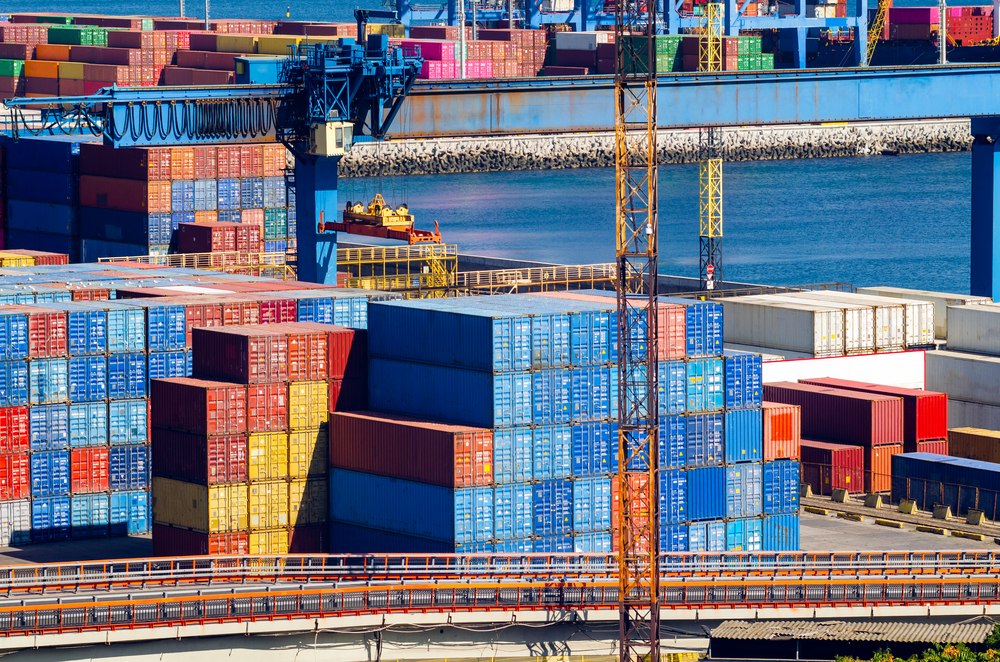
Kyrgyzstan and Russia are advancing plans for an alternative transport route that would bypass Kazakhstan. The proposed Southern Transport Corridor would connect the Russian port of Astrakhan across the Caspian Sea to the Turkmenbashi port in Turkmenistan and then continue overland through Turkmenistan and Uzbekistan to Kyrgyzstan.

The first test cargo shipments along this corridor have already been completed, according to Russian media reports citing Kyrgyzstan’s First Deputy Prime Minister Daniyar Amangeldiyev.

Amangeldiyev said Kyrgyzstan views the development of this southern route via the Caspian Sea as a promising alternative for trade between the two countries.

“We’re working in this direction. We have a strategic partnership in this area and a shared vision. We are currently in negotiations,” he told Russia’s TASS news agency on April 3 on the sidelines of the CIS International Economic Forum in Moscow.

Discussions on establishing the new transport corridor date back to October 2024, during the visit of then–prime minister of Kyrgyzstan Akylbek Japarov to Moscow.

For Kyrgyzstan, the Southern Transport Corridor offers a way to reduce dependence on transit through Kazakhstan. At present, most cargo traffic between Russia and Kyrgyzstan passes through the territory of Kazakhstan. Trucks from Kyrgyzstan often face delays of several days at the border, creating significant obstacles for cargo transport, particularly for perishable agricultural goods.

The new corridor is expected to help alleviate these bottlenecks and provide an alternative route linking Kyrgyzstan with the European part of Russia. Kazakhstan would continue to serve as the primary transit route for trade with Russia’s Siberian, Ural, and Far Eastern regions.

Six New Oil Fields Added to Kazakhstan’s Reserves

Six new oil fields in western Kazakhstan, with combined reserves exceeding 127 million tons, were added to the country’s national reserves in 2025, Vice Energy Minister Yerlan Akbarov has announced.

“Production will be carried out primarily by local, small companies that discovered these fields,” Akbarov said in response to journalists’ questions. He added that Kazakhstan has 15 sedimentary basins with potential hydrocarbon resources; five are currently under development, while geological exploration is ongoing in the others.

Earlier, at the Geoscience & Exploration Central Asia forum, Minister of Industry and Construction Yersayin Nagaspayev said that exploration aimed at discovering new oil and gas reserves is planned in the west, as well as in the southeast and north of the country. “Seismic exploration work is planned in the Shu-Sarysu and North Torgay sedimentary basins, which remain underexplored. The results are expected to provide a basis for more detailed prospecting and exploration,” Nagaspayev said.

According to the minister, approximately 10,000 deposits are currently recorded in Kazakhstan, of which only 359 are hydrocarbon deposits. In addition, more than 1,000 solid mineral deposits, over 3,700 sites of common minerals, and around 4,900 groundwater sources have been added to the national balance sheet.

At the same forum, Askhat Khasenov, Chairman of the Management Board of JSC National Company KazMunayGas (KMG), said the company’s remaining recoverable oil reserves amount to about 445 million tons, with more than 50% classified as hard to recover.

He noted that KMG is implementing innovative technologies to bring these reserves into production. As part of this effort, the company has adopted a Technological Challenges Program focused on deploying advanced solutions.

Under this program, an additional 434,000 tons of oil were produced in 2025. By 2040, the initiative is expected to generate a further 54 million tons of output, helping to sustain production and preserve jobs at mature fields around which local communities have developed over many years.

As previously reported by The Times of Central Asia, Kazakhstan is launching its most ambitious geological exploration program in the past 15 years. Over the next three years, the government plans to invest more than $470 million in the study of mineral resources. A major hydrocarbon field has already been discovered in the Atyrau region, with reserves potentially comparable to those of Kashagan, the country’s largest oil field.

Second Attack in Moscow Was Planned Alongside Crocus City Hall Assault

Organizers of the deadly attack at the Crocus City Hall concert venue near Moscow had initially planned a second, simultaneous attack in the Russian capital but later abandoned the idea, according to materials from the ongoing investigation cited by TASS.

A participant in the court proceedings told the agency that investigators had identified a coordinator operating from abroad, known by the alias Saifullo, who had prepared a group of recruited and trained attackers for two separate operations in Moscow. The second attack was intended to take place at the same time as the assault on Crocus City Hall, with two individuals assigned to carry it out and three others designated for the concert venue.

However, shortly before the attack, the plan was revised. Instead of dividing their forces, the organizers decided to concentrate on a single target, reinforcing the group assigned to Crocus City Hall. The exact location and method of the planned second attack were not disclosed in the case materials, although investigators noted it was also intended to result in mass casualties.

According to TASS, one week before the attack the coordinator informed the perpetrators that an additional individual, previously assigned to the second operation, would join the group targeting Crocus City Hall. Several suspects linked to the case have been placed on Russia’s list of designated terrorists, while the alleged coordinator remains at large abroad.

As previously reported by The Times of Central Asia, a man sentenced to life imprisonment in connection with the attack died in pretrial detention, in what Russian authorities described as suicide.

Investigations into the organization and execution of the Crocus City Hall attack are ongoing.

Construction Begins in Kazakhstan on a World-Class Film Studio for a Movie Starring Jackie Chan

A project has been launched in Kazakhstan’s Almaty region that could significantly transform the local film industry. Construction has begun in the city of Kaskelen on the “Dala Stage” film studio project, which is positioned as a world-class facility and is being developed with the participation of international partners.

According to local authorities, one of the most notable moments at the project’s groundbreaking ceremony was the delivery of a time capsule from Jackie Chan, which was transported by helicopter. The capsule was received by director Robert Koon, who is set to work on the first production at the new site, Armor of God 4: Ultimatum.

“The film industry is developing rapidly, requiring increasingly large-scale solutions and advanced technologies. This new project will allow local professionals to compete at a global level,” said Almaty Region Akim Marat Sultangaziev.

Producer Li Chiu Wa conveyed greetings from Jackie Chan and said the project is progressing quickly. He said that just six months ago it was still at the discussion stage, but construction has already begun.

The key parameters of the future facility have already been outlined. The total site will cover 15 hectares, with built-up space of 3,000 square meters. The project extends beyond the construction of a film studio and is intended to support the development of the national film industry, including training specialists and attracting investment.

Middle East Crisis: Kazakhstan Could Become an Alternative Supplier of Petroleum Products to Asia

The two-week ceasefire announced after Pakistani mediation between Iran and the U.S. has reduced the risk of immediate escalation in the Strait of Hormuz, but disruptions to one of the key routes of global oil trade have already triggered structural changes in energy markets. Against this backdrop, Kazakhstan and other countries in the region are increasingly being viewed as alternative suppliers of hydrocarbons, at least from the perspective of South Korea and Japan.

Despite the agreement on a two-week pause, Iran has made it clear that it retains control over shipping in the strait, including the potential to impose restrictions and coordinate tanker movements with its military. This has heightened concerns among importers, many of whom depend heavily on this route.

The most notable shift is taking place in Asia. South Korea, which receives about 61% of its crude imports and 54% of its naphtha imports through the Strait of Hormuz, is sending a high-level delegation to Kazakhstan, Oman, and Saudi Arabia to seek alternative sources of supply. Talks in Astana are expected to focus on oil and naphtha for industrial use.

South Korea, Asia’s fourth-largest economy, has proven to be among the most vulnerable to disruptions in the Strait of Hormuz. In response, Seoul is taking urgent diplomatic and economic measures, with Presidential Chief of Staff Kang Hoon-sik traveling to Kazakhstan as a special envoy for strategic economic cooperation. The delegation includes representatives from relevant ministries and major energy companies, underscoring the urgency of the effort.

The purpose of the visit is not only to address a potential short-term shortfall but also to establish sustainable alternative supply channels. South Korea has already secured a 24 million-barrel supply deal with the UAE, and shipments are already arriving at its ports, though officials say that volume is still insufficient given the ongoing instability.

The government is coordinating efforts with private fuel importers and logistics operators to ensure uninterrupted supplies until tankers arrive at the country’s ports.

Kazakhstan, which possesses large oil fields including Kashagan, is emerging as a key candidate to partially replace Middle Eastern volumes. However, geography imposes clear limitations: oil from the region requires more complex logistics, including transit across the Caspian Sea and onward through the Caucasus or the Black Sea. This is compounded by a projected decline in the country’s oil production. In March, Energy Minister Yerlan Akkenzhenov stated that output could fall by 2-4 million tons by the end of 2026 due to disruptions linked to attacks on infrastructure belonging to the Caspian Pipeline Consortium (CPC), as well as fires at the Tengiz field.

Initial projections placed Kazakhstan’s 2026 oil production at 100.5 million tons, potentially a record level. However, the minister indicated that actual output will most likely fall short of this target.

Japan is also reassessing its supply strategy. With more than 90% of its oil traditionally sourced from the Middle East, Tokyo is considering increasing imports from Kazakhstan and Azerbaijan through projects involving the national company INPEX.

Japanese experts note that oil from the Caspian region is broadly similar in quality to Middle Eastern crude, making it easier to process at existing refineries. However, alternative transport routes, such as shipments via the Red Sea and Mediterranean, or around Africa, extend delivery times to between 25 and 55 days and significantly increase costs.

Overall, the current crisis may accelerate a long-term reassessment of the role of Central Asia and the South Caucasus in the global energy sector. However, any significant increase in supply will be constrained by infrastructure and transport limitations. Most of Kazakhstan’s oil exports continue to rely on routes passing through Russia, introducing an additional geopolitical dimension.

While negotiations between Tehran and Washington continue, markets are already reacting to perceived risks. Jet fuel and diesel prices in Europe have risen sharply, and EU officials are discussing emergency measures including delayed refinery maintenance, lower grid tariffs and electricity taxes, and a possible revival of some 2022-era crisis tools. Even so, a partial reallocation of supply flows could stimulate investment in alternative routes, including the Trans-Caspian corridor and the expansion of existing pipeline networks.

Bukhara Demolitions Resurface as Developer Faces Financial Trouble

Concerns over demolition works linked to the “Eternal Bukhara” tourism project have resurfaced following renewed questions directed at Uzbekistan’s Cultural Heritage Agency, as the project’s main developer faces financial difficulties.

In 2024, The Times of Central Asia reported that construction of the large-scale tourism complex near the historic center of Bukhara had drawn criticism from local residents and UNESCO. The project, located in the buffer zone surrounding the ancient city, was seen as a potential threat to the integrity of one of Central Asia’s most significant cultural sites.

According to Uzbek outlet Uzdiplomat, the issue was raised again during a recent briefing, where journalists questioned officials about the consequences of last year’s demolitions. The project’s main investor, Enter Engineering, has since encountered financial problems and is reportedly selling assets to repay debts to banks, the government, and employees. While construction has slowed, concerns remain over the damage already caused to the cultural environment.

The demolitions carried out in 2024 sparked strong reactions from the public, architects, and international organizations. Several buildings, including administrative and social facilities in central Bukhara, were reportedly demolished as part of preparations for the tourism complex. At the time, international heritage group Alerte Héritage called for a halt to the process, arguing that it could contradict global preservation commitments.

Responding to questions, a representative of the Cultural Heritage Agency said the works were conducted outside UNESCO’s core protected area and instead took place in the buffer zone. According to the agency, all required documentation, including a master plan and impact assessments, was submitted, and UNESCO was informed of the process.

Officials also addressed criticism over the demolition of buildings that, while not officially listed as cultural heritage, were considered by some to have historical value. Deputy head of the agency Tursunali Kuziyev said the agency can only intervene in cases involving officially registered heritage sites. He added that granting such status requires a formal scientific review and legal procedure.

Questions about whether the agency could take a broader stance in defense of the public interest were met with similar responses. Officials reiterated that decisions regarding non-listed buildings fall under the authority of local governments and urban planning bodies.