• KGS/USD = 0.01144 0%
  • KZT/USD = 0.00194 -0%
  • TJS/USD = 0.10844 -0.46%
  • UZS/USD = 0.00008 0%
  • TMT/USD = 0.28571 0.28%
  • KGS/USD = 0.01144 0%
  • KZT/USD = 0.00194 -0%
  • TJS/USD = 0.10844 -0.46%
  • UZS/USD = 0.00008 0%
  • TMT/USD = 0.28571 0.28%
  • KGS/USD = 0.01144 0%
  • KZT/USD = 0.00194 -0%
  • TJS/USD = 0.10844 -0.46%
  • UZS/USD = 0.00008 0%
  • TMT/USD = 0.28571 0.28%
  • KGS/USD = 0.01144 0%
  • KZT/USD = 0.00194 -0%
  • TJS/USD = 0.10844 -0.46%
  • UZS/USD = 0.00008 0%
  • TMT/USD = 0.28571 0.28%
  • KGS/USD = 0.01144 0%
  • KZT/USD = 0.00194 -0%
  • TJS/USD = 0.10844 -0.46%
  • UZS/USD = 0.00008 0%
  • TMT/USD = 0.28571 0.28%
  • KGS/USD = 0.01144 0%
  • KZT/USD = 0.00194 -0%
  • TJS/USD = 0.10844 -0.46%
  • UZS/USD = 0.00008 0%
  • TMT/USD = 0.28571 0.28%
  • KGS/USD = 0.01144 0%
  • KZT/USD = 0.00194 -0%
  • TJS/USD = 0.10844 -0.46%
  • UZS/USD = 0.00008 0%
  • TMT/USD = 0.28571 0.28%
  • KGS/USD = 0.01144 0%
  • KZT/USD = 0.00194 -0%
  • TJS/USD = 0.10844 -0.46%
  • UZS/USD = 0.00008 0%
  • TMT/USD = 0.28571 0.28%
09 December 2025

Central Asian Leaders Welcome Azerbaijan’s Accession at Tashkent Summit

The leaders of Central Asia convened in Tashkent on November 16 for a high-level Consultative Meeting, marking a significant step toward deeper regional integration. The summit welcomed Azerbaijan as a full participant and endorsed a roadmap to formalize cooperation in trade, infrastructure, security, and water management. Hosted by Uzbekistan’s President Shavkat Mirziyoyev, the summit brought together the presidents of Kazakhstan, Kyrgyzstan, Tajikistan, Turkmenistan, and Azerbaijan, alongside a United Nations representative.

Ahead of the meeting, Tashkent’s central streets were adorned with national flags and floral installations, underscoring the political and symbolic significance the Uzbek government placed on the event.

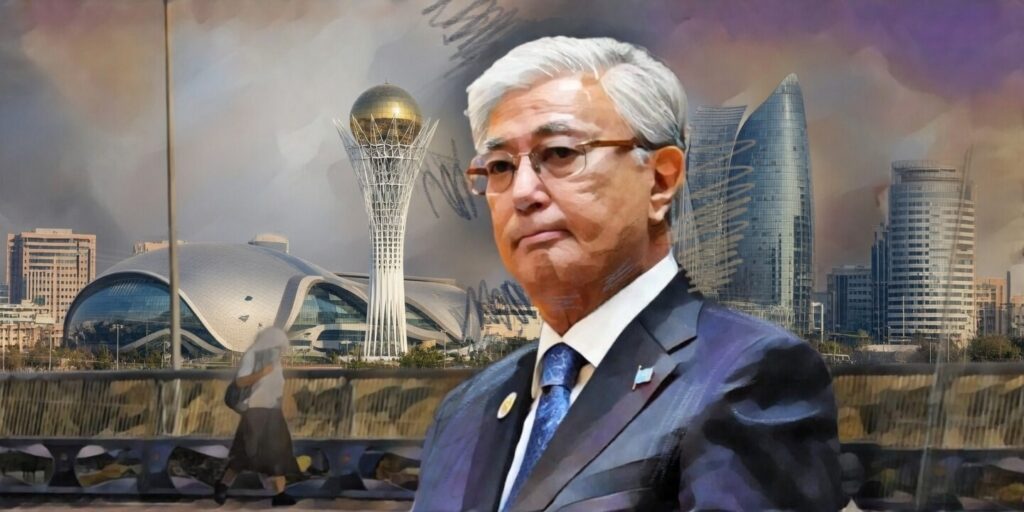
Mirziyoyev hailed Azerbaijan’s accession as “a truly historic day,” as the country became a full member of the Consultative Meeting of the Heads of State of Central Asia. He proposed forming a “Community of Central Asia,” establishing a rotating Secretariat, appointing special presidential envoys for coordination, and creating a Council of Elders to promote cultural and humanitarian dialogue.

Image: president.uz

Regional Economic and Connectivity Agenda

Economic cooperation dominated the multilateral agenda. Leaders agreed to develop a Comprehensive Regional Program for Trade and Economic Cooperation through 2035 and to draft a Declaration on a Common Investment Space.

“In essence, we will build a strong bridge between Central Asia and the South Caucasus and pave the way for the formation of a single space of cooperation, which will undoubtedly strengthen the strategic interconnectedness and stability of both regions,” said Mirziyoyev.

Kazakhstan’s President Kassym-Jomart Tokayev also highlighted deepening bilateral ties with Uzbekistan. Trade between the two countries has reached $4 billion in 2025, with plans to increase it to $10 billion through expanded industrial cooperation and import substitution. Over 6,500 joint enterprises now operate between the two countries, with new projects worth more than $8 billion under development. Several initiatives, such as the Silkway Central Asia logistics center, new industrial facilities, and cultural programs, were launched in Tashkent during the visit.

Image: president.uz

Tajikistan’s President Emomali Rahmon met with Mirziyoyev on the sidelines of the summit. The two leaders noted the steady growth in political dialogue and agreed to expand cooperation in energy, industry, agriculture, and innovation. Bilateral trade surpassed $440 million in the first nine months of 2025. They also discussed regional security, including collaboration against terrorism, extremism, cybercrime, and drug trafficking.

Security, Water, and Cultural Cooperation

To advance regional integration, Tashkent also hosted the first meeting of the Council of Ministers of Trade and Investment of Central Asian countries and Azerbaijan on November 13. Ministers discussed boosting trade, investment, and industrial cooperation, with the goal of increasing regional trade turnover to $20 billion. Plans were also made to develop joint production platforms under a “Made in Central Asia” label. Uzbekistan’s trade with Central Asian partners rose from $3.2 billion in 2017 to $6.9 billion in 2024, while trade with Azerbaijan has grown by 13% this year.

Connectivity remained a focal point. Participants reaffirmed their commitment to the China-Kyrgyzstan-Uzbekistan railway and the Trans-Afghan corridor. Azerbaijan’s President Ilham Aliyev highlighted the growing significance of the Middle Corridor, noting that Azerbaijani ports handled a substantial share of trans-Caspian cargo in 2023, reflecting the rise in freight traffic between Central Asia and Europe.

In the security domain, the leaders endorsed a Concept of Regional Security and Stability, calling for coordinated efforts to counter terrorism, extremism, cyber threats, and transnational crime. They also discussed mechanisms to monitor vulnerabilities in water and energy infrastructure.

Image: president.uz

Environmental cooperation featured prominently. Uzbekistan proposed declaring 2026–2036 as the “Decade of Practical Actions for the Rational Use of Water in Central Asia.” Mirziyoyev also proposed establishing a Regional Centre of Competencies in Water Management in Tashkent to support professional training and basin management. He urged deeper cooperation with Afghanistan on joint use of the Amu Darya basin, positioning the initiative as a response to growing water scarcity and a complement to broader climate adaptation efforts.

Cultural diplomacy also featured. Leaders visited the newly opened Centre for Islamic Civilization in Tashkent on November 15. The complex blends traditional and modern architectural styles, with four 34-meter portals and a 65-meter central dome. Uzbekistan proposed hosting an International Congress on Spiritual Heritage and called for support for a UN General Assembly resolution recognizing the contributions of Central Asian scholars to global culture.

Why Hosting the Seventh Consultative Meeting Matters to Uzbekistan

Political analyst Mukhtar Nazirov told The Times of Central Asia that hosting the seventh Consultative Meeting holds particular importance for Uzbekistan, not only as part of the rotating schedule but due to Tashkent’s leadership role in initiating this format. He said Uzbekistan is strongly committed to institutionalizing and legally strengthening the platform for long-term cooperation.

Image: president.uz

Nazirov emphasized that the success of the initiative is vital for Uzbekistan and that the government made significant efforts in preparation. He added that the Consultative Meeting is increasingly aligning with the region’s broader “Central Asia Plus” dialogues, enhancing the region’s ability to engage with external partners and address shared challenges.

Azerbaijan’s Accession: Risk or Opportunity?

According to Nazirov, Azerbaijan’s full participation has sparked both optimism and concern.

Some experts argue that since the format is named “Central Asia,” membership should be geographically limited. They worry that Azerbaijan’s inclusion could shift the platform’s original identity. Nazirov cited past examples, such as the “Central Asian Cooperation Organization,” which lost its independent status after Russia joined and eventually merged into the Eurasian Economic Community.

Concerns have also been raised over Turkey’s influence, given Azerbaijan’s close ties with Ankara, with some experts fearing that the format might drift toward the broader “Turkic world” institutional space.

However, Nazirov argues that Central Asia should be understood not only geographically, but also as a civilizational and economic space. Azerbaijan’s involvement, he said, expands the region’s connectivity and strengthens its resilience against external pressures, accelerating projects like the trans-Caspian corridors, and the China-Kyrgyzstan-Uzbekistan railway.

Nazirov added that Azerbaijan’s participation may reduce the dominance of Russia and China in regional connectivity, while boosting Turkey’s presence. This, he noted, aligns with the “Greater Central Asia” concept debated in Washington, which envisions a broader, interconnected regional space that includes Azerbaijan.

Image: president.uz

Afghanistan and Regional Water Security

Nazirov also addressed whether Afghanistan might eventually join regional platforms, should stability improve. He recalled Mirziyoyev’s past calls, as early as the 2003 Aral Sea summit, for Afghanistan’s inclusion in regional water dialogues, noting that Afghanistan shares transboundary water resources but lacks a legal framework for their use. At this year’s Aral Culture Summit, The Times of Central Asia reported on new efforts to restore the Aral Sea region. Nazirov referenced ongoing concerns about Afghanistan’s construction of the Qosh Tepa Canal, which could affect water flow to downstream regions such as Bukhara, Navoiy, Khorezm, and Karakalpakstan. In response, Uzbekistan and neighboring states have stepped up their engagement with the Taliban.

Finally, Nazirov observed a growing trend of regional coordination in dialogue with global powers such as Washington and Moscow, arguing that integrating Afghanistan into regional infrastructure, particularly Trans-Afghan corridors, could increase Kabul’s responsibility and promote more constructive engagement. More broadly, he concluded, the logic supporting Azerbaijan’s inclusion could, under the right conditions, also apply to Afghanistan in the future.

U.S. Eases Sanctions on Key Kazakh Oil Projects

The Caspian Pipeline Consortium (CPC), oil producer Tengizchevroil (TCO), and the Karachaganak field have been granted permission to resume services and conduct transactions related to their operational activities, following a United States Treasury Department decision to ease sanctions. The Tengiz and Karachaganak fields are located in Kazakhstan, and Kazakh oil is exported through the CPC system.

In October, the U.S. Treasury added Russian oil giants Lukoil and Rosneft, along with 34 of their subsidiaries, to its latest package of sanctions. However, experts now suggest that the exemption of key projects in Kazakhstan could have a stabilizing effect on the country’s oil sector and its broader economy.

The U.S. Treasury’s Office of Foreign Assets Control (OFAC) issued General License No. 124B, allowing services and other transactions required to maintain the operations of the CPC, Tengizchevroil, and the Karachaganak project, even when sanctioned entities such as Lukoil and Rosneft are involved. The license does not permit any transactions related to the sale or transfer of shares in these projects.

Kazakhstan’s Minister of Energy, Yerlan Akkenzhenov, confirmed on November 12 that the government is working to have the Karachaganak field fully exempt from the U.S. sanctions regime.

The CPC system links oil fields in western Kazakhstan and parts of Russia with a marine terminal in Novorossiysk on Russia’s Black Sea coast. It remains the main export route for Kazakh oil, carrying more than 80% of the country’s crude. The system has an annual capacity of about 83 million tons.

CPC shareholders include Kazakhstan, holding a combined 20.75% through KazMunayGas (19%) and Kazakhstan Pipeline Ventures LLC (1.75%). Other shareholders include Chevron Caspian Pipeline Consortium Company (15%), Lukoil International GmbH (12.5%), Mobil Caspian Pipeline Company (7.5%), Rosneft-Shell Caspian Ventures Limited (7.5%), BG Overseas Holdings Limited (2%), Eni International N.A. N.V. (2%), and Oryx Caspian Pipeline LLC (1.75%). The Russian government and Transneft also hold significant stakes.

Tengizchevroil LLP, the operator of the Tengiz field, is a joint venture between Chevron (50%), ExxonMobil Kazakhstan Ventures Inc. (25%), KazMunayGas (20%), and Lukoil (5%). Tengiz is one of Kazakhstan’s largest oil fields, with reserves estimated at 3.1 billion tons.

The Karachaganak field is among the world’s largest, with development carried out by the Karachaganak Petroleum Operating consortium. Shell and Eni serve as joint operators, and the partnership also includes Chevron (18%), Lukoil (13.5%), and KazMunayGas (10%).

On November 13, it was reported that KazMunayGas is considering acquiring Lukoil’s stake in the Karachaganak project, reflecting efforts to manage shifting ownership dynamics under the sanctions environment.

Uzbekistan to Build Central Asia’s Largest Ethanol Refinery

Allied Biofuels FE LLC and India’s Praj Industries Ltd have signed a Memorandum of Understanding (MOU) to construct what is set to become Central Asia’s largest ethanol refinery in Uzbekistan’s Khorezm region, the companies announced on November 17.

Praj will provide first-generation ethanol technology, proprietary equipment, and full-spectrum support, including design, engineering, procurement, and commissioning. The planned facility will produce 890 tonnes of 95% ethanol per day, or approximately 293,700 tonnes annually, using sorghum as the primary feedstock. The plant will also capture biogenic CO₂ generated during the production process.

Allied Biofuels intends to convert this ethanol into 160,400 tonnes of Sustainable Aviation Fuel (SAF) and 5,040 tonnes of green diesel each year. Biogenic CO₂ will also be combined with synthesis gas and green hydrogen, produced from 2,000 MW of PEM electrolysers, to generate 257,000 tonnes of Electro-Sustainable Aviation Fuel (e-SAF) annually.

The project represents the first phase in establishing Central Asia’s first integrated refinery for SAF, e-SAF, and green diesel. According to the companies, the initiative supports Uzbekistan’s climate objectives and aligns with the goals of the national Net Zero Emissions Office.

“This MOU is a landmark moment for Uzbekistan and for Central Asia’s clean-energy future,” said Alfred Benedict, Chairman and Managing Director of Allied Biofuels. “This project will strengthen energy security, reduce emissions, and create long-term economic opportunities for the region.”

Praj Industries Chairman Dr. Pramod Chaudhari added, “With our proven expertise and advanced technologies, Praj will help develop the ethanol facility and support Uzbekistan in advancing its sustainability targets.”

The investment is expected to generate hundreds of skilled jobs and position Uzbekistan as a regional leader in advanced biofuels.

The Times of Central Asia has previously reported on Uzbekistan’s increased emphasis on renewable energy and efforts to attract international clean-technology partnerships.

Opinion: The Integration of Afghanistan into Central Asia

Shared rivers and joint water management can shape a new regional partnership

Central Asia and Afghanistan sit on the same rivers, yet often behave as if they belong to different regions. Water ties them together more firmly than any border, but the politics of the past have kept Afghanistan outside the regional system. Today, as climate pressures intensify and development accelerates on both sides of the Amu Darya, the case for integrating Afghanistan into Central Asia has never been stronger. And the path to that integration begins with water.

The debate around the Qosh Tepa Canal makes this evident. Afghanistan was never part of the agreements that govern the Amu Darya River (Protocol 566 of the Soviet Union and the Almaty 1992 agreement). It did not sign allocation protocols and never joined regional basin institutions. Still, it was expected to follow rules it had no hand in shaping. Now, that old arrangement has reached its limit. The canal will bring new agriculture to the north of Afghanistan, but downstream states depend on the same river. The real question is not whether Afghanistan should develop, but how to shape that development jointly so the river can sustain all sides.

Central Asia already has cooperative models that Afghanistan could join. Uzbekistan and Tajikistan have shown how two neighbors can jointly manage a transboundary river through their collaboration in hydropower on the Zarafshan. Kyrgyzstan, Uzbekistan, and Kazakhstan have signed a similar mechanism with the KambarAta-1 project, which will generate energy and regulate seasonal flows for downstream agriculture. These experiences show that once countries share responsibility for a river, trust can grow and benefits expand.

Afghanistan can become part of this regional architecture. The 161-meter-high planned dam on the Kokcha River, set to generate 445 megawatts of electricity, offers a clear entry point. A jointly governed dam on this river would give Afghanistan energy, while downstream states would benefit from its flow in terms of agriculture. When operations are transparent and agreed upon, water becomes a field of cooperation rather than tension.

Energy trade adds another layer of opportunity. Central Asia has a long record of exchanging electricity and gas in return for upstream releases. Uzbekistan and Kazakhstan have done this with Kyrgyzstan for many years through a joint water and energy agreement. The same model can work with Afghanistan. The country needs power, and it can offer coordinated water management in return. A structured energy for water arrangement would give Afghanistan an incentive to cooperate and offer Central Asia predictability.

Agriculture is another arena where cooperation promises immediate gains. Uzbekistan’s policies on water-saving technologies offer a strong example. They subsidize drip, sprinkler systems, canal improvement, land levelling, efficient pumps, and even solar-powered irrigation. These investments reduce water losses while increasing yields only if their rebound effect, such as further expansion of agriculture, is controlled. The same approach could be applied in the northern provinces of Afghanistan, including in the area under the Qosh Tepa Canal. With similar financial support and technical guidance, Afghan farmers could modernize irrigation, reduce wastage, and improve productivity. Such upgrading requires financial support, which could be facilitated by third‑party funding organizations from the private sector, if the countries agree.

Moreover, water saving could be boosted by transitioning from water‑intensive crops to less water‑consuming ones. But farmers change crops only when the market gives them a reason. In northern Afghanistan, rice is important because of excess water and brings a stable income. If Central Asian states want farmers to transition toward crops that use less water, then regional trade must incentivize this. Uzbekistan, Tajikistan, and Turkmenistan can import vegetables, fruits, and legumes from Afghanistan. Turkmenistan already imports large quantities of vegetables from other countries, which could be replaced by Afghanistan, and shift more of that demand onto Afghan producers. Such trade would ease pressure on Turkmen water resources and give Afghan farmers stable buyers for crops that consume less water, gradually steering cultivation away from rice.

Upgrading agriculture can also support peace and stability. When farmers see improved incomes from modern techniques and expanded markets, pressure on water and land decreases. Cooperation between communities becomes easier. These programs fit naturally within peacebuilding, climate adaptation, and rural development portfolios, and third-party organizations can finance them. Joint pilot farms, training programs, and technology transfers along the Amu corridor would benefit all sides.

Another critical area for cooperation is early warning systems. Floods, glacial lake outbursts, and sudden climate-related disasters affect both Afghanistan and Central Asia. Shared monitoring, regional data platforms, and coordinated warning protocols would protect lives and livelihoods. Afghanistan could join the regional systems that already exist, or new ones could be built that link hydrometeorological services across the Amu basin. When neighbors detect threats together and respond together, regional resilience grows.

Security concerns remain central to Central Asia’s hesitation toward deeper integration with Afghanistan. Cross-border trafficking, extremist movements, and instability along the Amu corridor pose risks to regional peace. The Taliban, as the de facto authority, can play a constructive role by committing to joint border monitoring, curbing militant groups that threaten its neighbors, and cooperating on intelligence-sharing mechanisms. If Afghanistan demonstrates its reliability in addressing these concerns, trust will grow, and water cooperation will be reinforced by a foundation of security.

All these developments point toward a larger shift. Afghanistan’s natural place is within Central Asia. Its climate challenges match those of its northern neighbors, and its long-term interests align with the region’s priorities. Central Asia can help Afghanistan stabilize its water use, modernize agriculture, and integrate with regional trade. Afghanistan can offer regulated flows, hydropower potential, and a new market for energy and technology. Moving away from the endless friction associated with Pakistan in the south and stepping into the regional structures of the north is both logical and advantageous.

Beyond water and energy, integration offers significant economic dividends. Afghanistan’s northern provinces can become a hub for agricultural exports, hydropower trade, and transit routes linking Central Asia to South Asia. Coordinated infrastructure projects—roads, railways, and transmission lines—would reduce costs and open new markets. Regional investment in Afghanistan’s modernization would not only stabilize its economy but also expand Central Asia’s access to diversified trade corridors, creating a win‑win dynamic that strengthens resilience against external shocks.

This is the moment to shape a shared water future. A future in which Afghanistan is not an unpredictable upstream actor, but a constructive partner. A future in which development in Afghanistan is aligned with water security in the entire region. Central Asia has the experience and tools. Afghanistan has the need and potential. What has been missing is the choice to move forward together. Now is the time to make that choice. A shared water future, reinforced by security cooperation and economic integration, can be the bridge that brings Afghanistan fully into Central Asia.


The views expressed in this article are those of the author and do not necessarily reflect the official policy or position of the publication, its affiliates, or any other organizations mentioned.

Kazakhstan to Develop AI Rules for Financial Sector

Kazakhstan’s Agency for Regulation and Development of the Financial Market (ARDFM) plans to establish a regulatory framework governing the use of artificial intelligence (AI) in the country’s financial sector. The announcement was made by ARDFM Chair Madina Abylkassymova during the 13th Congress of Financiers of Kazakhstan.

According to the regulator, 75% of banks in Kazakhstan already use AI technologies in areas such as credit scoring, fraud detection, marketing, and customer service chatbots. However, adoption levels vary significantly: large banks have made substantial progress, while medium and smaller institutions are primarily conducting pilot projects.

Abylkassymova stressed that the widespread use of AI is imminent, necessitating the development of unified standards and regulatory guidelines.

“There is currently no dedicated document regulating artificial intelligence, but one will certainly be introduced,” she said. “The main challenges today involve the absence of uniform standards, inconsistent data quality, and a shortage of qualified specialists. At present, each financial institution independently sets objectives and configures its AI systems, but without common rules. We must therefore rely on existing regulatory practices and client-service standards.”

She added that regulatory measures should be proportionate to the level of risk associated with specific financial transactions. “We will conduct a detailed risk assessment. We do not believe every application of AI must be tightly regulated. Low-risk areas may require light oversight, whereas high-risk applications, particularly those with systemic implications, should face stricter controls.”

Abylkassymova identified data quality as a major obstacle to AI development. She noted that information is often fragmented and stored across various systems and formats, increasing the likelihood of errors in AI-driven decision-making. A proposed legislative initiative includes the creation of a unified database of anonymized data accessible to market participants, aimed at improving AI model accuracy.

Ongoing discussions are addressing whether access to government databases should be free or paid, and whether different pricing models should apply depending on the purpose of use.

“We place extensive requirements on financial institutions, including offering access to government services through their digital platforms,” Abylkassymova explained. “To fulfill these functions, banks need access to public databases. So, the question is: is it justified to charge for such access? That’s one scenario. It’s another matter entirely when access is sought for purely commercial gain.”

She concluded that the future AI framework will be developed in consultation with market stakeholders, with the goal of striking a balance between enabling innovation and safeguarding financial system stability.

Previously, The Times of Central Asia reported that Kazakhstan’s Ministry of Finance is piloting a digital platform that leverages AI and big data to help entrepreneurs identify the most profitable sales locations for their products.

How Kyrgyzstan’s Fastest-Growing Restaurant Tech Startup Is Revolutionizing Dining

Bishkek has long been known for its vibrant restaurant scene. Now the sector is implementing innovations, making the lives of its customers even easier. Meet Pai, the Kyrgyz startup serving as a digital concierge between restaurants and their customers.

“In Kazakhstan, I saw a product where you could pay your bill right at your table with two taps and leave without interacting with the staff. That’s when I realized you could build a whole world around this, turning every interaction between a guest and an establishment into a digital experience,” says Ehrlan Zholdosh, CEO and Co-Founder of Pai.

Zholdosh is not a newcomer to the industry; his experience in product design and management in Eastern Europe and the Middle East was an asset when launching his own company, Pai.

Old Habits Die Hard
 It’s a universal restaurant experience around the globe when you’re done with your meal and ready for the check – it can take an age to come, and that’s if you can find waitstaff in the first place. Now, with Pai, which essentially turns every table into a payment terminal, this process has been streamlined to the point where it takes only seconds to pay and even leave a tip.

The very first MVP (minimum viable product) was launched in Mar 2024. This is when Aibek Nogoev joined as a Co-Founder to completely overhaul the technical side of the product. The co-founder’s team has complementary skillsets — the third Co-Founder, Kairygul Kalbaeva, has over ten years of experience in the restaurant business, which came in handy when onboarding the first customers, as she understands how restaurants operate inside out.

As for the Pai team, the majority of its members were hired in ololoPlanet, one of the locations of ololo, the largest chain of tech hubs in Central Asia, where Pai has its offices.

Apart from enabling customers to pay faster and more smoothly, Pai aims to build a restaurant super-app that integrates with the ERP systems restaurants use, including customizable loyalty programs. Another strategic benefit for restaurants using Pai is a non-invasive way to collect user data.

The Snowball Effect

In September, Pai won first place in the country’s largest hackathon, Startup Nation. It may have been tough to onboard customers at the beginning of Pai’s journey, but now there are over 70 active restaurants and more than 100 in the waitlist, with hundreds of thousands of users and a daily turnover in excess of $20,000.

Recent changes to Kyrgyz tax legislation linked to the efforts to make the restaurant industry less opaque have been a massive boost as well. The authorities are trying to combat the shadow economy, pushing businesses, including restaurants, to become significantly more transparent, and many in the restaurant industry see Pai as the best solution. Its customer base now includes the majority of the largest restaurant chains in the Kyrgyz Republic, including global franchises.

The key challenge lies in its integration with ERP systems, which delivery services usually don’t integrate with. Pai has plans to expand its services to ultimately allow users to not only pay and receive rewards, but to enjoy new features, including ordering delivery and leaving reviews.

On the Way to Regional Expansion

Now, with domination within the Kyrgyz market and seven cities covered, Pai has ambitions beyond its home country and is looking to expand, starting with neighboring Kazakhstan, which offers a much larger market.

“Inspired by the words of PayPal’s founder, our product moved from zero to one by creating an innovative solution in a field lacking a standardized user experience or a monopoly, especially in a globalized world. Our first goal is to make requesting the bill from a waiter as obsolete as ordering a taxi via a phone call, and then build a new tech industry around restaurant services,” says Zholdosh.