• KGS/USD = 0.01144 0%
  • KZT/USD = 0.00216 0%
  • TJS/USD = 0.10456 0%
  • UZS/USD = 0.00008 0%
  • TMT/USD = 0.28490 0%
  • KGS/USD = 0.01144 0%
  • KZT/USD = 0.00216 0%
  • TJS/USD = 0.10456 0%
  • UZS/USD = 0.00008 0%
  • TMT/USD = 0.28490 0%
  • KGS/USD = 0.01144 0%
  • KZT/USD = 0.00216 0%
  • TJS/USD = 0.10456 0%
  • UZS/USD = 0.00008 0%
  • TMT/USD = 0.28490 0%
  • KGS/USD = 0.01144 0%
  • KZT/USD = 0.00216 0%
  • TJS/USD = 0.10456 0%
  • UZS/USD = 0.00008 0%
  • TMT/USD = 0.28490 0%
  • KGS/USD = 0.01144 0%
  • KZT/USD = 0.00216 0%
  • TJS/USD = 0.10456 0%
  • UZS/USD = 0.00008 0%
  • TMT/USD = 0.28490 0%
  • KGS/USD = 0.01144 0%
  • KZT/USD = 0.00216 0%
  • TJS/USD = 0.10456 0%
  • UZS/USD = 0.00008 0%
  • TMT/USD = 0.28490 0%
  • KGS/USD = 0.01144 0%
  • KZT/USD = 0.00216 0%
  • TJS/USD = 0.10456 0%
  • UZS/USD = 0.00008 0%
  • TMT/USD = 0.28490 0%
  • KGS/USD = 0.01144 0%
  • KZT/USD = 0.00216 0%
  • TJS/USD = 0.10456 0%
  • UZS/USD = 0.00008 0%
  • TMT/USD = 0.28490 0%

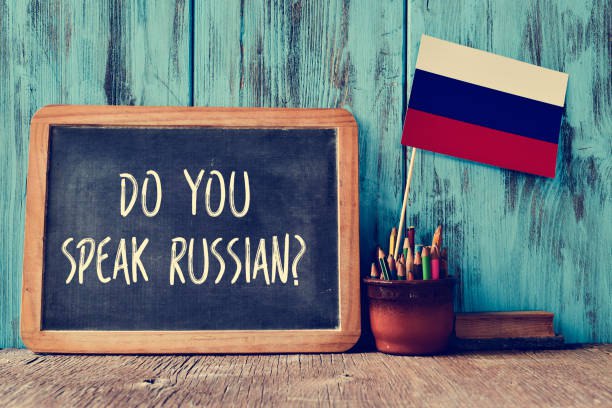
Russia to Measure Russian Language Influence Abroad, Focus on Uzbekistan

Russia’s Ministry of Foreign Affairs has commissioned a new research initiative to evaluate the effectiveness of its global Russian language promotion efforts, with a particular focus on Uzbekistan and Azerbaijan. According to the Russian daily Vedomosti, the state-funded All-Russian Public Opinion Research Center (ARPOR) secured the contract, valued at 34.8 million rubles (approximately $390,000).

ARPOR Director Valery Fedorov confirmed that the study has not yet begun, as the contract is still being finalized. When asked whether recent diplomatic strains between Russia and Azerbaijan might affect the initiative, Fedorov replied, “Escalations come and go.”

While the focus includes several post-Soviet states, the survey will also encompass countries such as India, China, Venezuela, and the United Arab Emirates. ARPOR previously conducted a similar study in 2024 in Israel, Kazakhstan, China, Cuba, Egypt, and India.

The current research will survey at least 1,500 people online and a minimum of 1,000 participants via phone or in-person interviews in each country. A ten-member expert team specializing in linguistics, international relations, culture, and media will analyze the results. The initiative will culminate in a roundtable discussion in Moscow.

Rossotrudnichestvo, the Russian government agency responsible for promoting cultural and educational ties abroad, told Vedomosti that more than 14,000 individuals studied Russian at its “Russian House” cultural centers across 71 countries in 2024. Uzbekistan remains one of the agency’s core focus areas, alongside Armenia, Belarus, Kazakhstan, Kyrgyzstan, Moldova, Tajikistan, and Turkmenistan.

In Uzbekistan, over 1,000 schools offer instruction in Russian or in bilingual formats. In contrast, Kazakhstan has more than 3,600 such schools.

Russian retains official language status in Kazakhstan and Kyrgyzstan, while in Tajikistan it is designated as a “language of interethnic communication.” In Uzbekistan and Turkmenistan, however, Russian does not have any official legal status.

In Kazakhstan, the use of Russian has been in gradual decline, largely due to demographic shifts. As of January 1, 2024, ethnic Russians made up 14.89% of the population, down sharply from nearly 40% in 1989. Nevertheless, Russian remains widely spoken and is supported by educational institutions and strong bilateral ties with Moscow.

Experts cited by Vedomosti noted that conditions for Russian language education are significantly more challenging outside urban centers like Tashkent and Baku. In many schools across Uzbekistan, Russian is taught for just two hours per week, insufficient to meet growing demand, they argue.

While interest in the Russian language remains steady, analysts say this is driven more by pragmatic factors, such as aspirations to study at Russian universities or pursue employment with Russian firms, than by cultural affinity or the effectiveness of Moscow’s soft power outreach.


Kazakhstan Engaged in Legal Disputes with 20 Foreign Companies

Kazakhstan is currently involved in 20 legal disputes with foreign companies, a decrease from 26 cases in 2023, according to Yerlan Musabayev, Acting Director of the Department for the Protection of State Property Rights under the Ministry of Justice.

“As of now, the Ministry is handling 20 cases involving claims totaling more than $7.5 billion,” Musabayev stated during a briefing in Astana. Of these, 13 are under review in international arbitration, five are in foreign courts, and two are in the pre-litigation stage. The reduction in the number of disputes reflects progress made over the past year, he noted.

Among the Ministry’s recent successes, Musabayev highlighted a key ruling by the High Court of Justice in London in favor of Kazakhstan in a case filed by Canadian uranium company World Wide Minerals (WWM). The dispute originated from Kazakhstan’s 1997 decision to deny WWM an export license for uranium and terminate a trust management contract for the Tselinograd Mining and Chemical Plant (now the Stepnogorsk Mining and Chemical Plant).

The High Court ruling, issued on February 28, 2025, overturned a 2024 decision that had awarded WWM approximately $65 million.

“Under the 2025 decision, the Republic of Kazakhstan has no obligations toward World Wide Minerals. It’s worth noting that the bar for appeals in UK courts is exceptionally high, fewer than 2% succeed,” Musabayev said.

Another legal victory came in a case involving the Kazakh-Italian construction joint venture Todini Impregilo Kazakhdorstroy. The company had sought $20 million in claims, but the International Chamber of Commerce Arbitration Court in Paris dismissed all demands and ordered the joint venture to reimburse $277,000 in legal costs. Enforcement of the ruling required compulsory measures.

“The Ministry of Justice is actively working to further reduce the number of disputes with foreign entities. Through coordinated efforts with other state bodies and the Government’s legal advisors, we’ve saved considerable budgetary resources, preserved Kazakhstan’s investment attractiveness, and strengthened the country’s international reputation,” Musabayev concluded.

As previously reported by The Times of Central Asia, Kazakhstan resolved a long-standing legal battle with Anatolie and Gabriel Stati’s Tristan Oil in 2024, following protracted litigation over the nationalization of oil assets. Meanwhile, early reviews of certain production-sharing agreements in the oil sector could lead to new legal proceedings in the near future.

Legal Media Center to Sue Kazakh Foreign Ministry Over Journalist Accreditation Refusal

The Legal Media Center, a media-focused human rights organization, has announced plans to file a lawsuit against Kazakhstan’s Ministry of Foreign Affairs (MFA) over its refusal to accredit seven journalists from Radio Azattyq, the Kazakh service of Radio Free Europe/Radio Liberty (RFE/RL).

According to Gulmira Birzhanova, head of the center’s legal department, the new regulations on foreign media introduced in 2024 have created a restrictive legal framework that infringes on journalists’ constitutional rights.

“By delaying their response and failing to provide concrete grounds for the MFA’s refusal to extend accreditation, the Ministry created conditions that violate journalists’ constitutional rights and legal protections. We remind the authorities that our journalists work for a media outlet already accredited in Kazakhstan,” Birzhanova said in a statement posted to Facebook.

The updated rules prohibit foreign media outlets from operating in Kazakhstan without official MFA accreditation. The Legal Media Center argues that these provisions constitute a de facto professional ban and conflict with both Kazakhstan’s Constitution and international press freedom standards.

The organization also claims that the restrictions appear to be selectively enforced, with Radio Azattyq being specifically targeted.

In January 2024, the MFA denied accreditation to several RFE/RL journalists, some of whom had not had their credentials renewed since late 2022. Radio Azattyq subsequently filed a lawsuit, which resulted in a mediation agreement in April.

At the time, RFE/RL President Stephen Capus welcomed the outcome.

“All we have ever asked for is that our journalists be allowed to do their jobs safely and without pressure. We remain committed to providing the Kazakh audience with independent and reliable information,” he said.

The Times of Central Asia previously interviewed Kazakh journalist Asem Tokayeva, a long-time contributor to RFE/RL. In that interview, she described internal challenges and disagreements within the media organization, raising broader concerns about the future of independent journalism in Central Asia.

Heavy Rains Flood Newly Renovated Streets and Market in Southern Kyrgyzstan

A sudden downpour on July 10 inundated parts of Osh, southern Kyrgyzstan’s largest city, flooding recently renovated streets, a newly opened municipal market, and multiple residential and public buildings. According to the Ministry of Emergency Situations (MES), the city’s drainage system overflowed after several hours of heavy rainfall.

Three private homes and the basement of an apartment block were submerged, along with the Family Medicine Center and the State Archive. Emergency services evacuated nine residents to safety, while 80 personnel, including firefighters and rescue teams, were deployed to respond to the crisis.

Authorities blamed the flooding on clogged drainage canals and irrigation ditches.

“The primary cause of the flooding was the failure to properly clean drainage systems in several districts,” the MES reported. “Accumulated garbage and debris blocked water flow, leading to road flooding and hindering pedestrian movement.”

Despite earlier instructions from Emergency Situations Minister Boobek Azhikeev to clear stormwater infrastructure in anticipation of the rainy season, the preparation appears to have been incomplete or ineffective.

Osh Mayor Jenishbek Toktorbaev toured the affected areas, met with residents and business owners, and ordered an expedited cleanup operation. Videos released by city authorities show the mayor wading through flooded streets and assessing damage.

@mchs.gov.kg

The timing of the flooding was particularly ironic. Just days earlier, Deputy Chairman of the Cabinet of Ministers Kamchybek Tashiev had visited Osh, praising Toktorbaev’s urban development initiatives and presenting him with a ceremonial car. Under Toktorbaev’s leadership, the city has invested in infrastructure upgrades, including road reconstruction and the demolition of illegal structures.

However, traders at the newly inaugurated municipal market voiced frustration over poor planning. Speaking to local media, they said the site lacked adequate drainage and roofing, leaving commercial aisles waterlogged.

“They rushed the relocation,” one vendor said. “The market should have been completed before moving us from the old site.”

Residents noted that such flooding has become a recurring issue during Osh’s rainy season, with stormwater systems consistently overwhelmed by downpours.

Rare Dinosaur Fossils Discovered in Kyrgyzstan

Rare dinosaur fossils unearthed in Kyrgyzstan have been identified as species endemic to the region, according to Ayzek Bakirov, acting director of the M.M. Adyshev Institute of Geology at the National Academy of Sciences of Kyrgyzstan. Bakirov shared the findings in an interview with 24.kg.

The discoveries stem from a series of joint expeditions in 2025 involving scientists from Kyrgyzstan, Germany, and the United Kingdom. As a result, new Jurassic-era sites, dating back approximately 165 million years, were located near the town of Tash-Kumyr in southern Kyrgyzstan. While these sites hold significant scientific promise, excavation has been temporarily suspended due to a lack of funding.

Notably, a new species of theropod, a group of predatory dinosaurs, was discovered in the Tash-Kumyr area last year during earlier fieldwork conducted with researchers from Munich’s Paleontological Museum.

“Discoveries of dinosaur remains began in the early 20th century and still continue. New sites are being found, and new species are being studied,” Bakirov noted. He added that more than 30 dinosaur fossil sites are now known across Kyrgyzstan, highlighting the steady progress of local scientific efforts.

Elsewhere in the region, significant paleontological discoveries have also been made. In November 2024, scientists unearthed dinosaur fossils estimated to be 85 million years old in Tajikistan’s Sughd region. Excavations took place in the village of Kansai, a site long recognized for its wealth of prehistoric remains, including reptiles, turtles, crocodiles, amphibians, and fish from the Cretaceous period.

That expedition, led by Russian and Tajik researchers, built upon Soviet-era studies. Among the participants were Umed Nabiev, a master’s student in paleontology, and ecologist Gafurjon Karimov. The team focused on recovering smaller vertebrates to help expand the understanding of prehistoric ecosystems in Central Asia.

Comic Con Astana 2025: Kazakhstan’s Premier Geek Culture Festival Set to Break Records

Geek culture has become a vibrant facet of Astana’s tourist appeal, and on July 9, the city kicked off the fourth edition of Comic Con Astana, Kazakhstan’s flagship festival for anime, comics, and cosplay. Over the years, festival-goers have become a familiar sight in the capital’s summer streets, embodying characters from across the worlds of comics, gaming, and fantasy.

While other Central Asian capitals, including Tashkent, have made similar attempts, it is Astana that has succeeded in establishing a sustainable and growing comic convention. The inaugural Comic Con Astana was held in 2019, but subsequent years were disrupted by the COVID-19 pandemic and the political turbulence of 2022. In 2023, however, the festival returned with renewed energy, drawing not only domestic fans but also international guests eager to meet Hollywood actors Michael Rooker and Sean Gunn, known for their roles as Yondu and Kraglin in Guardians of the Galaxy. The guest list also included top Eurasian video bloggers and prominent cosplayers, names that may be unfamiliar to the broader public, but are iconic within the global geek community.

That year, organizers reported at least 60,000 attendees.

Image: TCA

In 2024, the festival built on that momentum. A major highlight was the appearance of Danish actor Mads Mikkelsen, famed for his portrayal of Hannibal Lecter in the eponymous TV series, whose popularity kept him signing autographs late into the night, well past the scheduled program. He was joined by Canadian actor Percy Hynes White, who had recently risen to prominence through his role in Netflix’s Wednesday.

Now, in 2025, Comic Con Astana is aiming to surpass its own benchmarks.

Image: TCA

“This year, we decided to scale up and break our own record: two venues, Astana Arena and Barys Arena, and an extended five-day program,” said Natalina Abrashkin, general producer of Comic Con Astana. “Every year, Comic Con grows in terms of guests, international stars, and economic impact. In 2025, we expect more than 75,000 attendees, including at least 10,000 foreign tourists.”

Organizers estimate that each foreign visitor spends around 118,000 KZT ($228) per day. With an average stay of three days, the festival is projected to generate over 3.5 billion KZT (nearly $7 million) in economic activity through accommodation, food, transportation, entertainment, and shopping.

This year’s expanded program reflects that ambition. Even the two arenas may struggle to accommodate the crowds expected to attend appearances by three Hollywood stars: Andy Serkis, renowned for his motion-capture roles as Gollum in The Lord of the Rings and Caesar in Planet of the Apes, will headline. He will be joined by Esai Morales (Ozark, Titans, Mission: Impossible, La Bamba) and Scott Adkins (John Wick 4, Doctor Strange, Ip Man 4). Their public sessions are scheduled for the festival’s final weekend.

Image: TCA

A central feature of Comic Con Astana remains the cosplay competition. This year, organizers have raised the prize fund to 15 million KZT ($29,000).

Cosplay has been a cornerstone of the festival’s popularity. By embodying their favorite characters, often from Japanese and Korean pop culture, young people unleash creativity stifled by conventional social expectations. For many, cosplay provides an escape, a platform for artistic expression, and a chance to rewrite the rules. Masterclasses help participants refine their costumes and makeup, turning resource limitations into opportunities for imaginative design. In this community, sincerity and passion matter more than perfection.

Image: TCA

As this year’s older participants demonstrate, cosplay isn’t just for the young; it’s a lifelong invitation to embrace fantasy, creativity, and the freedom to play.