• KGS/USD = 0.01144 0%
  • KZT/USD = 0.00194 0%
  • TJS/USD = 0.10864 0.09%
  • UZS/USD = 0.00008 0%
  • TMT/USD = 0.28571 0%
  • KGS/USD = 0.01144 0%
  • KZT/USD = 0.00194 0%
  • TJS/USD = 0.10864 0.09%
  • UZS/USD = 0.00008 0%
  • TMT/USD = 0.28571 0%
  • KGS/USD = 0.01144 0%
  • KZT/USD = 0.00194 0%
  • TJS/USD = 0.10864 0.09%
  • UZS/USD = 0.00008 0%
  • TMT/USD = 0.28571 0%
  • KGS/USD = 0.01144 0%
  • KZT/USD = 0.00194 0%
  • TJS/USD = 0.10864 0.09%
  • UZS/USD = 0.00008 0%
  • TMT/USD = 0.28571 0%
  • KGS/USD = 0.01144 0%
  • KZT/USD = 0.00194 0%
  • TJS/USD = 0.10864 0.09%
  • UZS/USD = 0.00008 0%
  • TMT/USD = 0.28571 0%
  • KGS/USD = 0.01144 0%
  • KZT/USD = 0.00194 0%
  • TJS/USD = 0.10864 0.09%
  • UZS/USD = 0.00008 0%
  • TMT/USD = 0.28571 0%
  • KGS/USD = 0.01144 0%
  • KZT/USD = 0.00194 0%
  • TJS/USD = 0.10864 0.09%
  • UZS/USD = 0.00008 0%
  • TMT/USD = 0.28571 0%
  • KGS/USD = 0.01144 0%
  • KZT/USD = 0.00194 0%
  • TJS/USD = 0.10864 0.09%
  • UZS/USD = 0.00008 0%
  • TMT/USD = 0.28571 0%
22 December 2025

Kazakhstan’s Mini Oil Refineries Urge Government to Lift Export Ban on By-Products

Kazakhstan’s January ban on the export of naphtha, heating oil, and marine fuel should be reconsidered, as it threatens to shut down mini-oil refineries, Muratbek Makhanov, Managing Director of the Oil and Gas Sector and Ecology at the National Chamber of Entrepreneurs (Atameken) has warned.

Since January 29, Kazakhstan has imposed an official ban on exporting gasoline, diesel fuel, and certain petroleum products, including to other Eurasian Economic Union (EAEU) member states. The restrictions cover by-products of mini-refineries such as naphtha, used as fuel for tractors, a gasoline additive, or a solvent in paint production, heating oil, and marine fuel. While Kazakhstan operates three major refineries, approximately 30 smaller facilities focus primarily on diesel production, which inevitably results in these by-products.

The issue, industry representatives argue, is that these by-products have little domestic demand and are primarily sold for export.

“The oil refining process makes it impossible to produce only diesel fuel. Other petroleum products, such as heating oil and naphtha, are unavoidable by-products that now fall under the export ban. Selling them domestically is not viable, which means we may have to suspend production entirely, leading to a diesel fuel shortage,” said Abdymanap Isabayev, a representative of one of Kazakhstan’s mini-refineries.

Isabayev proposed maintaining the export ban on diesel fuel while lifting restrictions on by-products.

His concerns were echoed by Atameken’s Makhanov.

“Restrictions on the export of refined oil by-products, such as naphtha, heating oil, and marine fuel, harm not only the financial stability of mini-refineries but also Kazakhstan’s broader economy. The government must reconsider this ban and allow mini-refineries to export these products,” he said.

Makhanov emphasized that selling surplus petroleum products abroad would generate additional export revenues, increasing budget inflows through customs duties, fees, and other charges.

Amanbai Sembekuly, another mini-refinery representative, warned that shutting down small processing plants, which primarily refine crude from marginal and unprofitable fields, could also halt oil production at those sites.

“This would be a significant loss to the national budget, which is already suffering from lower revenues due to the ban. The export customs duty on our high-sulphur oil products is 2.5 times higher than the duty on diesel fuel, so these restrictions are costing the government money,” Sembekuly said.

Kazakhstani naphtha is primarily exported to Turkey, Uzbekistan, Italy, and Greece, where it is refined into diesel fuel. According to industry representatives, similar refining processes could take place within Kazakhstan’s major refineries, but this would require setting up additional processing lines.

As The Times of Central Asia previously reported, Kazakh authorities announced at the end of January the liberalization of domestic oil product prices, abolishing 11 regulations that had controlled wholesale and retail fuel prices since 2014. The move is expected to address fuel shortages, which have worsened due to price disparities that drive fuel exports to neighboring markets.


Uzbekistan Applies for UN Security Council Membership for 2035-2036

Uzbekistan has announced its bid for a non-permanent seat on the United Nations Security Council (UNSC) for the 2035-2036 term. The move reflects the country’s growing ambitions on the global stage, as it seeks to enhance its role in international diplomacy and regional stability.

At a recent international meeting, Uzbek officials outlined the country’s key priorities in working with the UN. They emphasized Uzbekistan’s commitment to global cooperation, fostering regional security, and supporting Afghanistan’s economic recovery.

Strengthening Ties with Afghanistan

Uzbekistan’s expanding international engagement was further highlighted during a high-level visit by a delegation from the Islamic Emirate of Afghanistan, led by Deputy Prime Minister Mullah Abdul Ghani Baradar. The delegation met with Uzbek officials, including Prime Minister Abdulla Aripov and Deputy Prime Minister Jamshid Khojayev, to discuss trade and economic cooperation.

Talks focused on strengthening trade, transit, and investment ties. Uzbekistan expressed its readiness to establish a joint trade zone on the border, featuring processing plants for pine nuts and cotton, packaging and logistics centers, and food production facilities. Uzbek investors also showed interest in Afghanistan’s oil and gas sector and industrial projects, including plans for a cement plant in Namangan.

Relations between Uzbekistan and Afghanistan have grown in recent years, with projects like the Termez International Trade Center boosting bilateral trade. Tashkent has also reaffirmed its commitment to tackling global challenges, including drug trafficking, terrorism, and organized crime.

Environmental and Development Initiatives

Uzbekistan has placed environmental protection at the center of its development strategy. The government has declared 2025 the “Year of Environmental Protection and Green Economy” and is taking steps to address the consequences of the Aral Sea crisis. Efforts include large-scale reforestation projects, water conservation measures, and the expansion of renewable energy sources. Uzbekistan has called for increased international support to sustain these initiatives.

Additionally, Uzbekistan invited UN member states to participate in the UN Public Services Forum, scheduled to take place in Samarkand in June 2025. The forum will focus on improving public services and accelerating progress toward global development goals.

Ethnic Kazakhs Returning to Their Historical Homeland

Ethnic Kazakhs holding foreign citizenship have received a total of 65 “Ata Zholy” cards, granting them the right to live and work in Kazakhstan for 10 years, the Kazakh Ministry of Labor and Social Protection of the Population has announced.

Of these, 27 cards were issued to business immigrants seeking to establish and develop enterprises in Kazakhstan, while 38 cards were granted to qualified professional, including physicists, mathematicians, chemical engineers, maxillofacial surgeons, and paediatricians. The recipients have arrived from Russia, Germany, Mongolia, China, the United States, Israel, France, the United Kingdom, the Netherlands, Finland, Kyrgyzstan, and Uzbekistan.

The Ata Zholy Program

The Ata Zholy (Path of Ancestors) card was introduced in July 2023 to strengthen ties between ethnic Kazakhs abroad and their historical homeland while attracting skilled professionals and entrepreneurs to Kazakhstan.

Holders of the card retain their foreign citizenship and receive a 10-year residence permit, allowing them to live anywhere in Kazakhstan. They enjoy equal rights with Kazakh citizens, including access to social benefits and employment opportunities, and can apply for Kazakh citizenship through a simplified process. However, as foreign nationals, Ata Zholy cardholders cannot vote, run for office, or hold public service positions.

Growing Number of Ethnic Kazakh Returnees

The Ministry of Labor and Social Protection also reported that since the beginning of 2025, 1,070 ethnic Kazakhs have returned to Kazakhstan and obtained “Kanda” status, a designation for ethnic Kazakhs and their family members who have never previously held Kazakh citizenship.

The Kandas who arrived in 2024 came from:

  • China – 51.9%
  • Uzbekistan – 37.5%
  • Turkmenistan – 7.1%
  • Russia – 1.8%
  • Other countries – 1.7%

Since gaining independence in 1991, Kazakhstan has welcomed over a million ethnic Kazakhs back to their homeland.

Magnus Carlsen Criticizes Almaty’s Air Quality After Chess Championship

Former world chess champion Magnus Carlsen has spoken about the challenges he faced while competing in the World Rapid Chess Championship in Kazakhstan.

Speaking on The Joe Rogan Experience podcast, the Norwegian grandmaster revealed that Almaty’s poor air quality forced him to seek refuge in the mountains to recover and breathe fresh air.

Carlsen described the tournament venue as a “strange place,” noting that Almaty suffers from severe air pollution in winter, creating an uncomfortable environment. To cope, he traveled to a mountainous area about an hour from the city, where he said the landscape resembled the Swiss Alps, with peaks reaching 3,500 meters.

This trip caused Carlsen to be late for his match against Belarusian grandmaster Vladislav Kovalev. He started the game 2.5 minutes behind schedule, a significant disadvantage in a format where players have just three minutes for the entire game, plus two seconds per move. Despite the setback, Carlsen won both the match and the championship.

“I was so miserable in the city that I realized if I wanted to keep playing, I needed to get out and get some fresh air. I decided to take the risk, and it worked,” he said in an interview.

The tournament began on December 25, 2022, in Almaty, with a total prize fund of $1 million, fully sponsored by general partner Freedom Broker.

Carlsen, widely regarded as one of the greatest chess players in history, held the world championship title from 2013 to 2023. He has won the World Rapid Chess Championship five times, claimed eight Blitz Chess titles, and secured victory in the 2023 FIDE World Cup.

A Taste of Kazakhstan: Interview with Almaty’s Apple City Cider

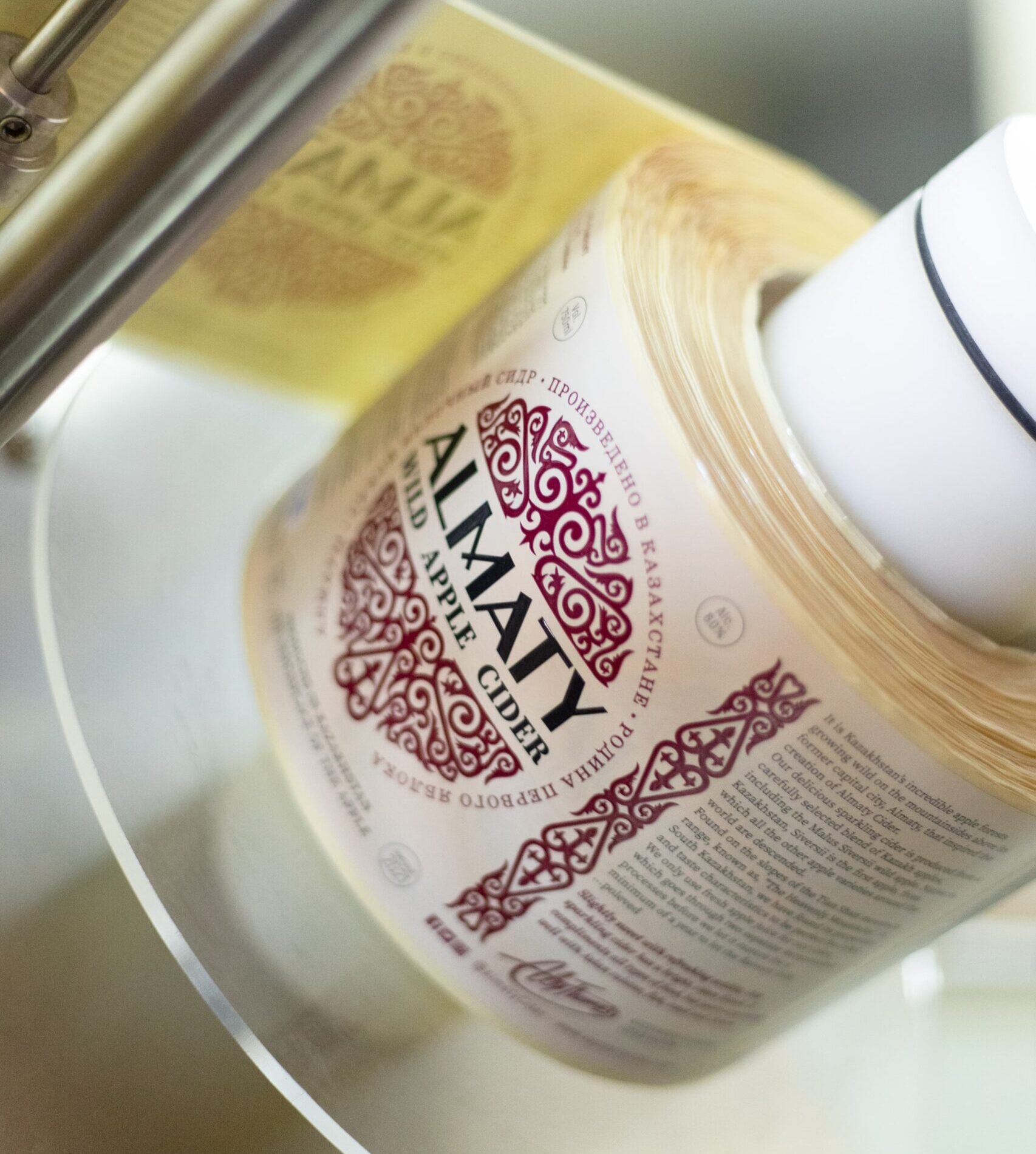
Englishman Alexander Thomas is the passionate founder of Apple City Cider, an Almaty-based craft cidery dedicated to producing high-quality, locally sourced ciders that celebrate tradition with a modern twist. With a deep-rooted love for orchards and fermentation, Thomas blends innovation with time-honored techniques to create crisp, flavorful ciders.

TCA: What first brought you to Almaty, and what kept you here?

AT: I used to work for the world’s largest publishing group, where I reported on different market sectors. When I covered aviation, I used to fly around the world to speak to different airline CEOs to discuss their route strategies and fleets. I first came to Kazakhstan to interview Air Astana’s CEO, Peter Foster. I was supposed to fly to Paris to speak with KLM and Air France, but that meeting was canceled, so I flew back to London. Sitting next to me, little did I know, was my future wife. In the same company, I very much enjoyed the coverage of the drinks industry. I had originally wanted to make wine in the south of France, but after marrying a Kazakh girl, we decided to start our business in Kazakhstan. Instead of pressing grapes in the South of France, we began pressing apples in Almaty.

TCA: Can you tell us the inspiration for Apple City Cider?

AT: We started the business because no one was making cider in the birthplace of the apple, around that time, cider was not even available to purchase in Kazakhstan. Around the same time we went on sale, another alcohol manufacturer began to produce cider as well, but we are the only cider specialists; the main business of the others is spirits and other alcoholic drinks.

Image: TCA, Henry Kuvin

TCA: How did Almaty respond to your business idea, and what were the main challenges when establishing your company?

AT: Consumers are very happy with the product and happy that we started our business here. Like other local companies, Almaty Cider has received a lot of positive support from the city; they love how it’s called “Almaty Cider.” The concept of eating locally and supporting local businesses is a global phenomenon, and Almaty is no exception. The fact that Almaty is the birthplace of the apple, proven by science, made it the ideal location to start such a business. The Malus Sieversii apple, native to the Almaty region, is perfect for cider. The levels of tannins, fruit sugar, and acidity, while not ideal for eating, make a great-tasting cider.

TCA: Almaty, the place of abundant apples, does not have a huge cider culture – how has this changed since you established the business, and where do you see it going?

AT: Cider was not available even as an imported product until about three to four years ago. Since then, we have seen imported brands come to the market, and people have developed a taste for it. In Russia, for example, there are now over 100 independent cideries. The first person to start a cidery in Russia was a deputy in the Duma, and he used his power to have cider move from the alcohol to the agricultural production list. As a result, it became easier to produce and distribute. Now, in St. Petersburg or Moscow, you can find three to four varieties on tap in most bars. In the rest of the CIS (Commonwealth of Independent States), consumer trends tend to follow what happens in Russia.

TCA: What have been the biggest challenges you faced as an entrepreneur in Almaty, and how did you overcome them?

AT: Time and patience: There is no printed list of things you need to do to start a business here. It’s definitely a case of trial and error; we did not have the necessary steps laid out for us nor examples to base our business on. In Kazakhstan, especially with a new product, you are a pioneer. By starting a business, we were stepping into the dark, so to speak. It was a lot more time-consuming than we initially thought, and it took several years of trying to get the necessary green lights before starting production.

TCA: How do you hope Apple City Cider contributes to Almaty’s cultural and culinary identity?

AT: The fact that it is a premium artisanal, or craft, product that did not exist in the market makes us unique. There are only mass-market competitors or high-priced imports. People have responded well to our product. Bartenders are making special cocktails with it, chefs are cooking with it, and it’s available in various bars, restaurants, and shops across the country. The entire Kazakh culinary scene is changing; it has absolutely transformed in the past decade. It used to be that most restaurants were very old-fashioned, with a twenty-page menu, the same in every place. But now, Neo-Nomad cuisine, as it’s called, a contemporary take on traditional Kazakh food, has created a really cool food scene in Kazakhstan. 

Image: TCA, Henry Kuvin

I hope it brings awareness to the true birthplace of the apple, as just outside of Almaty is the epicenter of the apple’s birthplace. In fact, it is not the Aport apple that is native to Kazakhstan, but the Malus Sieversii. The Aport was brought here by the Russians, and it simply grew well in the climate. There are some communities that are reintroducing Malus Sieversii trees to the region, but the variety is still not as well known as Aport.

TCA: What advice would you give someone in Almaty who dreams of starting their own business?

AT: Do as much research as you possibly can, but even then, it won’t be enough. There is so much you cannot prepare for without taking the plunge. Talk to as many people as possible, and you might find someone who has faced similar experiences to learn from.

TCA: Are there any local partnerships, like with farmers or businesses, that have been crucial to your success?

AT: We have some regular growers who we buy from and certain restaurants and bars where our products are popular. Our target audience is “hipsters” and adventurous people from all age demographics, but the largest percentage of our customers are younger people.

Kyrgyz State Companies Encouraged to List Securities on Local Stock Exchange

Kyrgyzstan’s Chairman of the Cabinet of Ministers, Akylbek Japarov, has signed a decree recommending that all state-owned enterprises conduct initial public offerings (IPOs) and trade their securities on the Kyrgyz Stock Exchange (KSE). Experts believe the move will stimulate stock market development and attract foreign investors.

Several years ago, shares of five major state-owned enterprises, Kyrgyzaltyn, Kyrgyztelecom, Manas International Airport, Uchkun (the state printing house), and RSK Bank, were listed on KSE. The initiative served as a testing ground for improving corporate governance. At the time, stock exchange representatives noted that the process enabled state companies to modernize their operations and expand without relying on loans.

“The IPO is just the beginning. According to KSE listing requirements, companies must maintain transparency, conduct public operations, and provide ongoing financial and economic disclosures to sustain investor confidence,” said KSE President Medet Nazaraliyev.

Nazaraliyev told The Times of Central Asia (TCA) that the shareholders of KSE include the Kazakhstan Stock Exchange and the Istanbul Exchange, making it possible for foreign investors to participate in Kyrgyz securities trading. Additionally, under Eurasian Economic Union (EAEU) agreements, investors from across the bloc can freely purchase shares in local companies.

“Transferring the trading of all state-owned companies’ securities to KSE aims to consolidate the market and ensure that state enterprises receive high-quality financial services. KSE is also working on expanding its investor base and exploring opportunities to enter foreign markets, all in the interests of our issuers,” KSE Vice President Myktybek Abirov told TCA.

According to Abirov, 24 state-owned enterprises are currently listed on the exchange. Under Kyrgyz law, all transactions involving securities of open joint-stock companies must be conducted on KSE.

Last year, U.S. credit rating agency S&P Global Ratings joined KSE’s list of official evaluators, alongside Kazakh and Russian firms. This partnership facilitates independent assessments of green and gender bonds issued by the exchange. Furthermore, S&P’s involvement enhances the credibility and attractiveness of Kyrgyz securities for foreign investors.

In the middle of 2024, the volume of capitalization of KSE amounted to $636 million.