In the art world, fairs often have a meteoric rise and fall in an oversaturated market of competing events. But every so often, one lands with a quiet, deliberate weight, embedding itself in the soil of its context and revitalizing it. VIMA Art Fair in Limassol, Cyprus, is one such project.
Unfolding in a transformed wine warehouse near the sea, VIMA resisted the sterile polish of typical fair venues. Here, the Mediterranean wind mingled with the hum of languages, from Russian to Arabic, Greek, and Turkish, to English.
The fair was founded by three Russians who have established themselves in Cyprus – Edgar Gadzhiev, Lara Kotreleva, and Nadezhda Zinovskaya – all of whom have brought a deep well of curatorial and institutional experience from Central Asia, Eurasia, and beyond.
The trio have diverse backgrounds: Zinovskaya used to manage Ayarkut, an international art foundation operating across Kazakhstan and Mexico, together with Gadzhiev, who specialized in marketing in the cultural sector. Lara Kotreleva, meanwhile, has a museological background in Moscow and founded Sphere Space, an ongoing research initiative dedicated to architectural heritage in Limassol.
To set up the fair, they teamed up with an expert committee comprising the Cypriots Alexandros Diogenous and Tasos Stylianou, co-founders of Limassol Art Walks, and Andre Zivanari, director of the Point Center for Contemporary Art in the capital, Nicosia.
Of the 27 participants at the fair, there was an emphasis on the ten Cypriot galleries, commercial, not-for-profit, and artist-run spaces, part of Cyprus’s flourishing contemporary art scene, as well as on a number of Middle Eastern and Greek galleries.
The Caucasus also made an appearance, with Georgia’s Window Project (Tbilisi) presenting a thoughtful mix of Georgian and international artists. Their mission centers on bridging generational narratives, with a particular emphasis on promoting emerging Georgian talents alongside an often-overlooked older generation of artists. At VIMA, the gallery highlighted the work of female artists, including Tamar Giorgadze, Sigrid Gloerfelt, Natela Grigalashvili, Tamara K.E., and Anie Toidze.
Representing Azerbaijan, pop/off/art (Baku) featured a dynamic selection of artists primarily from the post-Soviet sphere as well as Eastern and Central Europe, showcasing works by Despina Flessa, Andrey Krasulin, and Shamil Shaaev.
The mood was easygoing and fresh, but did not shy away from important socio-political themes that are unavoidable on the island, from the Greek-Turkish divide, to the arrival of a number of expats fleeing wars. Through a program of talks and a collateral exhibition, the fair leaned into this complexity and spelled out the necessity of communities coexisting, as well as articulating the desire to create new cultural infrastructure through public and private collaboration.
The Times of Central Asia spoke with Edgar Gadzhiev, Lara Kotreleva, and Nadezhda Zinovskaya.
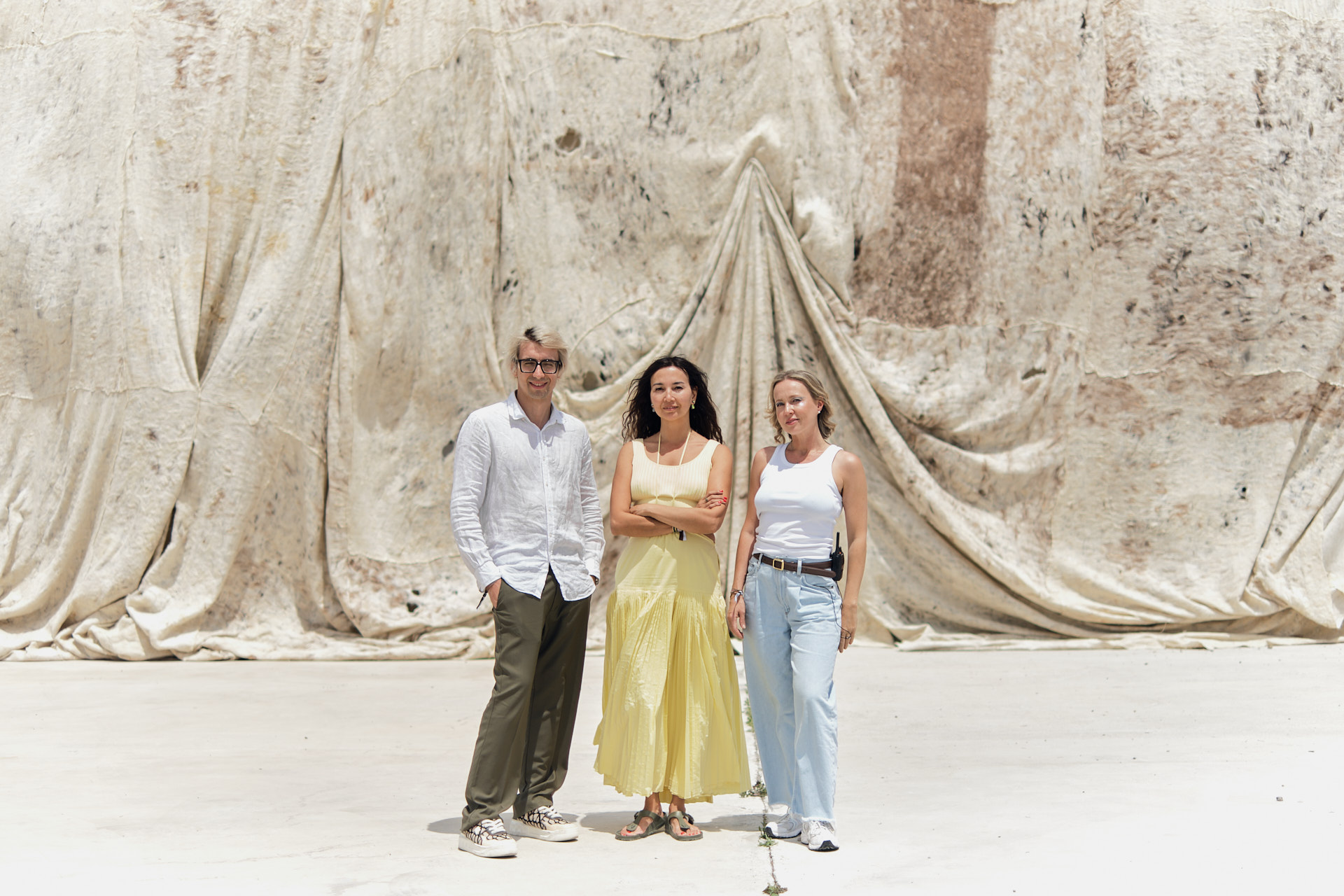
Portrait of the co-founders of the VIMA Art Fair, Edgar Gadzhiev, Nadezhda Zinovskaya, and Lara Kotrelevaimage; image courtesy of the VIMA Art Fair
TCA: Why did you choose Cyprus as the location to launch this project?
Gadzhiev: It wasn’t a random decision. We conducted long-term research, and it became clear that now is the right time to launch an art fair here. The market appears ready — there’s a growing demand for art and a significant influx of private capital into Cyprus. On one hand, there are people who want to buy art, and on the other, there’s a vibrant ecosystem of artists and institutions. It all just clicked.
Kotreleva: Cyprus also hosts many conferences and investment forums, and the numbers show the economy is steadily developing, especially compared to neighboring regions. Cyprus has become a sort of safe space in an otherwise complicated region. Plus, of course, we all live here.
TCA: Can you elaborate on why Cyprus feels like a “safe space”?
Gadzhiev: Many different nationalities coexist here — Russians, Lebanese, Ukrainians, English, Israelis. It’s historically been like this. That multicultural environment is part of why we see Cyprus as a safe space — it’s already happening in real-time.
Kotreleva: Cyprus has a deeply layered history. I’m not a specialist in Cypriot history, but as a historian, I think that its complexity contributes to a vibrant and interesting scene. But as a fair, we’re not focusing on politics. We rather aim to provide a space for art and the kind of discussions art can provoke.
TCA: Was the architectural and historical context of the venue important for the fair?
Kotreleva: Definitely. It was a challenge to find a space that suited our needs — large and visually appealing. Most art fairs happen in functional expo buildings. But here, we worked with the venue team to develop something new. Hopefully, this will inspire other building owners in Cyprus to see the potential of post-industrial spaces.

Image courtesy of the VIMA Art Fair
TCA: As Russian nationals, how do you relate to the Russian community in Cyprus?
Kotreleva: There’s a sizable Russian community, especially in Limassol. Migration began after the collapse of the Soviet Union, when many were looking for asylum or a better life. Over the years, more people have come; Cyprus has long been attractive to people from many countries.
TCA: What attracts expats to Cyprus?
Gadzhiev: Speaking personally, I love nature, and I can surf here! But also, Cyprus has a very rich art ecosystem—though I’m not sure that’s why people move here. Many come because IT companies enjoy a favorable tax regime. When companies relocate, they bring their people.
TCA: Are these newcomers — especially those from the IT sector — part of your target audience in terms of collecting?
Gadzhiev: There are established collectors already living here, and they are definitely part of our audience. We also work with foreigners who moved here in the 80s and 90s. Additionally, we’re looking to develop the local audience, which includes people from the IT sector, but we are not focusing on them.
Kotreleva: We discovered that generalizations — like saying all ‘IT guys’ are alike — misses the nuances. Everyone is different. Our work at the fair helped us uncover rich and unexpected connections across the island.
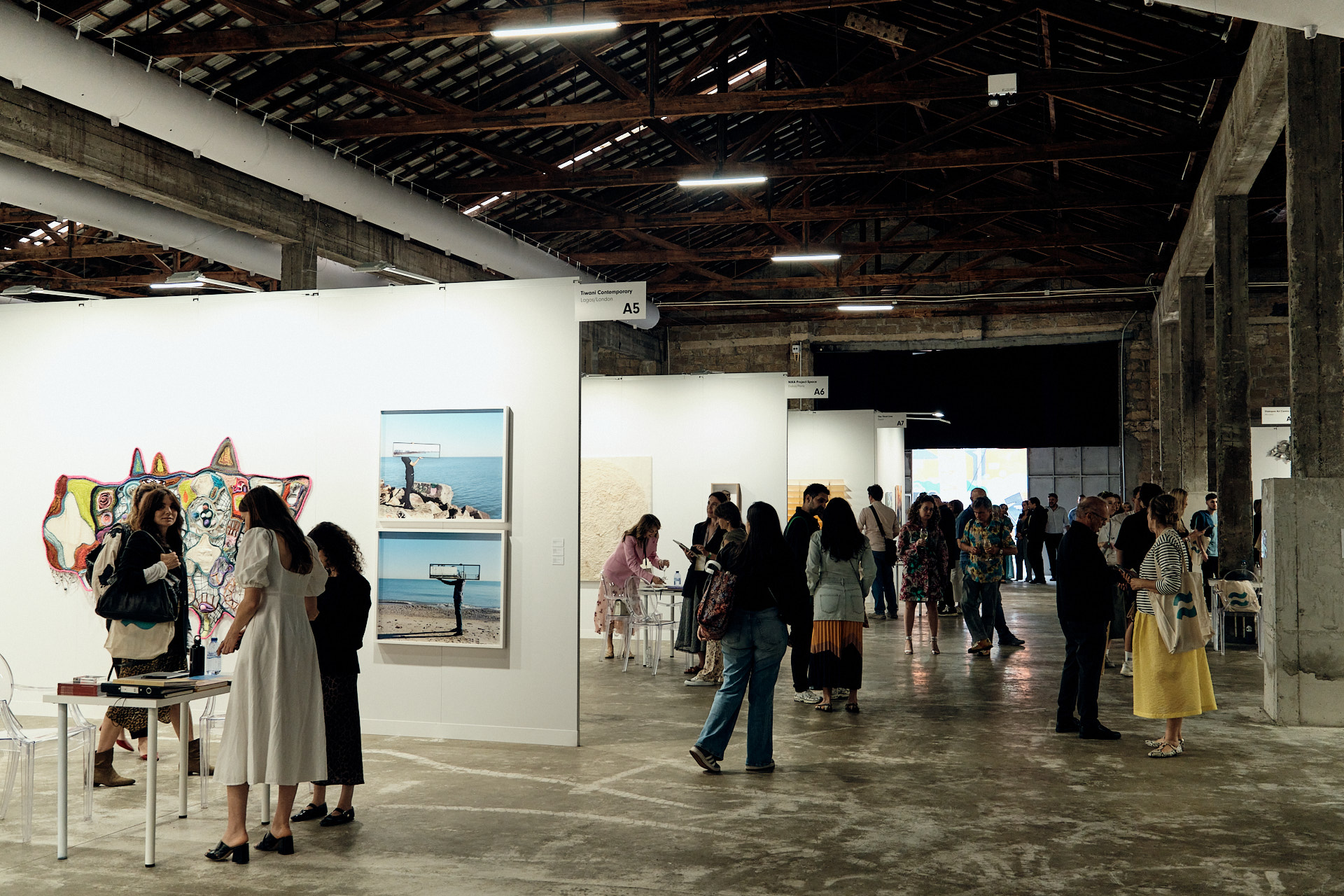
Image courtesy of the VIMA Art Fair
TCA: How did you connect with the local art scene initially?
Gadzhiev: We actually started to learn about Cyprus through its art scene. The art constituted our entry point to understand the complex dynamics within the country. We discovered there’s a rich art ecosystem in Cyprus, but what’s missing is a platform that connects galleries and the market.
Kotreleva: From the beginning, we knew we needed a strong expert committee. It took months to reach and convince people like Alexandros Diogenous, Tasos Stylianou, and Andre Zivanari. Together, we developed our strategy, including whether to curate or do an open call. Their insight helped provide deep context and support.
There’s also a lack of cultural media here. People don’t always know where to go to find information about art. A fair can offer visibility and help close that gap. Unlike a museum, a fair has a more vibrant, social vibe that can attract new audiences. That’s why we focused a lot on programming this year — and we plan to continue doing so.
TCA: Can you share a bit about your backgrounds and how they influenced the creation of VIMA?
Zinovskaya: Three years ago, Edgar and I started a foundation, Ayarkut, that carried out research and launched about 20 projects in a short space of time, including in Mexico and Kazakhstan. I also founded and ran Cube in Moscow, an art center with 15 galleries, with dynamics similar to those of an art fair.
Gadzhiev: With Ayarkut we worked closely with top institutions and developed public art festivals and prizes. The network and methodology we built then helped us shape VIMA.
TCA: Can you tell me a bit about your past project, Ayarkut, and how it connected Kazakhstan and Mexico?
Zinovskaya: The reason Ayarkut exists – or existed – in both countries is related to the presence of inDrive – the mother company of the foundation and a major sponsor. Ayarkut’s main mission is to support artists as agents of social change, foster dialogue around important topics, and facilitate actions.

Image courtesy of the VIMA Art Fair
TCA: What peculiarities did you notice working with Kazakh artists in that context, versus your previous experiences in Moscow?
Zinovskaya: We don’t believe we had enough time in Kazakhstan to become established enough, to have enough expertise to answer this question, but we worked with different artists from Kazakhstan and it’s very obvious that the Kazakh art ecosystem is incredibly diverse and rich, and we learned a lot from it.
TCA: Ayarkut was meant to extend the impact of art, artists and institutions who responded to current social and political challenges in both countries, by giving a platform to artists who lived outside of the big cities. Can you give me some examples of Kazakh artists who benefitted from this?
Zinovskaya: For us, it wasn’t a must to choose only artists from outside the big cities, but decentralization was an approach we were trying to follow. One of the projects was a public art project made together with Artbat, which resulted in pieces of art installed around Almaty by local artists such as Saule Suleimenova, Saken Narynov, Said Atabekov, Yelena and Viktor Vorobyev, Saule Dyussenbina, and other international artists.
TCA: How did this specific experience with artists working in artistic peripheries transfer itself to VIMA?
Ayarkut taught us how to build projects that aren’t just site-specific, but ecosystem-specific, based on continuous learning from research which never ends. With VIMA, we’re applying that same sensitivity — only now we’re working in Cyprus, which for outsiders can often be treated as peripheral despite its deep geopolitical and cultural centrality.
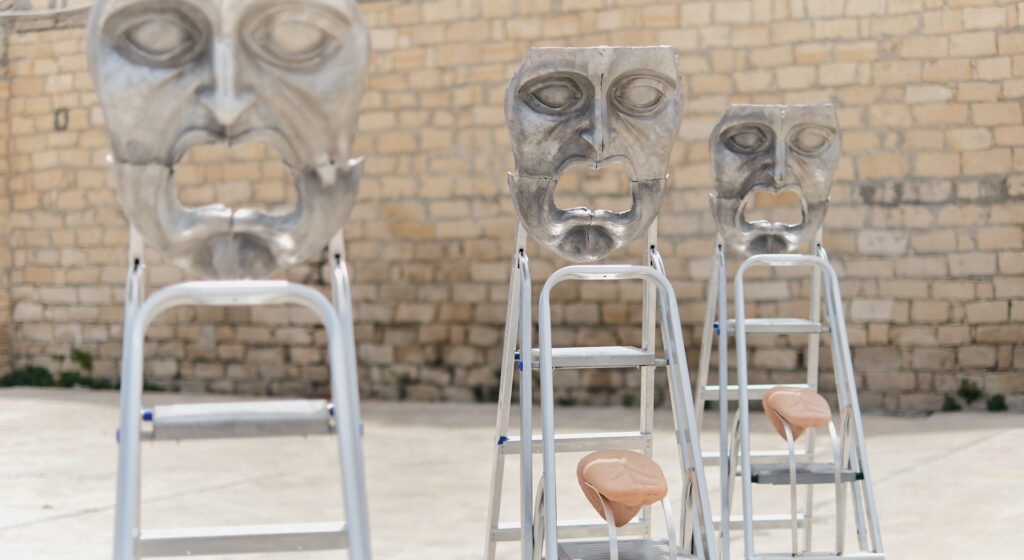
We designed VIMA as a cultural infrastructure including the main part as a conventional fair, but also as a curatorial project, public program, parallel program, and more, all with the same focus on the broader region, the Mediterranean, sometimes called the Eastern Mediterranean. This regional focus in the inaugural edition was represented by the selection of galleries, The Posterity of the Sun by Ludodivc Delalande, public talks program by Nadine Khalil, but even extended to the selection of the music and the wine served.
But what’s most important is that our work is about creating new infrastructural elements within an existing ecosystem that allow artists, arts professionals and also those interested in culture – brands and companies – to collaborate long-term and effectively. That was true for Ayarkut, and it’s even more central to VIMA.
TCA: Are there other projects within VIMA beyond the fair itself?
Kotreleva: We have three public talks curated by Nadine Khalil about the intersection of public and private collecting, market strategies for art galleries, and a focus on Cypriot institutions, foundations, and nonprofits. We’ll also host a lecture by the artist collective Slavs and Tatars on language and culture, a theme that is very relevant to Cyprus.
Gadzhiev: We want VIMA to be not just a fair, but a whole experience. We hope international visitors will come here and love Cyprus as much as we do. We’re already thinking of next year’s fair, and we have big plans.