• KGS/USD = 0.01144 0%
  • KZT/USD = 0.00194 -0%
  • TJS/USD = 0.10844 0%
  • UZS/USD = 0.00008 0%
  • TMT/USD = 0.28490 0%
  • KGS/USD = 0.01144 0%
  • KZT/USD = 0.00194 -0%
  • TJS/USD = 0.10844 0%
  • UZS/USD = 0.00008 0%
  • TMT/USD = 0.28490 0%
  • KGS/USD = 0.01144 0%
  • KZT/USD = 0.00194 -0%
  • TJS/USD = 0.10844 0%
  • UZS/USD = 0.00008 0%
  • TMT/USD = 0.28490 0%
  • KGS/USD = 0.01144 0%
  • KZT/USD = 0.00194 -0%
  • TJS/USD = 0.10844 0%
  • UZS/USD = 0.00008 0%
  • TMT/USD = 0.28490 0%
  • KGS/USD = 0.01144 0%
  • KZT/USD = 0.00194 -0%
  • TJS/USD = 0.10844 0%
  • UZS/USD = 0.00008 0%
  • TMT/USD = 0.28490 0%
  • KGS/USD = 0.01144 0%
  • KZT/USD = 0.00194 -0%
  • TJS/USD = 0.10844 0%
  • UZS/USD = 0.00008 0%
  • TMT/USD = 0.28490 0%
  • KGS/USD = 0.01144 0%
  • KZT/USD = 0.00194 -0%
  • TJS/USD = 0.10844 0%
  • UZS/USD = 0.00008 0%
  • TMT/USD = 0.28490 0%
  • KGS/USD = 0.01144 0%
  • KZT/USD = 0.00194 -0%
  • TJS/USD = 0.10844 0%
  • UZS/USD = 0.00008 0%
  • TMT/USD = 0.28490 0%
10 December 2025

Differentiated Tariffs Lead to Significant Drop in Water Consumption Across Kazakhstan

Water consumption has significantly decreased in eleven regions of Kazakhstan following the implementation of differentiated tariffs for water supply in 2024.

The new tariff system, introduced at the start of last year, applies an increasing coefficient based on the principle of “the more you consume, the more you pay.” The system features four levels of tariffs for individuals:

  • Up to 3 cubic meters per month: Consumers continue to pay the original tariff, which varies by region but averaged 82.66 KZT ($0.16) per cubic meter nationwide when the system was introduced. This group accounts for 49% of the population in the eleven regions.
  • 3 to 5 cubic meters per month: A 20% increase in the tariff applies, covering 20% of the population.
  • 5 to 10 cubic meters per month: The tariff rises by 50%, affecting another 20% of the population.
  • Over 10 cubic meters per month: The tariff doubles, impacting 11% of the population.

The introduction of these “social norms of consumption” has led to an average water savings of 1.65 million cubic meters per month in six regions — Akmola, Aktobe, Turkestan, Ulytau oblasts, and the cities of Almaty and Shymkent.

According to official data, the average monthly water consumption in these regions dropped from 21.1 million cubic meters to 19.5 million cubic meters after the implementation of the new tariff system. As of December 1, 2024, the “social consumption norms” were extended to the Zhambyl region, with plans to roll out the system in Mangistau, East Kazakhstan, West Kazakhstan, and North Kazakhstan regions in 2025.

“Additional funds generated from increased tariffs for high-consumption users will be directed toward the modernization and reconstruction of water supply and wastewater infrastructure,” stated the press service of the anti-monopoly committee. These investments aim to improve service quality and enhance the sustainability of the water supply system. The Ministry of the National Economy estimates the additional revenue from the tariff increases at approximately 13 billion KZT (around $25 million) annually.

Previously, The Times of Central Asia reported that nearly 10 million people, or 14% of Central Asia’s population, lack reliable access to safe drinking water. The Eurasian Development Bank (EDB) has estimated that addressing this issue will require over $12 billion between 2025 and 2030, or roughly $2 billion per year.

Uzbekistan to Launch “Eco-Active Citizen” Project for a Greener Future

The Ministry of Ecology, Environmental Protection, and Climate Change of Uzbekistan, in collaboration with the Ministry of Digital Technologies, has announced plans to launch the “Eco-Active Citizen” project by June 1, 2025.

This initiative is part of the nationwide “One Million Green Families” movement and integrates with the “Healthy Lifestyle” platform. It is outlined in the draft Presidential Decree “On the State Program for the Implementation of the Strategy ‘Uzbekistan – 2030,’” which places significant emphasis on environmental protection and fostering a “green economy.”

The project seeks to promote an ecological lifestyle and enhance environmental awareness among the population. Citizens will be encouraged to take actions such as planting trees, using public transportation, walking 10,000 steps daily, reducing waste, and transitioning to electric vehicles. Additional recommended measures include installing solar panels, utilizing energy-saving materials, and conserving electricity, gas, and water. Active participation in public environmental activities will also be key.

Participants in the “Eco-Active Citizen” program will qualify for public service discounts, lower interest rates on consumer loans, and may even receive environmentally friendly vehicles such as bicycles or scooters. Families in which all members achieve “eco-active” status will be recognized as “Green Families” and will have the opportunity to participate in an annual lottery to win an electric car.

Neighborhoods (mahallas) with over 50% of households classified as “Green Families” will earn the title of “Green Neighborhoods” and will receive additional environmental benefits, such as designated waste collection sites, tree planting initiatives, and green public parks. Cities or villages with more than 50% “Green Neighborhoods” will be officially recognized as “Green Cities,” “Green Villages,” or “Green Auls” (fortified villages).

The Ministry of Ecology underscored the environmental impact of individual actions. For instance, one car emits an estimated 4.6 tons of carbon dioxide annually, whilst walking 10,000 steps per day can prevent up to 1.5 tons of waste. Additionally, conserving 100 cubic meters of natural gas can prevent 2 tons of carbon dioxide emissions. These efforts aim to establish sustainable “green cities” while promoting environmentally responsible tourism.

In a related development, The Times of Central Asia previously reported that Uzbekistan is preparing a draft national program to reduce plastic pollution for 2025-2027.

Uzbek Businessman Salim Abduvaliyev Released from Prison Due to Illness

Salim Abduvaliyev, a well-known Uzbek businessman commonly referred to as “Salimboy,” was released from prison on January 12 due to health complications. According to Kun.uz, Abduvaliyev has been battling a serious illness for an extended period.

Born in Tashkent in 1950, Abduvaliyev was previously active in Uzbekistan’s sports administration, serving as deputy chairman of the National Olympic Committee and chairman of the Uzbekistan Sports Wrestling Association.

Abduvaliyev was detained in early December 2023 on charges of illegal possession of firearms. On March 19, 2024, the Mirabad District Court of Tashkent City found him guilty under Article 248, Paragraph 2 of Uzbekistan’s Criminal Code, which pertains to the illegal possession of firearms, ammunition, and explosives. He was sentenced to six years in prison.

His release this week was granted under Article 75 of the Criminal Code, which allows for the early release of prisoners suffering from severe illnesses that make it impossible for them to serve their sentences.

While serving his sentence in August 2024, the State Committee for National Security of Kyrgyzstan issued an arrest warrant against Abduvaliyev. Reports alleged that he had financed an organized criminal group led by Kamchybek Kolbaev. Kolbaev, a notorious figure linked to heroin trafficking and a member of the international criminal network known as the “Brothers’ Circle” (Bratva), was a wanted individual by the U.S. Department of State. Kolbaev was killed during a security operation in Bishkek in October 2023 at the age of 49.

Kazakhstan Again Leads Central Asia in Military Strength

Global Firepower (GFP) has released its Military Strength Ranking for 2025, evaluating the military capabilities of 145 countries based on 60 factors, including resources, financial stability, logistics, and geographic considerations.

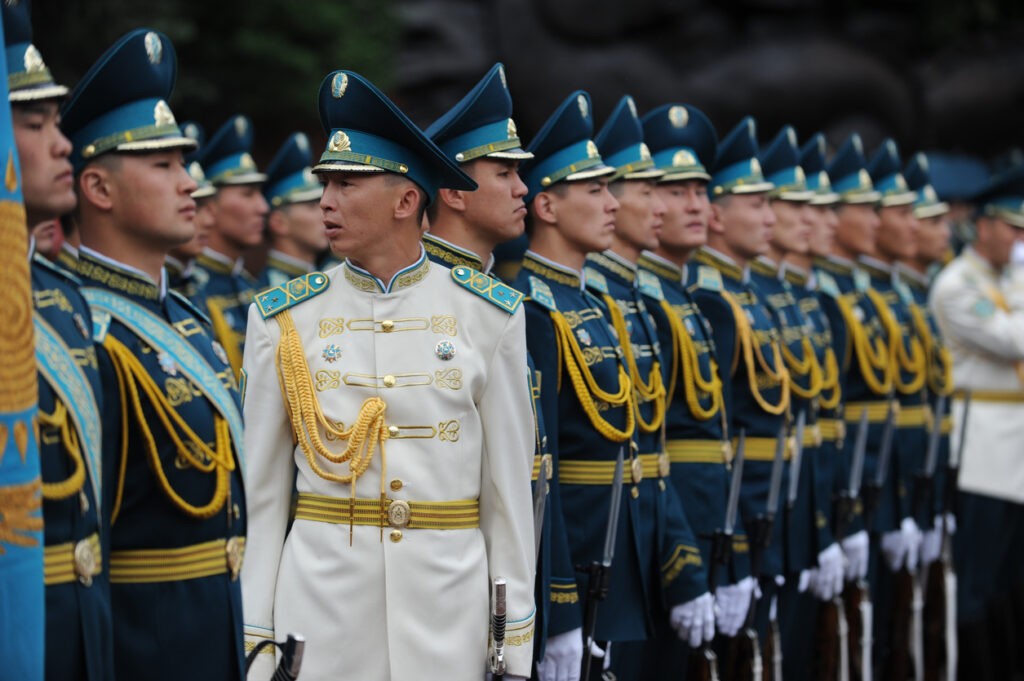
In Central Asia, Kazakhstan continues to lead the region in military strength, ranking 57th globally, an improvement from its 58th position in 2024. Uzbekistan follows closely in 58th place, climbing seven spots from the previous year.

Turkmenistan also made notable progress, rising from 83rd in 2024 to 77th this year. Kyrgyzstan saw a modest improvement, advancing to 100th from 105th, while Tajikistan moved up one spot to 107th this year.

The GFP ranking evaluates around 60 criteria, such as troop levels, financial resources, logistics, and the availability of specific military assets. Kazakhstan performed particularly well in heavy weaponry, ranking 17th globally for the number of multiple-launch rocket systems (407 units) and 21st for self-propelled artillery. These strengths have significantly bolstered its defense indicators.

Globally, the United States remains the top-ranked military power, supported by the world’s largest defense budget of $800 billion. Russia and China maintain their positions in second and third place, respectively. Bhutan, ranked 145th, is the weakest army on this year’s list.

In Doha, Central Asian Artists Dismantle Orientalism

Completely covered by a huge textile patchwork piece, softly moved by the wind, the façade of the Mathaf Museum in Doha promises visitors something fascinating and alluring. Coming closer, attendees could read a series of statements in various languages on the fabric.

The effect of familiarity and estrangement at once was the purpose of Azerbaijani artist Babi Badalov, who realized the piece. By layering phrases in Arabic, Cyrillic, and Latin with calligraffiti and employing disjointed grammar and syntax, the artist meant to visually disrupt “linguistic imperialism” and show how Europe’s modern civilization owes much to Arab civilization.
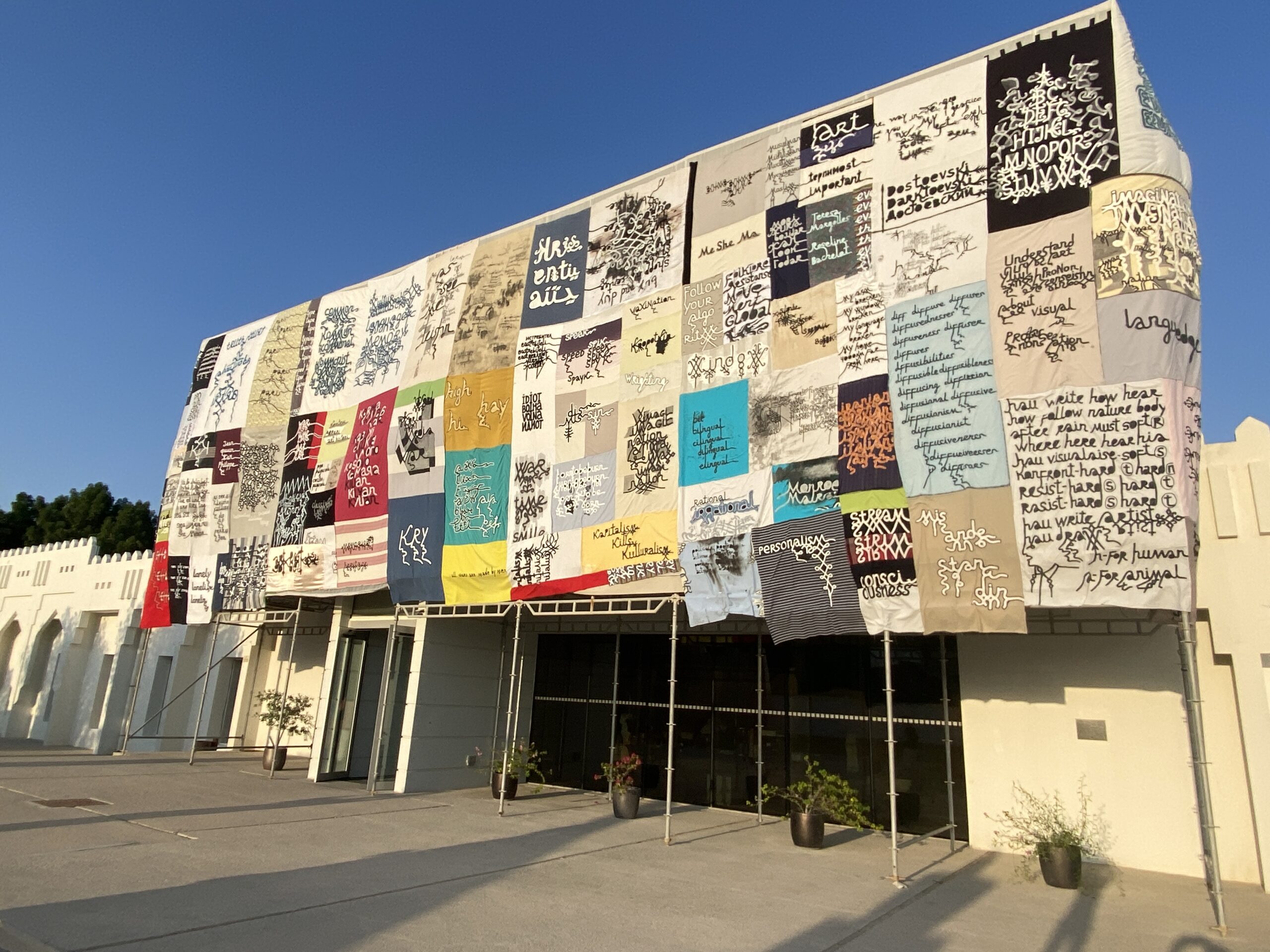
The Mathaf Museum in Doha; image: TCA, Naima Morelli

This specially commissioned work, called Text Still (2024), is nothing but an appetizer for the show Seeing is Believing: The Art and Influence of Gérôme. Organized by the forthcoming Lusail Museum — an institution under development in northern Doha that will house the largest collection of the so-called Orientalist art — the exhibition features loans from institutions such as the Metropolitan Museum of Art in New York and the Islamic Arts Museum in Malaysia.

The main part of the show is dedicated to French artist Jean-Léon Gérôme, who lived and worked in the 19th century and was profoundly influential in his depictions of the Middle East, North Africa, and South Asia. His works shaped Western perceptions of these regions during an era when colonialism and “Oriental Studies” were cementing global power dynamics.

The show included a historical and biographical exploration of Gérôme’s life, timed to celebrate the 200th anniversary of his birth, as well as a photographic section curated by Giles Hudson dedicated to visions of the Orient from Gérôme’s time to today.

But it is in the third section, centered on contemporary art and called “I Swear I saw That”, that Central Asian artist really enter into a close dialogue with Gérôme’s Orientalism, turning it on its head.

Sara Raza, curator of this section, takes Badalov’s textile work as a case in point: “Badalov inverts Edward Said’s mission of examining Western perceptions of the Orient, focusing instead on Eastern perceptions of the Occident, and vice versa,” she told The Times of Central Asia.

Edward Said’s concept of Orientalism, as detailed in his groundbreaking 1978 work of the same name, is an institutionalized program of Western knowledge, based mostly on projections, mystification, and imagination – and includes works of art as well as the academy – which is directed to justify a supposed Western superiority and imperialism over Eastern populations.

“I Swear I Saw That” interrogates Jean-Leon Gerome’s way of seeing, which Sara Raza recognizes as a “fantastical and highly mythologized vision of the East,” and looks at how artists from both the Middle East, the Arab world and Central Asia fought back.

A Central Asia and Caucasus expert who works extensively in the Middle East, Raza has examined the process of the exoticization of Eastern populations for a long time. She coined the term “Punk Orientalism,” which also became the name of her book and curatorial studio. She takes the reflections of Edward Said as a starting point, and looks at how the Central Asian population has been seen through a stereotyped lens by both Europe and the Soviet Union. Raza brings a punk, DIY approach to her curatorial method, which reflects the same attitude of many Central Asians who have a rebellious spirit and create art with a grassroots, bottom-down approach.
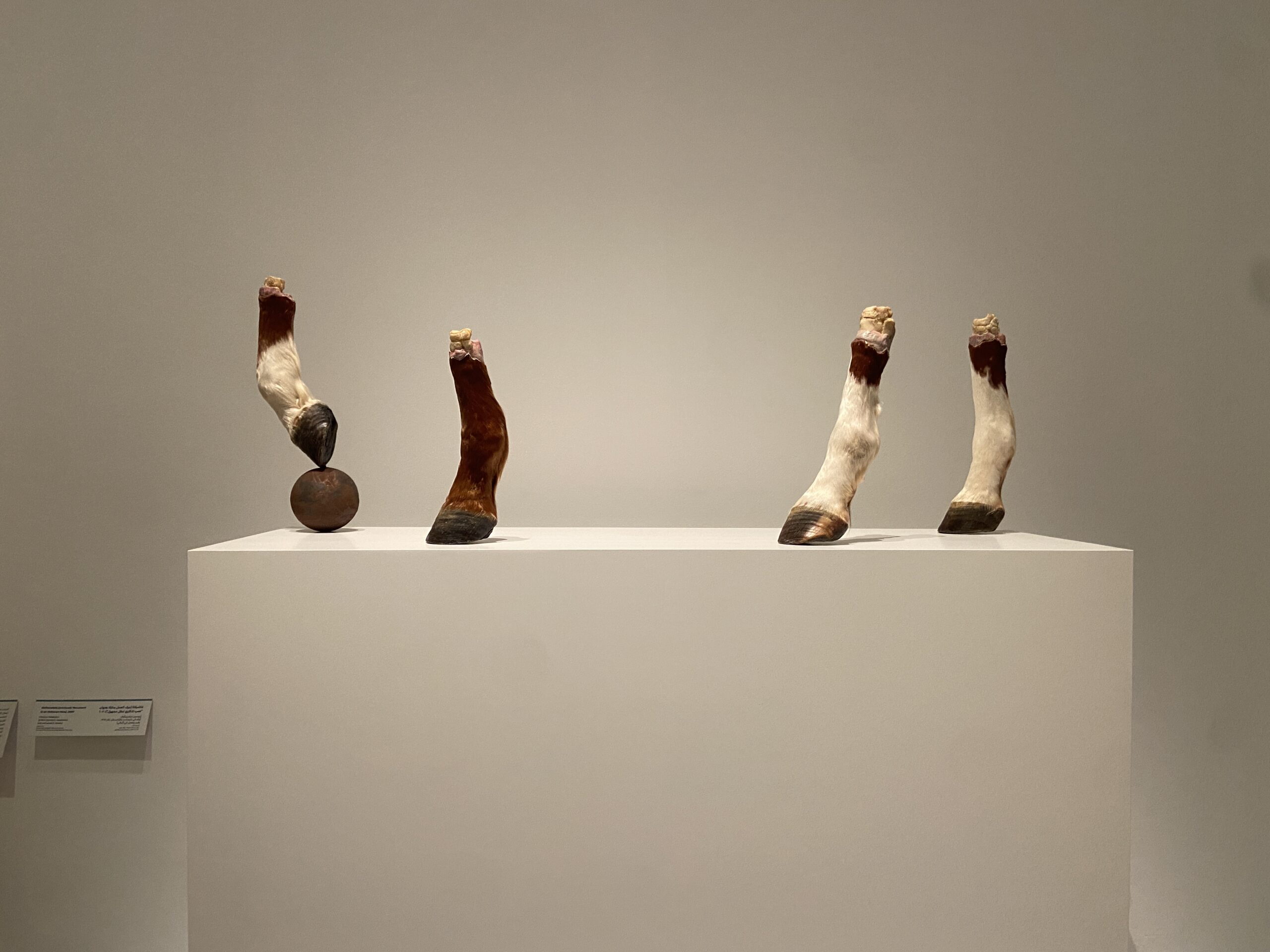
Installation by Erbossyn Meldibekov; image: TCA, Naima Morelli

From the stylized figures of Moroccan artist Baya – a trailblazer in the last century who was close to the surrealists – to contemporary artists like the Kazakh Erbossyn Meldibekov, the selection doesn’t only span Eastern geographies, but also different generations.

The installation by Meldivekov, featuring a horse’s lower legs frozen in motion and placed on a white podium, is particularly haunting. The work was conceived as a commentary on the rise and fall of historical figures celebrated by statues across Central Asia. The felling of these statues started following the collapse of the USSR as part of a state-sponsored nationalist agenda and was part of a plan to revive the region’s epic past, a topic dear to Meldibekov.

While his installation is dedicated to 15th-century Italian Captain Erasmo Gattamelata, and his statue to Italian Renaissance painter Donatello, Meldibekov also references Gérôme’s bronze statue of the 14th-century Uzbek emperor, Timur.

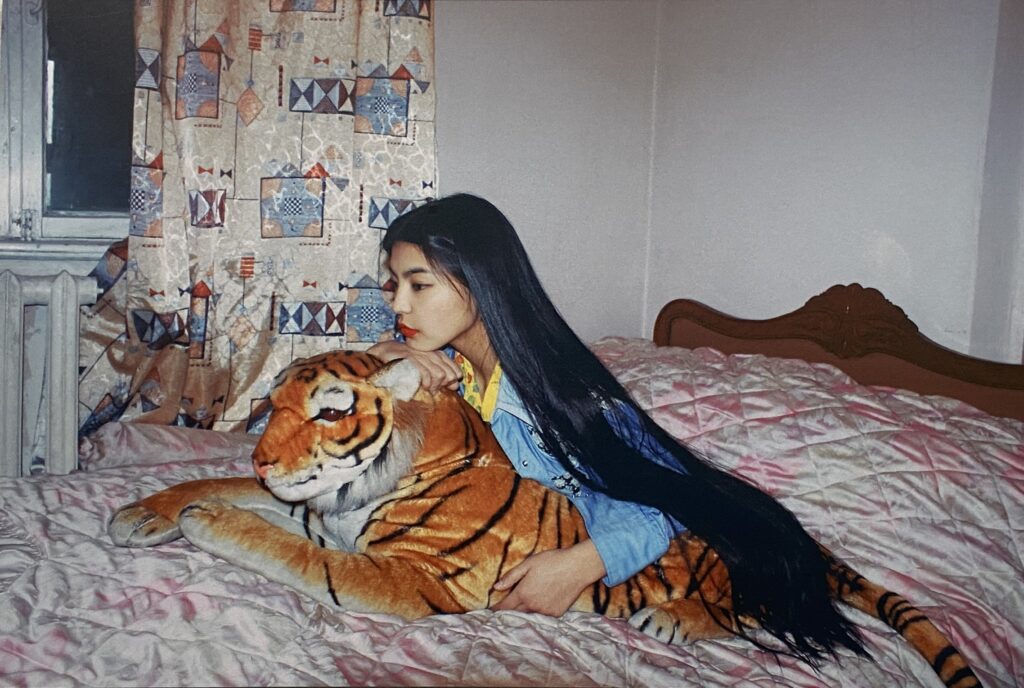
But the work which is probably more impactful in moving forward the discussion on Orientalism is a series of photographs titled “Girls of Kyrgyzstan,” which have distinctive GenY/ GenZ aesthetics.

Created by Uzbekistan-born Kyrgyzstan-bred artist Aziza Shadenova, a multidisciplinary artist and musician of Kazakh ethnicity, it encapsulates the ethos of the generation born right after the collapse of the USSR in 1991, who grew up familiar with the internet from an early age.

The series speaks of the pervasiveness of images on the internet as a means to represent the self, freeing themselves from both Western and the Soviet narratives, as well as debunking previous social norms and myths around the representation of Central Asian women.
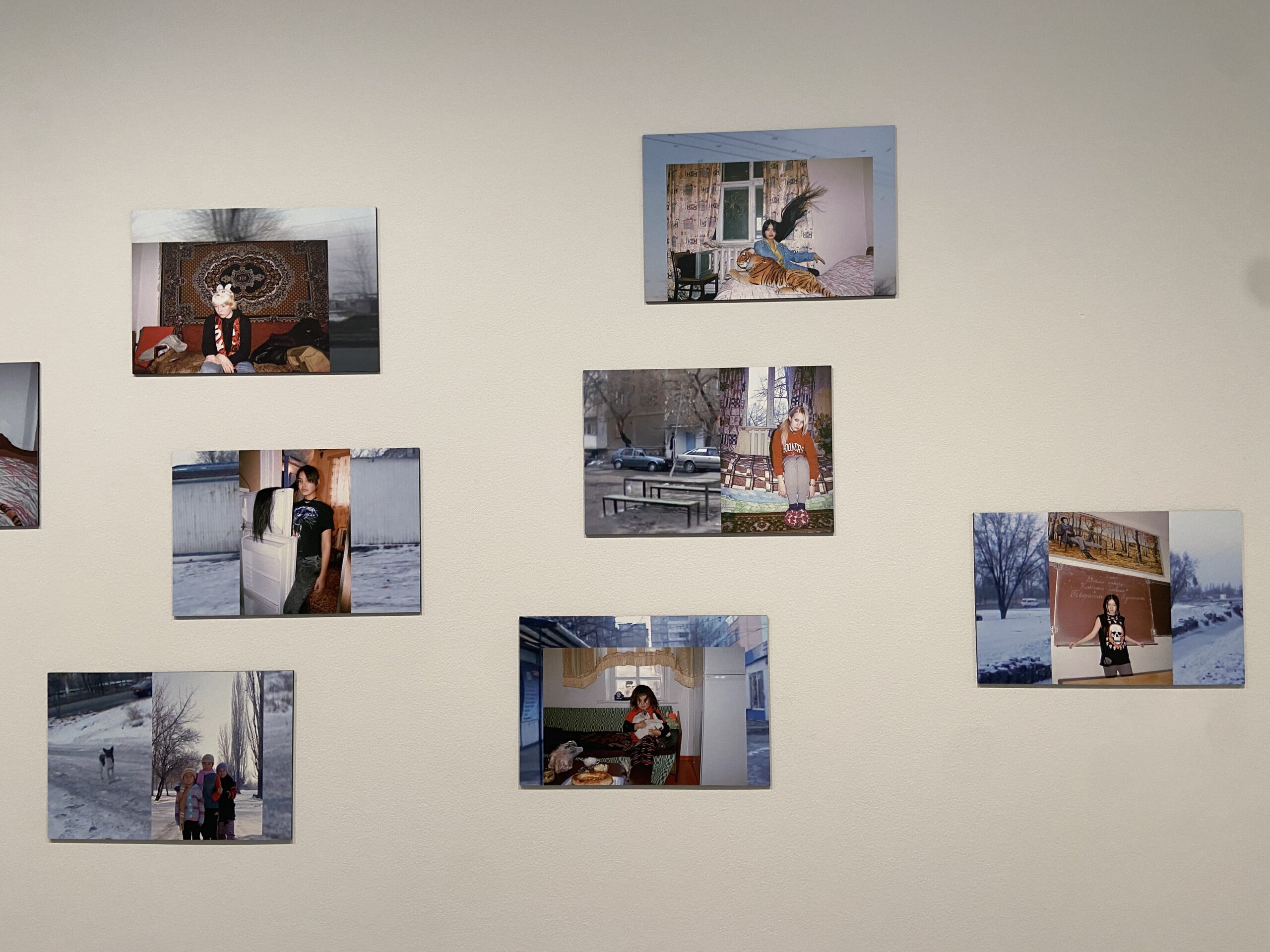
Aziza Shadenova, “Girls of Kyrgyzstan”; image: TCA, Naima Morelli

In the catalogue essay, Sara Raza explains that social media is a space where Kyrgyz girls can reclaim their sense of autonomy, posting images and texts that involve encoding hidden messages in clothing, hairstyles, gestures, and postures that are generationally-specific.

Overall, what emerges from the third chapter of “Seeing is Believing: The Art and Influence of Gérôme,” is a clear vision of how artists are entering a new era of de-orientalization. What Sara Raza and the artists suggest in the show is that in order to move forward the discourse on Orientalism, artists from all geographies must be aware of stereotyping and correct historical inaccuracies.

“Collectively the artists in ‘I Swear I Saw That’ embody conceptual positions that challenge obsolescent Eurocentric historical precedents and can tackle issues of prejudice, power and knowledge by way of conscious visioning,” says Sara Raza. “Witnessing becomes holy writ: mysterious, complicated, powerful. Necessary.”

And if the Gulf countries are providing the ideal framework, in terms of institutions, to be a place for these voices and narratives, Central Asian artists are at the forefront of this vision.

Uzbek Footballer Abdukodir Khusanov to Sign for Manchester City

When the English champions Manchester City suffered a shock run of losses recently, soccer fans began guessing what moves coach Pep Guardiola would make to stop their winter slump. No-one expected him to call for a defender from Uzbekistan.

Abdukodir Khusanov, still only 20 but already with 18 appearances for the White Wolves, is set to become Guardiola’s first signing of 2025. On 11 January the tall center-back agreed to join City in a €40 million ($41 million) transfer from the French team RC Lens. Once the move is complete, Khusanov is expected to sign a contract for four and a half years,

Manchester City have won five of the last six Premier League titles. They were European club champions in 2023 after winning a first UEFA Champions League.

With Europe’s giants very rarely looking to Asia for their next young star, Khusanov has taken an unconventional route to the Etihad Stadium. He began his career in the youth team of local side Bunyodkor, before moving to Belarus in 2022, at the age of 18, to play for Energetik-BGU Minsk.

In 2023 Khusanov was part of the Uzbekistan youth team that won the AFC Under-20 Asian Cup. There his confident passing and physicality caught the attention of RC Lens. He became a fan favorite in northern France, and the youngest Uzbek to play in the Champions League.

Conor Bowers, a British fan of Uzbek soccer, has followed Khusanov’s career closely, and mentions that the €40 million man once struggled even to make teams in his homeland. “Although he is now over six feet tall, his youth coaches thought he would be too small to make it professionally. And that was even as a child, when he played as a striker.”

Of his season in France, Bowers adds: “People had high hopes for Khusanov, but no-one expected him to move to a club the size of Manchester City this fast. People feel it will put Uzbekistan in the spotlight of the football world.”

It was his strong performances in the French league that put Khusanov on the radar of Europe’s best clubs – Manchester City beat other English teams to his signature – but the defender is also vital to his national team. With the striker Eldor Shomurodov (of Roma in Italy) leading the attack, and Khusanov the team’s rock in defense, Uzbekistan has become Central Asia’s most accomplished side. The senior team is on course to qualify for next year’s men’s FIFA World Cup in North America.

Khusanov will be the first footballer from anywhere in Central Asia to play in the English Premier League. However, he is not the first player born in Tashkent to grace the so-called “best league in the world”. The Nigerian forward Peter Odemwingie spent his early childhood in Uzbekistan’s capital, before playing in the EPL for West Bromwich Albion and Stoke City.

As news of Khusanov’s move to Manchester swept across Uzbek media over the weekend, sports fans were excited by the prospect of one of their footballers playing under the legendary coach, Guardiola. “It’s a big thing for us to get to see one of our young players winding up at Pep’s team”, says Donat Iskanderoff, an Uzbek sports journalist.

Iskanderoff adds: “One fact people might not know is that his father [Hikmat Hashimov] used to play football as well, for Metallurg Bekabad [and the Uzbek national team]. But Abdukodir plays under a different surname – the father wanted to take pressure off his son.”

Salvaging Manchester City’s season while taking his nation towards a first World Cup, Abdukodir Khusanov will have no way of escaping the pressure now. But whether or not he is a success in England, the impressive young defender will have the whole of Uzbekistan behind him.