
• KGS/USD = 0.01144 0%
  • KZT/USD = 0.00213 0%
  • TJS/USD = 0.10456 0.19%
  • UZS/USD = 0.00008 0%
  • TMT/USD = 0.28490 0%
  • KGS/USD = 0.01144 0%
  • KZT/USD = 0.00213 0%
  • TJS/USD = 0.10456 0.19%
  • UZS/USD = 0.00008 0%
  • TMT/USD = 0.28490 0%
  • KGS/USD = 0.01144 0%
  • KZT/USD = 0.00213 0%
  • TJS/USD = 0.10456 0.19%
  • UZS/USD = 0.00008 0%
  • TMT/USD = 0.28490 0%
  • KGS/USD = 0.01144 0%
  • KZT/USD = 0.00213 0%
  • TJS/USD = 0.10456 0.19%
  • UZS/USD = 0.00008 0%
  • TMT/USD = 0.28490 0%
  • KGS/USD = 0.01144 0%
  • KZT/USD = 0.00213 0%
  • TJS/USD = 0.10456 0.19%
  • UZS/USD = 0.00008 0%
  • TMT/USD = 0.28490 0%
  • KGS/USD = 0.01144 0%
  • KZT/USD = 0.00213 0%
  • TJS/USD = 0.10456 0.19%
  • UZS/USD = 0.00008 0%
  • TMT/USD = 0.28490 0%
  • KGS/USD = 0.01144 0%
  • KZT/USD = 0.00213 0%
  • TJS/USD = 0.10456 0.19%
  • UZS/USD = 0.00008 0%
  • TMT/USD = 0.28490 0%
  • KGS/USD = 0.01144 0%
  • KZT/USD = 0.00213 0%
  • TJS/USD = 0.10456 0.19%
  • UZS/USD = 0.00008 0%
  • TMT/USD = 0.28490 0%

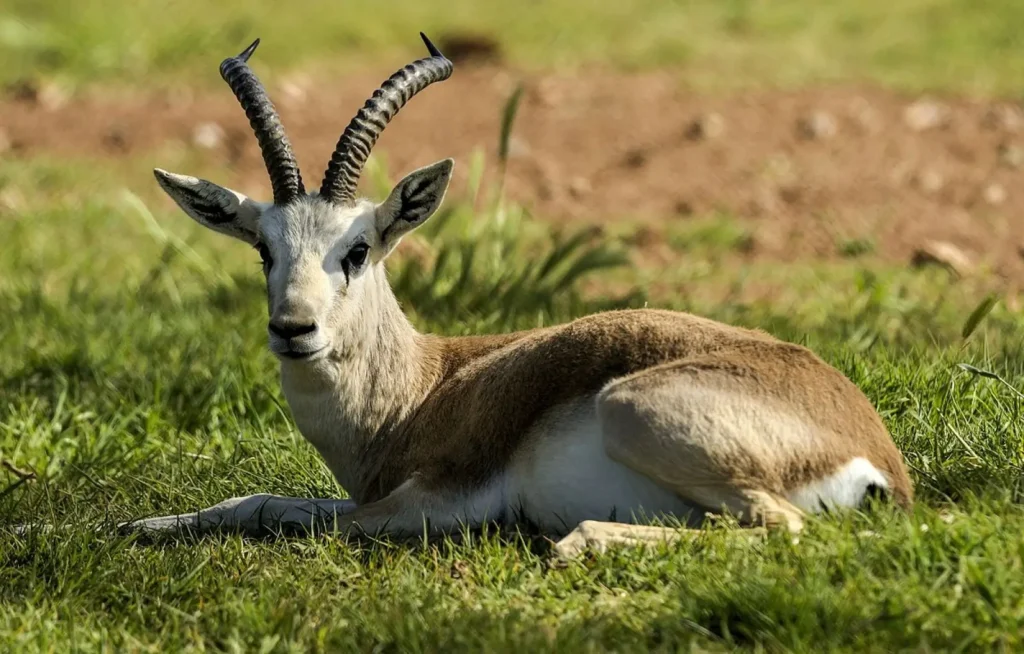
Despite USAID Funding Cuts, Kyrgyzstan Plans to Reintroduce Goitered Gazelle at Issyk-Kul

Kyrgyzstan has launched an ambitious project to restore the population and natural habitat of the goitered gazelle on the southern shore of Lake Issyk-Kul, a region once home to these graceful creatures. Led by the Argali Public Fund, Ilbirs Fund, and the Gulistan farm, the reintroduction effort marks a significant step toward reversing the species’ decline and restoring balance to the local ecosystem.

Reviving a Lost Species

The goitered gazelle, an elegant herbivore from the bovid family, was once abundant in the Issyk-Kul region. However, its population collapsed after the 1930s due to widespread poaching and the conversion of natural landscapes for agricultural and economic development. Today, the species is listed in Kyrgyzstan’s Red Book of endangered species, making their conservation an urgent priority. Found across Central Asia — from Kazakhstan and Uzbekistan to Iran and beyond — the gazelle is integral to maintaining the balance of steppe and desert ecosystems.

On the southern shore of Issyk-Kul, conditions remain favorable for the return of the goitered gazelle. However, decades of human activity and habitat loss have driven them away, leaving reintroduction as the most viable path to restoration. The project employs a “soft release” approach, starting with a semi-free adaptation phase. Animals are first acclimatized and allowed to breed in a controlled environment before being released back into the wild. This method reduces the risks associated with sudden release and ensures a higher survival rate.

The Project in Action

Currently, the Gulistan farm houses a herd of 43 gazelles. By the end of the year, the number is expected to grow to 60, with the first batch of 25 animals scheduled for release in 2025. Organizers aim to release an additional 15-20 gazelles annually, slowly building a self-sustaining wild population. If conservation measures, particularly anti-poaching efforts, prove successful, the gazelle population in Issyk-Kul could reach 500 within the next decade.

Gazelles play an essential role in their environments, feeding on thorny and toxic plants that other species avoid. This behavior helps control invasive vegetation and supports the overall health of the ecosystem. Their presence also benefits predators such as wolves and snow leopards, creating a natural chain of biodiversity.

Broader Impact on Biodiversity and Ecotourism

The reintroduction of the goitered gazelle represents more than just species preservation; it is a step toward restoring the ecological integrity of the Issyk-Kul landscape. A thriving population of gazelles can boost biodiversity by fostering healthier, more balanced ecosystems. Their grazing patterns promote plant regeneration, which in turn supports a variety of other species, from insects to birds of prey.

Furthermore, the project has significant potential to bolster Kyrgyzstan’s ecotourism sector. Issyk-Kul is already a popular destination for outdoor enthusiasts, and the presence of rare and protected wildlife like the goitered gazelle could attract even more visitors. Eco-friendly tourism initiatives could offer guided safaris to observe the gazelles in their natural habitat, providing educational opportunities while generating revenue for local communities. President Japarov has underscored the importance of halting illegal hunting, urging communities to see the gazelle as a symbol of natural heritage rather than a source of meat or trophies.

A Collaborative Effort

The success of the reintroduction project depends on a unified effort between conservationists, local authorities, and communities. Adequate anti-poaching measures, public awareness campaigns, and sustained funding will be critical to ensuring long-term results. Organizations such as the World Wildlife Fund (WWF) and other biodiversity agencies could play a vital role in supporting the initiative.

Kyrgyzstan’s restoration of the goitered gazelle at Issyk-Kul is an example of how targeted conservation efforts can rectify past ecological damage. By combining science, policy, and grassroots support, the project not only seeks to revive a species but also to restore a vibrant natural space that benefits both wildlife and humanity.

Wider Efforts and Funding Threats

Projects such as reintroducing the goitered gazelle in Kyrgyzstan and ongoing efforts to revive saiga antelope populations in Kazakhstan demonstrate Central Asia’s commitment to conservation. Kazakhstan is home to around 2.8 million saiga antelope, equivalent to 99% of the global population, up from a low point of just 39,000 in 2005. However, challenges such as funding, poaching, and ensuring community support remain significant. Despite these hurdles, success stories highlight the value of combining science, local collaboration, and strict enforcement of environmental protections to rebuild the region’s delicate natural balance.

Kyrgyzstan is also at the forefront of snow leopard conservation, working to protect this iconic and endangered species whose habitats span the country’s rugged mountain ranges. Efforts include anti-poaching measures, habitat preservation, and cooperation with worldwide initiatives like the Global Snow Leopard and Ecosystem Protection Program (GSLEP). Local organizations run awareness campaigns, while protected areas such as the Sarychat-Ertash Nature Reserve offer critical safe habitats. In December 2023, President Japarov signed a decree “On recognizing the snow leopard as a national symbol of the Kyrgyz Republic”. Protecting the snow leopard is vital for biodiversity and maintaining the health of mountain ecosystems where this apex predator regulates prey populations and supports ecological stability.

However, as previously reported by TCA, the suspension of USAID to foreign aid programs poses a massive threat to projects to restore the balance to local ecosystems.

“Ninety percent of our environmental projects are supported by USAID,” Askar Davletbayev, an ecologist at the Institute of Biology under the Kyrgyz Academy of Sciences told TCA in January 2025. “The Kyrgyz government has limited funds, so both NGOs and ministries turn to external donors. Most projects will likely shut down. For example, I received USAID and UNDP funding to restore [goitered] gazelle populations. I purchased and bred the animals, but now I don’t know where we’ll find the money to continue.”
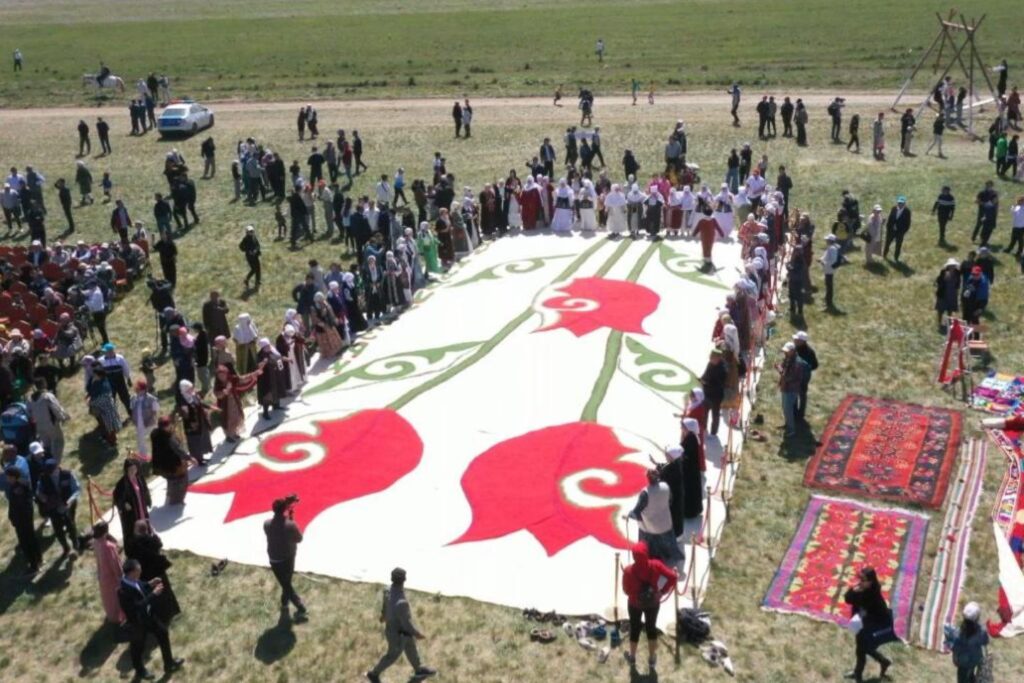

Record-Breaking Carpet Unveiled at Tulip Festival in Kazakhstan

A massive felt carpet crafted by 100 master artisans has been officially recognized by the Kazakhstan Book of Records during the international “Qyzgaldaq Mura” (“Tulip Heritage”) festival in the Zhambyl region. Measuring 200 square meters, the carpet was created using the traditional wet felting technique and adorned with tulip motifs, symbolizing the region’s cultural identity.

Renowned designer Aidarkhan Kaliev developed the carpet’s ornamentation, celebrating both craftsmanship and the region’s natural heritage. The finished work will be installed under protective glass at Auliye-Ata Airport, where it is expected to become a regional cultural landmark.

The festival attracted approximately 5,000 participants from Kazakhstan and abroad, including guests from Germany, Ukraine, Kyrgyzstan, the Netherlands, Russia, China, Turkey, and India. The event featured historical exhibitions, national games, artisan displays, and a vibrant concert program. The region’s tulip fields, home to 18 species, 10 of which are listed in the Red Book of endangered species, were a highlight for visitors.

Despite its cultural success, the festival drew logistical criticism. Numerous attendees reported transportation difficulties, with some being dropped off 10 kilometers from the venue and forced to walk. Aspandiyar Seisebayev, head of the Zhambyl Region Department of Entrepreneurship and Tourism Development, attributed the issues to unexpectedly high turnout and challenging terrain in the mountainous area.

Soviet Space Probe to Fall to Earth 50 Years After Baikonur Launch

In 1972, the Soviet Union launched a Venus-bound lander probe called Cosmos 482 from the Baikonur Cosmodrome in Kazakhstan, which was then a Soviet republic. The probe, which never got out of Earth’s orbit, is expected to re-enter Earth’s atmosphere in a week or so.

“Because the probe was designed to withstand entry into the Venus atmosphere, it is possible the probe (or parts of it) will survive reentry at Earth and reach the surface,” U.S. space agency NASA said on Friday.

“It is thought that a malfunction resulted in an engine burn which did not achieve sufficient velocity for the Venus transfer and left the payload in this elliptical Earth orbit. The lander probe orbit has been decaying over time and it is expected to reenter Earth’s atmosphere around 10 May 2025,” NASA said.

Right now, it’s hard to say where the lander will make its return. It’s possible that the spacecraft, or chunks of it, could survive reentry through the Earth’s atmosphere instead of burning up. After all, it has a titanium protective shell originally designed to get through the extreme atmosphere of Venus, which has the hottest surface of any planet in the solar system.

Dr. Marco Langbroek, a scientist based in the Netherlands, said on the SatTrackCam Leiden (b)log that he doesn’t think the lander’s parachute deployment system will work during the “uncontrolled” reentry.

“There are many uncertain factors in this though, including that this will be a long shallow reentry trajectory, and the age of the object,” Langbroek said. “The risks involved are not particularly high, but not zero: with a mass of just under 500 kg and 1-meter size, risks are similar to that of a meteorite impact.”

Today, Russia operates the Baikonur Cosmodrome, which retains a popular allure for its role in early space exploration and is still a vital part of the Russian space program.

On April 20, one NASA astronaut and two Russian cosmonauts made a parachute-supported landing on the steppes of Kazakhstan after a journey back to Earth from the International Space Station. The three men had launched from Baikonur and docked at the station on Sept. 11 last year, spending 220 days in space on that trip.

U.S. Cuts Funding for Uzbek Cotton Transparency Project

On April 30, during a cabinet meeting at the White House attended by President Donald Trump, U.S. Labor Secretary Lori Chavez-DeRemer announced the cancellation of more than $38 million in foreign aid programs, including funding for a project aimed at improving transparency and labor practices in Uzbekistan’s cotton industry.

“We have saved $250 million by canceling foreign aid programs under ‘America Last,’” said Chavez-DeRemer, referring to initiatives the Trump administration believes do not align with U.S. interests. “It makes no sense for our funds to be spent on such things. Thank you DOGE for the savings. What we found was fraud.”

Chavez-DeRemer’s reference to DOGE, the Department of Government Efficiency, led by Elon Musk, drew laughter in the room. Musk added, “Some of these things are so ridiculous you can’t believe it! Uzbek cotton farmers?! It sounds like a comedy sketch.”

The targeted Uzbek cotton project began in August 2022 and was initially scheduled to run through 2026. It received $2 million in its first year, with a further $1 million planned for 2025. The project aimed to improve labor conditions and prevent forced labor in Uzbekistan’s cotton sector, while helping workers and employers meet international standards.

In a video statement posted on X (formerly Twitter), Chavez-DeRemer reinforced the administration’s shift in aid priorities: “On day one, I promised that putting American workers first will be our top priority. At the direction of President Trump, we have wasted no time. Last week, we terminated several foreign aid grants, saving over $38 million… I bet you didn’t even know your hard-earned tax dollars were being spent on things like enhancing transparency in Uzbekistan’s cotton industry, supporting labor standards in Congo, or climate change programs in Brazil and Colombia.”

Uzbekistan’s cotton industry has long been under international scrutiny for the systemic use of forced labor. In recent years, however, the government has undertaken reforms and introduced strict monitoring systems to address these concerns with support from international partners, leading to organizations such as Cotton Campaign ending its call for a global boycott of Uzbek cotton. Additionally, the industry is being modernized through privatization and investments in technology, aiming to boost efficiency and sustainability.

Kyrgyzstan Proposes Closure of All Rural Libraries

Kyrgyzstan’s Cabinet of Ministers has submitted a draft bill for public consultation that proposes the closure of all rural libraries across the country, citing declining readership and poor infrastructure as the primary reasons behind the move.

According to the draft law, the heads of rural administrations are required to assess the operational efficiency and relevance of local libraries within three months. Libraries deemed underutilized or ineffective are to be closed, with their book collections transferred to school libraries in the same regions.

The Ministry of Culture reports that Kyrgyzstan currently has 1,050 libraries: 859 rural, 9 regional, 64 district, and 116 urban. Of these, 51 libraries are considered structurally unsound, while 214 require major repairs.

“Unfortunately, even those institutions that remain open often suffer from extremely low attendance. Data on the number of visitors and subscribers are often invalid and may be distorted, creating an illusion of library activity. This creates a misconception about the demand for services that do not actually meet the needs of the local population,” reads the bill’s explanatory note.

The document’s authors estimate that over half of the country’s libraries are effectively non-operational and argue that functioning cultural institutions lack sufficient material and technical support.

With the growth of digital technologies, traditional libraries, particularly in rural areas, are losing popularity, especially among younger generations, according to the proposal’s initiators.

Cyberattacks Double in Kazakhstan in Early 2025

Kazakhstan experienced a sharp increase in cyberattacks during the first quarter of 2025, with 30,000 information security incidents recorded between January and May, double the number reported during the same period in 2024.

According to data from research agency Ranking.kz, the most significant growth was observed in botnet-related activity, including spam mailings, password cracking, and remote system intrusions that cause service disruptions. Such incidents surged to 17,600 in the first quarter of 2025, compared to just 1,700 a year earlier.

Conversely, attacks involving computer viruses, worms, and Trojans declined by 17.9% year-on-year, totaling 7,900 cases. However, phishing attempts targeting Kazakhstani users rose by 37.2%, reaching 2,000 reported incidents.

Other categories saw a decrease. Cases involving inaccessibility of internet resources dropped by 48.1% to 112, while distributed denial-of-service (DDoS) attacks fell to 23, down from 30 in the same period last year. Incidents of unauthorized access or modification of digital content also declined slightly, with nine reported cases versus 13 previously.

Despite the rise in cyber threats, Kazakhstan’s IT sector continues to demonstrate robust growth. In 2024, the value of services in computer programming, consulting, and related fields reached 1.5 trillion tenge (approximately $2.9 billion), a 36.3% increase compared to 2023. Since 2016, the volume of services in this sector has expanded more than tenfold, and by over fivefold since 2019.

Regionally, Almaty and Astana dominated the sector, accounting for 90.2% of all IT services provided. Almaty led with KZT 853.1 billion ($1.6 billion), followed by Astana with KZT 486.7 billion ($950 million). The lowest activity was recorded in the Ulytau region, with only KZT 712.3 million ($1.3 million) in services.

Separately, The Times of Central Asia previously reported that a Chinese firm involved in cyber intelligence operations had been active in Kazakhstan for several years, accessing telecom data over an extended period.




