• KGS/USD = 0.01144 0%
  • KZT/USD = 0.00213 0%
  • TJS/USD = 0.10456 0.19%
  • UZS/USD = 0.00008 0%
  • TMT/USD = 0.28490 0%
  • KGS/USD = 0.01144 0%
  • KZT/USD = 0.00213 0%
  • TJS/USD = 0.10456 0.19%
  • UZS/USD = 0.00008 0%
  • TMT/USD = 0.28490 0%
  • KGS/USD = 0.01144 0%
  • KZT/USD = 0.00213 0%
  • TJS/USD = 0.10456 0.19%
  • UZS/USD = 0.00008 0%
  • TMT/USD = 0.28490 0%
  • KGS/USD = 0.01144 0%
  • KZT/USD = 0.00213 0%
  • TJS/USD = 0.10456 0.19%
  • UZS/USD = 0.00008 0%
  • TMT/USD = 0.28490 0%
  • KGS/USD = 0.01144 0%
  • KZT/USD = 0.00213 0%
  • TJS/USD = 0.10456 0.19%
  • UZS/USD = 0.00008 0%
  • TMT/USD = 0.28490 0%
  • KGS/USD = 0.01144 0%
  • KZT/USD = 0.00213 0%
  • TJS/USD = 0.10456 0.19%
  • UZS/USD = 0.00008 0%
  • TMT/USD = 0.28490 0%
  • KGS/USD = 0.01144 0%
  • KZT/USD = 0.00213 0%
  • TJS/USD = 0.10456 0.19%
  • UZS/USD = 0.00008 0%
  • TMT/USD = 0.28490 0%
  • KGS/USD = 0.01144 0%
  • KZT/USD = 0.00213 0%
  • TJS/USD = 0.10456 0.19%
  • UZS/USD = 0.00008 0%
  • TMT/USD = 0.28490 0%

KazMunayGas Sees No Risk from Falling Oil Prices, Prepares for Market Fluctuations

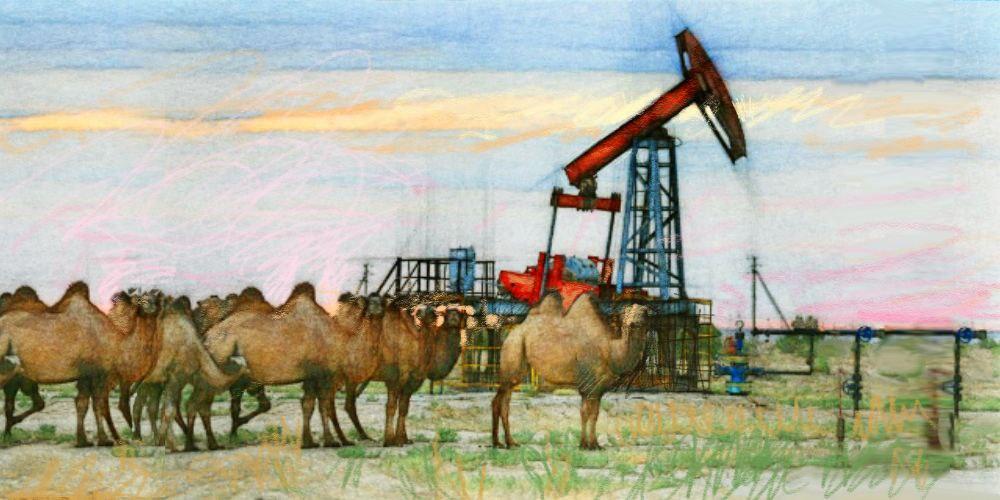
Kazakhstan’s national oil company KazMunayGas (KMG) has developed contingency strategies to manage volatility in global hydrocarbon markets and says it is fully prepared for any changes in oil prices.

As of the morning of May 5, Brent crude had dropped to $59.30 per barrel and WTI to $56.19, the lowest levels since April 9, following the OPEC+ decision to increase production. In response to questions at a media briefing, KMG Deputy Chairman Aset Magauov said the company foresees no significant risks despite this sharp decline.

“Analysts expect oil prices to average around $65 per barrel this year, though no one can predict with certainty,” Magauov stated. “We don’t see any risks for KazMunayGas. We have prepared for various scenarios and identified measures to optimize our expenses. In principle, we are ready for any fluctuations.”

KMG, which accounts for 26% of Kazakhstan’s total oil production and 80% of the domestic refining market, supplies roughly 70% of its crude oil to the domestic market. This oil is processed at Kazakhstan’s major refineries to ensure stable fuel and lubricant supplies. According to Magauov, the cost of domestic supply remains well below export prices, insulating KMG from international volatility.

“Even while export prices fluctuate, domestic prices remain stable and significantly lower than the lowest export benchmarks,” Magauov said. “Therefore, the majority of our sales, around 70%, are unaffected by global market movements. Moreover, exports of gasoline and diesel are limited, with nearly all production sold domestically.”

Magauov also noted ongoing discussions with Russian energy firm Tatneft on the potential joint development of the Atyrau refinery. As previously reported by The Times of Central Asia, Kazakhstan’s antitrust agency proposed privatizing state-owned stakes in the Pavlodar and Atyrau oil refineries, moves that could reshape the sector’s competitive landscape.

Meanwhile, Energy Minister Yerlan Akkenzhenov announced in April that Kazakhstan aims to double its domestic oil refining capacity by 2040, from 17.9 million tons in 2024 to 38 million tons annually.

Chinese Firms to Build 500 MW Solar Power Plant in Uzbekistan’s Jizzakh Region

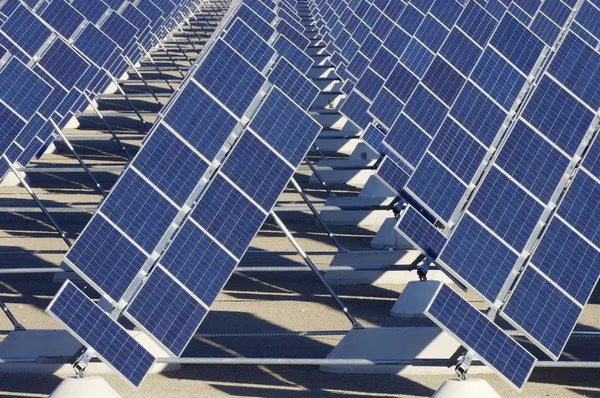
A major solar power project is set to launch in the Forish district of Uzbekistan’s Jizzakh region, following a presidential decree issued earlier this month. The project entails the construction of a 500-megawatt solar photovoltaic (PV) plant along with supporting power transmission infrastructure.

According to the decree, the initiative aims to ensure a stable energy supply for both the population and key sectors of the economy, reduce dependence on natural gas in electricity generation, and increase the share of renewables in Uzbekistan’s energy mix.

To carry out the project, China Electrical Equipment International Co. Ltd. and China Huadian Overseas Co. Ltd. have formed a joint venture, Huadian Jizzakh Solar Power LLC. The companies will design, finance, construct, and operate the facility.

Total direct investment is projected at 2.08 billion yuan (approximately $290 million). Under a 25-year guaranteed purchase agreement, Uzbekistan’s state electricity buyer, Uzenergosotish JSC, will buy the generated electricity.

For the construction site, the government has allocated 991.1 hectares of pastureland in Forish, which will be reclassified from agricultural to industrial use.

This announcement follows a wave of green energy initiatives signed during the inaugural Samarkand International Climate Forum in April 2025. Among them was an agreement with China’s Liquip International to build another solar facility in the same region.

As previously reported by The Times of Central Asia, Chinese investment in Jizzakh continues to grow. In June 2024, President Shavkat Mirziyoyev inaugurated a Technopark in the Zaamin district, where Chinese firms are financing 30 projects valued at $1.2 billion. The development is expected to generate over 5,000 jobs.

Kazakhstan Braces for Economic Fallout from OPEC+ Output Hike

The latest OPEC+ decision to boost oil production in a strained global market threatens to push Kazakhstan closer to recession and further inflation. On May 3, OPEC+ members agreed to a significant increase in oil output for June. Leading financial outlets, including Bloomberg, suggest that the move is intended to penalize member states that have consistently breached their production quotas, most notably Kazakhstan and Iraq. The announcement triggered a sharp drop in oil prices.

Production will rise by 411,000 barrels per day in June, following a tripling of output in May from the originally planned volume. Analysts attribute the shift to Riyadh’s growing frustration with non-compliant members. According to Rystad Energy analyst Jorge Leon, a former OPEC official, Saudi Arabia aims to “financially wear down” these states while aligning with U.S. President Donald Trump’s push for lower energy prices.

Kazakhstan’s Overproduction at Tengiz

Despite repeated assurances from Kazakhstan’s Ministry of Energy that they would honor OPEC+ agreements, the country exceeded its January quota by 32,000 barrels per day (bpd), producing 1.5 million bpd versus an allotted 1.468 million. This surge followed Tengizchevroil LLP’s launch of a new expansion phase at the Tengiz oil field in the Atyrau region, elevating output there to 870,000 barrels per day, 45% above the 2024 average. The expansion is expected to add 12 million tons annually to Tengiz’s crude production.

Tengizchevroil is a joint venture comprising Chevron (50%), ExxonMobil (25%), KazMunayGas (20%), and LUKOIL (5%).

Falling Prices and Criticism of OPEC’s Tactics

Following the OPEC+ announcement, Brent crude futures fell to $59.30 per barrel on May 5, with U.S. WTI at $56.19. Some analysts argue Kazakhstan is being unfairly targeted. As Reuters reports, Kazakhstan contributes only 5% of OPEC+ production and under 2% of global output.

Analysts at the Stankevicius Group note that larger producers such as the UAE, Russia, and Iraq have repeatedly breached quotas without facing similar scrutiny. They argue that Saudi Arabia’s surge in production undermines the cartel’s objectives more than Kazakhstan’s actions.

“Saudi Arabia, which has sharply increased its oil production, is causing even greater damage to the OPEC+ agreement by encouraging lower prices,” the analysts claimed.In other words, Kazakhstan is maintaining a balance of interests and the interests of other cartel members. Meanwhile, other members are allowing themselves to disrupt the market balance.”

Planning for a Downturn

Oil revenues are central to Kazakhstan’s state budget, prompting government officials to prepare for a potential downturn. Deputy Prime Minister and Minister of National Economy Serik Zhumangarin stated in April that contingency plans are being developed for scenarios where oil prices fall to $55 or even $50 per barrel.

However, the national budget is pegged to a $75 per barrel benchmark. According to analyst Murat Kastaev, social obligations make spending cuts politically infeasible, leaving the government reliant on increased transfers from the National Fund and a probable weakening of the tenge. While GDP growth could slow to 3-3.5% at current prices, a sustained drop to $40-50 per barrel may trigger a recession and significant currency devaluation.

“We hope it won’t come to that,” Kastaev said, “as prices below $50 threaten not only Kazakhstan’s economy but also the broader stability of the global market, including the interests of the U.S. and Saudi Arabia.”

Tourist Season Officially Opens in Kyrgyzstan’s Issyk-Kul

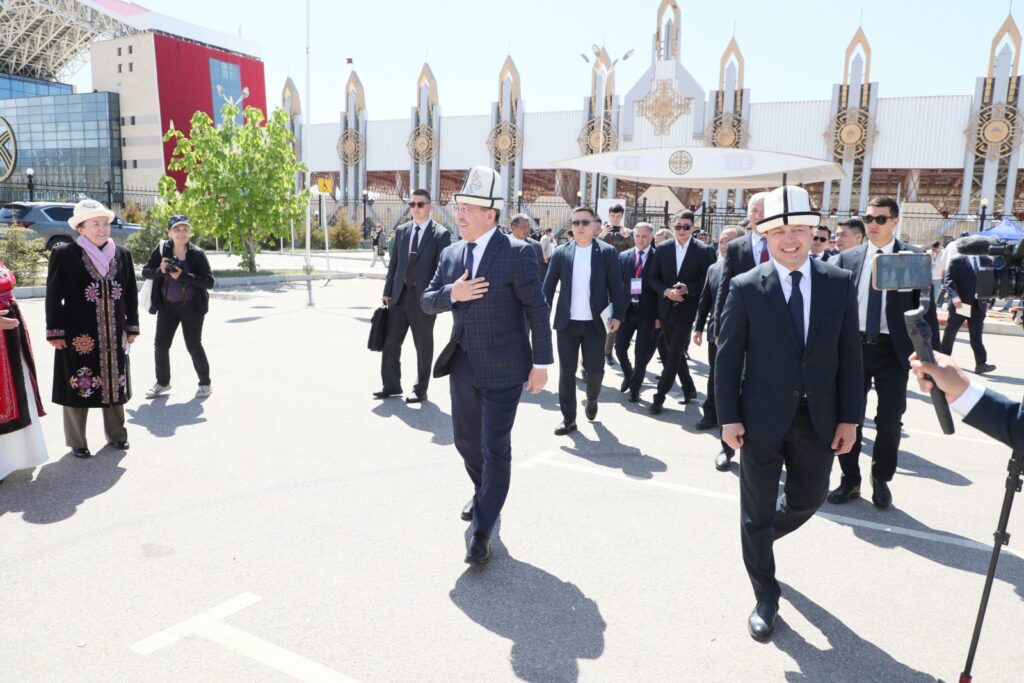
An international fair of craftsmen and folk art opened in Cholpon-Ata, marking the official start of the tourist season in Issyk-Kul. The highlight of the event was a lively and competitive display of yurt assembly, drawing large crowds and showcasing Kyrgyz traditions. 

Such fairs have become a key platform for Kyrgyz travel companies to promote their services and forge partnerships with tour operators from abroad.

“Today, Kyrgyzstan offers more than just a destination, we offer a tourism philosophy based on sustainability, respect for nature, and cultural diversity,” said Prime Minister Akylbek Japarov, reflecting the country’s broader tourism goals.

@gov.kg

Looking ahead, Japarov noted that by 2030, Central Asian countries may introduce a unified tourist visa. “Thanks to the goodwill of our presidents and peoples, we have recently been able to finally resolve border issues. Today, we are talking about creating a single tourist space in Central Asia. This initiative aims to enable foreign tourists to travel freely throughout the region, combining the routes, attractions, and cultural wealth of our countries in a single tourist package,” he said.

President Sadyr Japarov has also expressed support for a visa-free regime among Central Asian nations and the introduction of a regional visa akin to the Schengen model. 

Vietnamese Investment Group Eyes Airport Purchase in Kazakhstan

Vietnam’s SOVICO Group, the new owner of Kazakh airline Qazaq Air, is considering acquiring or managing an airport in Kazakhstan, according to Deputy Prime Minister and Minister of National Economy Serik Zhumangarin.

SOVICO Group, one of Vietnam’s leading investment conglomerates, operates across sectors including finance, aviation, energy, and digital transformation. The group also owns VietJet Air, an international low-cost airline with a fleet of 85 aircraft.

In 2024, SOVICO acquired Qazaq Air, a domestic carrier the Kazakh government had been trying to sell since 2023 for KZT 10.2 billion (approx. $19.7 million). However, the final sale price was significantly lower: KZT 2 billion (approx. $3.8 million), according to Transport Minister Marat Karabaev.

Qazaq Air currently serves 14 domestic routes, four of which are state-subsidized and four international destinations.

New Brand, Broader Ambitions

During a Kazakhstan-Vietnam business roundtable in Astana on Tuesday, it was announced that Qazaq Air will be rebranded as VietJet Kazakhstan. “We highly appreciate the intention of SOVICO Group and VietJet Air to manage Qazaq Air under the new brand,” said Nurlan Zhakupov, Chairman of the Board of Samruk-Kazyna JSC. “Expanding the route network will enhance regional connectivity and foster new economic growth.”

Zhumangarin mentioned that SOVICO Group is actively exploring options to either acquire or manage a Kazakh airport. “The company is large, rapidly expanding, and maintains numerous international partnerships. An airline needs a base airport, and they are considering establishing one here,” he said.

Strategic Infrastructure Interest

SOVICO has also signaled its interest in modernizing regional airport infrastructure, specifically in the Turkestan and Kyzylorda regions, a move seen as part of its broader strategy to expand operations in Central Asia.

In 2023, bilateral trade between Kazakhstan and Vietnam reached nearly $1 billion, although it dipped slightly to $879 million by the end of 2024.

Drone Attacks Intensify Security Worries Over Moscow Anniversary Event

Concerns about the security of dignitaries are circulating ahead of Russia’s plans for May 9 celebrations in Moscow of the 80th anniversary of the victory over Nazi Germany, an event that leaders from Central Asia are expected to attend as the Russo-Ukrainian war continues.

The unease relates to Ukraine’s growing capacity in drone warfare, a dominant feature of the battlefield after years of war between Ukrainian troops and invading Russian forces. On Sunday, Moscow Mayor Sergei Sobyanin said air defense forces in the urban area of Podolsk, on the outskirts of Moscow, “repelled an attack” by four drones flying toward the capital.

“According to preliminary data, there is no damage or casualties at the site of the fall of the debris. Emergency services specialists are working at the scene,” Sobyanin said on Telegram.

Overnight, Ukrainian drones targeted Moscow again, disrupting operations at four of the city’s airports. Sobyanin announced on Telegram that at least 19 Ukrainian drones were intercepted. Although no significant damage or injuries were immediately reported, debris from the intercepted drones landed on a major highway.

On April 28, Russian President Vladimir Putin unilaterally declared a three-day ceasefire in the war with Ukraine from May 8 – 11 to coincide with the celebrations of victory in the Great Patriotic War, as the Soviet experience in World War II is called. But Ukraine rejected the proposal, saying it seems mainly designed to create a safe environment for its guests in Moscow and that a U.S-backed plan for a 30-day unconditional ceasefire would instead represent a serious step toward peace.

Ukrainian President Volodymyr Zelenskyy has said Ukraine isn’t responsible for anyone’s safety on Russian territory on the day of the anniversary celebrations.

Dmitry Medvedev, deputy chairman of Russia’s Security Council, has warned of massive retaliation if Ukraine strikes Moscow during the May 9 event, saying on Telegram that “in the event of a real provocation on Victory Day, no one can guarantee that May 10 will come in Kyiv.”

An analyst who tracks drone technology, Russian military weapons development and related issues said Russia’s concern about the May 9 parade stems from Ukraine’s growing expertise in drones. “Ukrainian long-range drones can already strike across the entire [of] Russia’s European (west of Urals) territory,” Samuel Bendett, a researcher at the Center for Naval Analyses, said on X.

The city of Sevastopol in Russia-controlled Crimea won’t hold a Victory Day parade for security reasons, said city Gov. Mikhail Razvozhayev, according to Russia’s state-run news agency TASS. Sevastopol hasn’t held a parade in the last couple of years because of similar concerns. In 2014, Russian forces occupied and annexed the Ukrainian territory of Crimea, where Ukraine has conducted periodic attacks with drones and other weapons since Russia’s full-scale invasion in 2022.

The Kremlin says Chinese President Xi Jinping will visit Russia at Putin’s invitation on May 7-10 and will attend the Victory Day celebrations. Russian state media have reported that the leaders of the Commonwealth of Independent States, or CIS, will also attend. The CIS, a regional group that was set up as the Soviet Union collapsed in 1991, includes the Central Asian countries that were Soviet republics: Kazakhstan, Kyrgyzstan, Tajikistan, Turkmenistan and Uzbekistan.

On May 3, Putin and President Shavkat Mirziyoyev of Uzbekistan discussed trade and other issues including the treatment of Uzbek migrants in Russia. A Kremlin readout of the conversation said Mirziyoyev had confirmed he “would take part in the anniversary events to be held in Moscow;” the Uzbek presidency didn’t mention the May 9 celebrations in its summary of the talk.