• KGS/USD = 0.01144 0%
  • KZT/USD = 0.00193 -0%
  • TJS/USD = 0.10811 -0.28%
  • UZS/USD = 0.00008 0%
  • TMT/USD = 0.28490 0%
  • KGS/USD = 0.01144 0%
  • KZT/USD = 0.00193 -0%
  • TJS/USD = 0.10811 -0.28%
  • UZS/USD = 0.00008 0%
  • TMT/USD = 0.28490 0%
  • KGS/USD = 0.01144 0%
  • KZT/USD = 0.00193 -0%
  • TJS/USD = 0.10811 -0.28%
  • UZS/USD = 0.00008 0%
  • TMT/USD = 0.28490 0%
  • KGS/USD = 0.01144 0%
  • KZT/USD = 0.00193 -0%
  • TJS/USD = 0.10811 -0.28%
  • UZS/USD = 0.00008 0%
  • TMT/USD = 0.28490 0%
  • KGS/USD = 0.01144 0%
  • KZT/USD = 0.00193 -0%
  • TJS/USD = 0.10811 -0.28%
  • UZS/USD = 0.00008 0%
  • TMT/USD = 0.28490 0%
  • KGS/USD = 0.01144 0%
  • KZT/USD = 0.00193 -0%
  • TJS/USD = 0.10811 -0.28%
  • UZS/USD = 0.00008 0%
  • TMT/USD = 0.28490 0%
  • KGS/USD = 0.01144 0%
  • KZT/USD = 0.00193 -0%
  • TJS/USD = 0.10811 -0.28%
  • UZS/USD = 0.00008 0%
  • TMT/USD = 0.28490 0%
  • KGS/USD = 0.01144 0%
  • KZT/USD = 0.00193 -0%
  • TJS/USD = 0.10811 -0.28%
  • UZS/USD = 0.00008 0%
  • TMT/USD = 0.28490 0%
10 December 2025

Afghanistan’s Electricity Restored Following Supply Issues from Uzbekistan and Turkmenistan

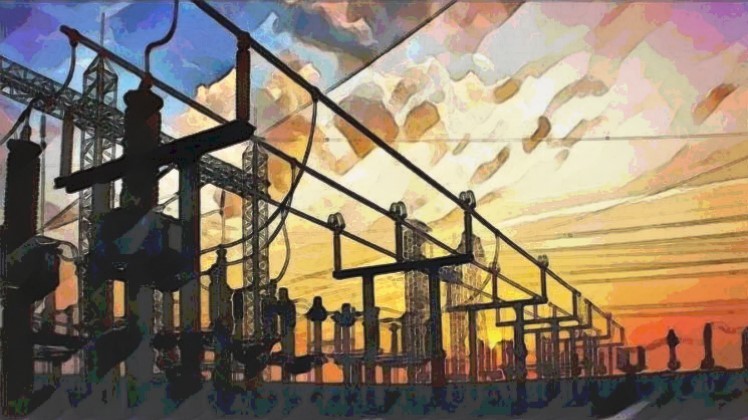
The Afghan Power Supply Company, Da Afghanistan Breshna Sherkat (DABS), recently announced disruptions in electricity imports from Uzbekistan and Turkmenistan. This has left many regions in darkness and sparked public dissatisfaction over the lack of a reliable power supply.

The interruptions stemmed from technical problems on the Uzbek side and hurricane-related issues in Turkmenistan. Uzbek authorities confirmed that they were working to resolve the issue swiftly.

On December 15, DABS confirmed that the technical issues had been resolved and normal electricity supply from both Uzbekistan and Turkmenistan had been fully restored.

Afghanistan relies heavily on electricity imports from neighboring countries, particularly Uzbekistan. In 2023, Uzbekistan extended its contract to export electricity to Afghanistan, underscoring the continued energy partnership between the two nations.

In earlier discussions, Afghanistan offered Uzbekistan opportunities to invest in its natural resources, including oil, gas, and copper deposits in the provinces of Ghazni and Herat, along with the potential to establish mineral processing plants.

U.S., Uzbek Think Tanks Agree to Work Together

Two prominent research centers in Uzbekistan and the United States plan to collaborate on joint projects.

The Washington-based Caspian Policy Center and Uzbekistan’s state-backed Institute for Strategic and Regional Studies signed a “strategic partnership agreement” and look forward to “fruitful joint work,” Caspian Policy Center CEO Efgan Nifti said on X.

Furqat Sidiqov, Uzbekistan’s ambassador to the U.S., said the agreement would help to foster ties between the two countries through research and dialogue.

Founded in 2016, the nonprofit Caspian Policy Center focuses on economic, political, energy and security issues in the Caspian region. The Uzbek institute started in 1992 under a presidential decree.

Last week, Eldor Aripov, director of the Institute for Strategic and Regional Studies, met leaders of top research groups in Washington. Among the topics they discussed were economic and other reforms in Uzbekistan that open “great opportunities for expanding the presence of American business in the Uzbek market,” the institute said.

The leaders also discussed U.S. foreign policy priorities, including in Central Asia, and noted “successful cooperation” in the so-called C5+1 talks format that includes Uzbekistan, Kyrgyzstan, Kazakhstan, Tajikistan, Turkmenistan and the United States, according to the institute. It said the format helped to coordinate efforts “to strengthen regional trade, develop transport and energy links, combat environmental challenges, and counter extremism.”

Marked by Tragedy: Why Kazakhstan’s Independence Day Is a Day of Reflection

On December 16, Kazakhstan marks Independence Day, commemorating the adoption of the Law on Independence and State Sovereignty of the Republic of Kazakhstan in 1991. Until 2022, the country observed this holiday over two days – December 16 and 17 – but recent legislative changes have reduced the celebration to a single day.

The amendments to the Law on Holidays in the Republic of Kazakhstan, adopted in September 2022, redefined the country’s official holidays. Republic Day on October 25 regained its national holiday status, while December 1 – Day of the First President – was removed as a public holiday. Independence Day, while still classified as a state holiday, was given a more somber tone, with official emphasis placed on honoring the sacrifices that paved the way to sovereignty.

@TCA, Askar Kubaizhanov
Independence monument

From Republic Day to Independence Day

The roots of Republic Day lie in Kazakhstan’s Declaration of State Sovereignty, adopted on October 25, 1990, as the Soviet Union was nearing its collapse. The declaration symbolized Kazakhstan’s first step toward independence. However, following the country’s full independence in 1991, December 16 became the primary national holiday. Republic Day lost its significance in 2009 but was reinstated as a national holiday in 2022.

President Kassym-Jomart Tokayev, in his proposal to restore Republic Day, emphasized its role as the foundation of Kazakhstan’s independence journey. He suggested that Independence Day, while significant, should serve as a time for mourning and remembrance to honor those who contributed to the country’s sovereignty.

@TCA, Askar Kubaizhanov

The Legacy of December 1986: Zheltoksan Protests

December 16 carries weighty historical significance for Kazakhstan. On this day in 1986, protests erupted in Alma-Ata (now Almaty) after Moscow appointed Gennady Kolbin – a Soviet official with no prior ties to Kazakhstan – as head of the Kazakh SSR. Young Kazakh protesters demanded the application of the Korenization principle, which advocated for local leadership in Soviet republics.

The protests, often viewed as a precursor to Kazakhstan’s independence movement, were violently suppressed by Soviet authorities. The operation reportedly codenamed “Blizzard,” was designed to provoke unrest and then crush it through bloodshed. Controversially, Nursultan Nazarbayev, who would later become Kazakhstan’s first president, was aligned with Soviet power at the time. In his memoir “Without Right and Left, “Nazarbayev claimed he led one of the protest columns during the demonstrations.

For many Kazakh citizens, particularly those who participated in or were affected by the events, December 16-17 remain days of mourning. Almaty’s Peace Street was renamed Zheltoksan Street to honor the memory of the victims.

December 2011: The Zhanaozen Tragedy

The somber tone surrounding Independence Day was reinforced by the events of December 16, 2011, in Zhanaozen. For months prior, oil workers in the Mangystau region had been on strike, demanding better wages. The protests escalated when workers occupied the city’s central square. On Independence Day, clashes broke out between protesters and local officials during holiday celebrations.

The situation turned violent when a group of men, reportedly posing as oil workers, attacked police officers, burned a Christmas tree set up for the festivities, and destroyed equipment. Chaos followed, with bank branches and government buildings – including the Akimat (local administration) – set ablaze. Civil servants were forced to escape through windows, and protesters attempted to seize the local police station.

The government’s response was swift and brutal. Officially, 15 deaths were reported, but many believe the true toll was higher. Since the Zhanaozen tragedy, December 16 has become a day marked by heightened security, with increased police presence in city centers and student movements restricted.

@TCA, Askar Kubaizhanov

Shifting Perceptions and Political Realities

The government’s decision to scale back Independence Day celebrations reflects a deliberate attempt to reduce tensions and avoid potential unrest. For over a decade, students in cities like Almaty have been advised to stay indoors on December 16. At the same time, the authorities remain vigilant against potential provocations. This year, Kazakhstan’s Center for Analysis and Investigation of Cyberattacks reported an increase in fake calls for rallies, noting that many originated from foreign IP addresses.

Critics argue that political figures living abroad, such as Mukhtar Ablyazov, continue to exploit Independence Day for their agendas, seeking to replicate the unrest of 2011.

A Day of Reflection

While Independence Day remains a significant date in Kazakhstan’s history, its tone has shifted over the years. For many, it is no longer a festive occasion but a day of remembrance for the sacrifices of 1986 and the tragedy of 2011. Few citizens participate in public commemorations beyond laying flowers at monuments. Instead, most prefer to stay at home or leave for the countryside, avoiding the heavy police presence that defines the day in major cities.

Uzbekistan Welcomes 6.5 Million Tourists in 10 Months of 2024, With China Leading Growth Outside CIS

Uzbekistan’s tourism industry is thriving, with 6.5 million foreign visitors from January to October 2024, fueled by a 17.2% year-on-year increase, or 951,300 more visitors compared to the same period last year.

Among these tourists, 57,700 were from China, marking a 63.1% rise and making China the leading source of visitors outside the Commonwealth of Independent States (CIS).

China’s interest in landlocked Uzbekistan comes as no surprise. Rich in natural resources and brimming with untapped potential, Uzbekistan stands as a promising opportunity for growth and prosperity when strategic investments are managed effectively.

For instance, China continues to dominate Uzbekistan’s trade scene, accounting for 18.8% of the country’s total foreign trade turnover as of October 2024. Bilateral trade between the two nations reached $10.2bn, with Uzbekistan exporting $1.7bn worth of goods to China and importing $8.5bn in return.

While this was a slight dip from the $10.8bn in 2023, China has maintained its position as Uzbekistan’s largest trade partner since 2020, thanks in part to strategic agreements like the Bilateral Investment Treaty (BIT) and the Agreement on Avoidance of Double Taxation (DTA).

Additionally, China’s investment footprint in Uzbekistan is hard to miss. By the end of 2022, China had invested a total of $4.5bn, with over 2,000 Chinese enterprises operating in the country as of January 1, 2024. These businesses span a wide range of sectors, from oil and gas exploration to infrastructure development, automotive assembly, agriculture, and textiles.

Projects include the Pengsheng Industrial Park, which focuses on construction materials and modern agriculture with a $129mn investment, and the Anjiyan Textile Park, which specializes in textile production, backed by more than $64mn. The Luoyang-Bukhara Agricultural Cooperation Zone takes this partnership to the next level, blending agricultural cultivation with industrial activities for a dynamic collaboration.

Agriculture has blossomed as a key area of collaboration between Uzbekistan and China in recent years. Uzbek exports, such as cherries, apricots, and dried fruits are hitting the sweet spot in China, while Chinese investments in agri-tech are giving Uzbekistan’s productivity and export game a major boost.

When it comes to green energy, Uzbekistan’s renewable ambitions are getting a powerful push from Chinese know-how. A standout project, a 1 GW solar power plant under the Belt and Road Initiative, is a shining example of both nations’ dedication to a greener, more sustainable future.

In addition, on December 5, Uzbekistan’s Uzatom and China National Nuclear Corporation Overseas (CNOS) signed a cooperation agreement, setting the stage for small nuclear power plants and improved uranium processing in Uzbekistan. This follows earlier talks about tapping into China’s expertise to enhance the country’s nuclear energy capabilities.

The digital transformation of Uzbekistan is another exciting frontier of opportunity. With plans to expand its digital infrastructure, Chinese companies are stepping in with cutting-edge technologies like 5G networks and e-commerce platforms. These innovations are set to supercharge Uzbekistan’s digital economy, making it more efficient and connected than ever before. It’s a win-win that promises to drive growth and elevate the country’s technological landscape.

Two major Chinese firms — CITIC Construction and China CAMC Engineering — were also chosen to kick off irrigation reconstruction projects in 2025. These projects will be supported by the Export-Import Bank of China, pending the green light on feasibility studies.

There has also been good news for Uzbek passport holders, with a new visa-free agreement signed recently by Uzbekistan’s Foreign Minister Bakhtiyor Saidov and China’s Foreign Minister Wang Yi, allowing citizens of both countries to visit each other for up to 30 days. This follows Uzbekistan’s 2021 move to grant Chinese citizens a 10-day visa-free stay.

China, the world’s second-largest economy, has a major impact on global trade and investment trends. Its substantial investments in Central Asia, particularly Uzbekistan, are driven by several strategic factors. Rich in natural resources, Central Asia meets China’s energy needs, with Uzbekistan serving as a key source of oil and gas to fuel China’s drive for energy security. Uzbekistan is also a critical player in China’s Belt and Road Initiative (BRI), which aims to boost connectivity and trade routes between China and Europe, while promoting infrastructure development and regional economic integration.

These investments open up new markets for Chinese products, reducing reliance on traditional markets, and strengthen China’s position in the region, balancing Russia’s influence. Ultimately, Chinese investments are focused on enhancing infrastructure, fostering connectivity, and supporting local economies for long-term growth.

Transforming Kazakhstan’s Railways: Strategic Infrastructure for Regional and Global Connectivity

Kazakhstan’s rail network is a strategic national asset, vital for a country of its vast size and landlocked geography. Without direct access to the world’s oceans, railways serve as critical arteries for trade and transit. Under new geopolitical and logistical conditions, the importance of modernizing and expanding this network has become increasingly urgent.

Spanning 21,000 kilometers, Kazakhstan’s railroads form the backbone of its transportation infrastructure. By 2030, the country plans to modernize 11,000 kilometers of highways and construct over 5,000 kilometers of new railways. Among these ambitious projects are the construction of second tracks on the Dostyk-Moyinty railway section, a bypass railway line around Almaty, and two new lines: Darbaza-Maktaaral and Bakhty-Ayagoz.

Expanding Trade with China: Increased Cargo Traffic

The Dostyk border station has become a key hub for exports to China and a vital transit point for East-West trade. In recent years, growing cargo volumes and limited capacity have placed immense pressure on its infrastructure. The Dostyk-Alashankou junction point, with a current capacity of 20 million tons annually, handled 15.2 million tons in the first 10 months of this year alone – a 15% increase compared to the same period last year.

To address these challenges, construction of second railroad tracks on the Dostyk-Moyinty section began in November 2022. Part of the National Project: Strong Regions – Driver of the Country’s Development, this project aims to increase the section’s capacity fivefold, from 12 to 60 train pairs per day. Transportation speeds between China and Europe are also set to improve significantly, from the current 800 kilometers per day to 1,500 kilometers per day.

Official data indicates that 635 kilometers of the planned 836 kilometers have already been completed. The project involves 62 bridges, 242 pipelines, and a workforce of 24 construction companies and over 440 units of equipment. Completion is expected by late 2025.

Private Investments Driving New Railway Lines

Kazakhstan’s second major rail crossing with China, Altynkol station, has also reached its maximum capacity. Together with Dostyk, the two stations handle 28 million tons annually. This makes the development of the new 272-kilometer Bakhty-Ayagoz railway line essential. Connecting the border to the Semey-Aktogay section and the China-Europe corridor, the new line is expected to boost goods transportation to and from China by an additional 20 million tons.

This project, realized under a public-private partnership model, will feature the construction of 11 stations, 47 bridges, 23 railroad overpasses, and eight highway overpasses. It will also include five pedestrian bridges and 16 observation structures, utilizing over 500,000 locally manufactured sleepers and 36,000 rails. Approximately 1,700 jobs will be created during the construction phase, with priority given to local residents.

Alleviating Traffic in Almaty: A New Bypass Line

The 73-kilometer bypass railway line around Almaty is set to increase cargo capacity by 17 million tons annually. By redirecting traffic to the Zhetygen-Kazybek Bey line, this project will reduce congestion at the Almaty junction by 40%. Faster delivery times for goods and passengers – up to 24 hours shorter – are among the expected benefits.

Beyond logistics, the project is expected to improve the city’s environmental conditions by reducing urban rail traffic, thereby lowering air and noise pollution in Almaty.

Connecting Central Asia: Access Through Uzbekistan

The Darbaza-Maktaaral railway project is designed to handle over 20 million tons of cargo annually. A new border checkpoint between Kazakhstan and Uzbekistan will alleviate pressure on the existing Saryagash-Tashkent section and increase freight speeds across Uzbekistan, Tajikistan, Afghanistan, and Iran.

Additionally, the project will drive economic growth in the Turkestan region by linking the Maktaaral and Zhetysai districts with Kazakhstan’s national rail network. The initiative involves the construction of three junctions and five posts, employing over 3,000 workers. Completion is targeted for late 2026.

Enhancing Competitiveness on the Global Stage

Over the past 30 years, Kazakhstan has prioritized optimizing its railway network to remain competitive in the global transportation market. Current efforts focus on expanding mainline capacity, boosting transit volumes, and strengthening the nation’s position as a key trade hub for Central Asia and beyond.

Kazakhstan’s investment in rail infrastructure reflects its commitment to becoming a vital transit and logistics corridor in a rapidly evolving global economy.

Central Asia, a Possible Winner in Regional Reshuffle Over Syria

There has been talk about who’s up and who’s down since the Syrian rebel offensive that ousted President Bashar Assad this month. Central Asia might end up as a winner on the geopolitical scorecard, according to one theory. 

For Syrians, the future depends on whether the country can stabilize under a new government or is headed for fresh conflict. But here’s the international fallout so far: 

Russia, Iran and the Hezbollah group in Lebanon, key backers of Assad during years of civil war, lost power and influence in the region. Turkey, which supported some rebel groups, has more clout in Syria, where it opposes Syrian Kurdish forces. Israel has benefited because its enemy Hezbollah has lost a supply route through Syria from patron Iran, though it says it is striking Syrian military sites because threats remain.    

There could be economic gains for Central Asia, far from the maneuvers on the ground in Syria. Some analysts believe an ascendant Turkey will call in some favors from Russia, which along with Iran is on the backfoot. One thing that Turkey and Central Asian trading partners really want is the opening of a land route, the so-called Zanzegur corridor, in the South Caucasus, and Russia can possibly help to make that happen. 

The 43-kilometer corridor, which is expected to make land trade between East Asia and Europe more efficient, would connect Azerbaijan with its enclave of Nakhchivan, passing through Armenia before joining with Turkey and European markets beyond. The transport connection is supposed to open under a 2020 cease-fire agreement following Azerbaijan’s military success against Armenia, with Russia as a security guarantor. But Zanzegur remains contentious because of Armenian concerns over sovereignty and a final peace deal is yet to be signed.    

Now, the theory goes, Turkish President Recep Tayyip Erdogan could push Russian President Vladimir Putin for an assist on Zanzegur in exchange for apparently helping Russia evacuate troops from Syria, and for possibly helping Moscow form a relationship with the new Syrian leadership.   

“What will Turkey demand from Russia? Perhaps lighter terms for the supply of key energy supplies now at threat from US sanctions,” economist Timothy Ash wrote in an analysis. “Russian agreement also perhaps over Azeri and Turkish access to Nakhichevan [through] the Zangezur corridor and on to Central Asia? Putin now owes Erdogan. He will collect.”

Ahmad Vakhshiteh, a senior lecturer at RUDN University in Moscow, made a similar argument, saying in an interview with German media outlet DW that Turkey could use Syria leverage to advance wider geopolitical goals such as the Zanzegur corridor. 

Under the 2020 cease-fire deal, Russian border guards would control transport on the corridor, whose opening could also benefit Russia´s trade connections. But Russian influence has decreased as Armenia has all but withdrawn from a regional, Russian-led security pact and increasingly looks for Western partnerships. There has also been some discussion of bypassing Armenia and building an adjacent land corridor through Iranian territory, though Iran’s own trade and security interests are big factors.   

Still, Erdogan has pushed hard for a land route with cultural implications as a link with Turkic ethnic groups in the Caucasus and Central Asia. Moreover, as part of his “intense Syria diplomacy,” the Turkish president spoke by phone with President Ilham Aliyev of Azerbaijan, Erdogan’s office said on Saturday. Earlier this year, Erdogan told reporters that the Zanzegur corridor holds “great significance” for Aliyev and that “Azerbaijan will be very relieved as soon as the rail system is put into operation,” according to the Turkish presidency.

Currently, Turkey and Azerbaijan are connected via a land route through Georgia. The Zanzegur route, however, is the shortest land route from Asia to Europe and would deliver “great prospects for the development of trans-Caspian transportation, which involves almost all of Central Asia and the South Caucasus,” Nargiza Umarova wrote for the Caspian Policy Center. 

“The Zangezur Corridor is more than just a shortcut – it’s a game-changer for Central Asia, offering unprecedented economic integration and connectivity between Asia and Europe,” Raissa Muhutdinova, regional director with Global Civil Initiatives, a Kyrgyzstan-based NGO, said last month in a post on LinkedIn. 

“For the Central Asian ‘five,’ this route could redefine their geo-economic landscape by facilitating faster, cheaper access to European markets, allowing these nations to capitalize on their strategic positions like never before,” said Muhutdinova, referring to the five post-Soviet states of Kazakhstan, Kyrgyzstan, Uzbekistan, Tajikistan and Turkmenistan.