• KGS/USD = 0.01144 0%
  • KZT/USD = 0.00193 -0%
  • TJS/USD = 0.10876 0.55%
  • UZS/USD = 0.00008 0%
  • TMT/USD = 0.28490 0%
  • KGS/USD = 0.01144 0%
  • KZT/USD = 0.00193 -0%
  • TJS/USD = 0.10876 0.55%
  • UZS/USD = 0.00008 0%
  • TMT/USD = 0.28490 0%
  • KGS/USD = 0.01144 0%
  • KZT/USD = 0.00193 -0%
  • TJS/USD = 0.10876 0.55%
  • UZS/USD = 0.00008 0%
  • TMT/USD = 0.28490 0%
  • KGS/USD = 0.01144 0%
  • KZT/USD = 0.00193 -0%
  • TJS/USD = 0.10876 0.55%
  • UZS/USD = 0.00008 0%
  • TMT/USD = 0.28490 0%
  • KGS/USD = 0.01144 0%
  • KZT/USD = 0.00193 -0%
  • TJS/USD = 0.10876 0.55%
  • UZS/USD = 0.00008 0%
  • TMT/USD = 0.28490 0%
  • KGS/USD = 0.01144 0%
  • KZT/USD = 0.00193 -0%
  • TJS/USD = 0.10876 0.55%
  • UZS/USD = 0.00008 0%
  • TMT/USD = 0.28490 0%
  • KGS/USD = 0.01144 0%
  • KZT/USD = 0.00193 -0%
  • TJS/USD = 0.10876 0.55%
  • UZS/USD = 0.00008 0%
  • TMT/USD = 0.28490 0%
  • KGS/USD = 0.01144 0%
  • KZT/USD = 0.00193 -0%
  • TJS/USD = 0.10876 0.55%
  • UZS/USD = 0.00008 0%
  • TMT/USD = 0.28490 0%
11 December 2025

Eurasian Creative Week in Scotland Celebrates International Art, Literature, and Cultural Exchange

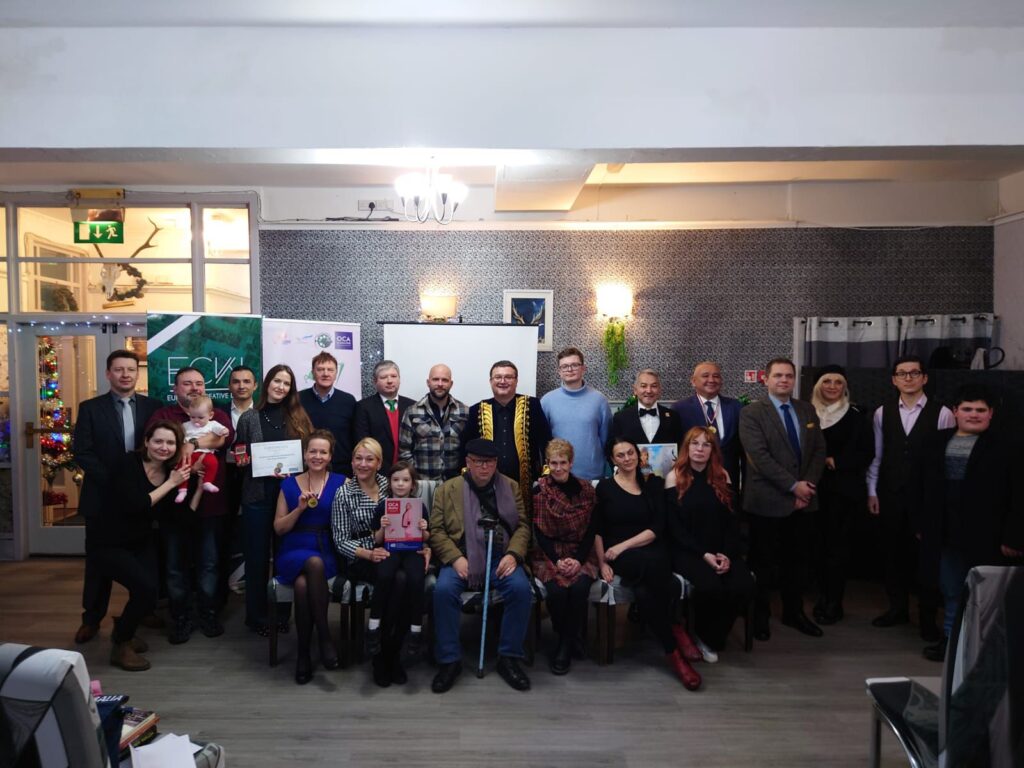
The XIII Eurasian Creative Week took place in Greenock, Scotland, from November 28 to 30, 2024, drawing artists, writers, poets, and diplomats from 15 countries, including Kazakhstan, Russia, and Canada. Hosted at the Beacon Arts Centre, the event kicked off with the presentation of artwork from the renowned collection The Great Steppe Treasure, featuring creators such as Maria Muchinskaya and Larisa Pak. Attendees also enjoyed video messages from notable writers and public figures, fostering a spirit of collaboration and dialogue. The evening spotlighted author Alexander Kazarnovsky, who captivated the audience with readings from his acclaimed novel, War will show the plan.

Continuing on November 29 at the OYO Gin House Hotel, the festival’s literary program showcased key publications by Hertfordshire Press, including Viktor Slipenchuk’s Zinziver. A highlight was the screening of an AI-created film based on Slipenchuk’s poem Chingis-Khan, which sparked discussions on historical and modern leadership. Meanwhile, OCA Magazine unveiled its special issue celebrating Uzbekistan’s vibrant Jizzakh region and key cultural figures. The day culminated in an award ceremony recognizing influential contributors, with honors like the Jonathan Fryer Medal and the Barbara Yurkowska-Nawrocka Medal celebrating efforts in literature and creative exchange.

Notable award winners included Timur Akhmedjanov for his charity comic book, Elish and the Wicker Tale, and Marina Alyassova for her psychological fairy tales, Wise Tales for Children and Adults. Other honorees, such as Tajikistan’s Gulsifat Shahidi and Kazakhstan’s Alikhan Zhaksylyk, were recognized for their contributions to romance stories and innovative novels. A gala reception featured traditional dishes and a keynote speech emphasizing the importance of fostering international ties.

The festival concluded on November 30 with a visit to the Watt Institution Museum, offering participants a glimpse into Scottish cultural heritage. Throughout the week, exhibits of national art and literature from countries like Uzbekistan and Kyrgyzstan exemplified Eurasia’s cultural diversity and creative potential. The XIII Eurasian Creative Week reaffirmed its role in strengthening international cultural collaboration.

U.S. Sanctions Former Uzbek Officials in Orphan Abuse Case

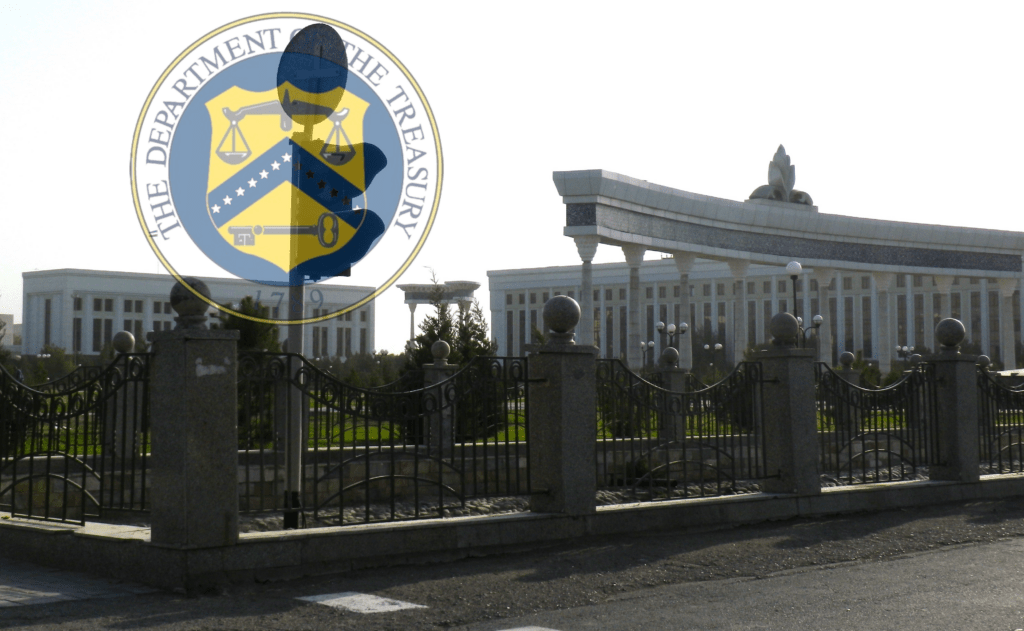
The United States has imposed sanctions on three former officials in Uzbekistan’s government who were involved in human trafficking as well as physical and sexual violence toward orphan children.

The three people, who carried out the crimes during their tenure as government employees, are now ineligible for entry into the United States and any property or entities in the U.S. that they own are “blocked” in line with the sanctions, the U.S. Department of the Treasury said Monday. American citizens are also barred from doing any transactions related to the blocked assets, it said.

The sanctioned individuals were identified as Yulduz Khudaiberganova, who was director of a state-run orphanage in Urgench, in Khorezm region, at the time of the abuses; Anvar Kuryazov, who was head of the Khorezm regional justice department; and Aybek Masharipov, who was head of the district emergency department.

“For at least 10 months, Khudaiberganova forced at least three underage girls to engage in sexual acts with at least six different men in exchange for funds and goods,” said the Treasury statement, which was released on the International Day for the Abolition of Slavery.

“Khudaiberganova used various coercive tactics to ensure the girls’ compliance, including physical beatings, threats, starvation, and isolation from their peers. Both Masharipov and Kuryazov demanded sexual access to orphans in compensation for ‘gifts’ they provided to the orphanage. Kuryazov and Masharipov repeatedly visited the orphanage in order to prey upon the young girls,” it said.

Uzbek media have previously reported on the case, saying a district court in Khorezm sentenced Khudaiberganova to five and a half years in prison, while the two men were given one and a half years of partial house arrest that barred them from leaving their homes from 10 p.m. to 6 a.m. The sentences were handed down in 2022 but an appeals court took up the case in 2023 after Nemolchi.uz, a non-governmental group that campaigns against gender-based violence, publicized the light sentences, causing a public outcry.

Kuryazov and Masharipov were subsequently sentenced to three years in prison.

“This was the most severe punishment given the legislation in force at the time of the crime,” Nemolchi.uz said on Telegram after the U.S. sanctions announcement. The group has pushed for tougher laws in Uzbekistan to shield children from sexual abuse, and the government has taken steps to strengthen protections.

2025 Asian Youth Games Moved from Tashkent to Bahrain

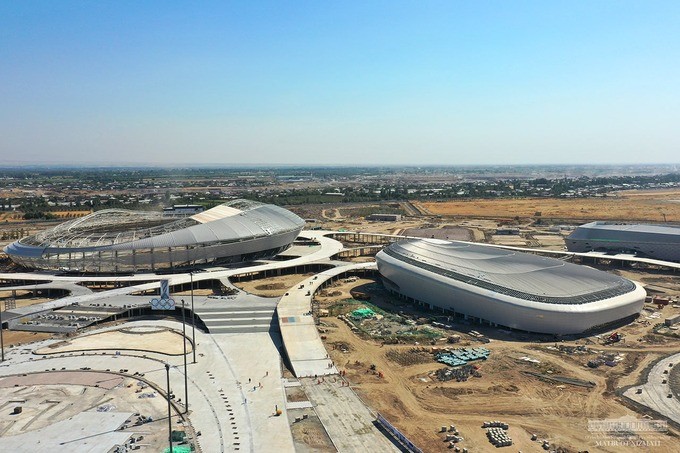
The Olympic Council of Asia (OCA) has announced that the 3rd edition of the Asian Youth Games in 2025, which had been due to be hosted in Tashkent, is to be moved to Bahrain. This decision was put down to some of the venues in the Uzbek capital being unready.

Uzbekistan’s National Olympic Committee (NOC) issued a statement explaining that the country had asked the OCA to postpone the competition for one year. There have been delays in the construction of the $289 million Olympic Campus due to post-pandemic constraints. However, the OCA refused the postponement because the 2025 Games are a selection stage for the 2026 Youth Olympic Games in Dakar, Senegal.

As a result, the event will now be hosted by Bahrain.

The OCA recommended that Uzbekistan focus on preparations for other sporting events, such as the Islamic Solidarity Games or the Asian Indoor and Martial Arts Games.

“The construction of the Olympic City remains a key project for the development of sports in Uzbekistan. We intend to complete its construction on time and turn it into a base for major international competitions,” the NOC said.

Uzbekistan and China Introduce Visa-Free Regime for 30 Days

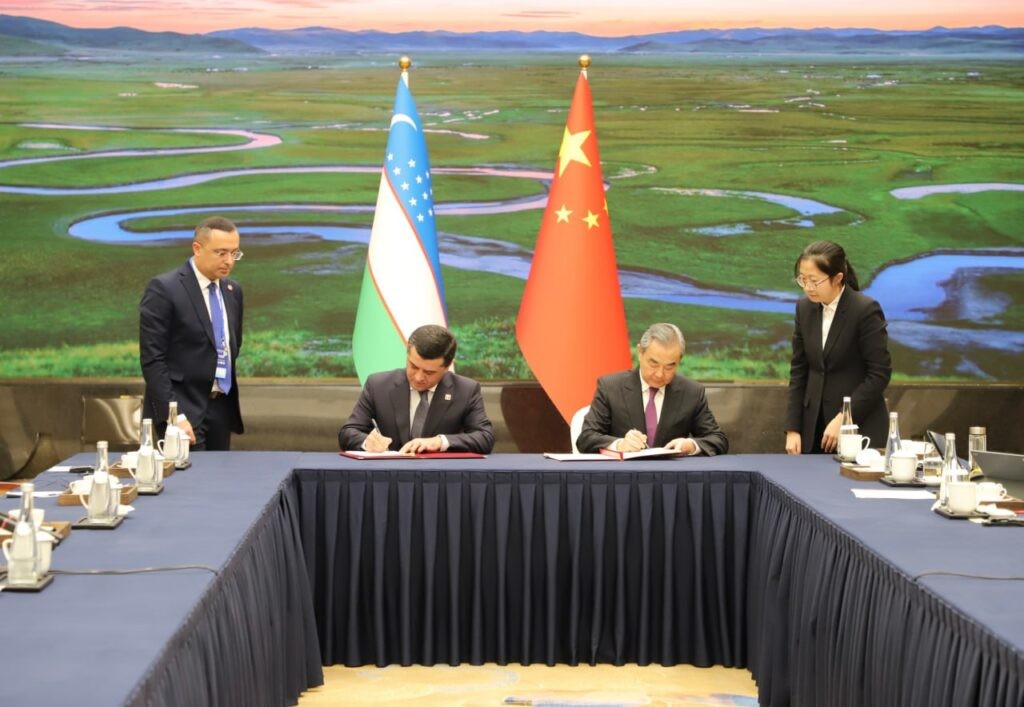
The heads of the foreign ministries of Uzbekistan and China have signed an agreement which will allow citizens of both countries to travel without visas for up to 30 days. This was announced by Uzbek Foreign Minister Bakhtiyor Saidov.

The document was signed December 1 in Chengdu during a business forum. Saidov emphasized that the agreement will be an important step towards strengthening bilateral ties, and developing trade and cultural exchange between the countries.

The initiative to simplify the visa regime was discussed last spring during Uzbek President Shavkat Mirziyoyev’s state visit to China. Until now, Uzbeks had to obtain a visa to travel to China, while Chinese citizens from March 2021 could visit Uzbekistan without visas for up to 10 days.

The date when the visa-free regime will come into effect will be announced later.

Russia’s Strategic Posturing and Putin’s November Visit to Kazakhstan

On November 27, 2024, Russian President Vladimir Putin’s state visit to Kazakhstan underscored the complex geopolitical and security challenges facing the region. Hosted by Kazakh President Kassym-Jomart Tokayev in Astana, the visit took place amidst heightened tensions following Russia’s deployment of its Oreshnik hypersonic missile in Ukraine on November 21. This escalation has reshaped the regional security environment, compelling Kazakhstan to confront potential spillover effects of the Ukraine conflict.

Energy remained a central focus during the visit. Kazakhstan remains heavily reliant on oil exports through the pipeline of the Caspian Pipeline Consortium (CPC), which passes through southern Russia. This cooperation benefits Kazakhstan economically but, by tying Kazakhstan further into Russian energy networks, it further complicates Astana’s efforts to balance relations with Moscow and Western powers.

Following periodic closures of the CPC route on various pretexts, Kazakhstan has resolved to diversify its energy export strategy. It has increased shipments by barge across the Caspian Sea to enter the Baku-Tbilisi-Ceyhan (BTC) pipeline, which terminates on Turkey’s coast in the eastern Mediterranean. One should not be surprised if ideas about the old Trans-Caspian Oil Pipeline (TCOP) project are taken out of deep storage for reanimation.

The TCOP is an undersea link first discussed in the late 2000s between then-Presidents Nursultan Nazarbayev of Kazakhstan and Nicolas Sarkozy of France. It was shelved at the time because it did not seem geoeconomically necessary. Since then, relations between Russia and Kazakhstan have been complicated by the periodic CPC closures that, although they are given technical justification, appear politically motivated by Moscow to squeeze Astana.

Kazakhstan’s short-term solution, to increase oil shipments by barge across the Caspian Sea to Baku for insertion into the BTC pipeline, simply cannot attain the volumes necessary to provide a strategic alternative to the CPC. The BTC, at present, would be able to accommodate whatever volumes Kazakhstan would be able to transit to Azerbaijan including via a prospective TCOP, for export to world markets from Ceyhan.

One would suppose that bilateral discussions also covered the possible participation of Rosatom in the construction and operation of Kazakhstan’s first nuclear power plant (NPP). However, no mention of this topic was made in public statements. Kazakhstan would prefer to escape the vise-like pressure between Russia and China on this matter. That is why Tokayev has discussed participation by the French firms Orano and EDF with France’s President Emmanuel Macron.

It has recently been suggested that it would be technically feasible for Kazakhstan to find a group of Western companies capable of executing the project. A Western consortium would have no reason to hesitate to include Kazatomprom in an appropriate role, not excluding capacity-building. The Russia-only and China-only options for the NPP’s construction would be less welcoming to such a possibility. Kazakhstan’s leadership has become properly sensitive to how energy partnerships are not just economic decisions, but strategic calculations in Central Asia’s volatile geopolitical landscape.

Indeed, Russia’s use of the Oreshnik missile against Ukraine has created an entirely new security situation. It has raised concerns that the military conflict may worsen, and Putin’s visit came days after that escalation. Tokayev has responded to Russia’s deployment of the Oreshnik by instructing Kazakhstan’s government to enhance security measures, prioritizing critical infrastructure and border regions near Russian military facilities. Kazakhstan needs to strengthen its air and missile defenses to mitigate risks of accidental strikes or provocations.

A nuclear conflict remains unlikely, but Kazakhstan must prepare for worst-case scenarios, including unintended strikes near its territory. Kazakhstan’s proximity to Russia’s military bases creates risks that call for improved civil defense and radiation preparedness. The sensitivity of the situation for Kazakhstan is only increased by its position as a non-aligned state that refused to recognize the Donetsk and Luhansk People’s Republics. It is imperative for Kazakhstan to diminish its dependence on Russian economic and security ties in order to maintain and enhance its own sovereignty.

Putin’s visit also served as a platform for reinforcing Russia’s influence in Central Asia. Facing Western sanctions and growing isolation over its actions in Ukraine, Russia has sought to solidify alliances with regional partners. Kazakhstan, as Central Asia’s largest economy and a member of the Collective Security Treaty Organization (CSTO), remains vital to Moscow’s strategy. The CSTO summit, held alongside Putin’s visit, emphasized the bloc’s role in Russia’s search to impose its own version of regional stability.

During the visit, both leaders emphasized the importance of stable economic ties and made commitments to accelerate the development of international transport corridors linking Central and South Asia. These projects highlight Kazakhstan’s strategic role in Russia’s efforts to pivot away from European markets.

Whether this new phenomenon gives Kazakhstan actual economic leverage over Russia is open to discussion. Economic relations between the two countries remain a cornerstone of their partnership, but recent trade disputes have tested their resilience. Russia’s ban on Kazakhstan’s agricultural exports and Kazakhstan’s decision not to join BRICS illustrate these tensions.

Putin’s visit highlighted Russia’s determination to maintain influence in Central Asia, but it also exposed the limitations of Moscow’s approach in a region increasingly seeking to diversify its partnerships. Against the backdrop of Russia’s military escalation in Ukraine and growing regional instability, Kazakhstan faces mounting pressures to safeguard its interests while navigating the challenges of an increasingly polarized world.

Kazakhstan’s diplomacy remains pragmatic, engaging Russia while pursuing ties with other global powers. As international tensions intensify, Kazakhstan’s ability to maintain this balance will be crucial for its security and sovereignty.  Its response — enhancing its defenses, diversifying its economic partnerships, and asserting its diplomatic independence — will determine not just how its relationship with Russia will develop, but also its own role in shaping the evolving dynamics of Central Asia.

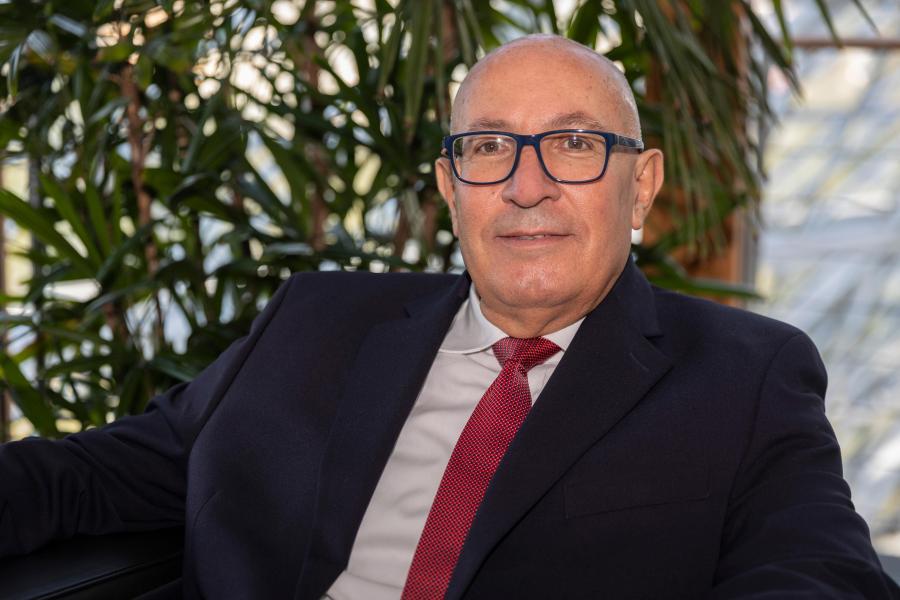
Securing EIB Funding in Kyrgyzstan: An Interview with VP Kyriacos Kakouris

Central Asia is rapidly developing its economy, with several international financial institutions successfully operating here. Among them is the European Investment Bank. Vice-President Kyriacos Kakouris spoke with The Times of Central Asia about its activity in Kyrgyzstan.

TCA: Could you briefly introduce the European Investment Bank (EIB) and its main objectives in Kyrgyzstan?

KK: The EIB is more than a bank, it is part of the EIB Group, one of the largest multilateral financial institutions in the world with a unique position allowing it to mobilize large-scale financing. The European Investment Bank, as the long-term financing institution of the European Union, is closely aligned with EU priorities, such as the EU-Central Asia strategy and the EU Global Gateway strategy, and is ready to play a more significant role in helping Kyrgyzstan respond more effectively to current and future challenges. The Bank has already been involved in economic development, transport, and climate action operations. We are interested in supporting the development of a competitive and environmentally friendly private sector that can incorporate modern and green technologies into various sectors.

TCA: What are the EIB’s priorities for supporting economic growth and sustainability in Kyrgyzstan?

KK: EIB Global launched its activity in Kyrgyzstan in 2014 and up to now, has signed three separate operations worth a total of €112 million. We have established a very positive relationship with the Embassy of Kyrgyzstan in Brussels, which is essential for our dialogue with the Kyrgyz authorities. All operations involve co-financing either with other international financial institutions like the World Bank and the European Bank for Reconstruction and Development (EBRD) or development institutions such as KfW.

So far, the Bank has approved lending operations for three projects on power transmission, water and waste management, and the agri-food sector, in line with the priorities defined in the EU-Central Asia and the EU Global Gateway strategies. The main aims of these projects are to protect the environment and take action against climate change.

We will soon sign a €9 million top-up for the completion of the Kyrgyz section of the high-voltage transmission line known as CASA-1000. This project is part of a larger regional electricity scheme called Central Asia – South Asia Electricity Transmission and Trade initiative, covering Kyrgyzstan, Tajikistan, and Pakistan. This project is essential for developing trade in sustainable renewable electricity between the countries, using energy generated from renewable hydropower sources in the region. This will alleviate power shortages and increase export revenue in Kyrgyzstan and Tajikistan.

TCA: How does the EIB’s role differ from that of other development banks or financial institutions?

KK: The EIB is the EU bank, and its shareholders are the 27 EU Member States. EIB Global is focused on EU policy priorities such as the EU strategy on Central Asia and the EU Global Gateway, supporting the green transition, boosting technological innovation, bolstering security and defense, and supporting regional cohesion and the development of social infrastructure. Our commitment to international development and capital market integration secures Europe’s strong global presence. Our projects boost growth, prosperity, and technological and social progress in individual EU Member States, across the EU as a whole, and around the world.

The EIB also has a strong team of experts who can provide advisory services and technical assistance to our clients to help them prepare and implement projects.

TCA: What criteria does the EIB use to select and evaluate projects for investment?

KK: Every project submitted for EIB Global financing is unique. However, in general, EIB Global supports projects that are in line with EU policies, economically viable, and environmentally and technically sound. The EIB directly finances projects that have a total cost of over €25 million, which are usually undertaken by big public and private companies. Smaller projects – usually implemented by small and medium-sized enterprises (SMEs) and mid-caps – are supported through our partner financial intermediaries.

TCA: Could you describe the sectors or industries the EIB is most focused on supporting and any that might be emerging in importance?

KK: The EIB supports projects that involve innovation, agriculture and water management, sustainable connectivity, and the transition towards a sustainable, climate-neutral growth model. With regard to sustainable connectivity, EIB Global is currently working on operations related to the Trans-Caspian corridor. These operations are closely aligned with the European Global Gateway strategy and add to the substantial support that EIB Global has already provided for the East-West corridor in the Southern Caucasus.

The Bank’s overall focus in Kyrgyzstan for the coming years is determined by the new EU priorities for the country and the Central Asia region. These priorities are to develop a green and climate-resilient economy, to continue the digital transformation and to make use of critical raw materials.

TCA: What role does the EIB play in fostering innovation and supporting technology startups in Kyrgyzstan?

KK: Innovation and, mainly, digitalization are core priorities for the EIB. We usually provide indirect support to smaller companies, including startups, using credit lines via financial institutions and by creating venture capital funds that are well-equipped to support higher-risk projects.

TCA: What areas or sectors does the EIB plan to prioritize for future investment to support Kyrgyzstan’s evolving economic landscape?

KK: EIB Global is working towards the long-term objective of making the Trans-Caspian Transport Corridors a multimodal, modern, competitive, sustainable, reliable, smart, and fast route linking Europe and Central Asia. Such investments are necessary to strengthen trade and competition and to diversify transport routes between Europe and Central Asia. Increased economic cooperation will be beneficial for prosperity and peace for people living in Kyrgyzstan and in Central Asia in general.

In this context, at the EU-Central Asia Investor Forum, which took place at the end of January 2024, EIB Global signed four memoranda of understanding for project co-financing with Kyrgyzstan, Kazakhstan, the Development Bank of Kazakhstan, and Uzbekistan amounting to €1.5 billion. It is expected that this will mobilize a total of €3 billion to support EU-Central Asia transport connectivity projects, a significant milestone in the context of the Global Gateway strategies.

We are also open to exploring new opportunities to support energy, water, and agriculture projects.

TCA: What advice would you give to entities looking to partner with or receive funding from the EIB?

KK: Given that every potential project is unique, the general advice I would give is to explore our objectives and the financial instruments that we provide and, if your project is in line with them, to get in contact with us. In principle, the EIB expects to receive a comprehensive feasibility study, a detailed description of the capital investment, and the prospective financing arrangements. The project promoter should provide sufficient information to allow the EIB to assess whether the project adheres to EIB lending objectives and has a well-developed business plan.

TCA: Where does the EIB see itself in the next decade, and how will it continue to align itself with Kyrgyz’s values and priorities?

KK: The EIB has been operating for over six decades. Within that time, it invested over a trillion euros in the benefit of people, economic development, and the climate to make our planet a better place.

We will continue to tackle global challenges in cooperation with our partners as multilateral action is required to provide effective support for development and growth outside Europe. Through our projects, we will work towards creating more jobs and opportunities and contribute to a cleaner planet and a better quality of life for the benefit of us all.

With these objectives in mind, we will operate via EIB Global, the EIB Group’s specialized arm for operations outside the European Union and a vital partner of the EU’s Global Gateway strategy. We aim to support at least €100 billion of investment by the end of 2027, around one-third of the overall target of the Global Gateway strategy. Within Team Europe, EIB Global fosters strong, committed partnerships alongside fellow development finance institutions and civil society. I believe that our collaboration with Kyrgyzstan and Central Asia will continue and that we will further enhance our cooperation in the years to come.