• KGS/USD = 0.01144 0%
  • KZT/USD = 0.00213 0%
  • TJS/USD = 0.10456 0.19%
  • UZS/USD = 0.00008 0%
  • TMT/USD = 0.28490 0%
  • KGS/USD = 0.01144 0%
  • KZT/USD = 0.00213 0%
  • TJS/USD = 0.10456 0.19%
  • UZS/USD = 0.00008 0%
  • TMT/USD = 0.28490 0%
  • KGS/USD = 0.01144 0%
  • KZT/USD = 0.00213 0%
  • TJS/USD = 0.10456 0.19%
  • UZS/USD = 0.00008 0%
  • TMT/USD = 0.28490 0%
  • KGS/USD = 0.01144 0%
  • KZT/USD = 0.00213 0%
  • TJS/USD = 0.10456 0.19%
  • UZS/USD = 0.00008 0%
  • TMT/USD = 0.28490 0%
  • KGS/USD = 0.01144 0%
  • KZT/USD = 0.00213 0%
  • TJS/USD = 0.10456 0.19%
  • UZS/USD = 0.00008 0%
  • TMT/USD = 0.28490 0%
  • KGS/USD = 0.01144 0%
  • KZT/USD = 0.00213 0%
  • TJS/USD = 0.10456 0.19%
  • UZS/USD = 0.00008 0%
  • TMT/USD = 0.28490 0%
  • KGS/USD = 0.01144 0%
  • KZT/USD = 0.00213 0%
  • TJS/USD = 0.10456 0.19%
  • UZS/USD = 0.00008 0%
  • TMT/USD = 0.28490 0%
  • KGS/USD = 0.01144 0%
  • KZT/USD = 0.00213 0%
  • TJS/USD = 0.10456 0.19%
  • UZS/USD = 0.00008 0%
  • TMT/USD = 0.28490 0%

Kazakhstan Aims to Nearly Triple Investment in the Economy by 2029

Kazakhstan plans to significantly increase investment in its economy over the next five years, aiming to nearly triple current levels. However, officials from the Ministry of National Economy acknowledge that the primary challenge lies not in securing additional funds but in the shortage of high-quality investment projects.

Shortage of Viable Projects

At a recent meeting of the Expert Council under the Ministry of National Economy, Deputy Minister Arman Kasenov stated that the ratio of domestic investment to GDP currently stands at a modest 14-15%, a figure he described as objectively low. “To achieve higher rates of economic growth, investments need to increase 2.75 times, from $40 billion in 2024 to $103 billion by 2029,” Kasenov stated.

To help reach this target, the government plans to allocate KZT 1 trillion (approximately $2 billion) through the state holding company Baiterek to stimulate business lending. This amount is expected to catalyze additional credit lines totaling KZT 8 trillion (around $15.9 billion). Still, Kasenov stressed that financing alone is not enough.

“The real issue is the lack of quality projects,” Kasenov said. “This problem has been flagged by international development finance institutions. When we talk about increasing investment from $40 billion to $103 billion, it’s not just about capital, it’s about where and how that capital is deployed.”

Targeting High-Return Sectors

To ensure impactful investment, the Kazakh government is prioritizing support for highly productive and export-oriented projects. These are concentrated in key sectors such as metallurgy, oil and gas, petrochemicals, and agriculture.

Rustam Karagoyshin, the head of Baiterek Holding, outlined the financing model for investment projects, which consists of 60% market funding and 40% state-backed lending. In 2025, Baiterek plans to disburse a total of KZT 8 trillion in project financing, with KZT 3.75 trillion (around $7.4 billion) provided in the national currency.

“Our main objective is to unify lending rates at 12.6% for end consumers. Standardizing rates will enable second-tier banks to participate across nearly all sectors where Baiterek operates today,” Karagoyshin said.

Foreign Investment Outlook

As The Times of Central Asia previously reported, Kazakhstan is looking to attract more foreign direct investment following a notable decline in 2023. Amid growing concerns about resource nationalism, the government is eager to position itself as a stable and attractive destination for international capital.

EDB Begins Pre-Feasibility Study for Hydropower Plant Cascade in Kyrgyzstan

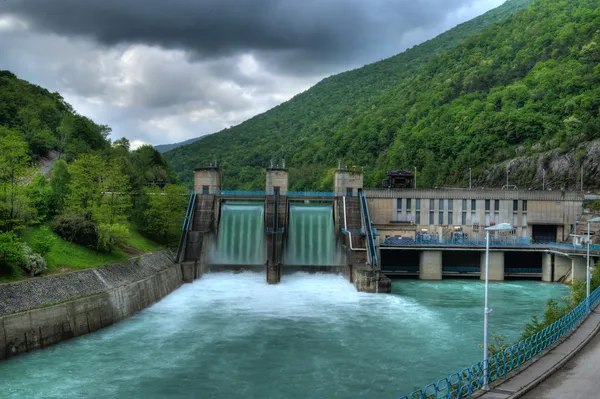
The Eurasian Development Bank (EDB) and Kyrgyzstan’s Ministry of Economy and Commerce have signed a technical assistance agreement to initiate a pre-feasibility study for the Hydropower Plant (HPP) Cascade Project. The announcement was made on March 26 and marks a significant step forward in the development of one of Kyrgyzstan’s most ambitious energy infrastructure projects.

This agreement builds on the existing partnership between the EDB and the Ministry, established under a Memorandum of Cooperation signed in December 2024.

Scope of the Study

Under the agreement, the EDB will finance the pre-feasibility study, which will include:

  • Estimating preliminary capital expenditures
  • Developing key technical solutions
  • Assessing environmental and social impacts
  • Outlining state support measures needed for project implementation

The study will be carried out in collaboration with the Ministry and a designated consulting firm.

Strategic Importance of the Suusamyr-Kokomeren Cascade

The planned hydropower cascade will be situated on the Kokomeren River and consist of three power plants with a combined installed capacity of 1,305 MW. The project is expected to significantly enhance Kyrgyzstan’s electricity generation capacity, help meet growing domestic energy demands, and contribute to reducing greenhouse gas emissions.

Hydropower is a cornerstone of Kyrgyzstan’s renewable energy strategy, and the Suusamyr-Kokomeren project is envisioned as a key driver of energy security and regional development.

Regional and International Cooperation

The EDB is a multilateral development institution comprising six member states: Armenia, Belarus, Kazakhstan, Kyrgyzstan, Russia, and Tajikistan. It finances regional development projects that foster economic integration across Eurasia.

It is worth noting that in early 2024, Kyrgyzstan’s Ministry of Energy signed memorandums of understanding with China National Electric Engineering Co. Ltd. These agreements include cooperation on the construction of both the Suusamyr-Kokomeren HPP Cascade and the Kara-Kechin thermal power plant.

Together, these initiatives underscore Kyrgyzstan’s strategic push to diversify its energy portfolio and strengthen infrastructure through international partnerships and sustainable energy investments.

Opportunities and Challenges in Uzbekistan’s Mining Industry

Uzbekistan is well-positioned to become a key global supplier of critical minerals, but the stakes are high. If not managed prudently, the country risks falling victim to the very challenges that have historically plagued resource-rich nations. According to Nodir Ruzmatov, founder of One Nexus Group and a Master’s candidate in Public Policy at UC Berkeley, Uzbekistan faces a pivotal moment.

In his article, “Striking Gold or Courting Disaster in Uzbekistan’s Mining Boom,” Ruzmatov writes:

“Uzbekistan stands at a crossroads. Global demand for critical minerals, key to clean energy and high-tech manufacturing, is growing at an unprecedented rate. With gold, copper, lithium, and rare earth elements in abundance, Uzbekistan has an opportunity to become a major global supplier. But as history has shown, such riches can be a double-edged sword.”

Rising Demand, Rising Stakes

Global demand for critical minerals has surged due to the rapid expansion of electric vehicles, renewable energy systems, and digital infrastructure. Uzbekistan, already a top gold producer and an emerging copper exporter, holds significant reserves of the minerals needed to power the global energy transition.

Properly harnessed, this sector could attract billions in investment, create thousands of jobs, and elevate Uzbekistan’s standing in the global economy. Yet, the path forward is fraught with risks.

Ruzmatov warns of the “resource curse”, a paradox where natural wealth leads to economic mismanagement, environmental degradation, and political instability. The Syr Darya River serves as a cautionary example: already burdened by industrial waste from neighboring Kazakhstan, it now faces growing contamination from heavy metals, arsenic, and other toxins. These pollutants threaten agriculture, food security, and public health across the region.

Learning from Global Experience

Ruzmatov draws parallels between Uzbekistan’s situation and water management conflicts in other parts of the world. Disputes over the Colorado River between the United States and Mexico, and environmental challenges in Southeast Asia’s Mekong River basin, show that resource tensions can be addressed through strong legal frameworks and cross-border cooperation.

For Uzbekistan, this means not only protecting its rivers but also developing a governance model that prioritizes environmental integrity, transparency, and regional collaboration.

A Sustainable Path Forward

To avoid repeating past mistakes, Ruzmatov advocates for:

  • Strict environmental regulations to guide mining operations
  • Investment in cleaner, more efficient technologies
  • Enhanced regional partnerships to manage shared natural resources equitably
  • Greater public involvement and scientific research to inform decision-making

As he concludes, “The question is no longer whether Uzbekistan should develop its critical minerals sector but rather how it will do so. The Syr Darya crisis and the Aral Sea disaster serve as stark warnings. If Uzbekistan fails to address its water pollution issues now, the consequences will be irreversible.”

Uzbekistan has the potential to lead Central Asia in responsible, sustainable mining. Realizing this potential will depend on careful planning, international engagement, and a long-term commitment to environmental and social resilience.

Uzbekistan to Generate Electricity from Household Waste

Uzbekistan is advancing plans to build waste-to-energy (WTE) plants across several regions as part of a broader strategy to improve waste management and generate electricity. Presidential decrees have approved investment projects in Tashkent and the regions of Andijan, Namangan, Ferghana, Tashkent, Kashkadarya, and Samarkand.

These projects aim to modernize the country’s waste processing infrastructure while enhancing environmental sustainability and attracting direct investment into the energy and utilities sectors.

Under the agreements, project companies will supply the electricity generated from waste to “Uzenergosotish” JSC through 30-year guaranteed purchase contracts. Equipment launches are scheduled between 2025 and 2027, with the following projected processing capacities:

  • Tashkent Region: 2,500 tons of waste processed daily, generating 390 million kWh annually
  • Andijan Region: 1,500 tons for 240 million kWh
  • Kashkadarya Region: 1,500 tons for 240 million kWh
  • Samarkand Region: 1,500 tons for 240 million kWh
  • Namangan Region: 1,500 tons for 227.5 million kWh
  • Ferghana Region: 1,500 tons for 227.5 million kWh

Global Models for Waste-to-Energy

The concept of converting household waste into energy is widely used in countries with advanced waste management systems. Sweden, for instance, has developed a highly efficient WTE infrastructure that provides heating to over 1 million households and electricity to approximately 680,000 homes. As of 2013, the country was importing roughly 800,000 tons of waste annually from neighboring states to meet the fuel demands of its power plants.

Japan has also embraced WTE technology, largely due to its limited landfill capacity. By 2020, Japanese incineration plants had a combined power generation capacity of approximately 2,200 megawatts, contributing significantly to the national grid.

Challenges and Considerations

Despite its promise, WTE technology is not without challenges. If not properly managed, waste incineration can result in harmful emissions and air pollution. Ensuring that Uzbekistan’s facilities meet modern environmental standards will be critical to the success and sustainability of the initiative.

The government’s move reflects a growing recognition of the need for cleaner, more sustainable energy sources while addressing the persistent issue of urban waste. If implemented effectively, these projects could mark a significant step toward Uzbekistan’s green energy transition.

Opinion: Kazakhstan Caught in the Crossfire of Caspian Pipeline Strikes

The developing peace process between Russia and Ukraine, initiated by U.S. President Donald Trump, offers a glimmer of hope for stability. Yet Kazakhstan finds itself in a difficult position, caught in the crosshairs of a conflict that continues to spill across its borders, at least economically. Over the past few months, the Caspian Pipeline Consortium (CPC), through which more than 80% of Kazakhstan’s oil is exported, has become the target of repeated drone attacks linked to the war in Ukraine.

Despite a tentative ceasefire agreement, damage to CPC infrastructure continues. In mid-March, the Kavkazskaya oil depot in Russia’s Krasnodar region, part of the CPC system, suffered a major fire following a suspected Ukrainian drone attack. According to Reuters, the blaze lasted nearly a week before being extinguished, raising concerns about the vulnerability of energy infrastructure in the region.

Western outlets have confirmed that the CPC’s Kropotkinskaya pumping station was targeted around the same period. S&P Global reported that drone strikes on March 18-19 damaged a key facility transferring oil from rail tankers to the pipeline system. Business Insider noted the attack caused serious financial disruption, particularly for CPC shareholders such as Chevron-led Tengizchevroil.

Kazakhstani journalist Oleg Chervinsky has stated that the CPC was included in a ceasefire moratorium on mutual strikes, reportedly agreed upon by both sides. If accurate, the March attacks could suggest a violation of those terms. AP News has also highlighted ambiguity in the ceasefire framework, with Russia and Ukraine each accusing the other of non-compliance.

The economic stakes for Kazakhstan are high. According to oil and gas analyst Olzhas Baidildinov, the CPC distributed $1.3 billion in dividends in 2024, with KazMunayGas, Kazakhstan’s national oil company, receiving an estimated $250 million, approximately $85 million of which was channeled into the state budget.

At a time when Kazakhstan is still recovering from a budget deficit, further disruptions to CPC operations are more than technical, they threaten fiscal stability. Yet the response from Astana has remained subdued.

Political analyst Andrei Chebotarev recalled that following an an earlier attack in February, the Kazakh Ministry of Foreign Affairs pledged to engage with its Ukrainian counterparts. What emerged from those talks remains unclear. Chebotarev also noted that Ukraine has yet to appoint a new ambassador to Kazakhstan, despite generally constructive relations.

Fellow analyst Daniyar Ashimbayev has speculated that geopolitical rivalries may be at play, including competition with the Baku-Tbilisi-Ceyhan pipeline and Kazakhstan’s recent overproduction within OPEC+, though these claims remain unverified.

In a brief official comment, Deputy Foreign Minister Alibek Kuantyrov confirmed that Kazakhstan remains in contact with Ukraine and that discussions are ongoing.

Meanwhile, the Ministry of Energy has stated that Kazakh oil continues to flow through the CPC pipeline without restriction. Yet, for many observers, Kazakhstan’s measured diplomacy, perhaps aimed at avoiding antagonism with either side, is beginning to feel inadequate. As key infrastructure remains exposed to cross-border conflict, the case for a firmer and more public diplomatic posture grows stronger.

Kyrgyzstan Combats Pastureland Degradation to Safeguard Livestock Farming

Pastureland is a strategic asset for Kyrgyzstan, where agriculture forms the backbone of rural livelihoods. A majority of the population depends on raising sheep, cattle, and horses for food and income. However, widespread degradation of pastureland, especially near settlements, now poses a growing threat to the country’s livestock sector.

Farmers and herders increasingly favor grazing their animals on easily accessible village pastures, leaving more remote areas underused. This uneven distribution has led to overgrazing and deterioration of pastures near populated areas. According to the Ministry of Water Resources, Agriculture and Processing Industry, more than 139,000 hectares of village pastures have been degraded and require restoration.

Policy Response: Grazing Restrictions and Seasonal Rotation

In response, the ministry has issued a directive mandating seasonal rotation of grazing lands. Under the new policy, farmers must move their livestock to distant pastures between April 15 and September 15 each year.

This initiative aims to:

  • Preserve natural ecosystems
  • Promote responsible use of state-owned pastureland
  • Enhance livestock productivity through improved pasture management

Grass Reseeding Campaign Underway

To rehabilitate affected areas, the government has launched a nationwide reseeding campaign. For the 2025 season, the Ministry of Agriculture has procured 94,462 kilograms of sainfoin seeds and 137,725 kilograms of other pasture grass seeds. These have been distributed across regions for use by local farmers and pasture users.

The reseeding effort is expected to help restore 15,299 hectares of degraded pastureland. As of now, 2,810 hectares have already been sown with a mix of sainfoin and pasture grasses.

This proactive approach underscores Kyrgyzstan’s commitment to sustainable agriculture and long-term food security. Ensuring the health of its pastures is not just an environmental necessity, it’s an economic imperative for the thousands of families who depend on livestock farming for their livelihoods.