• KGS/USD = 0.01144 0%
  • KZT/USD = 0.00213 0%
  • TJS/USD = 0.10456 0.19%
  • UZS/USD = 0.00008 0%
  • TMT/USD = 0.28490 0%
  • KGS/USD = 0.01144 0%
  • KZT/USD = 0.00213 0%
  • TJS/USD = 0.10456 0.19%
  • UZS/USD = 0.00008 0%
  • TMT/USD = 0.28490 0%
  • KGS/USD = 0.01144 0%
  • KZT/USD = 0.00213 0%
  • TJS/USD = 0.10456 0.19%
  • UZS/USD = 0.00008 0%
  • TMT/USD = 0.28490 0%
  • KGS/USD = 0.01144 0%
  • KZT/USD = 0.00213 0%
  • TJS/USD = 0.10456 0.19%
  • UZS/USD = 0.00008 0%
  • TMT/USD = 0.28490 0%
  • KGS/USD = 0.01144 0%
  • KZT/USD = 0.00213 0%
  • TJS/USD = 0.10456 0.19%
  • UZS/USD = 0.00008 0%
  • TMT/USD = 0.28490 0%
  • KGS/USD = 0.01144 0%
  • KZT/USD = 0.00213 0%
  • TJS/USD = 0.10456 0.19%
  • UZS/USD = 0.00008 0%
  • TMT/USD = 0.28490 0%
  • KGS/USD = 0.01144 0%
  • KZT/USD = 0.00213 0%
  • TJS/USD = 0.10456 0.19%
  • UZS/USD = 0.00008 0%
  • TMT/USD = 0.28490 0%
  • KGS/USD = 0.01144 0%
  • KZT/USD = 0.00213 0%
  • TJS/USD = 0.10456 0.19%
  • UZS/USD = 0.00008 0%
  • TMT/USD = 0.28490 0%

Vučić in Astana: Trade, Defense, and Technology Drive Kazakhstan–Serbia Talks

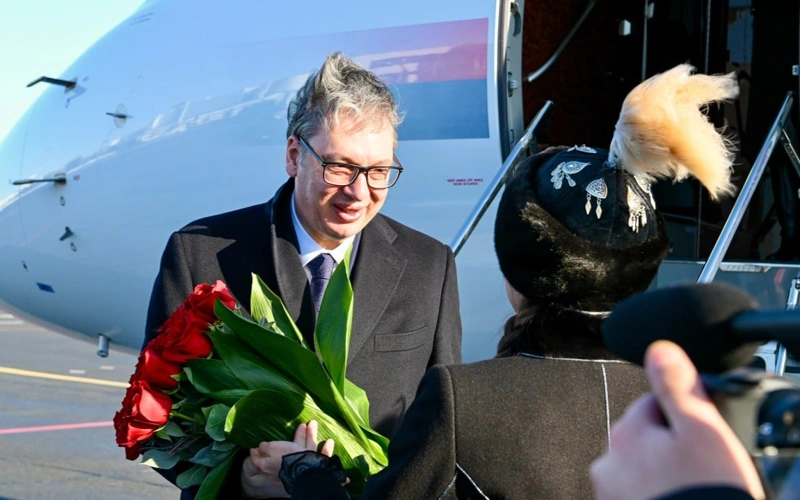
Serbian President Aleksandar Vučić arrived in Astana on February 26 for a two-day official visit. Prime Minister Olzhas Bektenov and Astana Mayor Jenis Qasymbek received him at the airport. Vučić is scheduled to hold talks with President Kassym-Jomart Tokayev on February 26–27. The agenda includes political dialogue, trade, digital transformation, healthcare, science, culture, and judicial cooperation. The two presidents are expected to adopt a joint statement and oversee the signing of ten memorandums. Kazakhstan also plans to award Vučić the Order of the Golden Eagle, the country’s highest state honor.

The Serbian delegation includes Minister of Internal and External Trade Jagoda Lazarević, Minister without Portfolio Nenad Popović, and Mihailo Jovanović, director of Serbia’s Office for eGovernment and IT. Economic ties form a central pillar of the visit. Kazakhstan’s government stated that bilateral trade grew by 7.6% in 2025.

At the first meeting of the Kazakhstan–Serbia Business Council and Business Forum in Astana, Nenad Popović said trade turnover reached about $117 million in 2025, an increase of roughly 7%.

“The free-trade agreement between our countries ensures a strong institutional basis. It is now important to further strengthen this foundation with concrete projects and targeted mechanisms to support entrepreneurship in Kazakhstan and Serbia, as well as their business communities,” he stated.

Defense cooperation has also emerged as a significant outcome of the business meetings. Kazakhstan’s LLP SP Kaztechnology and Serbia’s Yugoimport SDPR agreed to cooperate on the repair and modernization of 122mm and 152mm self-propelled artillery systems from the Nora and Soko/Soho families. LLP Great Sky and Yugoimport SDPR also signed a framework agreement on technology transfer and the organization of high-energy materials production.

The visit extends beyond defense. Astana Hub signed memorandums with Serbia’s Digital Transformation Center, SEE UP Accelerator, and Science Technology Park Belgrade. Kazakhstan’s National Biotechnology Center also signed a memorandum with Serbia’s Bio4 Campus.

Diplomatic relations between Kazakhstan and Serbia were established in December 1996. As previously reported by The Times of Central Asia, momentum in bilateral ties increased in late 2024 when Tokayev visited Serbia, and the sides signed multiple cooperation agreements in trade, investment, and industry.

The Astana meetings signal a practical expansion of relations between Central Asia and the Balkans. Trade remains modest in absolute terms, but the new agreements in defense, digital technology, and biotechnology point to the growth of a broader industrial partnership.
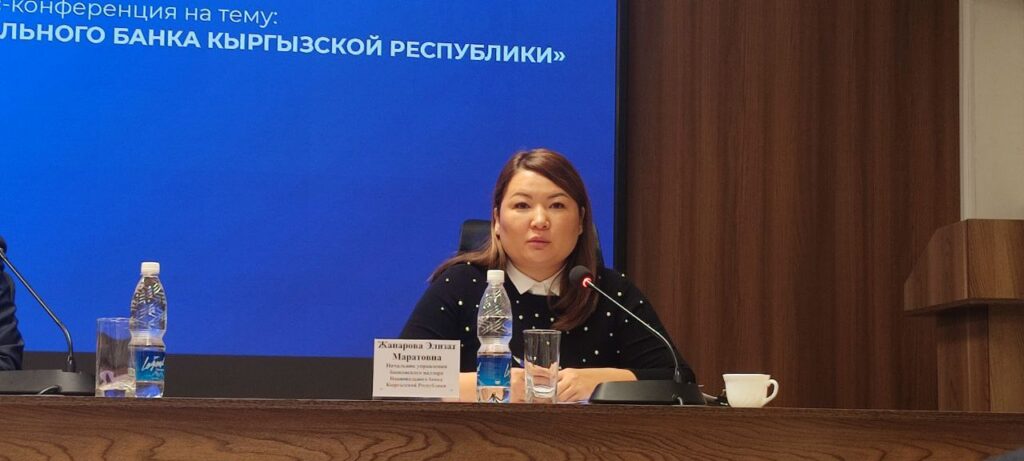

Kyrgyz Citizens to Be Allowed to Pass On E-Wallet Funds to Heirs

Kyrgyzstan’s parliament, the Jogorku Kenesh, has approved a government initiative to regulate the inheritance of electronic money, with the National Bank also backing the proposal.

According to the regulator, the popularity of electronic wallets in the country continues to grow. Their number has exceeded 6.5 million, marking an annual increase of about 20%. In the first six months of last year alone, the volume of electronic wallet transactions reached $3.2 million, while the total number of transactions amounted to 132 million.

At the same time, there have been no unified rules governing the inheritance of electronic funds, leading to disputes, including legal conflicts. The National Bank noted that many e-wallets remain unidentified and that legislation has lagged behind the rapid development of digital financial instruments.

Following the completion of public consultations, amendments are expected to be introduced to the Civil Code of Kyrgyzstan recognizing electronic money as part of a citizen’s property. This would allow funds held in electronic wallets to be inherited on an equal basis with bank accounts.

Previously, commercial banks were required to resolve such matters independently, which often resulted in legal disputes. In some cases, after the death of an e-wallet owner, funds were transferred to only one heir, typically the first to contact the bank. The new law is intended to establish a clear and uniform inheritance procedure.

Under the draft amendments, once notified of a customer’s death, a bank will be required to block transactions on the e-wallet account at the request of a notary. After heirs’ rights are verified, the funds will be distributed in accordance with the procedure established by law.

Financial institutions will also be required to provide notaries with information not only about the deceased’s bank deposits but also about their electronic wallets and other financial assets.

In comments to The Times of Central Asia, representatives of the National Bank said that the sums citizens hold in electronic wallets have become significant, prompting the regulator to support the initiative put forward by the Ministry of Justice.

Elizat Zhaparova, head of the banking supervision department, noted that amendments to the law on the protection of bank deposits were adopted last year, and the National Deposit Protection Agency now guarantees the safety of bank deposits. She added that extending similar inheritance provisions to electronic wallets is a logical step.

The reform marks a move toward aligning Kyrgyzstan’s digital financial sector with civil law, closing a regulatory gap and reducing the risk of disputes among heirs.

U.S. Sanctions Uzbek Citizen Over Alleged Cybercrime Links

The U.S. Department of the Treasury’s Office of Foreign Assets Control (OFAC) has imposed sanctions on an Uzbek citizen over alleged involvement in cybercrime activities linked to Russian actors, according to an official press release published on the agency’s website.

OFAC reported that Azizjon Mamashoyev, a citizen of Uzbekistan born in 1987, was added to the sanctions list under regulations related to Russia-linked activities. U.S. authorities allege that he participated in cyber operations and maintained connections with individuals suspected of conducting malicious cyber activities.

The announcement included identifying details, listing Mamashoyev’s date of birth as February 20, 1987, and confirming his Uzbek nationality. The designation was issued under the Ukraine-/Russia-Related Sanctions Regulations and forms part of measures targeting cyber-enabled threats.

According to OFAC, Mamashoyev is linked to Sergey Zelenyuk, who has also been associated with cybercrime investigations. The sanctions were introduced pursuant to authorities under the Countering America’s Adversaries Through Sanctions Act (CAATSA) and a cyber-related sanctions program identified as CYBER4.

The U.S. Treasury also designated Advance Security Solutions, a company reportedly connected to Mamashoyev. The firm, described as operating in computer programming, is registered in Dubai’s Jumeirah Living Marina Gate area and also lists operations in Tashkent. U.S. officials stated that the company was established in 2025 and may have engaged in activities posing secondary sanctions risks.

Under OFAC sanctions, designated individuals and entities are generally subject to asset freezes within U.S. jurisdiction, and U.S. persons are typically prohibited from engaging in transactions with them.

Kyrgyzstan Advances Construction of Ala-Too All-Season Ski Cluster

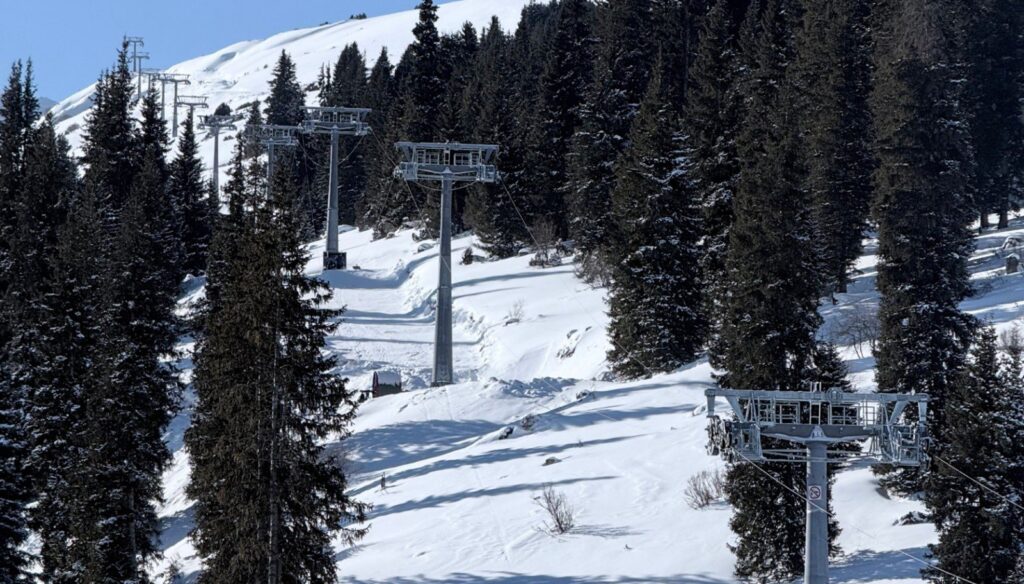
On February 25, Kyrgyzstan’s Ala-Too Resort OJSC and the Austrian company Doppelmayr, a global leader in cable car construction, signed a contract for the installation of four additional cable-car lines at the Jyrgalan resort. The site represents the first phase of the Ala-Too Resort project, a flagship state investment initiative to develop an all-season mountain ski cluster in the Issyk-Kul region, east of Lake Issyk-Kul.

Construction of the Ala-Too Resort cluster, which will combine three resorts, Jyrgalan, Ak-Bulak, and Boz-Uchuk, began in August 2025.

The new agreement follows a contract signed last year under which Doppelmayr is currently building two cable-car lines at Jyrgalan. Their commissioning is scheduled for May 2026.

The four additional cable-car lines are expected to be completed by the end of this year, with the official opening of Jyrgalan planned for December. Once operational, the total length of cable-car lines at the resort will exceed 8 kilometers, while ski trails will extend to 46 kilometers.

Doppelmayr has also completed a 1-kilometer cable-car line in the Ala-Archa State Nature Park, located about 30 kilometers from the capital, Bishkek. Officially opened on February 18, it became Kyrgyzstan’s first gondola lift.

According to the Ministry of Economy and Commerce, the Ala-Too Resort project will be implemented in stages through 2038, with total investments estimated at approximately €1.2 billion. The cluster aims to attract up to 4 million tourists annually.

The total area of the mountain cluster will cover 3,916 hectares, with ski slopes extending to 260 kilometers. Project developers state that this would place Ala-Too Resort among the world’s top ten resorts by total trail length and make it the largest ski destination in Central Asia.

The development plan includes the construction of private villas and three- to five-star hotels, as well as a panoramic restaurant, conference facilities, a medical center, a stadium, an amphitheatre, and recreational parks.

Infrastructure works are currently underway, including the construction of power transmission lines, drinking water systems, and wastewater treatment facilities. Reconstruction of the road linking Jyrgalan with Karakol, the administrative center of the Issyk-Kul region, has also begun.

The Ala-Too Resort project is expected to provide a significant boost to Kyrgyzstan’s tourism sector, positioning the country as a major destination for mountain skiing in Central Asia.

Belarus Aims to Increase Trade with Uzbekistan to $2 Billion by 2030

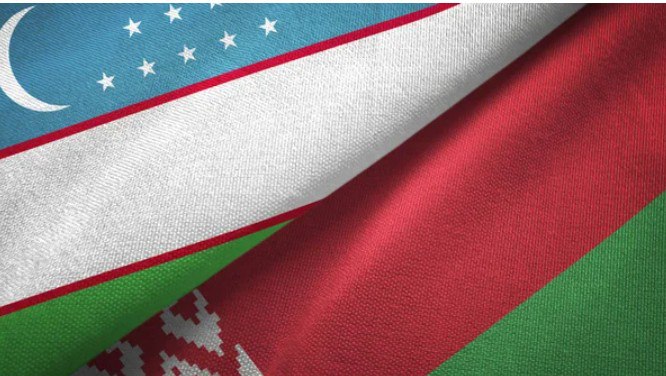
Belarus plans to increase its trade turnover with Uzbekistan to $2 billion by 2030, according to a statement issued by the Council of Ministers of the Republic of Belarus following high-level talks between the two countries’ prime ministers.

Belarusian Prime Minister Aleksandr Turchin announced the target during a meeting with Uzbekistan’s Prime Minister Abdulla Aripov on February 24, underscoring the growing importance of bilateral cooperation. “Undoubtedly, Uzbekistan is one of our key partners in Central Asia and beyond,” Turchin said, adding that relations are supported by what he described as a trusting dialogue between the two presidents.

He noted that both governments are focused not only on implementing previously reached agreements but also on developing new initiatives ahead of a planned high-level meeting later this year. According to the Belarusian government, a bilateral cooperation roadmap is being prepared in advance of President Shavkat Mirziyoyev’s upcoming visit to Belarus.

Turchin described the $2 billion trade target as ambitious but achievable, pointing out that current trade turnover is already approaching $1 billion. “We are committed to fruitful work and open dialogue. A number of large-scale projects are already being implemented,” he said.

Economic cooperation between the two countries has expanded into several strategic sectors. Last year, Uzbekistan and Belarus moved to strengthen collaboration in nuclear energy following talks in Minsk hosted by Belarusian Energy Minister Denis Moroz and attended by a delegation from Uzbekistan’s Uzatom Atomic Energy Agency led by Director Azim Akhmedkhadjaev. Discussions focused on nuclear infrastructure development, specialist training, and radioactive waste management.

Uzbekistan Continues Busy Sporting Year with Tashkent Judo Grand Slam

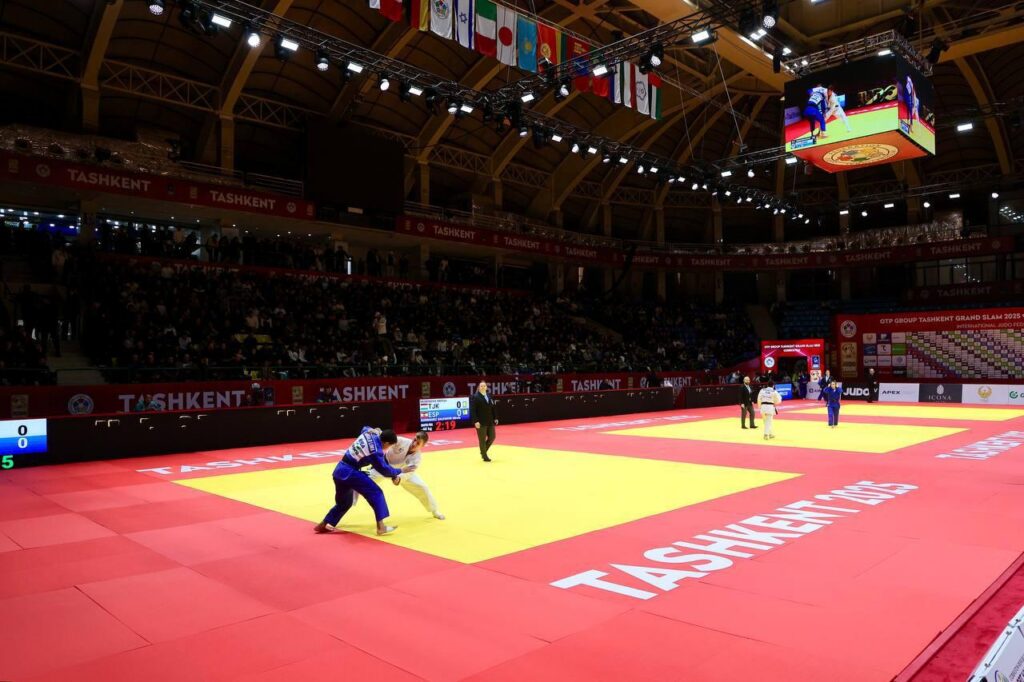
The 12,500-capacity Humo Arena in central Tashkent is preparing to host the OTP Group Tashkent Grand Slam 2026 this week. The three-day elite competition starts on 27 February.

The event is the second stop on the 2026 World Judo Tour, following the Paris Grand Slam, and will feature 400 world-class judokas representing more than 40 countries. Home hopes are resting on the Olympic medallist and World champion Davlat Bobonov, while other high-profile competitors include Olympic champions Hidayat Hedarov and Zelym Kotsoiev from Azerbaijan, and the Georgian Lasha Bekauri.

The Grand Slam is separated into 14 weight categories. Friday’s action focuses on the lighter weight classes, including the women’s 48kg and men’s 60kg divisions. On Saturday the competition switches to the middleweight categories, while the final day on Sunday features the heavyweights.

Uzbekistan is quietly establishing itself as a host for judo tournaments, having previously hosted the 2022 Judo World Championships, and the Grand Slam for the last five years. Uzbek judo is on the rise, with Diyora Keldiyorova winning the country’s first ever gold medal at the Paris 2024 Olympic Games.

“We look forward to welcoming the world’s best judokas to compete in Uzbekistan,” said Otabek Umarov, First Vice President of the National Olympic Committee of Uzbekistan, and Vice-President of the Olympic Council of Asia. “It is a great honour for Tashkent to continue to host major international judo events, and we thank the International Judo Federation for their continued trust. Hosting the Grand Slam not only inspires the next generation of athletes but stands as a testament to Uzbekistan’s dedication to the sport.”

The 2026 Judo Grand Slam comes at the start of a standout year for Uzbek sports. The country’s football team will make its first appearance at a FIFA World Cup at the tournament in North America this summer. Samarkand will host the World Triathlon Championship Series on 25-26 April, then the 46th Chess Olympiad in September. The World Aquatics Swimming World Cup comes to Tashkent in October.

To ensure the spirit of judo remains accessible to all fans and aspiring athletes across Central Asia, the Humo Arena will offer free admission to the public for the duration of the event. For fans abroad, the competition will be broadcast live to a global audience via the JudoTV platform.