• KGS/USD = 0.01144 0%
  • KZT/USD = 0.00196 -0%
  • TJS/USD = 0.10899 0%
  • UZS/USD = 0.00008 0%
  • TMT/USD = 0.28490 0%
  • KGS/USD = 0.01144 0%
  • KZT/USD = 0.00196 -0%
  • TJS/USD = 0.10899 0%
  • UZS/USD = 0.00008 0%
  • TMT/USD = 0.28490 0%
  • KGS/USD = 0.01144 0%
  • KZT/USD = 0.00196 -0%
  • TJS/USD = 0.10899 0%
  • UZS/USD = 0.00008 0%
  • TMT/USD = 0.28490 0%
  • KGS/USD = 0.01144 0%
  • KZT/USD = 0.00196 -0%
  • TJS/USD = 0.10899 0%
  • UZS/USD = 0.00008 0%
  • TMT/USD = 0.28490 0%
  • KGS/USD = 0.01144 0%
  • KZT/USD = 0.00196 -0%
  • TJS/USD = 0.10899 0%
  • UZS/USD = 0.00008 0%
  • TMT/USD = 0.28490 0%
  • KGS/USD = 0.01144 0%
  • KZT/USD = 0.00196 -0%
  • TJS/USD = 0.10899 0%
  • UZS/USD = 0.00008 0%
  • TMT/USD = 0.28490 0%
  • KGS/USD = 0.01144 0%
  • KZT/USD = 0.00196 -0%
  • TJS/USD = 0.10899 0%
  • UZS/USD = 0.00008 0%
  • TMT/USD = 0.28490 0%
  • KGS/USD = 0.01144 0%
  • KZT/USD = 0.00196 -0%
  • TJS/USD = 0.10899 0%
  • UZS/USD = 0.00008 0%
  • TMT/USD = 0.28490 0%
08 December 2025

U.S. Supports Restoration of Medieval Mausoleum in Karakalpakstan, Uzbekistan

The  12th Century Khalif Erejep Mausoleum, restored with a $80,000 grant from the U.S. Ambassadors Fund for Cultural Preservation (AFCP), has reopened in Khojayli in Uzbekistan’s northwestern Karakalpakstan region.

As reported by the U.S. Embassy in Uzbekistan, the condition of the site was first assessed using  advanced techniques such as geophysics, geodesy, archaeological investigations, structural monitoring, 3D scanning, photogrammetry, and radiocarbon dating. Information boards with interactive elements installed at the site, now offer visitors both detailed insights into the mausoleum’s history and the conservation techniques applied. In addition to the above, an audio guide provides informative commentary accessible via mobile devices, and a dedicated website, www.mizdakhkan.com, has been launched to broadcast the site’s historical background, updates on conservation efforts, and practical visitor information.

During his visit on October 15, U.S. Ambassador Jonathan Henick, announced:  “Karakalpakstan’s rich history and culture shine through this important monument. It reflects Karakalpakstan’s deep traditions and ancient soul. The preservation of the Khalif Erejep Mausoleum is a testament to the strong partnership between the United States and Uzbekistan. Through the Ambassadors Fund for Cultural Preservation, we are honored to support Uzbekistan’s efforts in preserving its rich history for future generations.”

Established by Congress in 2001 and administered by the U.S. Department of State, the Ambassador’s Fund for Cultural Preservation (AFCP) provides direct grant support for preserving cultural sites, cultural objects and collections, and forms of traditional cultural expression in developing countries worldwide. Since 2001, the Fund has supported 15 projects, with a total budget of $1,300,000 in Uzbekistan focused on the restoration of ancient and historic buildings, the assessment and conservation of rare manuscripts and museum collections, the preservation and protection of important archaeological sites, and the documentation of traditional craft techniques.

Kazakhstan Decides to Abstain from Applying for BRICS Membership

Kazakhstan’s presidential spokesman, Berik Uali, announced that Kazakhstan plans to refrain from applying for membership in the international association BRICS.

According to him, despite Kazakhstan’s proposals, the decision to join BRICS remains under consideration. Specialists are analyzing prospects with a focus on the country’s national interests.

Uali also noted that President Tokayev will participate as a guest in the BRICS Summit, scheduled to take place October 23-24 in Kazan. He will speak at the organization’s extended outreach meeting on October 24. At the same time, Kazakhstan will refrain from applying for BRICS membership. This is due to the multi-stage process of accepting new members and other aspects of the association’s development.

When asked about the priorities of Kazakhstan’s diplomacy, Berik Uali noted that Tokayev emphasized the importance of the UN as a universal and irreplaceable international institution. Despite its shortcomings, he emphasized that the UN remains the sole platform for addressing crucial global issues. Tokayev also expressed the view that the UN Security Council should be reformed to consider the interests of the middle powers and to hold broad consultations among the organization’s members.

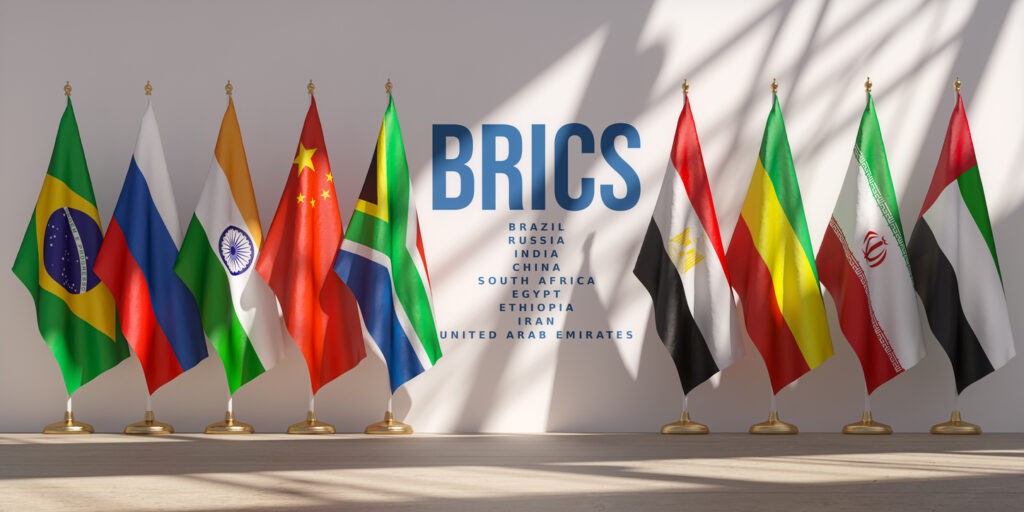
Established in June 2006, BRICS (Brazil, Russia, India, China, South Africa, UAE, Iran, Egypt, Ethiopia) aims to promote a multipolar world order. Azerbaijan and Belarus have already applied to join.

Middle Powers Rising: Shaping a Balanced Global Order at the Astana Think Tank Forum

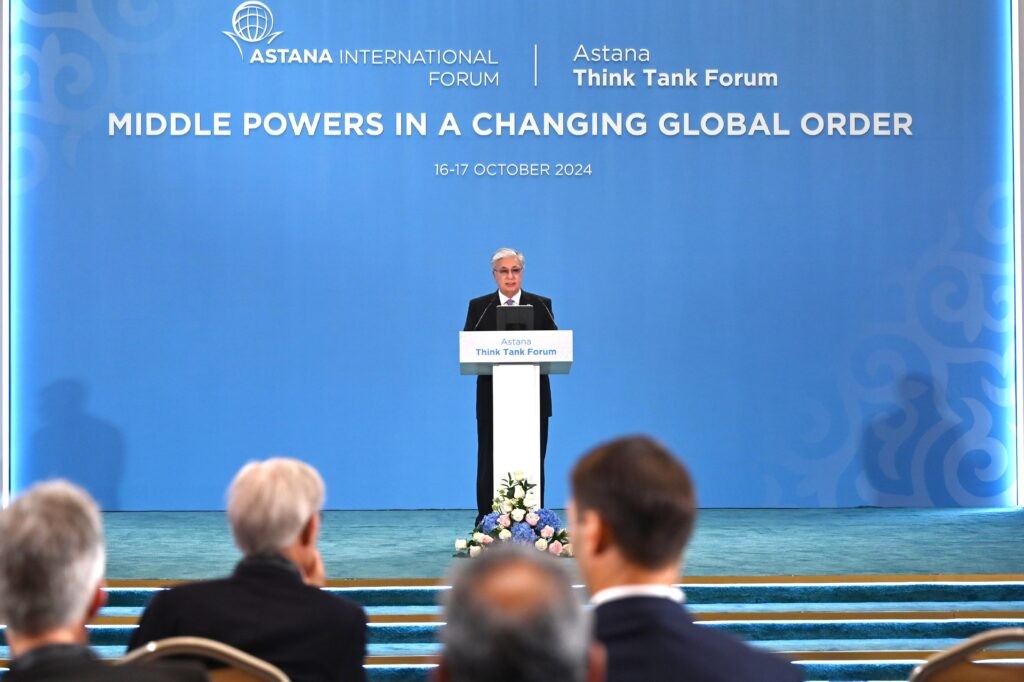
On October 16-17, the capital of Kazakhstan hosted the Astana Think Tank International Forum. The theme of the two-day meeting was “Middle Powers in the Changing Global Order: Strengthening Security, Stability and Sustainable Development.” Experts from 22 countries — heads of leading think tanks, politicians and diplomats — participated and spoke at the event. Kazakhstan’s President Kassym-Jomart Tokayev addressed the forum.

The two-day event focused on geopolitical, economic and strategic issues, including the role of mediating countries in resolving global conflicts.

One of the main topics was determining the potential of intermediate states in forming a new world system under conditions of geopolitical tension. The experts tried to define the term “middle power” and what countries can be classified as middle powers.

The moderator of the key session, Charles McLean, Managing Director of Borderless Consulting Group, invited the participants to answer several questions about the criteria, characteristics, and influence of middle powers in the modern geopolitical context.

Dino Patti Djalal, Chair of the Foreign Policy Community of Indonesia (FPCI), suggested categorizing all the of the world’s states using analogies to boxing weight classes: heavyweights, middleweights, and lightweights. According to Djalal, middle powers have great potential to create a new world order.

“There are several dimensions of middle powers. The first is potential, encompassing territorial and demographic size factors, political and economic weight, and a state’s foreign policy ambitions. The second dimension is a moderate stance on major global issues,” Djalal said. Citing Kazakhstan as an example of a middle power, Djalal stated that Kazakhstan has achieved this status due to its balanced position, which allows it to exert some influence on the formation of the world order. Djalal emphasized that, even today, middle states (the bulk of which are concentrated in the Global South) can solve regional issues without the participation of so-called ‘world powers’.

“Look at Southeast Asia. Indonesia and Singapore solve their issues directly, without external influence. Naturally, this situation is developing in the conditions of weakening U.S. influence. Middle powers are dictating new rules,” Djalal noted, and should voice their positions on the global agenda, so their “voice” will be heard and become more “powerful.”

Michel Duclos, Special Advisor on Geopolitics, suggested that regional powers whose activities have a global impact should be considered middle powers. “The great challenge for middle powers is establishing peace and stabilizing the situation. However, a common platform for all middle powers must be formed. This applies to the Global South and the Global North. France and others are reforming the UN Security Council,” Duclos stated.

Joshua Lincoln from the Center for International Law and Governance at the Fletcher School (Tufts University), meanwhile, believes that increasing competition between great powers opens a “window of opportunity” for medium-sized states. “Geopolitical rivalries, the fragmentation of the world order, and the disillusionment of many with existing international institutions offer middle powers an opportunity to bring order to today’s chaos. Their stance can enormously contribute to the world’s security, stability, and sustainability. However, no country, even a great power, can exist without partners. Therefore, the key role of middle powers is to create a connective tissue in international relations,” Joshua Lincoln told the event.

Kazakhstan’s Deputy Foreign Minister, Akan Rakhmetullin, suggested that middle powers should be characterized as countries that have good relations with most external partners.

“Kazakhstan’s geographical location determines our interaction with external players: we build cooperation with other states not only from the position of developing our country and ensuring national interests, but also from striving to strengthen peace and stability in a global context. Since the first years of independence, Kazakhstan has been building a pragmatic multi-vector foreign policy, promoting the ideas of international dialog and cooperation as a basis for solving any issues,” Rakhmetullin stated, emphasizing that he believes that reforming the UN’s algorithms is necessary to create a synergy of middle powers.

“What prevents us from achieving stability and security? Look how many resolutions have been adopted on the Iranian and North Korean nuclear programs, on Palestine, and on countering terrorism. But how many of these UN resolutions have been implemented? The Security Council’s permanent members cannot reach a common denominator – the body is paralyzed. In turn, medium-sized states can build bridges, interacting with all countries,” said the Deputy Foreign Minister.

The second day of the Forum began with a speech by the President of Kazakhstan, Kassym-Jomart Tokayev, who reminded those in attendance of the importance of exchanging ideas on the most pressing global and regional issues. “While major powers are consumed by rivalry or simply cannot reach a compromise, middle powers often become mediators in settling disputes, thus supporting the fundamental basis of global cooperation,” said Tokayev.

The President emphasized that Kazakhstan will continue to defend the voices of middle powers in international forums, including the UN Security Council.

“We would like to see a more inclusive and sustainable international system. States, no matter how large or small they are, should be able to do their part in building a better world… We do not want to be idle observers in this changing international order; rather, we seek to become architects of a more balanced, fair, and sustainable global system,” Tokayev said, before turning to the Russia-Ukraine conflict.

“As I said during my talks with Chancellor Scholz, Russia is militarily invincible,” Tokayev stated. “This fact is confirmed by Russia’s military potential and the support of this country’s population for the policy of President Putin, and by history itself. Therefore, we believe seeking options for a peaceful settlement is necessary, and we support realistic plans from all nations, including China and Brazil. There is no other way. The alternative is a war of mutual destruction. Some world forces may be interested in this, but it is a path to the abyss. Striving for peace through constructive negotiations is not a sign of weakness, but a manifestation of strategic prudence.”

Almaty to Host Exhibition of Afghan Products

Kazakhstan’s Ministry of Trade and Integration has announced that an exhibition of Afghan carpets, jewelry, construction materials, household and industrial chemicals, vegetables, fruit, and food products will run from October 20 -22, at the Atakent Exhibition Center in Almaty.

Afghanistan’s TOLOnews reported that a delegation led by the Taliban Minister of Industry and Commerce and 250 Afghan traders will participate in the exhibition. Akhundzada Abdul Salam Jawad, spokesperson for the Afghan Ministry of Industry and Commerce, further confirmed that 69 companies from Afghanistan will participate in the exhibition, with displays promoting various products, including carpets, dried fruit, saffron, and precious and semi-precious stones.

Early in June, Kazakhstan’s President Kassym-Jomart Tokayev announced that his country had removed the Taliban from its list of terrorist organizations, in a move to develop trade and economic ties with Afghanistan. In late August, Kazakhstan’s Foreign Ministry then accredited a chargé d’affaires of Taliban-led Afghanistan to expand trade, financial, and humanitarian cooperation between the two countries.

Turkic Investment Fund to Begin Financing Projects

Following the participation of its head, Temir Sariev, in a meeting of the Chambers of Commerce and Industry of the Turkic states in Istanbul on October 16, Kyrgyzstan’s Chamber of Commerce and Industry announced that from January 2025, the Turkic Investment Fund, with an authorized capital of $1 billion, will begin financing major joint projects of member countries of the Organization of Turkic States.

The Organization of Turkic States, currently comprising Azerbaijan, Kazakhstan, Kyrgyzstan, Turkey, Uzbekistan, and Turkmenistan, with Hungary and the Turkish Republic of Northern Cyprus as observers, was founded in 2009 to foster comprehensive cooperation among Turkic-speaking nations.

The Turkic Investment Fund, aimed to mobilize the economic potential of the Organization of Turkic States member states, strengthen trade and economic cooperation, and implement joint projects in infrastructure, renewable energy, agriculture, tourism, and IT, was established at the extraordinary summit of the Organization of Turkic States in March 2023 in Ankara. Founding members include Azerbaijan, Kazakhstan, Kyrgyzstan, Turkey, and Uzbekistan. Hungary joined in June 2024, and Turkmenistan has an observer status.

After the inaugural meeting of the Fund’s Board of Governors in Istanbul in May 2024, the Turkish Ministry of Finance declared that by the end of 2024, the Turkic states are poised to play to an important role in the world economy, reaching an economic volume of $1.9 trillion and a population of 178 million.

New Requirements for Citizenship Approved in Kazakhstan

Updated requirements for obtaining citizenship in Kazakhstan, approved by the  Minister of Science and Higher Education of Kazakhstan, came into force on October 8. According to the new legislation, applicants for citizenship or persons restoring it must demonstrate a basic knowledge of the state language, the basics of the Constitution, and an understanding of the country’s history.

The minimum thresholds are 36 points in the Kazakh language, 9 points in the basics of the Constitution, and 15 points in the history of Kazakhstan. The exam, conducted on a quarterly basis by National Testing Center (NTC), takes two hours and ten minutes with an additional 30 minutes for people with special needs. Of the 100 tests set under three categories,  60 questions relating to the Kazakh language, include 20 listening and 40 reading tasks; the Constitution section covers 15 issues, and the history of Kazakhstan, 25.

Applicants must achieve a score of at least 60 points to pass the exam, and if successful, will be issued with an electronic certificate valid for two years.

The prerequisites for new requirements for knowledge of the state language and the history of Kazakhstan for obtaining citizenship relate to the government’s efforts to strengthen national identity, dictated by the need to integrate new citizens into society and the growing public demand for support of the Kazakh language.

The amendments are based on the practices of other countries, including Germany, Canada, and Turkey. For example, Germany requires applicants for citizenship to have a high level of German language proficiency and respect for German cultural traditions. In Canada, applicants must understand the history and responsibilities of citizenship and take an English or French language test, depending on the province. Similarly, Turkey requires applicants to demonstrate a knowledge of  the Turkish language.