
• KGS/USD = 0.01144 0%
  • KZT/USD = 0.00211 0%
  • TJS/USD = 0.10523 0%
  • UZS/USD = 0.00008 0%
  • TMT/USD = 0.28530 0%
  • KGS/USD = 0.01144 0%
  • KZT/USD = 0.00211 0%
  • TJS/USD = 0.10523 0%
  • UZS/USD = 0.00008 0%
  • TMT/USD = 0.28530 0%
  • KGS/USD = 0.01144 0%
  • KZT/USD = 0.00211 0%
  • TJS/USD = 0.10523 0%
  • UZS/USD = 0.00008 0%
  • TMT/USD = 0.28530 0%
  • KGS/USD = 0.01144 0%
  • KZT/USD = 0.00211 0%
  • TJS/USD = 0.10523 0%
  • UZS/USD = 0.00008 0%
  • TMT/USD = 0.28530 0%
  • KGS/USD = 0.01144 0%
  • KZT/USD = 0.00211 0%
  • TJS/USD = 0.10523 0%
  • UZS/USD = 0.00008 0%
  • TMT/USD = 0.28530 0%
  • KGS/USD = 0.01144 0%
  • KZT/USD = 0.00211 0%
  • TJS/USD = 0.10523 0%
  • UZS/USD = 0.00008 0%
  • TMT/USD = 0.28530 0%
  • KGS/USD = 0.01144 0%
  • KZT/USD = 0.00211 0%
  • TJS/USD = 0.10523 0%
  • UZS/USD = 0.00008 0%
  • TMT/USD = 0.28530 0%
  • KGS/USD = 0.01144 0%
  • KZT/USD = 0.00211 0%
  • TJS/USD = 0.10523 0%
  • UZS/USD = 0.00008 0%
  • TMT/USD = 0.28530 0%

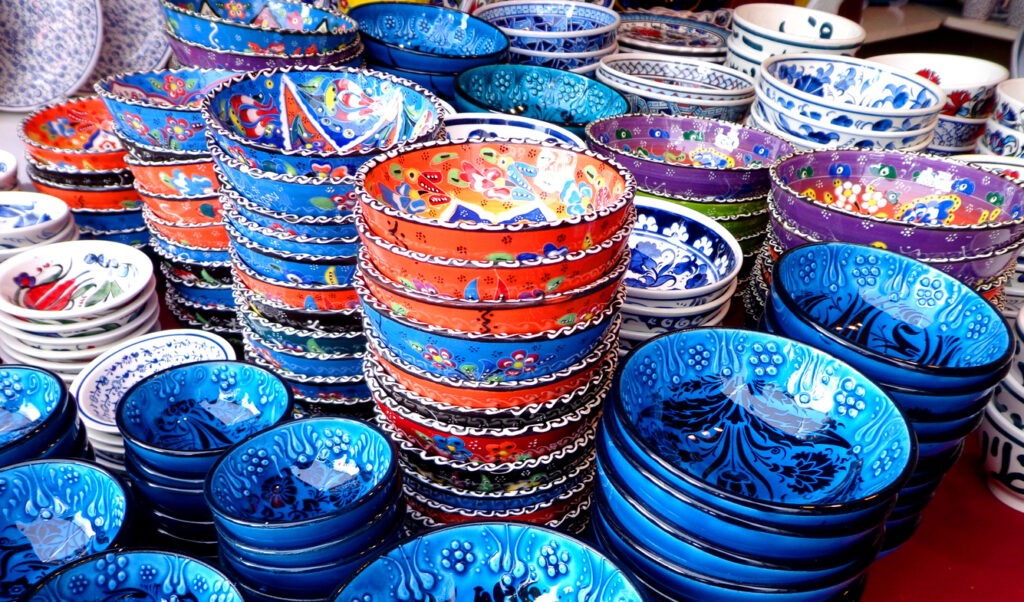
Museum Showcasing Traditional Rishtan Ceramics to Be Established in Uzbekistan

A museum dedicated to the history of traditional ceramics will be established in the Uzbek town of Rishtan. The institution, organized as a non-governmental entity, aims to serve as a center for preserving and promoting the region’s unique pottery heritage.

The museum’s key objectives include collecting and preserving exhibits, conducting cultural and educational programs, and training young artisans in pottery through the traditional mentoring system. Additionally, it will foster international cooperation by collaborating with foreign museums to organize exhibitions and exchange expertise.

To implement the project, a working group has been formed to develop the museum’s concept and oversee its activities. The building designated for the museum is expected to be fully adapted to its needs by April 1, 2025.

Notably, in September 2023, London’s King’s Foundation School of Traditional Arts hosted a master class led by Uzbek ceramist Shokhrukh Rakhimov. The event, supported by Uzbekistan’s Foundation for the Development of Culture and Arts, introduced master’s and doctoral students to the traditions of Uzbek ceramics. Rakhimov inspired participants to explore new artistic forms using ancient craft techniques, highlighting the importance of cultural exchange and the preservation of national heritage within the global academic community.
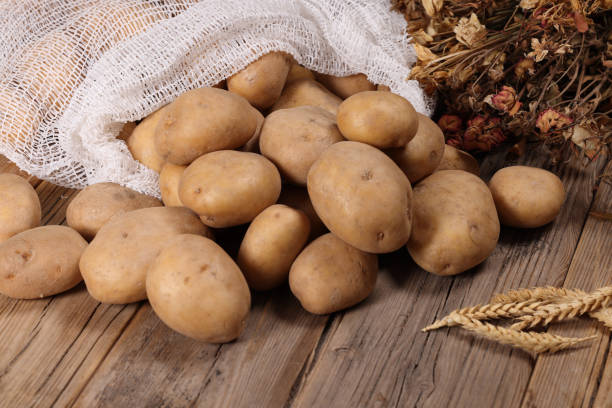

Uzbekistan Aims for Self-Sufficiency in Potato Production by 2027

Uzbekistan plans to fully meet its domestic potato demand through local production by 2027. Although potatoes are among the most consumed food products in the country, a portion of the supply still comes from imports, despite being cultivated on 290,000 hectares of land.

Government Initiative to Boost Production

Current potato varieties and yields are falling short of expectations, prompting the government to take action. The Potato Research Institute has been tasked with developing high-yield varieties adapted to Uzbekistan’s climate. The institute will produce three million tubers annually using the in-vitro method, a technique where plant samples from the upper shoot are cultivated under artificial conditions in test tubes or glass containers.

To support these efforts, the government will allocate 400 billion UZS (USD 30.85 million) from the Agricultural Fund this year for potato farming development. Additionally, imported seed potatoes will be exempt from customs duties for the next three years. Authorities have also been instructed to provide farmers with potato cultivation and processing equipment, offering affordable leasing options.

Impact of Regional Potato Supply Disruptions

The announcement comes amid rising potato prices in Central Asia. Recently, Kazakhstan suspended potato exports to non-EEU countries, including Uzbekistan, for six months due to increasing domestic prices. This restriction has already caused difficulties for Uzbek importers.

Additionally, a shipment of 43 wagons of potatoes from Kazakhstan’s Pavlodar region was stopped at the Uzbek border a few days ago for a phytosanitary inspection. The delay left the potatoes in storage for over 10 days, causing them to freeze and spoil.

“Look, it’s rotten. Water is leaking, everything is ruined. First, it froze, then it melted – now it’s useless. There were 68 tons in one wagon,” said businessman Azamat Serikbayev.

The Kazakh entrepreneurs, who had sold the shipment before the export ban took effect, expressed frustration, arguing that all necessary documents had been issued in mid-January. They claim the cargo was unjustly delayed and is now unsuitable even for animal feed. Representatives of five affected companies say they intend to sue officials over their losses.

U.S. Weapons Smuggled into Russia via Kyrgyzstan, Authorities State

Kyrgyzstan’s State Committee for National Security (GKNB) has claimed that it has uncovered and dismantled a criminal group that operated a smuggling network transporting firearms, ammunition, and military uniforms from the United States to Russia via Kyrgyzstan.

According to Kyrgyz security services, the smuggling operation began in April 2022 and involved individuals from Kyrgyzstan, Russia, and the United States. The group illegally transported and sold firearms, including Glock, CZ, and SIG Sauer pistols, as well as assault rifles, shotguns, and corresponding ammunition.

“It was established that Kyrgyz citizens and other individuals – whose names are not being disclosed due to the ongoing investigation – purchased firearms from U.S. manufacturers via online platforms. These weapons were then concealed in shipments disguised as video equipment and transported to Kyrgyzstan. Once in the country, the main firearm components were assembled, creating ready-to-use weapons, which were subsequently smuggled into Russia for illegal sale,” the GKNB stated.

Authorities estimate that since 2022, more than 300 firearms have been trafficked from the United States to Russia through this scheme.

On January 23, 2025, a Kyrgyz citizen was caught while receiving another shipment of weapons from the United States. Law enforcement officials seized two barrels from a combat assault rifle and a barrel from a Glock-34 pistol.

The suspects have been placed in pre-trial detention at a GKNB detention center following a court decision. Special services continue to identify other individuals involved in the operation.

Kazakhstan’s Energy Minister Discusses Construction of Three CHP Plants with Russian Participation

Kazakhstan’s Minister of Energy, Almasadam Satkaliev, has provided an update on the construction of three combined heat and power (CHP) plants in the Akmola, East Kazakhstan, and Abay regions, projects in which Russia is involved.

Russia’s involvement in constructing these cogeneration plants was first announced in 2023 by Kazakhstan’s Deputy Prime Minister, Serik Zhumangarin, during a forum on interregional cooperation between the two countries. Subsequently, Kazakhstan’s Ministry of Energy drafted a corresponding government resolution. According to Satkaliev, the feasibility study for the Kokshetau thermal power plant is now in its final stage.

“We have started designing. Moreover, in the first stage, on-site preparation and clearing have already begun. We have practically started the construction of auxiliary infrastructure. For the Semey and Ust-Kamenogorsk plants, we expect to finalize feasibility studies this spring and will announce the figures later,” the minister stated.

Satkaliev stressed that project costs remain a critical issue for Kazakhstan, and negotiations on financing will be conducted under strict conditions.

“Samruk-Energo, which represents Kazakhstan in these projects, has been given the necessary instructions. Our primary financing scenario involves a loan from the Russian government with subsidization. Negotiations are ongoing, particularly regarding the amount of financing. Despite limited funding sources, we will take all necessary measures to ensure the timely construction of these plants, given their importance for economic security,” he stated.

On January 28, during an expanded government meeting, Kazakhstan’s President Tokayev criticized the authorities’ performance in the heat supply sector.

Kazakhstan Secures 11 Billion Cubic Meters of Irrigation Water from Central Asian Neighbors

Kazakhstan will receive 11 billion cubic meters of irrigation water by April 2025 under an agreement reached in Dushanbe at a meeting of the Interstate Water Management Coordination Commission of Central Asia. The meeting brought together water management officials from Kazakhstan, Uzbekistan, Tajikistan, and Turkmenistan.

Discussions focused on managing water resources in the Syr Darya and Amu Darya River basins.

The allocated volume will flow into the Shardara Reservoir in Kazakhstan’s Turkestan region via the Syr Darya River. Of this total, 1.6 billion cubic meters will be directed to the Aral Sea to support its ecosystem.

Kazakhstan’s Minister of Water Resources and Irrigation, Nurzhan Nurzhigitov, stated that the agreement will help the country secure sufficient irrigation water for the upcoming agricultural season while sustaining ecosystems in southern Kazakhstan.

Nurzhigitov highlighted the stark contrast between the south and other parts of the country:

“There are no large-scale floods in the south as there are in the west and north. In the summer, the demand for irrigation water is extremely high. That’s why we take a different approach to water management in the south, where water diplomacy is a priority. Through negotiations, we ensured an uninterrupted water supply to the region last year. We continue to resolve water distribution and transboundary water protection issues in cooperation with our Central Asian colleagues.”

Kazakhstan’s agriculture, particularly in its arid southern regions, depends heavily on irrigation water from upstream Central Asian neighbors. As a result, regional water management remains a crucial factor in both economic and political relations among the countries of Central Asia.

Afghanistan Advances TAPI Gas Pipeline Construction as Kazakhstan Explores Participation

Afghanistan has made significant progress in constructing the Turkmenistan-Afghanistan-Pakistan-India (TAPI) gas pipeline. According to Ariana News, citing the Herat provincial governor’s office, approximately six kilometers of pipeline have already been laid since work began last month.

Herat Governor Maulana Islam Jar assured project representatives of his full support, stating that TAPI will play a crucial role in strengthening the economy and promoting regional stability.

Afghanistan’s section of the pipeline is expected to take approximately two years to complete and represents a significant milestone for the broader project. TAPI is designed to connect Central Asia’s vast gas reserves with the rapidly growing energy markets of South Asia.

During a recent meeting, TAPI’s general director in Afghanistan, Abdullah Yoof, updated Governor Jar on construction progress and outlined further plans for the project, including job creation and infrastructure development in Herat province.

Meanwhile, Kazakhstan is actively exploring the possibility of joining the TAPI pipeline. The country’s Ministry of Energy has confirmed ongoing negotiations between the national gas company, QazaqGaz, and Turkmengaz, which owns an 85% stake in TAPI Pipeline Company Limited. However, officials have refrained from disclosing details, citing the confidentiality of the discussions.

Kazakhstan’s interest in the project was first officially announced by Deputy Energy Minister Yerlan Akkenzhanov. Speaking at the Kazakhstan-Afghanistan Business Forum in October 2024, he highlighted that participation in TAPI could provide Kazakhstan with access to new markets, including Pakistan and India while attracting additional investment to the country’s gas sector.

The TAPI pipeline, spanning over 1,800 kilometers, will traverse:

  • Turkmenistan – 214 kilometers
  • Afghanistan – 774 kilometers
  • Pakistan – 826 kilometers

The pipeline will terminate in India, providing a crucial energy link between Central and South Asia.


