• KGS/USD = 0.01144 0%
  • KZT/USD = 0.00211 0%
  • TJS/USD = 0.10460 0.19%
  • UZS/USD = 0.00008 0%
  • TMT/USD = 0.28490 0%
  • KGS/USD = 0.01144 0%
  • KZT/USD = 0.00211 0%
  • TJS/USD = 0.10460 0.19%
  • UZS/USD = 0.00008 0%
  • TMT/USD = 0.28490 0%
  • KGS/USD = 0.01144 0%
  • KZT/USD = 0.00211 0%
  • TJS/USD = 0.10460 0.19%
  • UZS/USD = 0.00008 0%
  • TMT/USD = 0.28490 0%
  • KGS/USD = 0.01144 0%
  • KZT/USD = 0.00211 0%
  • TJS/USD = 0.10460 0.19%
  • UZS/USD = 0.00008 0%
  • TMT/USD = 0.28490 0%
  • KGS/USD = 0.01144 0%
  • KZT/USD = 0.00211 0%
  • TJS/USD = 0.10460 0.19%
  • UZS/USD = 0.00008 0%
  • TMT/USD = 0.28490 0%
  • KGS/USD = 0.01144 0%
  • KZT/USD = 0.00211 0%
  • TJS/USD = 0.10460 0.19%
  • UZS/USD = 0.00008 0%
  • TMT/USD = 0.28490 0%
  • KGS/USD = 0.01144 0%
  • KZT/USD = 0.00211 0%
  • TJS/USD = 0.10460 0.19%
  • UZS/USD = 0.00008 0%
  • TMT/USD = 0.28490 0%
  • KGS/USD = 0.01144 0%
  • KZT/USD = 0.00211 0%
  • TJS/USD = 0.10460 0.19%
  • UZS/USD = 0.00008 0%
  • TMT/USD = 0.28490 0%

U.S. Magazine Highlights French Cave Explorers’ Discoveries in Koytendag, Turkmenistan

The December 2024 issue of NSS News, a U.S. magazine, featured an in-depth report on the spring expedition of French speleologists to Koytendag, Turkmenistan.

The expedition brought together 17 specialists in topography, photogrammetry, biospeleology, geology, and karstology. Their primary objectives were to document existing cave systems, create updated maps, and identify unexplored caves. Over 21 days, the team surveyed approximately 19 kilometers of caves, conducted over 8,500 topographic measurements, and refined maps created by Russian researchers.

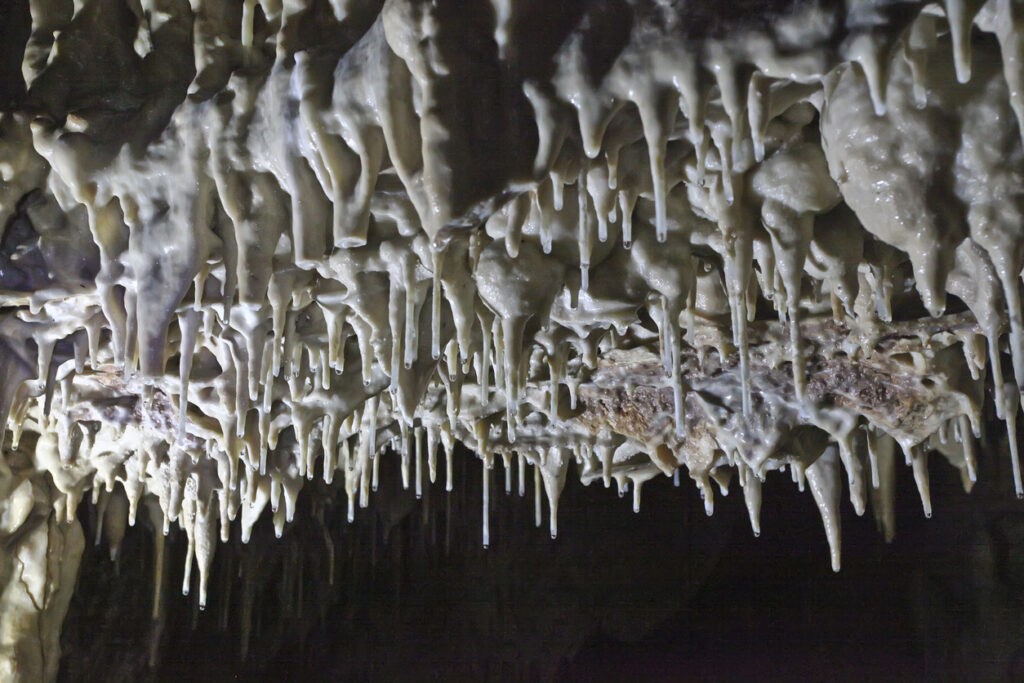
A major focus of the expedition was 3D photogrammetric modeling of the Geophysical (Gulshirin) Cave, renowned for its stunning gypsum formations. Using a Disto X laser rangefinder and the Topodroid app, the researchers enhanced mapping accuracy and created a digital replica of the cave. This cutting-edge model serves both scientific and educational purposes.

“We took more than 50,000 photos in four days, allowing us to produce a highly accurate 3D model,” one expedition participant explained. “This technology not only reveals the cave’s internal structure and unique gypsum formations but also offers an immersive viewing experience.”

The team also explored the northwestern part of the massif, identifying small gypsum systems and passages several tens of meters in length. To the east, near the snowy peak of Airybaba at an altitude of 2,400 meters, they discovered a cave marked on their maps. However, adverse weather conditions delayed a full survey of the site.

Despite challenges in accessing some areas, the expedition yielded significant results. Koytendag reaffirmed its reputation as a geologically and biospeleologically rich region.

The expedition’s findings were presented at a conference held at the French Institute in Ashgabat. Koytendag’s unique caves remain an untapped treasure, holding immense potential for advancing scientific and ecological understanding.

Kazakhstan Strengthens Locust Control to Protect Agricultural Crops

Kazakhstan plans to double its machinery and equipment for combating locust infestations during the 2025 growing season. The expansion of locust control measures and preparations for spring fieldwork were key topics discussed at a government meeting on January 9​.

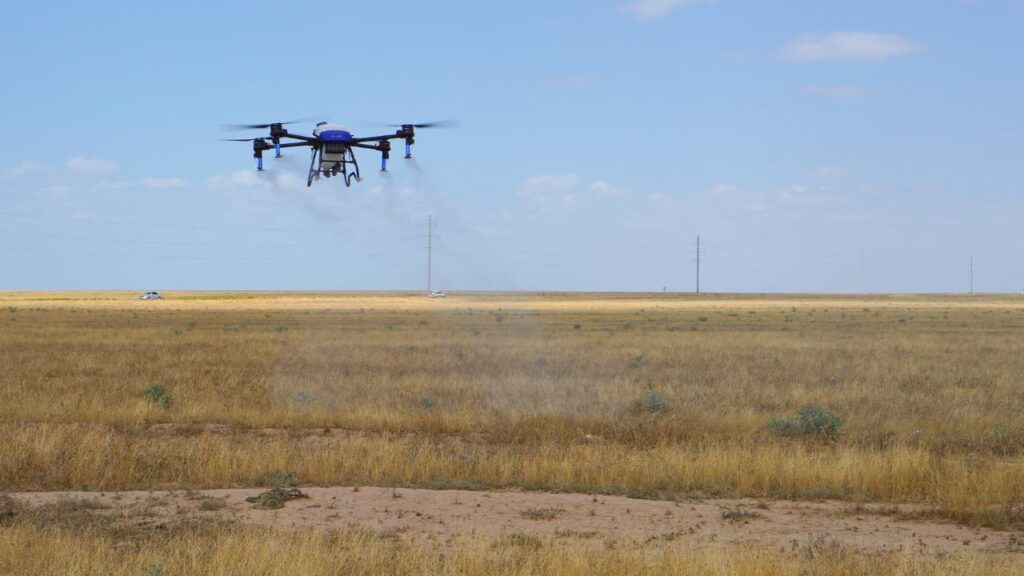
Deputy Minister of Agriculture Ermek Kenzhekhanuly reported that 247 pieces of equipment were deployed for chemical field treatments in 2024. This number will rise to 443 in 2025, including 46 agro drones and 7 monitoring drones newly acquired by the Ministry of Agriculture.

Enhanced Strategies and Subsidies

Building on a successful pilot project in the Turkestan region last spring, the Ministry has adopted centralized services for the purchase, transport, and storage of pesticides and field treatment. The program tested agro drones for spraying fields and operated under a unified “one supplier – all work” principle.

To further support farmers and service providers, the government will reimburse 25% of the cost of wheeled spraying machinery and agro drones, making these technologies more accessible.

Deputy Prime Minister and Minister of National Economy Serik Zhumangarin emphasized the need to restructure sown areas, reducing wheat cultivation in favor of oilseed and other high-margin crops.

Results and Regional Cooperation

Kazakhstan’s locust control measures proved effective in 2024, with over 3.1 million hectares treated – 23% more than the planned 2.5 million hectares. This protected agricultural crops from significant damage by grasshopper swarms.

Locust infestations in Kazakhstan have escalated in recent years, affecting 514,000 hectares in 2020 and rising to 1.6 million hectares by 2023. According to the UN’s Food and Agriculture Organization, locust outbreaks threaten agriculture across Central Asia and the South Caucasus, endangering over 25 million hectares of farmland and impacting approximately 20 million people.

To address the issue, Kazakhstan continues close cooperation with neighboring countries, including Russia, to monitor and mitigate the potential spread of locusts.

Uzbekistan Receives Historic Manuscript Copies from Malaysia

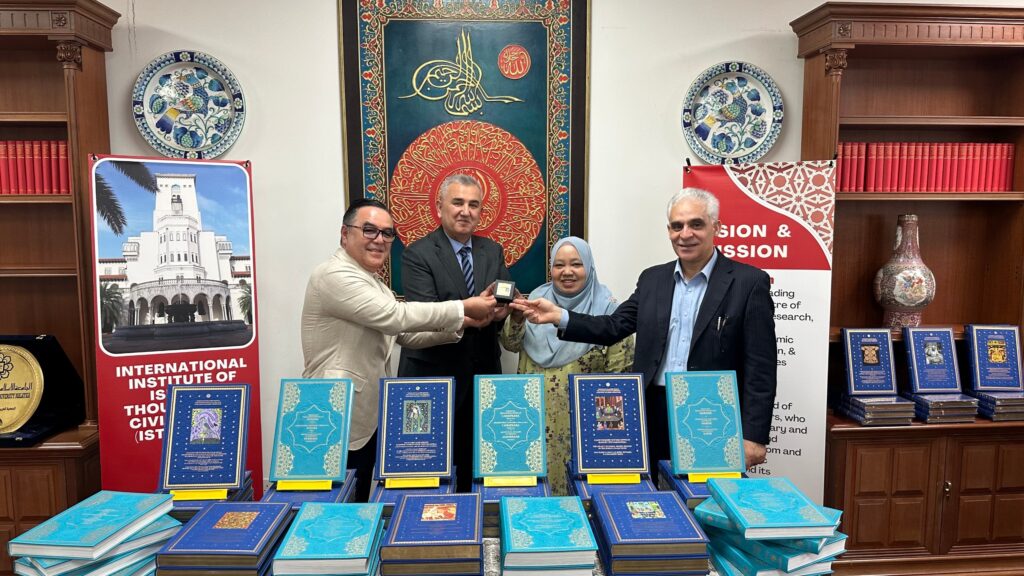
Uzbekistan’s cultural heritage will soon be added to with facsimile copies of ancient manuscripts provided by Malaysia. This initiative is part of a collaboration between the Center for Islamic Civilization in Uzbekistan and Malaysia’s International Institute of Islamic Thought and Civilization.

During a recent visit to Malaysia by an Uzbek delegation, the Center’s Director, Firdavs Abdukhalikov, received copies of two invaluable works: Abu Rayhan Beruni’s At-Tafhim and Abulkasim Firdavsi’s Shahnameh, both transcribed during the Timurid era.

Abdukhalikov believes this initiative aligns with broader efforts to promote humanitarian values and preserve Uzbekistan’s historical heritage. “The copies of manuscripts received today will further enrich the exposition of our center,” he stated.

Beruni’s At-Tafhim, originally transcribed in 1197, holds immense significance for world science. Meanwhile, the Timurid-era transcription of Firdavsi’s Shahnameh, produced in the 15th century, reflects the traditions of book printing from that period and showcases the distinctive features of Kamoliddin Behzod’s renowned school of miniature painting.

These manuscripts will be displayed at the Center for Islamic Civilization, which was established eight years ago to celebrate the contributions of Uzbek scholars to global civilization and to preserve the nation’s rich cultural legacy.

Uzbekistan Adds to List of Banned Extremist Content

The Supreme Court of Uzbekistan has significantly expanded its list of materials classified as extremist, terrorist, or fanatical, prohibiting their import, production, distribution, and display within the country.

Compared to last year’s version, which included over 800 items, the updated list now features 1,389 banned materials in audio, video, and text formats​. The list has grown considerably across social media platforms:

  • 203 Facebook pages (up from approximately 150);
  • 713 Telegram channels (almost doubling from 400);
  • 226 Instagram accounts (previously around 100);
  • 135 YouTube channels;
  • 35 Odnoklassniki pages;
  • 44 TikTok pages;
  • 13 websites; and 20 other sources.

The identification of these materials is a joint effort by the Committee on Religious Affairs, the State Security Service, the Ministry of Internal Affairs, and the Agency for Information and Mass Communications​.

Legal Framework

Under Uzbekistan’s Law on Countering Extremism, the distribution, storage, or demonstration of such materials is strictly prohibited, and access to them must be restricted​. Violations of these provisions may result in criminal liability under the nation’s Criminal Code, as they pose a threat to public security and order​.

Historical Context

Uzbekistan has steadily tightened its measures to combat extremist content. In 2018, the government adopted a decree allowing the blocking of media outlets that “promote extremist, propaganda, or hateful content on the Internet”​. The following year, the Ministry of Justice published a list of 40 information resources identified as extremist​. Subsequent updates to the list have reflected the government’s evolving focus on countering online extremism.

Uzbekistan to Launch Bus Routes to Central Asian Countries, Russia, and China

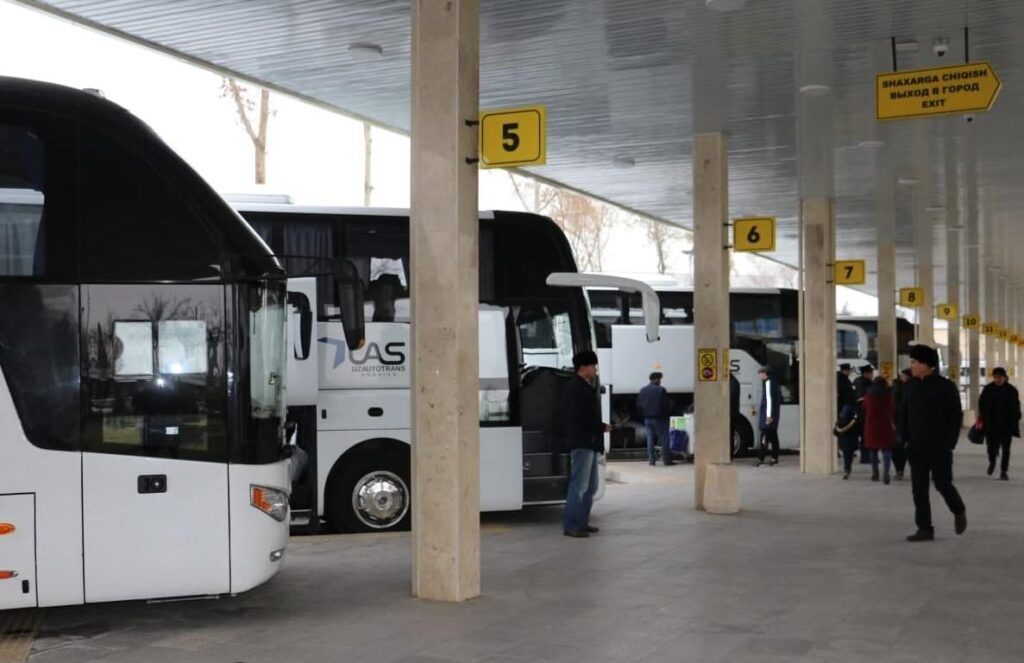
Uzbekistan’s Ministry of Transport has unveiled plans to establish new international passenger bus routes connecting regions of Uzbekistan to cities in Kazakhstan, Kyrgyzstan, Tajikistan, Russia, and China. The initiative aims to increase the share of bus transportation in Uzbekistan’s international passenger traffic, which is currently dominated by air travel.

Planned Routes

Kazakhstan

  • Bukhara – Turkestan
  • Urgench – Aktau
  • Fergana – Almaty

Kyrgyzstan

  • Andijan – Osh
  • Andijan – Jalalabad
  • Andijan – Arslanbob
  • Kosonsoy – Jalalabad
  • Bukhara – Bishkek

Tajikistan

  • Samarkand – Dushanbe
  • Bukhara – Dushanbe

Russia

  • Surkhandarya – Bukhara – Urgench – Nukus – Moscow
  • Urgench – Nukus – Ufa
  • Nukus – Krasnodar
  • Tashkent – Ufa
  • Tashkent – Krasnodar

China

  • Nukus – Urgench – Bukhara – Urumqi (Xinjiang Uyghur Autonomous Region)

The Ministry has invited both domestic and international transport companies to apply for the operation of regular bus services on these proposed routes.

Kyrgyzstan Announces Tax Amnesty

The Kyrgyz government has introduced a tax amnesty as part of its efforts to ease the financial burden on citizens and stimulate economic activity. President Sadyr Japarov directed the government to draft the necessary legislation and submit it to the country’s Parliament, the Jogorku Kenesh, for approval​. One key measure is the abolition of the annual tax on movable property, previously ranging from $10 to $20 depending on vehicle engine capacity. Instead, this tax will now be incorporated into the price of gasoline, resulting in a one som (KGS) increase in fuel costs.

“The Cabinet of Ministers of the Kyrgyz Republic is instructed to submit within two months a proposal to exempt vehicle owners from tax obligations unfulfilled as of January 1, 2025, provided there is no judicial act of recovery,” states the presidential decree.

Tax Relief for Farmers and Entrepreneurs

Farmers will benefit from a suspension of the agricultural land tax until 2030. Additionally, Japarov has prohibited tax authorities from conducting inspections of businesses except for unscheduled checks in cases where an organization or entrepreneur ceases operations. Citizens with tax debts as of January 1, 2022, will also be exempted from repaying those amounts.

While the move has been welcomed by many Kyrgyz entrepreneurs, who see it as a step toward fostering business growth, it has also sparked mixed reactions. Some citizens who have already paid their taxes expressed frustration on social media, questioning the fairness of the amnesty.

Changes to Tax Administration

In a related development, Japarov instructed the Cabinet of Ministers to revise the system of electronic delivery notes used for monitoring business turnover and tax compliance. The updated system will retain electronic invoicing for a limited list of goods, with all other products exempt from such requirements.

The recent reforms build on efforts initiated under Almambet Shykmamatov, the new head of the State Tax Service, to streamline Kyrgyzstan’s tax system and reduce administrative burdens on businesses​​.