• KGS/USD = 0.01144 0%
  • KZT/USD = 0.00213 0%
  • TJS/USD = 0.10456 0.19%
  • UZS/USD = 0.00008 0%
  • TMT/USD = 0.28490 0%
  • KGS/USD = 0.01144 0%
  • KZT/USD = 0.00213 0%
  • TJS/USD = 0.10456 0.19%
  • UZS/USD = 0.00008 0%
  • TMT/USD = 0.28490 0%
  • KGS/USD = 0.01144 0%
  • KZT/USD = 0.00213 0%
  • TJS/USD = 0.10456 0.19%
  • UZS/USD = 0.00008 0%
  • TMT/USD = 0.28490 0%
  • KGS/USD = 0.01144 0%
  • KZT/USD = 0.00213 0%
  • TJS/USD = 0.10456 0.19%
  • UZS/USD = 0.00008 0%
  • TMT/USD = 0.28490 0%
  • KGS/USD = 0.01144 0%
  • KZT/USD = 0.00213 0%
  • TJS/USD = 0.10456 0.19%
  • UZS/USD = 0.00008 0%
  • TMT/USD = 0.28490 0%
  • KGS/USD = 0.01144 0%
  • KZT/USD = 0.00213 0%
  • TJS/USD = 0.10456 0.19%
  • UZS/USD = 0.00008 0%
  • TMT/USD = 0.28490 0%
  • KGS/USD = 0.01144 0%
  • KZT/USD = 0.00213 0%
  • TJS/USD = 0.10456 0.19%
  • UZS/USD = 0.00008 0%
  • TMT/USD = 0.28490 0%
  • KGS/USD = 0.01144 0%
  • KZT/USD = 0.00213 0%
  • TJS/USD = 0.10456 0.19%
  • UZS/USD = 0.00008 0%
  • TMT/USD = 0.28490 0%

Uzbekistan’s Economic Transformation and Future Goals Take Center Stage

Uzbekistan’s economic progress and future ambitions are in focus as the Indian magazine Business Central Asia dedicates its latest issue to the country’s development. Highlighting key points from President Shavkat Mirziyoyev’s address to the Legislative Chamber of the Oliy Majlis, the feature showcases Uzbekistan’s achievements and ambitious goals for the years ahead.

The article highlights Uzbekistan’s remarkable economic transformation. Since the early 2000s, the country’s economy has doubled, surpassing the $100 billion mark. By 2024, per capita income is expected to reach $3,000, while exports have grown to exceed $25 billion for the first time. Gold and foreign exchange reserves have also seen substantial growth, surpassing $40 billion.

Looking to the future, the Uzbekistan-2030 strategy outlines ambitious targets to further accelerate economic growth. The plan envisions increasing GDP to $160 billion, with a projected $110 billion milestone this year. If current growth rates are sustained, Uzbekistan’s economy could reach $200 billion by 2030, significantly improving living standards and the overall quality of life for its citizens.

Ensuring macroeconomic stability is a key priority in the government’s roadmap. Over the next five years, Uzbekistan aims to sustain annual growth of 6-7%, expand the private sector’s share of the economy to 85%, and launch large-scale public-private partnership projects.

The feature also emphasizes Uzbekistan’s long-term economic resilience. According to the World Bank, the country is poised to rank among the top three fastest-growing economies in Europe and Central Asia in 2024, further validating its development strategy.

Uzbekistan’s leadership remains committed to maintaining growth momentum while addressing structural reforms. With a strong focus on sustainable development, the government’s policies aim to enhance economic opportunities and ensure inclusive growth for all segments of the population.

Turkmenistan and U.S. Representatives Explore Prospects for Economic Partnership

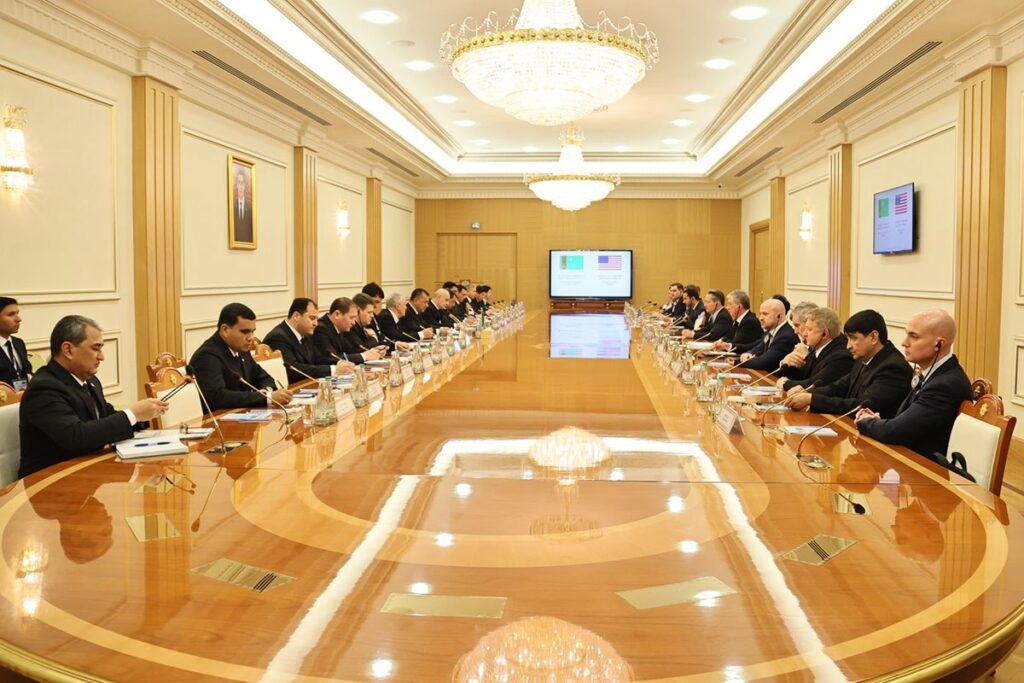
A Turkmen-American business forum was held in Ashgabat to discuss opportunities for expanding economic cooperation between Turkmenistan and the United States. The event brought together a delegation of American business leaders led by Eric Stewart, Executive Director of the Turkmen-American Business Council.

In their remarks, representatives from both sides emphasized the friendly and cooperative nature of Turkmen-American relations, reaffirming their commitment to deepening ties based on mutual benefit. Turkmenistan, focused on economic diversification and the adoption of advanced technologies, expressed readiness to support U.S. companies in establishing and expanding operations in the Turkmen market. It was highlighted that Turkmenistan offers favorable conditions for investors, including legal and organizational mechanisms to facilitate business activities.

The U.S. delegation underscored the strong interest of leading American companies in the Turkmen market and their willingness to contribute to strategic programs aimed at regional development. Companies such as John Deere, Case, General Electric, Boeing, and others are already operating successfully in key sectors of the Turkmen economy.

Discussions during the forum centered on priority areas of collaboration, including:

  • Industry, agriculture, and water resources: Supplies of advanced equipment to boost productivity.
  • Fuel and energy sector: Joint projects to advance energy infrastructure.
  • Transportation and construction: Enhancing connectivity and infrastructure development.
  • Innovative technologies, healthcare, and ecology: Promoting sustainable solutions and technological progress.

Special attention was given to the role of the Turkmen-American Business Council as a key platform for fostering partnerships between public and private sectors in both countries.

Meetings between Turkmen ministries and agencies and representatives of the U.S. business community took place as part of the forum. Discussions focused on opportunities to increase bilateral trade, expand investment activities, and enhance cooperation in high-tech industries. Participants outlined practical steps for implementing joint projects to further strengthen economic ties.

Turkmen-American cooperation continues to develop across multiple sectors. Notable recent engagements include:

  • February 2024: The U.S. State Department hosted talks with a Turkmen delegation led by U.S. Deputy Assistant Secretary of State for Central Asia, John Pommersheim, covering political, economic, and cultural cooperation.
  • April 2024: Political consultations in Ashgabat reaffirmed mutual commitments to enhancing bilateral ties.
  • August 2024: Turkmen Deputy Foreign Minister Ahmed Gurbanov met with U.S. Ambassador Elizabeth Rood to discuss future collaboration prospects.

Both sides highlighted the importance of regular political consultations and multilateral platforms such as the C5+1 format for coordinating joint actions and fostering regional development.

Kazakhstan’s Mining Association Proposes Reforming Mineral Extraction Tax

Aibar Dautov, head of Kazakhstan’s Mining Industry Association, has called for reforms to the procedure for calculating the mineral extraction tax (MET) to boost budget revenues from oil and solid minerals.

Speaking at the Astana Open Dialogue during discussions on the new tax code, Dautov noted that Kazakhstan currently employs ten different MET rates for crude oil taxation. These rates are determined based on two key factors: the price of oil at the time of sale and the annual production volume at a given field. The current tax structure is divided into the following production thresholds:

  • 5% tax for annual production up to 250,000 tons
  • 7% for 500,000 tons
  • 8% for 1 million tons
  • 9% for 2 million tons
  • 10% for 3 million tons
  • 11% for 4 million tons
  • 12% for 5 million tons
  • 13% for 7 million tons
  • 15% for production up to 10 million tons
  • 18% for production exceeding 10 million tons

Dautov criticized this system as unfair to other sectors of the economy.

“We believe the criterion of annual production volume should not exist at all. This differentiation has been in place for many years, but for some reason, it hasn’t been removed or acknowledged as a tax benefit. The Ministry of National Economy continues to support its inclusion in the new Tax Code. It’s unclear why this grading still exists—it should be eliminated and considered a relic,” Dautov stated.

The complexity is even greater for solid minerals, according to Dautov, as their MET calculation currently involves 38 different tax rates for various types of minerals.

The Times of Central Asia previously reported that Kazakhstan’s Ministry of Industry and Construction has proposed replacing the current MET system with royalties. Under this system, taxes would be calculated based on the volume of sold products rather than the volume extracted. This change is scheduled to take effect on January 1, 2026, under new subsoil use contracts, while existing contracts will remain taxed under the current rates.

Central Asia’s Role in Europe’s Energy Future: Insights from Samuel Doveri Vesterbye

The Times of Central Asia sat down with Samuel Doveri Vesterbye, Director of European Neighbourhood Council, a research organization funded by the EU and by Member States, to discuss prospects for the further development of the EU’s relations with Central Asia.

TCA: How significant is Central Asia for Europe’s energy diversification strategy, especially in light of the need to reduce dependency on Russian gas?

Europe needs energy. Since the revolution in shale gas production and liquefied natural gas (LNG) transport, it’s clear that European energy has become more diversified, particularly since Russia’s war against Ukraine. Reliance on Russia has decreased, while importation of U.S., African and Asian LNG has increased. Pipeline gas from Azerbaijan and renewable energy are both important and rising sources of diversification. The problem is that Europe doesn’t only need energy; it needs inexpensive energy, preferably in terms of pipeline gas. This is why the Caspian region, home to some of the world’s largest natural gas reserves, is important. That’s one significant reason for Europe’s renewed interest in the region.

TCA: What are the key energy projects connecting Central Asia to Europe, and what obstacles do they face in becoming viable alternatives?

In 2022–2023, the EU and the European Bank for Reconstruction and Development (EBRD) financed and conducted the biggest connectivity study about Central Asia to date. This study outlined the full capacity, potential, and challenges of trans-Caspian infrastructure and regulatory connectivity. It has become a key roadmap for all governments involved, as well as for the private sector and international investors in renewables, gas, transport, and other types of logistical infrastructure. In January and February 2024, the EU, together with international financial institutions, provided over €10 billion in low-interest loans and grants for the construction of energy and transport infrastructure cross-regionally. This amount represents over 50% of the investment needs estimated and outlined in the EBRD study. It is a strong indication of Europe’s political and financial dedication towards the region.

TCA: How can Central Asian economies benefit from closer economic ties with Europe, particularly through energy trade?

Central Asia has significantly increased its economic engagement with the European Union. In less than a decade, the EU has become Kazakhstan’s biggest trade partner in the world, ahead of China, Russia and the United States. Uzbekistan is taking a similar direction to Kazakhstan, and is about to sign an Enhanced Partnership and Cooperation Agreement (EPCA) with Brussels covering energy, politics, security, trade, and natural resources among many other issue-areas. For Central Asia, its new relationship with the EU is strategically intelligent, as the region ceases to be only a part of so-called “Chinese transit trade”.

TCA: What economic reforms are necessary in Central Asia to align with European standards and attract more investment in energy sectors?

The relationship with the EU allows Central Asia to increase its trade and gain new technology as it also benefits from industrialization. Both Europe and Central Asia are full of small and medium-sized nations who are often under pressure from great powers. Central Asia can build long-term energy relations with Europe, instead of only over-relying on Russia and China. By diversifying its trade relations, the region can thereby gain strategic sovereignty regarding prices and security of supply. This is the case not only for natural gas and oil, but also for renewable sources like solar, wind, hydrogen, and hydro-electric, as well as nuclear.

TCA: What potential do you see for renewable energy in Central Asia?

Renewable energy has high potential in Central Asia for two primary reasons. Critical raw materials (CRMs) are abundantly available in Central Asia and those same CRMs are needed for renewable energy generation. In addition, a country like Kazakhstan, for example, has a great deal of unused open space, while solar panels and wind farms need such open space to function at cost effective levels.

TCA: What is the current state of energy infrastructure in Central Asia, and how can European investment help modernize it?

The state of energy infrastructure in Central Asia has been dominated by Russian contracts, maintenance, and construction. The EU’s recent financing of green corridor projects, which includes renewables, is an important and financially significant step towards more regional energy infrastructure. It also encourages cross-Caspian energy developments. In addition, huge investments into solar and wind by Middle Eastern financiers are also changing the landscape of energy across the region.

TCA: What are the most promising areas for EU–Central Asia energy cooperation over the next decade? What are the implications of EU energy policies on Central Asian countries’ export strategies?

The most promising cooperation on energy between Central Asia and Europe over the next decade is in the renewables, nuclear, and gas sectors. The first step should be for Central Asia to develop its own secure supply for affordable energy for industrial and supply chain purposes. This will benefit both European and Central Asian industry. A logical second step would be for Europe to connect with the region through energy infrastructure that would allow Central Asia to export this energy westward.

TCA: Where do you see Central Asia fitting into Europe’s long-term energy strategy, considering both traditional and renewable sources? What are the security risks associated with energy supply routes from Central Asia to Europe, and how can these be mitigated?

The main security risk associated with energy and connectivity between the EU and Central Asia arises from the volatile geopolitical environment. Europe aims for a multi-corridor and diversified policy vis-à-vis energy, CRMs and trade globally. Security is high on the agenda because corridors increasingly face conflict, terrorism, and other barriers which hike up prices, decrease security of supply and overall disrupt relations. In the case of the trans-Caspian corridor, its vital that the protection of critical energy and other infrastructure is guaranteed by the EU and Central Asia. It is crucial that the EU invests and works closely with other regional powers like Türkiye, as well as Azerbaijan, Georgia and Armenia in order to solve any conflict risks that could jeopardize connectivity development.

TCA: Thank you for taking the time to talk with us.

It was a pleasure.

World Bank Report Highlights Poverty and Inequality Challenges in Kazakhstan

The World Bank has released its Kazakhstan Poverty and Equity Assessment 2024, urging policymakers to adopt pro-poor fiscal policies, improve education quality, and enhance climate resilience to address poverty and inequality in the country.

According to the report, Kazakhstan’s poverty reduction has slowed in recent years despite significant progress since the early 2000s.

“Between 2006 and 2021, economic advancement significantly improved living standards and reduced poverty rates in Kazakhstan. However, economic growth has slowed since 2014, and the pace of poverty reduction has fallen. The COVID-19 pandemic exacerbated these challenges, highlighting the need for resilient and inclusive economic strategies presented in this report,” said Andrei Mikhnev, World Bank Country Manager for Kazakhstan.

Kazakhstan’s economy has grown exponentially since 2006, with an average annual growth rate of 4.7 percent. This growth helped lift 5.9 million people out of poverty, reducing the poverty rate from 49.5 percent to 8.5 percent. However, the report identifies three phases of Kazakhstan’s poverty reduction journey:

  1. 2006-2013: Rapid poverty decline driven by strong economic growth.
  2. 2014-2016: Reversal during the economic downturn, raising poverty rates.
  3. 2016-2021: Resumed poverty reduction but at a slower pace

The report highlights that Kazakhstan’s middle-class households with a low probability of falling into poverty grew 2.5 times, reaching 67 percent of the population in 2021 compared to 26 percent in 2006. However, this expansion has stagnated since 2013 due to slower structural transformation and productivity growth.

Income inequality has also increased. The Gini index, a measure of inequality (0 = perfect equality, 100 = extreme inequality), rose from 24.3 in 2015 to 26.4 in 2021, driven by faster income growth among high-income households. Although fiscal policies, such as taxation and social spending, have mitigated some inequality, the report recommends making fiscal measures more progressive and pro-poor to maximize their redistributive impact.

Poverty rates in rural areas (11.4 percent) remain significantly higher than in urban centers (6.6 percent). The southern Turkistan region now accounts for a disproportionate share of the poor population. Alarmingly, poverty has become more concentrated among children and large families, with children comprising 40 percent of the poor in 2021, up from 27 percent in 2006.

The report underscores the critical role of human capital investment in achieving long-term poverty reduction and growth. While access to education in Kazakhstan is nearly universal, significant disparities in quality and outcomes persist. The Human Capital Index indicates that children in Kazakhstan achieve only 53–64 percent of their productivity potential, with regional and socio-economic inequalities exacerbating the issue.

Climate-related shocks present additional risks, particularly for rural and vulnerable populations. The report calls for targeted investments in infrastructure and social transfers to build resilience against these challenges.

To reduce poverty and inequality, the report suggests:

  • Enhancing fiscal policies through progressive taxation and better-targeted social transfers.
  • Improving education quality and outcomes, particularly for disadvantaged groups.
  • Building resilience to climate shocks by investing in infrastructure and providing targeted support to low-income households.

The report concludes that sustained policy reforms will be essential for Kazakhstan to maintain economic progress, reduce poverty, and address growing inequalities.

Turkmenistan and Afghanistan to Accelerate TAPI Gas Pipeline Project

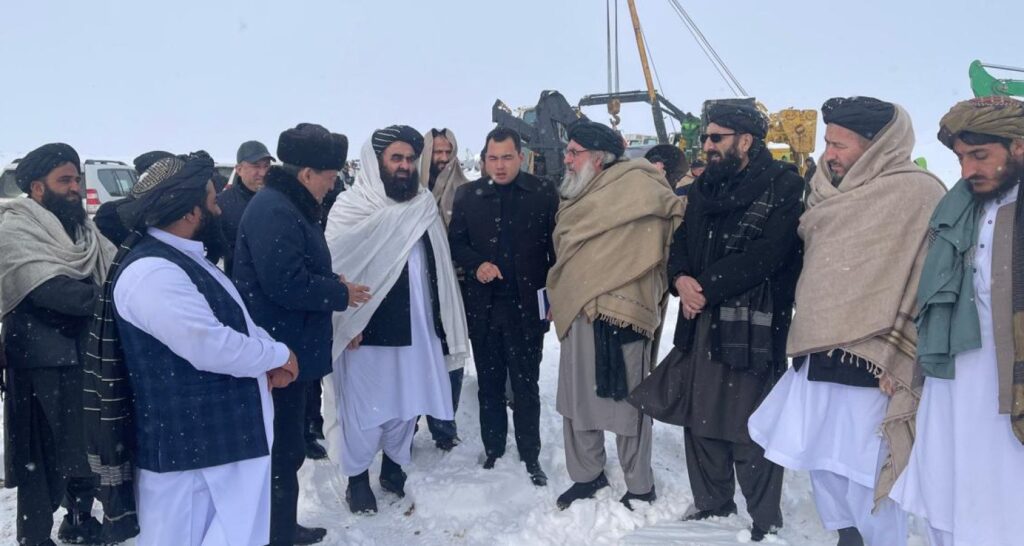
During a working visit to Afghanistan on December 15, Turkmenistan’s Minister of Foreign Affairs, Rashid Meredov, met with Afghanistan’s Acting Foreign Minister, Amir Khan Muttaqi, to review the progress of major energy, transport, and infrastructure projects involving Turkmenistan in Afghanistan, the Turkmen Foreign Ministry reported.

The ministers inspected the ongoing construction of the Afghan section of the Turkmenistan-Afghanistan-Pakistan-India (TAPI) natural gas pipeline and agreed to accelerate its implementation, according to TOLOnews​.

Turkmenistan has already completed its section of the TAPI pipeline, designed to transport 33 billion cubic meters of Turkmen natural gas annually to Afghanistan, Pakistan, and India.

The $10 billion TAPI project will span 1,814 kilometers, with 816 kilometers crossing Afghanistan. The pipeline will help meet Afghanistan’s domestic gas needs while generating approximately $450 million annually in transit fees. The pipeline will extend from Afghanistan to Quetta and Multan in Pakistan before reaching Fazilka in India.

As part of the visit, the Turkmen foreign minister also inspected the construction of a fiber-optic communication line and a warehouse complex at the dry port of Turgundi railway station, located in Afghanistan’s northern Herat Province. Meredov further assessed progress on the Turgundi-Sanabar section of the Turgundi-Herat railroad.

The Times of Central Asia previously reported that construction of the Afghan section of the TAPI pipeline officially began on September 11, 2024.

Once operational, the TAPI pipeline will enable Turkmenistan — currently exporting natural gas primarily to China — to diversify its export routes. The project aligns with Turkmenistan’s broader plans to deliver gas across the Caspian Sea to Azerbaijan, Turkey, and Europe.