• KGS/USD = 0.01144 0%
  • KZT/USD = 0.00213 0%
  • TJS/USD = 0.10456 0.19%
  • UZS/USD = 0.00008 0%
  • TMT/USD = 0.28490 0%
  • KGS/USD = 0.01144 0%
  • KZT/USD = 0.00213 0%
  • TJS/USD = 0.10456 0.19%
  • UZS/USD = 0.00008 0%
  • TMT/USD = 0.28490 0%
  • KGS/USD = 0.01144 0%
  • KZT/USD = 0.00213 0%
  • TJS/USD = 0.10456 0.19%
  • UZS/USD = 0.00008 0%
  • TMT/USD = 0.28490 0%
  • KGS/USD = 0.01144 0%
  • KZT/USD = 0.00213 0%
  • TJS/USD = 0.10456 0.19%
  • UZS/USD = 0.00008 0%
  • TMT/USD = 0.28490 0%
  • KGS/USD = 0.01144 0%
  • KZT/USD = 0.00213 0%
  • TJS/USD = 0.10456 0.19%
  • UZS/USD = 0.00008 0%
  • TMT/USD = 0.28490 0%
  • KGS/USD = 0.01144 0%
  • KZT/USD = 0.00213 0%
  • TJS/USD = 0.10456 0.19%
  • UZS/USD = 0.00008 0%
  • TMT/USD = 0.28490 0%
  • KGS/USD = 0.01144 0%
  • KZT/USD = 0.00213 0%
  • TJS/USD = 0.10456 0.19%
  • UZS/USD = 0.00008 0%
  • TMT/USD = 0.28490 0%
  • KGS/USD = 0.01144 0%
  • KZT/USD = 0.00213 0%
  • TJS/USD = 0.10456 0.19%
  • UZS/USD = 0.00008 0%
  • TMT/USD = 0.28490 0%

Kazakhstan Faces Doubling of Construction Industry Labor Shortage by 2030

Kazakhstan’s construction sector is grappling with a significant labor shortage, with approximately 111,000 positions currently unfilled. Prime Minister Olzhas Bektenov warned at a recent government meeting that this figure is expected to double by 2030, forecasting a deficit of over 200,000 skilled workers in the industry.

Bektenov highlighted that the most affected roles include plasterers, painters, welders, masons, and concrete workers – essential positions for the sector’s operations.

While the construction industry ranks third among sectors facing workforce shortages, it holds a critical place in Kazakhstan’s economy. According to government forecasts, education leads in expected vacancies, with 331,000 unfilled positions projected by 2030, followed by trade at 228,000. Despite ranking behind these sectors in terms of unmet demand, construction contributes the most to Kazakhstan’s GDP among the three, accounting for 5.6% of the country’s total economic output, according to the Ministry of Industry and Construction.

This looming shortage poses challenges to sustaining growth in a sector vital to the nation’s development and economic stability.

Endangered Great Bustard Named Tajikistan’s Bird of the Year

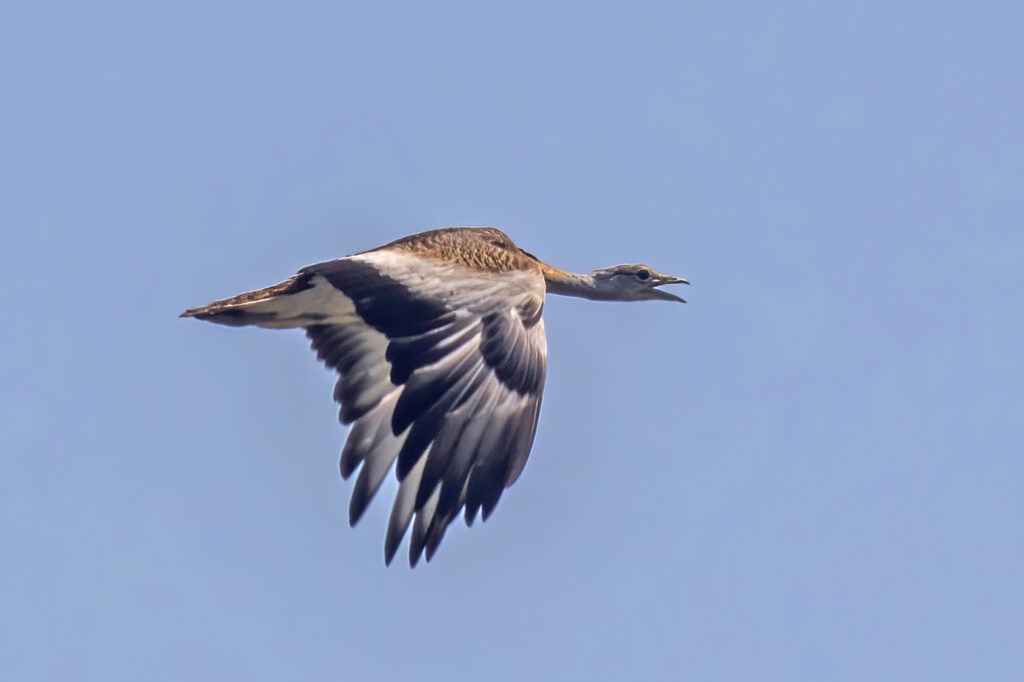
The great bustard, also known as the red-breasted bustard, has been named the bird of the year for 2025 in Tajikistan. The decision, announced on December 11, followed a vote by the National Academy of Sciences​.

The rare bird, locally called dugdogi zebo, is listed in both the International Union for Conservation of Nature (IUCN) Red List and the Red Book of Tajikistan, signifying its endangered status.

Since 2007, Tajikistan has annually designated a bird of the year to raise awareness about avian conservation. Previous honorees include an owl, corncrake, pheasant, paradise flycatcher, Tibetan eagle, peregrine falcon, white stork, and oriole. The common turtle dove has held the title this year​.

The great bustard resides in Tajikistan as both a breeding and migratory species. Experts estimate that only 23 breeding pairs inhabit the country, though the population temporarily rises to 50-60 individuals during migration periods. Slightly larger than a domestic hen, male great bustards have a body length of 65-75 cm and weigh between 1.8 and 3.2 kg, significantly smaller than the common bustard, which can weigh up to 15 kg.

Omnivorous by nature, the bird’s diet includes fruits, seeds, leaves, flowers, locusts, beetles, and small reptiles. Known for their cautious behavior, great bustards avoid human contact and prefer to hide or flee when threatened. Their average lifespan in the wild is approximately 20 years.

Globally, the International Bustard Conservation Foundation, supported by the UAE government, leads efforts to protect the species. To date, the foundation has bred over 480,000 bustards in captivity and released 285,000 into the wild​.

In Kazakhstan, the foundation releases great bustards into the wild while simultaneously issuing hunting licenses for $1,280 per bird, catering to Arab hunters. Uzbekistan hosts an Emirati conservation center in the Kyzylkum Desert, dedicated to breeding and protecting the species, as well as releasing them into their natural habitat​.

Despite these international initiatives, Tajikistan has yet to leverage Arab funding or hunting tourism to support conservation efforts. Utilizing such resources could bolster the great bustard population while generating additional economic benefits.

Uzbek Government Files Criminal Case Against Citizen Over Jihadi Activities in Syria

The Uzbek Ministry of Internal Affairs has instigated a criminal case against Khudoyor Nuriddinov, also known as Abu Walid, who is accused of being a member of an international terrorist organization. The announcement was made via the ministry’s press service.

Born in 1994 in the Rishtan district of Ferghana, Nuriddinov faces multiple charges under Uzbekistan’s Criminal Code, including:

  • Article 155-2: Training or travel for the purpose of terrorist activities,
  • Article 159: Undermining the constitutional order of Uzbekistan,
  • Article 223: Illegal travel abroad or entry into Uzbekistan,
  • Article 244-2: Creation, management, or participation in extremist, separatist, or banned organizations.

According to the authorities, Nuriddinov left for Russia in 2016 as a labor migrant, where he became influenced by international terrorist ideologies. He later traveled to Idlib, Syria, where he engaged in propaganda activities. The Uzbek authorities report that his actions led to the deaths of several Uzbek citizens who were recruited and killed in fighting in Syria.

Nuriddinov continues to promote jihad through social networks and YouTube, giving a religious pretext for his activities. His accounts and pages are banned in Uzbekistan, and those found storing, distributing, or transporting his content face legal action.

World Bank Chief Economist Owes a Bottle of Wine to Kyrgyzstan’s Cabinet Chief

During a conversation with Hugh Riddell, head of the World Bank’s office in Kyrgyzstan, Akylbek Japarov, Chairman of the Cabinet of Ministers, shared an anecdote about a wager made with the World Bank’s chief economist.

“In 2022, at a World Bank session in Washington, your chief economist and I bet that Kyrgyzstan’s economic growth over the next 3-4 years would remain stable and exceed 7%. He doubted this was possible and was ready to wager a bottle of fine wine,” Japarov recounted at a recent event focused on Kyrgyzstan’s development.

Japarov highlighted the latest economic figures to underscore his point: GDP growth for the first 11 months of 2024 stands at an impressive 9%. Confident in his position, Japarov announced his intention to claim his winnings.

The anecdote reflects broader optimism about Kyrgyzstan’s trajectory. According to data presented by World Bank experts during discussions with the presidential administration, 89% of Kyrgyz citizens believe the country is moving in the right direction regarding political, social, and economic reforms​.

The World Bank is actively monitoring socio-economic trends in Kyrgyzstan through its “Listening to the Kyrgyz Republic” project. This initiative conducts monthly panel surveys of 1,500 households across all regions, using telephone interviews to track citizens’ well-being and gather insights into national development trends.

Uzbekistan Proposes 10-Year Extension of Duty Free Export Benefits to the EU

On December 4-5, Uzbekistan participated for the first time in the meeting of the General Scheme of Preferences (GSP+) working group of the European Union in Brussels. The meeting included representatives from 28 EU member states and Uzbekistan’s Ministry of Investment, Industry, and Trade (MIIT).

Uzbekistan’s delegation highlighted the progress made since becoming a GSP+ beneficiary in 2021. During this time, the country’s exports to the EU nearly tripled, reaching $1.15 billion. Of the 6,200 products eligible for duty-free export, approximately 1,100 – primarily agricultural, textile, and chemical goods – are exported regularly.

To further enhance market stability and competitiveness, the delegation proposed adding new fruits and vegetables to the list of preferred goods and revising seasonal export quotas. They also recommended extending the GSP+ preferential trade regime for an additional ten years to foster long-term economic ties with the EU.

During the visit, Uzbek representatives held talks with European Commission officials to improve access to Uzbek products, adjust quotas for rolling metals, and secure technical assistance to align with EU standards. These discussions mark a significant step in expanding trade and economic cooperation under the GSP+ framework.

Kyrgyzstan Opens Airport in Karakol – More New Routes Coming Soon

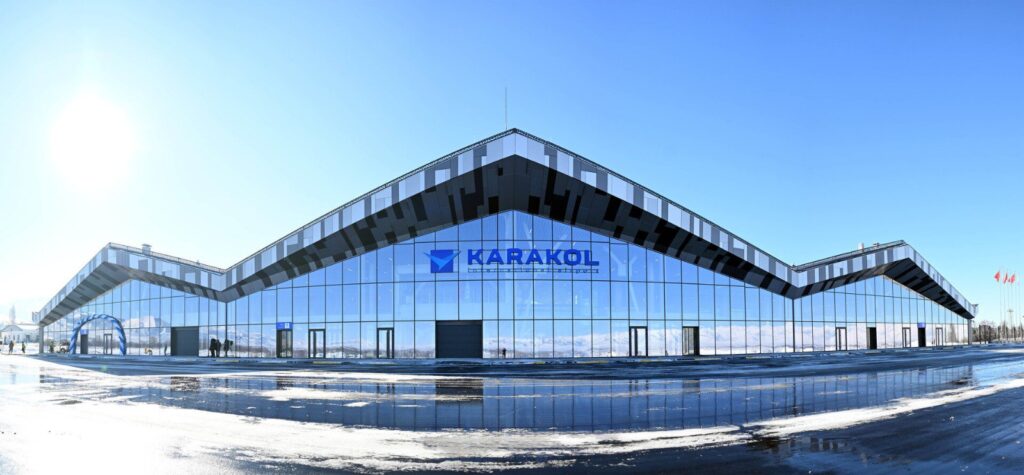
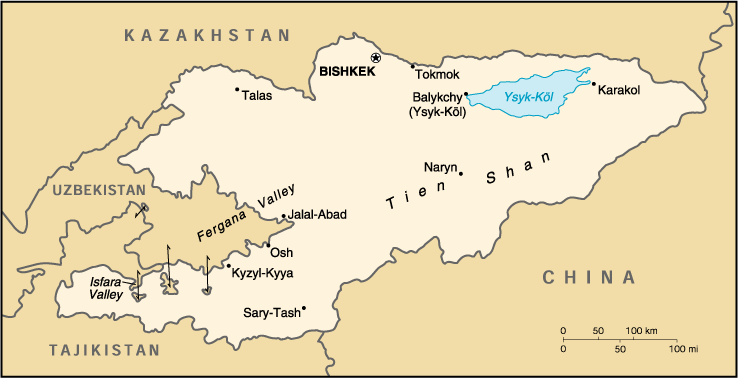
On December 11, Kyrgyzstan’s President Sadyr Japarov inaugurated the reconstructed international airport in Karakol, the main city of the Issyk-Kul region. Situated southeast of Lake Issyk-Kul, Karakol is Kyrgyzstan’s winter tourism hub and home to the nation’s largest and most popular mountain ski resort.

President Japarov highlighted the reopening of the Karakol International Airport as a pivotal move toward strengthening regional connectivity, boosting tourism, and enhancing Kyrgyzstan’s international profile. “This is just the beginning,” Japarov remarked, announcing plans for a major new development: a “Kyrgyz Courchevel,” envisioned as Central Asia’s largest and most modern ski resort. Located 70 kilometers from the airport, the year-round facility is planned to accommodate up to a million tourists per season.

Kyrgyzstan’s government is also prioritizing the modernization of regional airports to improve domestic air connectivity. Renovation projects are underway in Naryn, Kazarman, Kerben, and Batken, while construction of a new airport in the southern city of Jalal-Abad is set to begin soon.

Starting in May, the government plans to launch domestic flights on routes including Kazarman-Bishkek, Naryn-Bishkek, Kerben-Bishkek, Karakol-Osh, and Talas-Osh. These flights will be operated by the state-owned Asman Airlines.

This follows the reopening of the Talas airport in May, as previously reported by The Times of Central Asia, marking its return to operation after decades of inactivity since the Soviet-era. Originally built in 1979 to accommodate planes and helicopters, the airport had long been out of service until its recent renovation.

To support the enhanced domestic air network, Kyrgyzstan’s Manas International Airport Open Joint Stock Company has procured two Bombardier Dash 8 Q400 aircraft for Asman Airlines. Manufactured in Canada, the Dash 8 Q400 is a short-haul plane capable of carrying up to 80 passengers over distances of up to 2,000 kilometers.