• KGS/USD = 0.01144 0%
  • KZT/USD = 0.00211 0%
  • TJS/USD = 0.10460 0%
  • UZS/USD = 0.00008 0%
  • TMT/USD = 0.28571 0.28%
  • KGS/USD = 0.01144 0%
  • KZT/USD = 0.00211 0%
  • TJS/USD = 0.10460 0%
  • UZS/USD = 0.00008 0%
  • TMT/USD = 0.28571 0.28%
  • KGS/USD = 0.01144 0%
  • KZT/USD = 0.00211 0%
  • TJS/USD = 0.10460 0%
  • UZS/USD = 0.00008 0%
  • TMT/USD = 0.28571 0.28%
  • KGS/USD = 0.01144 0%
  • KZT/USD = 0.00211 0%
  • TJS/USD = 0.10460 0%
  • UZS/USD = 0.00008 0%
  • TMT/USD = 0.28571 0.28%
  • KGS/USD = 0.01144 0%
  • KZT/USD = 0.00211 0%
  • TJS/USD = 0.10460 0%
  • UZS/USD = 0.00008 0%
  • TMT/USD = 0.28571 0.28%
  • KGS/USD = 0.01144 0%
  • KZT/USD = 0.00211 0%
  • TJS/USD = 0.10460 0%
  • UZS/USD = 0.00008 0%
  • TMT/USD = 0.28571 0.28%
  • KGS/USD = 0.01144 0%
  • KZT/USD = 0.00211 0%
  • TJS/USD = 0.10460 0%
  • UZS/USD = 0.00008 0%
  • TMT/USD = 0.28571 0.28%
  • KGS/USD = 0.01144 0%
  • KZT/USD = 0.00211 0%
  • TJS/USD = 0.10460 0%
  • UZS/USD = 0.00008 0%
  • TMT/USD = 0.28571 0.28%

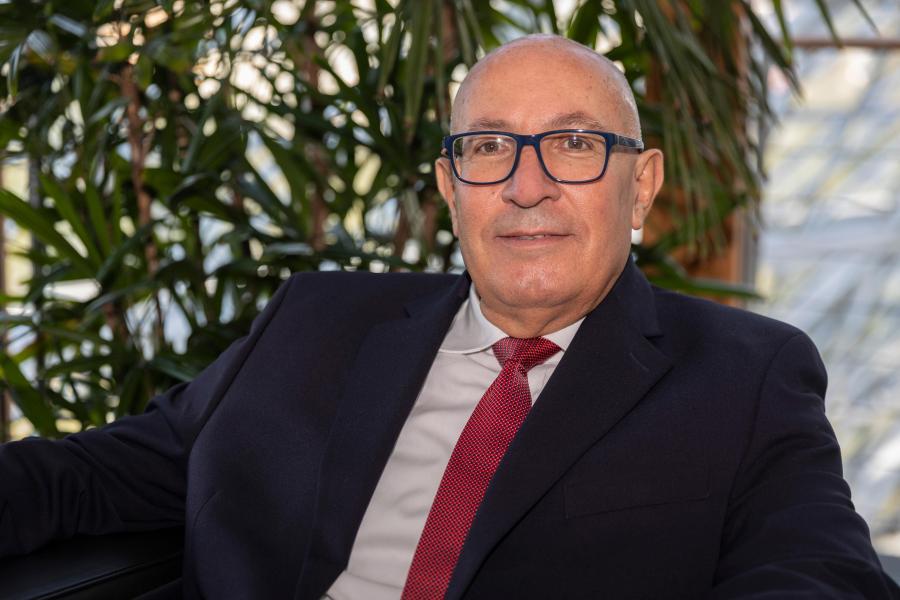
Securing EIB Funding in Kyrgyzstan: An Interview with VP Kyriacos Kakouris

Central Asia is rapidly developing its economy, with several international financial institutions successfully operating here. Among them is the European Investment Bank. Vice-President Kyriacos Kakouris spoke with The Times of Central Asia about its activity in Kyrgyzstan.

TCA: Could you briefly introduce the European Investment Bank (EIB) and its main objectives in Kyrgyzstan?

KK: The EIB is more than a bank, it is part of the EIB Group, one of the largest multilateral financial institutions in the world with a unique position allowing it to mobilize large-scale financing. The European Investment Bank, as the long-term financing institution of the European Union, is closely aligned with EU priorities, such as the EU-Central Asia strategy and the EU Global Gateway strategy, and is ready to play a more significant role in helping Kyrgyzstan respond more effectively to current and future challenges. The Bank has already been involved in economic development, transport, and climate action operations. We are interested in supporting the development of a competitive and environmentally friendly private sector that can incorporate modern and green technologies into various sectors.

TCA: What are the EIB’s priorities for supporting economic growth and sustainability in Kyrgyzstan?

KK: EIB Global launched its activity in Kyrgyzstan in 2014 and up to now, has signed three separate operations worth a total of €112 million. We have established a very positive relationship with the Embassy of Kyrgyzstan in Brussels, which is essential for our dialogue with the Kyrgyz authorities. All operations involve co-financing either with other international financial institutions like the World Bank and the European Bank for Reconstruction and Development (EBRD) or development institutions such as KfW.

So far, the Bank has approved lending operations for three projects on power transmission, water and waste management, and the agri-food sector, in line with the priorities defined in the EU-Central Asia and the EU Global Gateway strategies. The main aims of these projects are to protect the environment and take action against climate change.

We will soon sign a €9 million top-up for the completion of the Kyrgyz section of the high-voltage transmission line known as CASA-1000. This project is part of a larger regional electricity scheme called Central Asia – South Asia Electricity Transmission and Trade initiative, covering Kyrgyzstan, Tajikistan, and Pakistan. This project is essential for developing trade in sustainable renewable electricity between the countries, using energy generated from renewable hydropower sources in the region. This will alleviate power shortages and increase export revenue in Kyrgyzstan and Tajikistan.

TCA: How does the EIB’s role differ from that of other development banks or financial institutions?

KK: The EIB is the EU bank, and its shareholders are the 27 EU Member States. EIB Global is focused on EU policy priorities such as the EU strategy on Central Asia and the EU Global Gateway, supporting the green transition, boosting technological innovation, bolstering security and defense, and supporting regional cohesion and the development of social infrastructure. Our commitment to international development and capital market integration secures Europe’s strong global presence. Our projects boost growth, prosperity, and technological and social progress in individual EU Member States, across the EU as a whole, and around the world.

The EIB also has a strong team of experts who can provide advisory services and technical assistance to our clients to help them prepare and implement projects.

TCA: What criteria does the EIB use to select and evaluate projects for investment?

KK: Every project submitted for EIB Global financing is unique. However, in general, EIB Global supports projects that are in line with EU policies, economically viable, and environmentally and technically sound. The EIB directly finances projects that have a total cost of over €25 million, which are usually undertaken by big public and private companies. Smaller projects – usually implemented by small and medium-sized enterprises (SMEs) and mid-caps – are supported through our partner financial intermediaries.

TCA: Could you describe the sectors or industries the EIB is most focused on supporting and any that might be emerging in importance?

KK: The EIB supports projects that involve innovation, agriculture and water management, sustainable connectivity, and the transition towards a sustainable, climate-neutral growth model. With regard to sustainable connectivity, EIB Global is currently working on operations related to the Trans-Caspian corridor. These operations are closely aligned with the European Global Gateway strategy and add to the substantial support that EIB Global has already provided for the East-West corridor in the Southern Caucasus.

The Bank’s overall focus in Kyrgyzstan for the coming years is determined by the new EU priorities for the country and the Central Asia region. These priorities are to develop a green and climate-resilient economy, to continue the digital transformation and to make use of critical raw materials.

TCA: What role does the EIB play in fostering innovation and supporting technology startups in Kyrgyzstan?

KK: Innovation and, mainly, digitalization are core priorities for the EIB. We usually provide indirect support to smaller companies, including startups, using credit lines via financial institutions and by creating venture capital funds that are well-equipped to support higher-risk projects.

TCA: What areas or sectors does the EIB plan to prioritize for future investment to support Kyrgyzstan’s evolving economic landscape?

KK: EIB Global is working towards the long-term objective of making the Trans-Caspian Transport Corridors a multimodal, modern, competitive, sustainable, reliable, smart, and fast route linking Europe and Central Asia. Such investments are necessary to strengthen trade and competition and to diversify transport routes between Europe and Central Asia. Increased economic cooperation will be beneficial for prosperity and peace for people living in Kyrgyzstan and in Central Asia in general.

In this context, at the EU-Central Asia Investor Forum, which took place at the end of January 2024, EIB Global signed four memoranda of understanding for project co-financing with Kyrgyzstan, Kazakhstan, the Development Bank of Kazakhstan, and Uzbekistan amounting to €1.5 billion. It is expected that this will mobilize a total of €3 billion to support EU-Central Asia transport connectivity projects, a significant milestone in the context of the Global Gateway strategies.

We are also open to exploring new opportunities to support energy, water, and agriculture projects.

TCA: What advice would you give to entities looking to partner with or receive funding from the EIB?

KK: Given that every potential project is unique, the general advice I would give is to explore our objectives and the financial instruments that we provide and, if your project is in line with them, to get in contact with us. In principle, the EIB expects to receive a comprehensive feasibility study, a detailed description of the capital investment, and the prospective financing arrangements. The project promoter should provide sufficient information to allow the EIB to assess whether the project adheres to EIB lending objectives and has a well-developed business plan.

TCA: Where does the EIB see itself in the next decade, and how will it continue to align itself with Kyrgyz’s values and priorities?

KK: The EIB has been operating for over six decades. Within that time, it invested over a trillion euros in the benefit of people, economic development, and the climate to make our planet a better place.

We will continue to tackle global challenges in cooperation with our partners as multilateral action is required to provide effective support for development and growth outside Europe. Through our projects, we will work towards creating more jobs and opportunities and contribute to a cleaner planet and a better quality of life for the benefit of us all.

With these objectives in mind, we will operate via EIB Global, the EIB Group’s specialized arm for operations outside the European Union and a vital partner of the EU’s Global Gateway strategy. We aim to support at least €100 billion of investment by the end of 2027, around one-third of the overall target of the Global Gateway strategy. Within Team Europe, EIB Global fosters strong, committed partnerships alongside fellow development finance institutions and civil society. I believe that our collaboration with Kyrgyzstan and Central Asia will continue and that we will further enhance our cooperation in the years to come.

One Billion Points for Planting Trees: Payme Users Helping Green Navoi

By allowing users to donate their accumulated points to good causes, the Payme app, part of the Payme Mahalla, has, since its launch in December 2022, funded projects for schools in Uzbekistan and Karakalpakstan, including the purchase of computers, sports equipment and stationery.

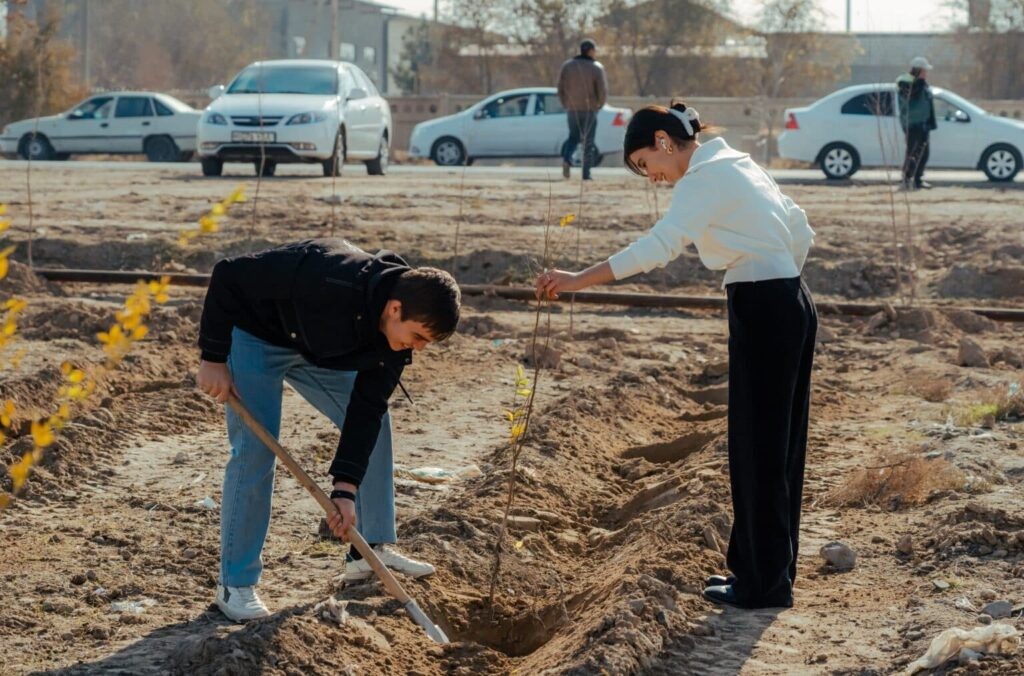
Users of the Payme payment service have collected a billion points to support the project to turn Navoi green, a scheme initiated by ecoactivist and blogger Mutabar Khushvaktova (urikguli). Thanks to this action, more than a thousand trees were planted on the territory of Navoiazot JSC in November alone.

The project began in October, when Khushvaktova announced a fundraiser for tree planting on her blog. Initially, the collection progressed slowly, but since Payme connected its users through the Mahalla loyalty program, in just a few days the required amount was raised, confirming that thousands of people are willing to support environmental initiatives.

The trees were planted under the guidance of biologists and soil scientists. Garden elms, ideally suited to the climatic conditions of the region, were selected for the project. The site for planting was coordinated with the local authorities, with Navoiazot JSC taking care of the trees.

Russian MP Blames Central Asians for Ruble Depreciation

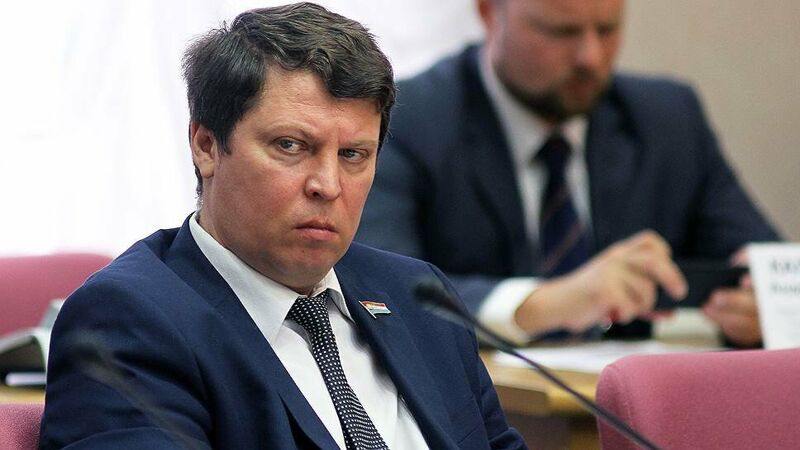
Mikhail Matveyev, a member of Russia’s State Duma, has attributed the depreciation of the Russian ruble in part to remittances by labor migrants from Central Asia and the Caucasus.

In a statement on his Telegram channel, Matveyev argued that millions of migrants working in Russia transfer their earnings abroad, removing significant sums from the Russian economy. According to him, these remittances fuel demand for foreign currencies, such as the dollar, thereby weakening the ruble.

Citing statistics, Matveyev claimed that in 2023, labor migrants sent $5.7 billion from Russia to Tajikistan – nearly half of Tajikistan’s GDP. Kyrgyzstan received remittances equal to about one-third of its GDP, while Uzbekistan received over $14.5 billion, accounting for 12-15% of its GDP. Other significant recipients included Georgia (over $2 billion), Armenia (over $3 billion), and Kazakhstan.

Matveyev also criticized some of these countries for their stance on Western sanctions against Russia. He noted that several countries in the Eurasia region have joined sanctions targeting Russian banks and refuse to process transactions using the Russian Mir payment system. This, he said, forces migrants to withdraw cash dollars from Russia to transfer home, exacerbating the pressure on the ruble exchange rate.

The MP’s remarks came amid a sharp drop in the ruble’s value against the dollar last week.

For more than 30 years, millions of Central Asian citizens have migrated to Russia for work. However, recent trends indicate an increase in return migration, driven by Russia’s deteriorating economic conditions, stricter immigration rules, worsening attitudes toward Central Asian workers, and attempts by Russian authorities to recruit immigrants – both with and without Russian citizenship – for military service in Ukraine.

Kazakh Agricultural Producers Sign $1 Billion in Deals with China

Kazakhstan and China have strengthened their agricultural partnership with $1 billion in new export agreements signed on November 30 during negotiations in Beijing. The deals include a $100 million contract for Kazakh poultry products.

Kazakhstan’s Agriculture Minister, Aidarbek Saparov, emphasized that grain, oilseeds, and vegetable oil form the bulk of the country’s agricultural exports to China. Grain exports, in particular, remain a key focus.

In 2023, Kazakhstan’s grain exports to China surged 5.5-fold to 1.4 million tons. From January to September 2024, the country exported 1.1 million tons of grain to China. Both governments have agreed to raise grain exports to 2 million tons shortly.

Kazakhstan has invited Chinese investors to collaborate in its agro-industrial sector, particularly in producing organic products, which command higher prices and are increasingly sought after in global markets. The country is also well-positioned to expand the production and export of high-quality livestock products, including beef, lamb, poultry, canned meat, dairy products, and honey.

According to the Agriculture Ministry, Kazakhstan produces about $20 billion in agricultural goods annually. Over the past five years, agricultural exports have nearly doubled, reaching $5.4 billion. The ministry projects this figure will climb to $10 billion within the next five years.

Kazakh Deputy PM Zhumangarin: Our Industries Come Before Sanctions

Kazakhstan has clarified its position on sanctions against Russia imposed as a result of Russia’s invasion of Ukraine. Primarily, Kazakhstan will not support measures that could negatively impact its economy.

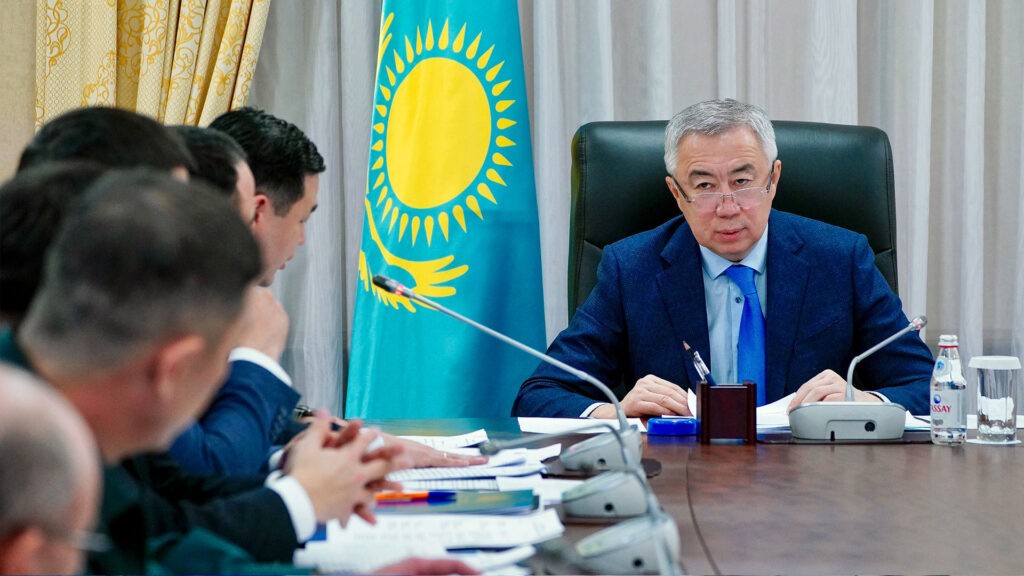
Speaking to Russian state media outlet Tass, Deputy Prime Minister Serik Zhumangarin underscored that Kazakhstan will not act as a conduit for circumventing sanctions, as doing so could severely affect its domestic industries. However, he emphasized the nation’s commitment to safeguarding its economic interests, particularly in sectors where products might fall under sanction restrictions.

“We have explicitly stated that we will not impose restrictions on these goods, as behind them are large labor collectives and enterprises, often located in single-industry towns,” Zhumangarin explained.

During Russian President Vladimir Putin’s visit to Kazakhstan on November 27-28, he met with Kazakh President Kassym-Jomart Tokayev. The leaders issued a joint statement condemning unilateral sanctions, citing their detrimental effects on global trade, economic cooperation, and sustainable development. They reaffirmed their commitment to principles of open and non-discriminatory international trade.

By maintaining a neutral stance on sanctions, Kazakhstan seeks to minimize economic risks while prioritizing the interests of its workforce and industries. As The Times of Central Asia previously reported, Kazakhstan’s Ambassador to Russia, Dauren Abayev, noted that Kazakh companies aim to avoid secondary sanctions but will continue fostering close cooperation with Russia.

In an August interview with Bloomberg, Zhumangarin reiterated that Kazakhstan would not blindly adhere to sanctions against Russia but would consider international restrictions. He highlighted that while Kazakhstan aims to protect its companies from trade bans, it cannot completely disregard sanctions due to the risk of economic isolation.

Furthermore, Kazakhstan’s Minister of National Economy, Nurlan Baibazarov, addressed concerns in early November regarding including Kazakh companies on UK sanctions lists. He emphasized that these cases mostly involved transient firms, asserting that Kazakhstan continues to comply with international regulations.

Kazakhstan Seeks to Stabilize Currency as Tenge Hits Record Low

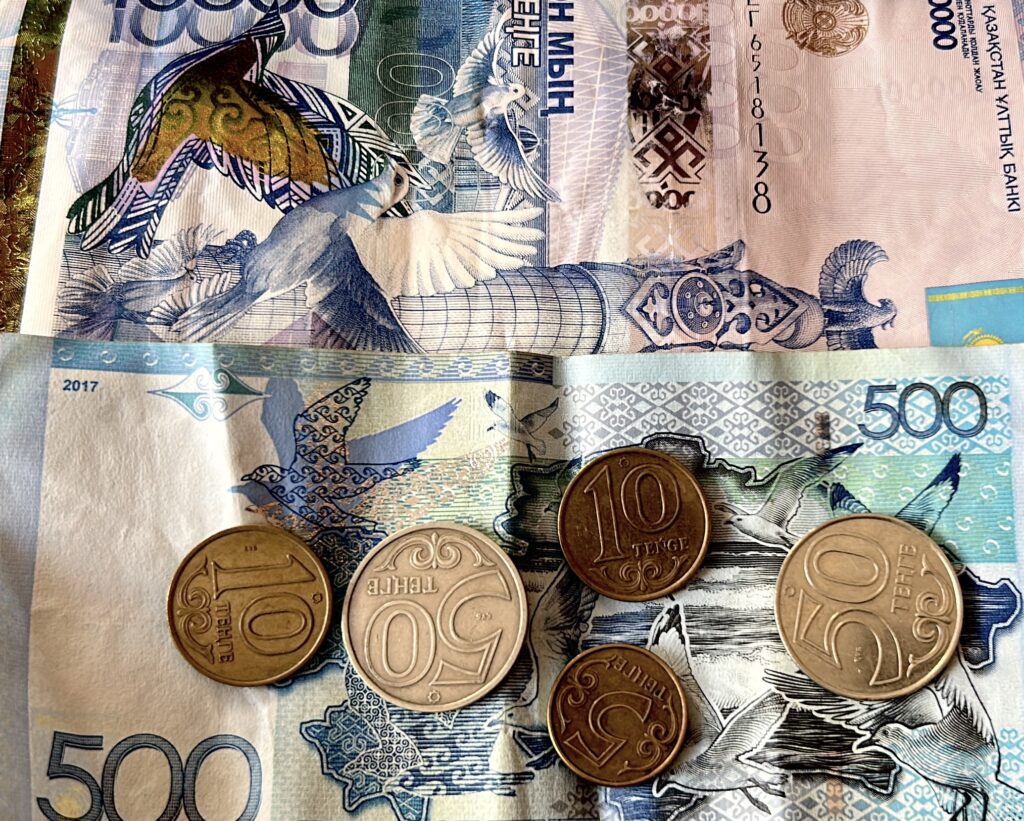
Kazakhstan’s central bank said Monday that it has spent more than $1 billion in foreign exchange interventions since mid-November in an effort to stabilize the declining currency, which has passed the threshold of 500 tenge to the U.S. dollar and hit record lows. Kazakh officials attribute the drop to the global appreciation of the dollar, a decrease in oil prices, the tumbling Russian ruble and other factors. 

The National Bank said it expects to spend another $800 million or $900 million in foreign currency sales in December to cover transfers from the National Fund to the state budget. It also noted that the government on Nov. 19 reinstated a requirement that “quasi-government entities” sell 50% of foreign currency revenue as a measure to balance the FX market. 

“On the domestic FX market, there was an increase in demand for foreign currency from economic agents and a limited supply, partly due to the exchange rate surpassing a psychological threshold,” said the bank, referring to the 500 tenge to the dollar barrier. 

“Amid the deterioration of several fundamental factors, to prevent destabilizing fluctuations, smooth excessive volatility in the tenge exchange rate, and ensure the supply of foreign currency, the National Bank conducted foreign exchange interventions from November 15 to November 28. The total volume of currency sales for the month amounted to USD 1,047 million,” it said. 

The tenge fell to a record low of 520 to the dollar on Monday, according to financial news reports. The Bloomberg news agency said the currency went as low as 530 to the dollar on Monday afternoon, amounting to a loss of more than 13% for the year so far.

A significant factor affecting the tenge is the fall in the value of the ruble, which took another hit last month after new Western sanctions were imposed on Gazprombank, a Russian state-owned bank that handles energy transactions.  

Kazakhstan and Russia are major trading partners. On a visit to Kazakhstan last week, Russian President Vladimir Putin highlighted growing trade between the two countries and said: “Payments were and still are a problem, but we now have over 80 percent of payments made in national currencies, which, of course, makes our work in the financial sphere easier.”

Russia accounts for almost 20% of Kazakhstan’s foreign trade, according to Kazakh President Kassym-Jomart Tokayev. He said last week that Kazakhstan remains a partner of Russia during this “difficult” time, possibly a reference to geopolitical tensions and economic challenges related to Russia’s war in Ukraine.  

On Monday, Nurlan Baibazarov, Kazakhstan’s deputy prime minister and minister of the national economy, appealed for calm, said finances are stable and that Kazakhstan had weathered similar exchange rate fluctuations at the beginning of the war in early 2022, according to the Orda.kz news site.