The United States is facilitating a private American bid by Cove Kaz Capital Group LLC for Kazakhstan’s Upper Kairakty and North Katpar tungsten deposits, in competition with state-backed Chinese bidders. Tungsten is not a rare earth element, but it is a critical raw material. In particular, it underpins armor-piercing ammunition, penetrators, and high-temperature tooling used across aerospace and industrial manufacturing. Reporting indicates direct engagement by senior U.S. officials and active coordination with Kazakhstan’s sovereign-wealth ecosystem.
The metal’s significance elevates the commercial negotiation into a strategic policy. The policy driver is diversification away from China’s dominance along the mine-to-powder supply chains. China accounts for well over four-fifths of global tungsten production and processing, and tightened export controls in 2025 have upset pricing and availability. The U.S. has established a procurement deadline of 2027 to avoid sourcing from China or Russia for covered defense uses. All this adds urgency to securing non-Chinese volumes. Kazakhstan’s revived tungsten sector includes a newly opened processing plant, with destinations not yet announced for the concentrate to be produced. The country thus offers a practical non-Chinese source of tungsten.
Strategic Stakes and Principal Actors
The American role would be one of facilitation and financing, rather than ownership. The administration has supported talks linking Cove Kaz to Kazakhstan’s Samruk-Kazyna and relevant mining entities. Commerce Secretary Howard Lutnick is mentioned as a key interlocutor. Potential financial tools include the U.S. International Development Finance Corporation (DFC) and the Export-Import Bank. Insurance (EXIM), guarantees, or direct loans from these institutions would offset pricing and risk advantages historically offered by Chinese bidders. The U.S. government’s approach is to enable a private operator to compete without placing federal equity as an asset.
Kazakhstan’s Samruk-Kazyna and its mining arm Tau-Ken Samruk coordinate with the national exploration company Qazgeology. Kazakhstan has pursued a wider critical-minerals investment agenda, signaling its openness to joint ventures and privatization pathways under a special legal regime that provides a familiar legal and compliance framework for Western partners. That structure streamlines licensing and dispute resolution and has already been used for joint ventures in other critical minerals projects.
China remains the current market leader, dominating tungsten mining, ammonium paratungstate (APT) conversion, and downstream powders and carbides. Beijing’s 2025 export controls cover tungsten, tightening an already narrow global market and raising the policy value of non-Chinese options. Reports of Chinese interest in Vietnam’s Nui Phao tungsten complex underscore that non-Chinese sources face active competition, framing Kazakhstan’s appeal to Western buyers.
The Assets and Kazakhstan’s Capacity Rebuild
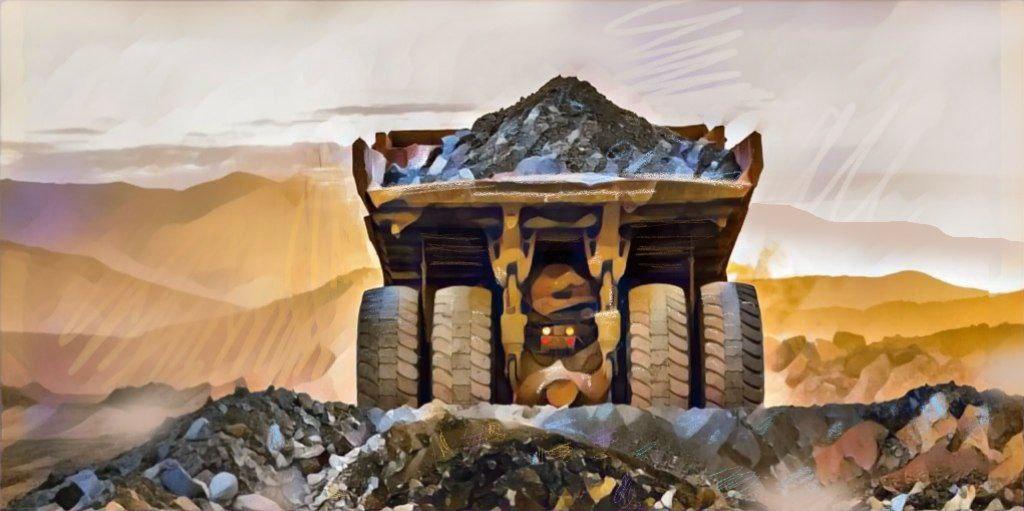
Kazakhstan suspended tungsten production after the 1990s but has moved over the past several years to re-establish a mine-to-processing base, with corporate and ministerial communications emphasizing the strategic nature of these deposits for long-term development. Upper Kairakty (also rendered as Verkhneye or Upper Kayrakty) and North Katpar sit in the Karaganda Region and feature repeatedly in Samruk-linked materials as the top tungsten prospects. Upper Kairakty is by itself the world’s largest tungsten deposit, and represents over two-thirds of the total tungsten reserves across the ex-Soviet territories.
One report places combined reserves above 40,000 tons of tungsten at North Katpar and Upper Kairakty together, while other public commentary sometimes cites a multi-million-ton national endowment across numerous deposits. Estimates can vary depending on whether sources report ore tonnage or contained tungsten, which among different legitimate reporting standards they use, and what cut-off grade they assume.
Kazakhstan’s rebuilding of capacity on the processing side has been significant. In November 2024, the first tungsten processing plant in the Almaty Region was launched, implemented with Chinese partners. Government, trade-press, and regional outlets consistently describe design throughput of about 3.3 million tons of ore per year, producing a 65% concentrate at steady state. That facility creates domestic value-add and export options that were not present during the long post-Soviet hiatus.
Beyond tungsten, other projects are advancing. Signaling extends beyond tungsten. The Luxembourg-based Eurasian Resources Group, 40% owned by the Kazakhstan government with the remainder split evenly among the families of the three Kazakhstani founder-shareholders, plans to begin gallium production in 2026. This would add a non-Chinese source for a semiconductor input that has largely come from China. In practice, additional mineral projects make it easier to fund and run the transport links and services a tungsten mine needs.
Deal Mechanics, the 2027 Clock, and Financing Paths
The 2027 U.S. defense-sourcing deadline creates a practical cut-off for primes and suppliers. Every tungsten-bearing component will face tighter origin checks. As the date approaches, compliant, auditable supply gains value, and contracts tied to Chinese or Russian feedstock become less acceptable. Early, verifiable offtake from Kazakhstan would therefore carry both policy and price advantages in U.S. defense procurement.
Financing is the step that makes production and delivery possible. DFC and EXIM can supply political-risk insurance, direct loans, loan guarantees, and buyer credits that reduce the cost of capital and counter concessional terms from Chinese institutions. A structured package aligned with environmental and social safeguards can support mine development, processing, and dedicated transport, without U.S. public ownership. Properly arranged, such a stack can also accelerate project timelines to intersect with the 2027 window.
The near-term watchlist for project implementation includes definitive agreements with Samruk-Kazyna and Tau-Ken Samruk, pre-feasibility updates, and any non-binding documents outlining the key financial terms (hence technically called “term sheets”) and conditions of a potential loan or other financing arrangement. Term sheets typically set the groundwork for future, legally binding contracts, and indicate that a project has passed initial reviews and is moving toward final approval.
Precedent exists for how U.S. private capital can work with Kazakhstan’s state entities under the legal framework of the Astana International Financial Centre (AIFC), a special legal regime based on the law of England and Wales, including joint ventures in adjacent critical minerals domains. AIFC law includes regulations on company incorporation, corporate governance, intellectual property, and financial services that can shorten the learning curve for a tungsten joint venture and clarify dispute-resolution pathways. In a competitive tender against Chinese state-backed bidders, procedural speed and regulatory clarity can matter as much as headline price.
A Tungsten Pathway
If completed, a Cove Kaz-led development of Upper Kairakty and North Katpar would constitute a credible, scalable non-Chinese tungsten pathway in Central Eurasia. It would align U.S. diversification policy with Kazakhstan’s industrial strategy, connect to an emerging domestic processing base, and begin to shift allied tungsten procurement away from a single dominant source. The policy timing is tight but actionable if financing and governance align.
Risks are real and should be explicit. Resource and grade dispersion require additional work; capital intensity and operating inputs must be benchmarked against international peers; permitting and environmental review must be thorough; and Chinese commercial and diplomatic pushback should be assumed. Even so, the combination of processing capacity, policy alignment, and institutional financing tools gives this bid a foundation that earlier efforts lacked. The next twelve months will show whether this opportunity becomes signed agreements and pilot shipments in time to meet the 2027 constraint.
The lens of “strategic transactionalism” reveals that a Kazakhstan tungsten deal is not about new blocs or security guarantees. Rather, it is a practical bargain between sovereign actors to trade value for market access, finance, and predictability, without asking anyone to subordinate their identity or policies. This approach matches Washington’s current habit of favoring specified, commercial deliverables over open-ended commitments, and it suits Astana’s preference to diversify partners while keeping decisions at home. The U.S. role is that of a facilitator and buyer, not a garrison power.