• KGS/USD = 0.01144 0%
  • KZT/USD = 0.00214 0%
  • TJS/USD = 0.10508 0.48%
  • UZS/USD = 0.00008 0%
  • TMT/USD = 0.28490 -0.28%
  • KGS/USD = 0.01144 0%
  • KZT/USD = 0.00214 0%
  • TJS/USD = 0.10508 0.48%
  • UZS/USD = 0.00008 0%
  • TMT/USD = 0.28490 -0.28%
  • KGS/USD = 0.01144 0%
  • KZT/USD = 0.00214 0%
  • TJS/USD = 0.10508 0.48%
  • UZS/USD = 0.00008 0%
  • TMT/USD = 0.28490 -0.28%
  • KGS/USD = 0.01144 0%
  • KZT/USD = 0.00214 0%
  • TJS/USD = 0.10508 0.48%
  • UZS/USD = 0.00008 0%
  • TMT/USD = 0.28490 -0.28%
  • KGS/USD = 0.01144 0%
  • KZT/USD = 0.00214 0%
  • TJS/USD = 0.10508 0.48%
  • UZS/USD = 0.00008 0%
  • TMT/USD = 0.28490 -0.28%
  • KGS/USD = 0.01144 0%
  • KZT/USD = 0.00214 0%
  • TJS/USD = 0.10508 0.48%
  • UZS/USD = 0.00008 0%
  • TMT/USD = 0.28490 -0.28%
  • KGS/USD = 0.01144 0%
  • KZT/USD = 0.00214 0%
  • TJS/USD = 0.10508 0.48%
  • UZS/USD = 0.00008 0%
  • TMT/USD = 0.28490 -0.28%
  • KGS/USD = 0.01144 0%
  • KZT/USD = 0.00214 0%
  • TJS/USD = 0.10508 0.48%
  • UZS/USD = 0.00008 0%
  • TMT/USD = 0.28490 -0.28%

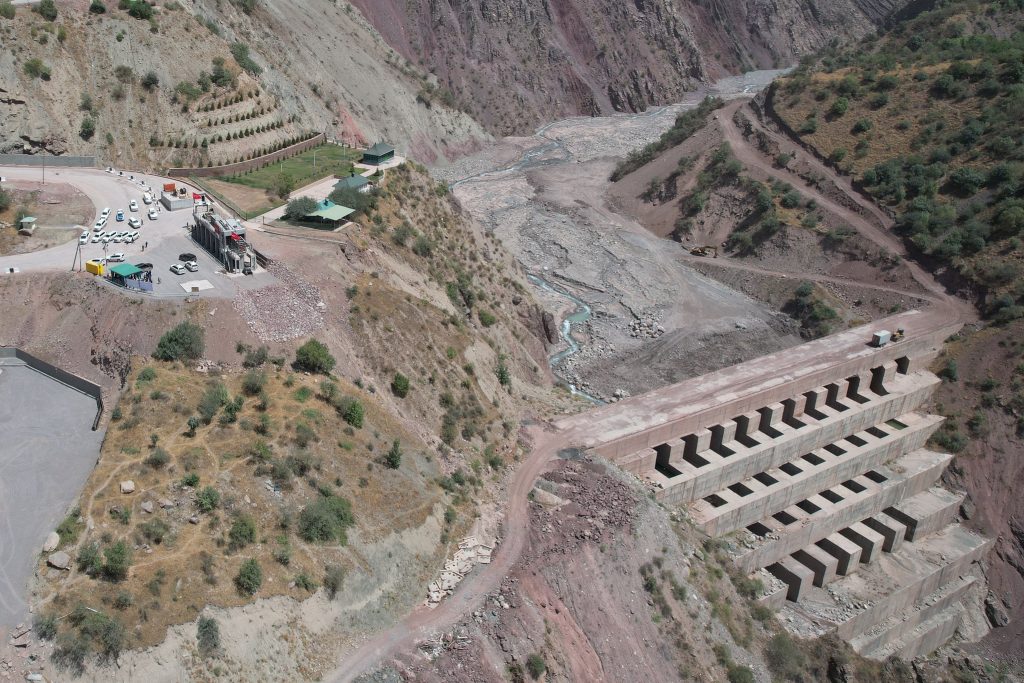
Saudi Fund Contributes $100 Million Towards Rogun Hydropower Plant in Tajikistan

The Saudi Development Fund has allocated $100 million to finance the completion of the Rogun hydropower plant in Tajikistan. This was announced by the Ambassador Extraordinary and Plenipotentiary of the Kingdom of Saudi Arabia to the Republic of Tajikistan, Walid bin Abdulrahman Al-Rashidan, at a press conference dedicated to the 94th anniversary of the Kingdom of Saudi Arabia’s founding.

“This project is strategically important for the country, as it will ensure energy security and sustainable economic growth. The Rogun HPP is a key element of Tajikistan’s energy infrastructure; it will significantly increase electricity production and strengthen its position regionally,” Al-Rashidan said.

Saudi Arabia’s financial support strengthens bilateral cooperation in energy and economic relations.

The estimated cost of completing the construction of the Rogun HPP is $6.4 billion. Once it reaches full capacity, about 70% of the electricity generated will be exported to other Central Asian countries.

According to a report by the Eurasian Fund for Stabilization and Development (EFSD), the financing of the Rogun HPP is one of the main risks for Tajikistan’s budget and debt sustainability. A possible increase in the cost of hydropower construction could reduce funding for other essential infrastructure projects and social spending. Analysts emphasize that “in the face of uncertainty regarding funding sources, starting in 2025, the government of Tajikistan may have additional needs for budgetary support from international financial organizations.”

China Gives 200 Million Yuan Grant Aid to Kyrgyzstan

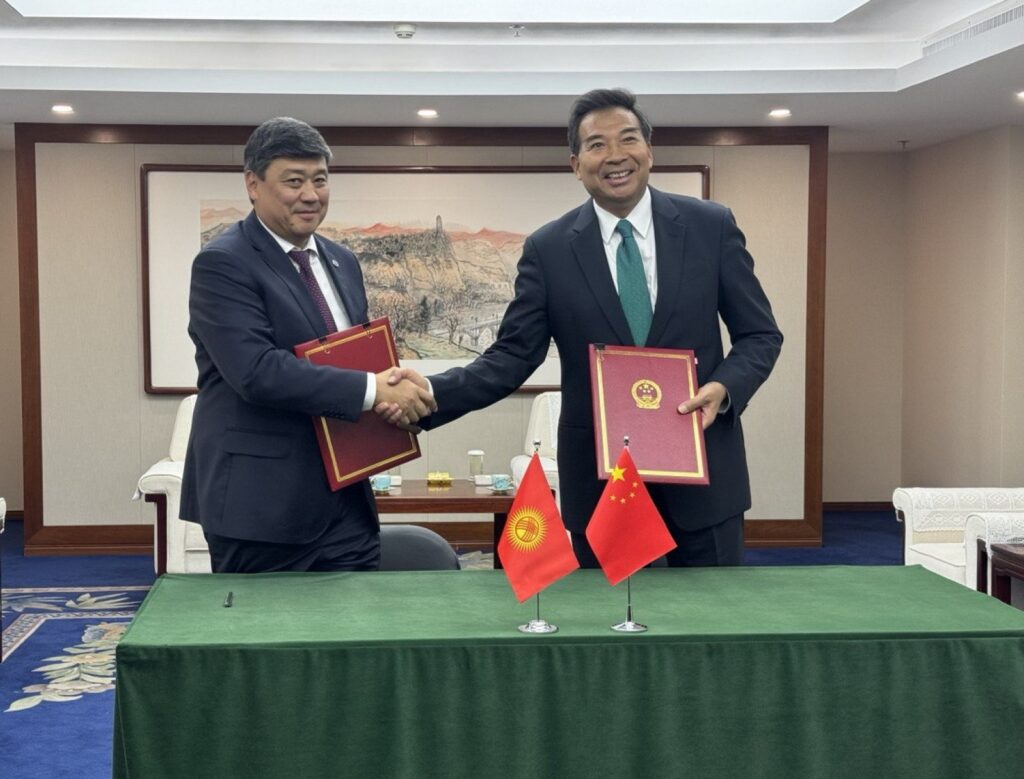
The Kyrgyz Ministry of Economy and Commerce has announced that the Chinese government has allocated grant assistance to Kyrgyzstan totaling 200 million yuan (more than $28 million). The money will be used to finance socially significant projects in priority areas.

The grant agreement was signed on September 19 in Beijing, following the Intergovernmental Kyrgyz-Chinese Commission on Trade and Economic Cooperation meeting held the previous day.

Deputy Chairman of the Kyrgyz Cabinet of Ministers, Bakyt Torobaev, headed the Kyrgyz delegation at the meeting.

On September 18, Torobaev held meetings with the heads of Chinese companies.

During a meeting with Zoomlion, a leading Chinese agricultural machinery manufacturer, the sides discussed supplying agricultural machinery and equipment to Kyrgyzstan and the potential opening of a training center for the assembly of agricultural machinery in Kyrgyzstan.

Noting Kyrgyzstan’s efforts to expand the export of agricultural products to China, Torobaev said that work is nearing completion on constructing a warehouse near the Irkeshtam checkpoint on the Kyrgyz-Chinese border. This will increase the volume of cargo transportation from Kyrgyzstan and Uzbekistan to China.

During a meeting with Jiangnan Delivery (GZ) Food Supply Chain Co., Ltd, a Chinese importer of agricultural products, the parties focused on issues of exchanging experience in the field of e-commerce and a proposal to build a laboratory in Kyrgyzstan that will create opportunities for the unhindered entry of Kyrgyz agricultural products into the Chinese market.

According to Chinese statistics, trade turnover between China and Kyrgyzstan amounted to $20 billion in 2023, a 32% increase compared to 2022. Bilateral trade reached almost $11 billion from January to July this year.

Uzbekistan to Head CIS Interstate Space Council

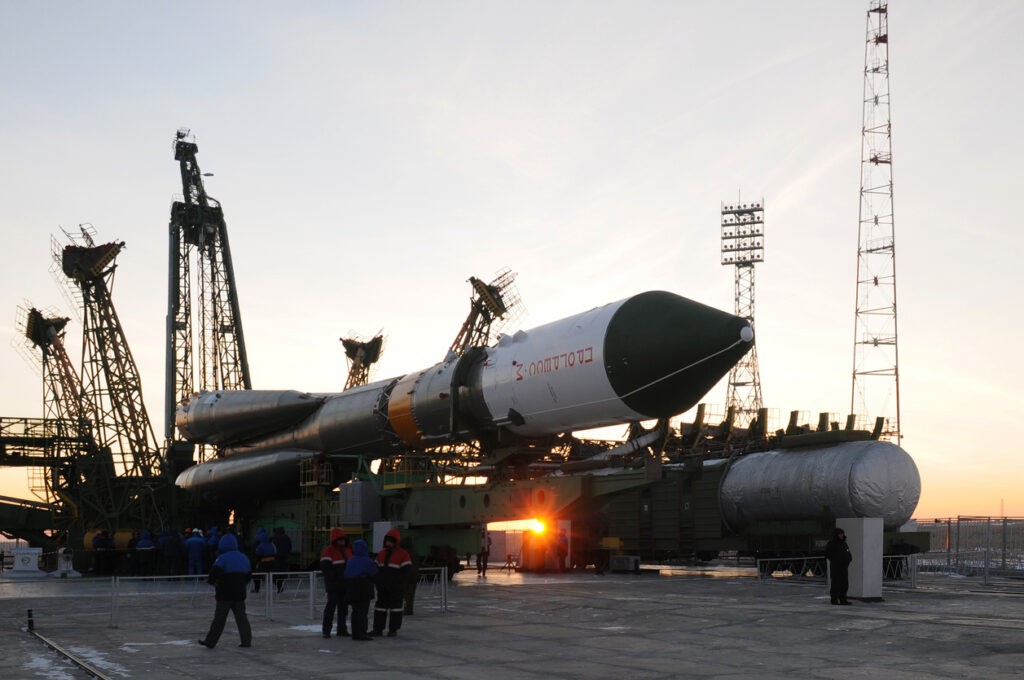
Uzbekistan will head the Interstate Space Council of CIS countries for 2024-2025, and Shukhrat Kadirov, Director of the Uzbekcosmos agency, was unanimously elected as the council chairman.

This decision was made at the Fifth Council meeting, which was held in Tashkent. According to CIS rules, the council’s chairmanship is passed alphabetically between the participating countries; Tajikistan held the previous chairmanship.

Kadirov proposed enhancing cooperation in space education and initiating joint projects to train young specialists. He also noted that the council faces ambitious tasks, including coordinating within the UN and deepening cooperation in space technologies.

In August this year, Uzbekistan announced its accession to the 1967 treaty on the exploration and use of space.

It was also reported that Uzbekistan will not send weapons of mass destruction into space; the country has advocated reducing the risk of space militarization.

The CIS Interstate Space Council is an organization established to coordinate the efforts of CIS countries in space activities. The Council deals with space research, technological developments, and the implementation of joint projects in the space sphere. The organization’s importance lies in strengthening cooperation between the countries in using space technologies for scientific research, communications, and navigation. The Council also works on coordination within international organizations such as the UN.

Malaysian Meraque Group to Invest in Uzbekistan’s Agriculture Sector

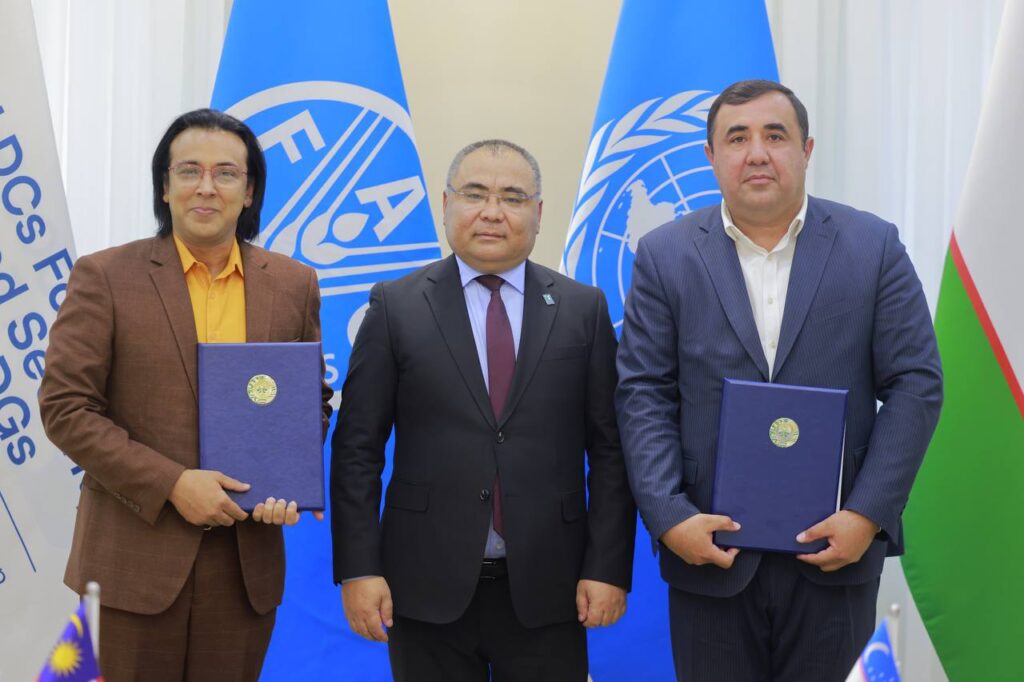
The Ministry of Agriculture of Uzbekistan has reported that a memorandum of understanding on agricultural technologies was signed between the leading Malaysian DroneTech company Meraque Group and the Ministry of Agriculture of Uzbekistan.
This cooperation aims to improve the Uzbek agriculture sector, which includes 4.3 million hectares of cultivated land.

Meraque intends to invest 20 million Malaysian ringgits ($4.78 million) in the next three years to establish a production enterprise that will create 1,000 jobs and serve 100,000 hectares of agriculture in Uzbekistan. The company is also looking to raise an additional 30 million ringgit ($7.17 million) for technological improvements in the region.

The report reads: “A key part of the partnership will be policy development to create an ecosystem of drones for agriculture that will improve productivity and sustainability for the country’s 100,000 farmers. Meraque also focuses on training and knowledge sharing through training programs to support drone operations.”
Razali Ismail, CEO of Meraque, said that this cooperation will sustain the development of the two countries’ agriculture.

The Times of Central Asia previously reported that in April of this year, the European Union presented €6 million ($6.4 million) to the Uzbek government to support the country’s National Food Security and Healthy Nutrition Strategy. In addition to the grant, the EU has also provided funds to help the Ministry of Agriculture carry out reforms.
Further funding of €20 million ($21.4 million) will be issued later this year and next to support Uzbekistan’s National Agriculture Development Strategy for 2020-2030.

Also, 3 million hectares of pastoral and agricultural lands have been degraded in Uzbekistan, and almost 2 million hectares have become saline. According to experts, by 2030, water resources in the region are in danger of decreasing by nearly 6% due to climate change.

In response, Uzbekistan has developed a national program for adapting agriculture to climate change and mitigating its effects, which allocates more than $294 million in grants.

Tokayev Gets Pundits Talking with “Invincible” Russia Remark

Carl von Clausewitz, the Prussian military theorist, described war as “the realm of uncertainty.”

So, is Russia militarily invincible?

Kazakh President Kassym-Jomart Tokayev´s emphatic statement earlier this week that Russia can’t be defeated on the battlefield had analysts, observers and history buffs musing about whether the proposition is actually true, and what if any politics were behind the widely reported remark.

Tokayev made the point in a conversation with visiting German Chancellor Olaf Scholz as part of a general argument for peace more than two years after Russia’s full-scale invasion of Western-backed Ukraine. The official English-language translation of Tokayev’s comment didn’t include “invincible,” but basically said the same thing: “It is a fact that Russia cannot be defeated militarily.”

For some people, the remark was a blunt assessment of a grinding conflict that, according to a report this week in The Wall Street Journal, has killed and injured about one million Russians and Ukrainians. For others, it amounted to a kind of pro-Russian defeatism, even though Kazakhstan and other Central Asian countries have angled for neutrality, not endorsing the invasion but maintaining traditional ties with Moscow.

Roland Kater, an analyst and former commander in the Germany military, said he agreed – with caveats – with Tokayev’s assessment that Russia was militarily invincible.

“With regard to the war in Ukraine, I would say yes at the moment, under the given conditions,” Kater said on Germany’s Welt news channel. He noted that NATO, which supports Ukraine won’t enter the war “as an institution.”

“The result is that Ukraine cannot actually win this war at the moment and that the Russians there are, I don’t want to say unbeatable, but they are in the lead,” Kater said.

Russia earned a reputation for resilience in past wars, after initial setbacks on its own territory and at great cost.

It prevailed over Charles XII at the Battle of Poltava in 1709 after the Swedish king’s invasion of Russia; prevailed over Napoleon during the disastrous 1812 invasion in which the French emperor seized Moscow but was forced to retreat as disease, harsh weather and other problems took a toll; and prevailed over Adolf Hitler when the German invasion of the Soviet Union in 1941 eventually faltered with massive casualties on both sides.

Still, the Washington-based Central Asia Consulting group, a critic of Russia, said there was no basis for Tokayev’s comment about Russia’s military invincibility and made some unflattering historical references.

“Russia has faced defeats in the past wars (Crimean War, Russo-Japanese War, WWI, Winter War, Afghanistan, First Chechen War, Tajikistan War),” the group said on X.

In his remarks, Tokayev also said “further escalation of the war will lead to irreversible consequences” for humanity, in what appeared to be a message for the West since he was in the company of Scholz when he said it. Scholz agreed that peace was the best option but that Russia could end the war anytime by stopping its aggression.

Ukrainian President Volodymyr Zelenskyy, meanwhile, is expected to present what he calls a “victory plan” to U.S. President Joe Biden during meetings in New York next week, when the U.N. Security Council and General Assembly meet. Zelenskyy has said the plan intends to create conditions for a peace acceptable to Ukraine.

While the term “invincible” is sometimes associated with superheroes and fantasy, it has a long history of use in Russian and other military contexts. Visiting Chechnya last month, Russian President Vladimir Putin said army volunteers had made Russia invincible. Comparing the Soviet fight against the Nazis to Russia’s military today, he told students last year, “We were absolutely invincible. And we are the same now.”

Often, the term appears as part of a cautionary tale, as in the “myth of invincibility” of powerful armies humbled by a smaller foe.

The Chinese military strategist Sun Tzu had a nuanced view.

“To secure ourselves against defeat lies in our own hands, but the opportunity of defeating the enemy is provided by the enemy himself,” he said in The Art of War. “Thus the good fighter is able to secure himself against defeat, but cannot make certain of defeating the enemy.”

Redefining Diplomacy: Kazakhstan’s Strategic Shift in Relations With Afghanistan

On September 9, 2024, President Kassym-Jomart Tokayev signed a decree dismissing Alimkhan Yesengeldiyev from the position of Kazakhstan’s Ambassador to Afghanistan. Yesengeldiyev has been at the post since April 2018. Local media have not yet reported on the appointment of a new ambassador.

Previously, Astana has made bold diplomatic steps towards normalizing relations with Afghanistan under Taliban rule. For instance, Kazakhstan accredited Taliban diplomats in April 2023, and removed the Taliban from its list of banned organizations in December 2023. On August 21 of this year, Kazakhstan accredited the head of the Afghan diplomatic mission as charge d’affaires in the country.

Astana continues to increase trade, economic, and humanitarian cooperation with the de facto authorities, and has actively engaged in various international platforms for initiatives in Afghanistan.

Moreover, President Tokayev outlined Kazakhstan’s position on the situation in Afghanistan just a month after the Taliban seized Kabul, when the world was still in shock. “Kazakhstan sees the future Afghanistan as a truly independent and united state living in peace with itself and its neighbors,” he stated. “At this crucial historical moment, the multinational people of Afghanistan should not be left alone in the face of unprecedented difficulties.”

By changing the head of its diplomatic mission in Kabul, it appears that the authorities in Kazakhstan intend to qualitatively improve the state of their relations with the Taliban. The eventual appointment of a new head of the Kazakh embassy will symbolize a new page in relations. In all likelihood, according to recognized international practice, a diplomat will be presented to the Taliban not in the rank of Ambassador Extraordinary and Plenipotentiary but as the Charge d’Affaires of Kazakhstan. This will preserve the principle of parity and be understandable given international disputes surrounding recognition of the Taliban. Overall, Kazakhstan’s foreign policy steps have always been characterized by consistency and an unwavering focus on international law.

It seems that the world as a whole is now acclimatizing to the idea of pragmatic dialog with the authorities in Kabul, with whom it is necessary to maintain constant bilateral and multilateral diplomatic contacts.

On September 27, at the official request of the British government, the embassy of the former Islamic Republic of Afghanistan in London will officially cease operations. The embassy building will not be handed over to the Taliban or any other political representation. The embassy in Oslo representing the former government in Afghanistan has also ceased functions since September 12 at the request of the authorities there. Neither the British nor the Norwegian authorities are currently commenting on the situation.

A few days ago, Deutsche Welle reported that the German Foreign Ministry has accepted the Taliban’s application to recognize their consulate general in Munich as the sole center for providing consular services in Germany.

In July, the Taliban Foreign Ministry declared that documents issued by 14 Afghan missions abroad are illegitimate. They were located in Britain, Berlin and Bonn in Germany, Belgium, Switzerland, Austria, France, Italy, Greece, Poland, Australia, Sweden, Canada, and Norway. Currently, the Taliban recognizes only five Afghan diplomatic missions in Europe as legitimate, those in the Netherlands, Spain, Bulgaria, Czechia, and the consulate in Munich.

The steps taken by London, Oslo, and Berlin have nothing to do with the mechanism of unilateral recognition of the Taliban regime, but indirectly have a positive impact on its image. Seyed Rasul Mousavi, head of the West Asia Department of the Iranian Foreign Ministry, assesses these European steps as the beginning of rapprochement with the Taliban. First, Afghan missions will be removed from the grasp of the anti-Taliban opposition, and then, after some time, they will reopen to provide consular services in coordination with the Taliban.

Diplomatic missions currently operating in Afghanistan represent the embassies of Azerbaijan, the European Union, Indonesia, Iran, Kazakhstan, Qatar, China, Kyrgyzstan, Pakistan, Russia, Tajikistan, Turkey, Turkmenistan, Turkey, Uzbekistan, Japan, as well as a technical group representing India, and the official representatives from the Italian intelligence services.

Only six missions are headed by Ambassadors Extraordinary and Plenipotentiary: the embassies of Azerbaijan, China, Russia, Turkmenistan, Uzbekistan, and Japan. (Until recently, Kazakhstan was also numbered here). It is important to note that these ambassadors presented their credentials to the republican authorities before the Taliban came to power, the sole exception being the Chinese ambassador, who was received by the Taliban on September 13, 2023.

The missions of the European Union, Indonesia, Iran, Qatar, Iran, Kyrgyzstan, Pakistan, Tajikistan, Qatar, and Turkey are headed by charge d’affaires ad interim of these countries. The Indian mission is fronted by the head of the technical team, and the Italian mission is headed by the official representative of the special services. Thus, at present, the foreign diplomatic corps in Kabul is represented by only one ambassador accredited by the Islamic Emirate — the Chinese ambassador.

Diplomatic sources report that embassies for Egypt, Spain, Italy, Malaysia, the UAE, and Saudi Arabia may also soon start work in Afghanistan.

Kazakhstan’s dealings with the Taliban are indicative of President Tokayev’s multi-vector foreign policy, which has seen Astana pursue a balanced approach, ensuring the best interests of the state whilst positioning the nation as an increasingly important land-bridge between East and West in a time of global uncertainty. Described by Ariel Cohen, a Nonresident Senior Fellow at the Eurasia Center of the Atlantic Council as “visionary [and pioneering,” this pragmatic outlook has led to Kazakhstan’s emergence as a Middle Power, both in terms of trade and diplomacy.