• KGS/USD = 0.01144 0%
  • KZT/USD = 0.00212 0%
  • TJS/USD = 0.10456 0.19%
  • UZS/USD = 0.00008 0%
  • TMT/USD = 0.28490 0%
  • KGS/USD = 0.01144 0%
  • KZT/USD = 0.00212 0%
  • TJS/USD = 0.10456 0.19%
  • UZS/USD = 0.00008 0%
  • TMT/USD = 0.28490 0%
  • KGS/USD = 0.01144 0%
  • KZT/USD = 0.00212 0%
  • TJS/USD = 0.10456 0.19%
  • UZS/USD = 0.00008 0%
  • TMT/USD = 0.28490 0%
  • KGS/USD = 0.01144 0%
  • KZT/USD = 0.00212 0%
  • TJS/USD = 0.10456 0.19%
  • UZS/USD = 0.00008 0%
  • TMT/USD = 0.28490 0%
  • KGS/USD = 0.01144 0%
  • KZT/USD = 0.00212 0%
  • TJS/USD = 0.10456 0.19%
  • UZS/USD = 0.00008 0%
  • TMT/USD = 0.28490 0%
  • KGS/USD = 0.01144 0%
  • KZT/USD = 0.00212 0%
  • TJS/USD = 0.10456 0.19%
  • UZS/USD = 0.00008 0%
  • TMT/USD = 0.28490 0%
  • KGS/USD = 0.01144 0%
  • KZT/USD = 0.00212 0%
  • TJS/USD = 0.10456 0.19%
  • UZS/USD = 0.00008 0%
  • TMT/USD = 0.28490 0%
  • KGS/USD = 0.01144 0%
  • KZT/USD = 0.00212 0%
  • TJS/USD = 0.10456 0.19%
  • UZS/USD = 0.00008 0%
  • TMT/USD = 0.28490 0%

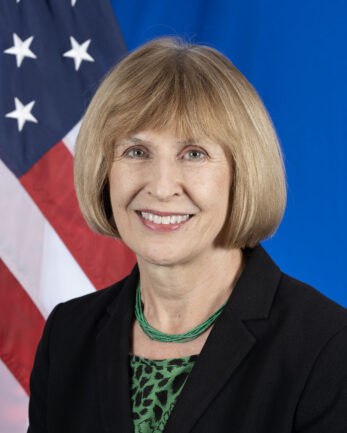
New U.S. Ambassador to Turkmenistan Outlines Priorities For Cooperation

At her first press briefing in Ashgabat, the new U.S. Ambassador to Turkmenistan, Elizabeth Rood, outlined key areas of cooperation between the two countries. She paid particular attention to economic development and investment attraction.

Rood emphasized that the U.S. Embassy intends to actively engage with Turkmenistan’s government, private sector, and educational institutions to create new jobs and employment opportunities and diversify the national economy.

Rood also emphasized four critical areas of work: combating climate change, economic sector development, security issues, and promoting fundamental freedoms.

Regarding climate challenges, Rood emphasized Turkmenistan’s role in mitigating climate change and welcomed President Serdar Berdymukhamedov’s pledge to limit methane emissions.

Ambassador Rood also emphasized the importance of supporting civil society in Turkmenistan, including upholding fundamental freedoms and combating forced and child labor.

In addition, she expressed her intention to strengthen ties between the peoples of the two countries, noting her inspiration from the determination of Turkmen youth to learn exact sciences and the English language.

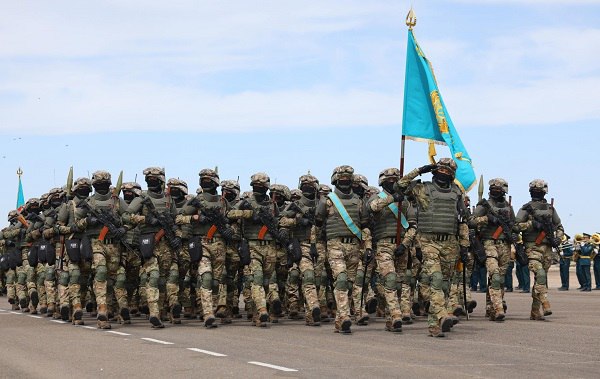
Kazakhstan Proposes to Abolish Compulsory Military Conscription

In Kazakhstan, activists have led calls to abolish compulsory military service by publishing a petition on the epetition.kz platform directed to the Ministry of Defense.

The petition has been provoked by recent tragic cases among servicemen, which, the document’s authors say, revealed severe problems in the Kazakh army. The petition emphasizes that the main issues are hazing and non-statutory relations, which exert strong pressure on conscripts, causing psychological trauma and, in some cases, suicide.

The authors are also concerned about soldiers’ inadequate training. They believe modern challenges and technologies can be effectively countered only by professional soldiers, not temporarily conscripted ones.

The authors cite weak medical and psychological supervision as one of the military’s critical problems, as it does not help conscripts adapt to army conditions. They propose a switch to a thoroughly professional army, which they believe would improve training and reduce the number of tragic incidents.

The petition will be open until October 4. To be considered by the government, a petition in Kazakhstan must garner at least 50,000 votes.

In recent years, Kazakhstan has observed an alarming increase in suicides among soldiers. In 2022, President Kassym-Jomart Tokayev ordered an investigation to identify the causes of these incidents. Hazing and psychological pressure remains one of the key causes of these tragedies.

Despite the measures taken, such incidents continue. Last month Kazakhstan was shocked by the death of a conscripted soldier in the Mangistau region. According to some reports, an officer shot the enlisted man in the face with a pistol.

Kyrgyzstan Wants to Fine Emigrants Who Leave Their Children at Home

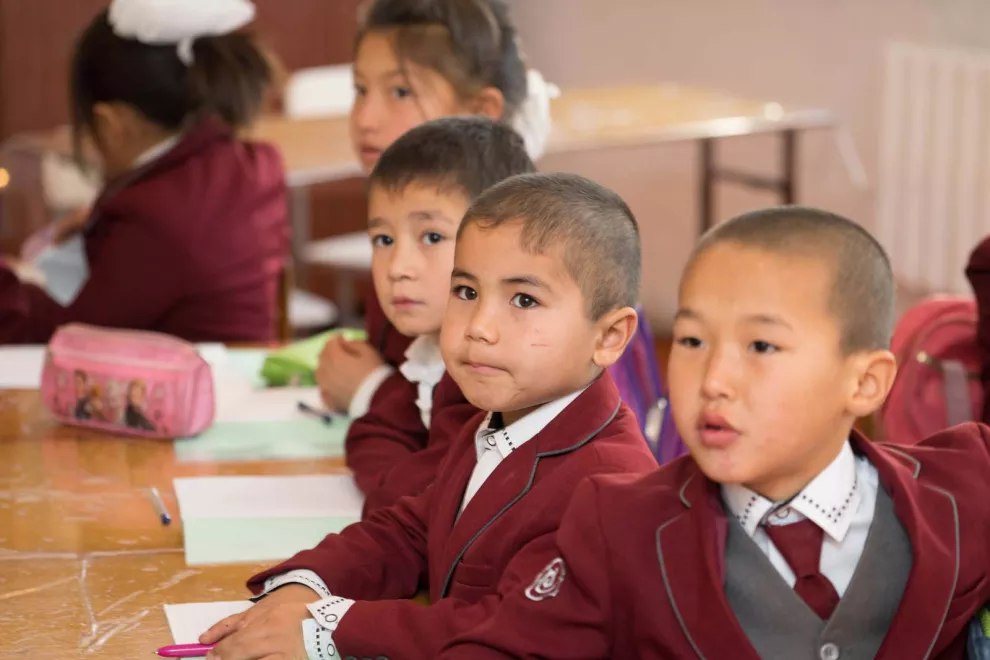
Kyrgyzstan has proposed introducing liability for parents who go to work abroad and leave their children without proper custody.

The bill was initiated by the Ministry of Labor and has been submitted for public discussion. It is planned to introduce the concept of “children of migrant workers” into the Children’s Code. According to the Ministry of Labor, in the first quarter of this year, about 85,000 children were identified, half of whom are with relatives without legal guardianship.

The Ministry emphasizes that parents’ absence leads to a lack of love and care; many are forced to work and do not attend school. The new bill proposes fines of 15,000 KGS ($181) for parents who leave their children in the care of relatives, neighbors, children, or acquaintances without notifying the guardianship authorities.

Similar measures to protect migrant children exist in other countries. For example, in Uzbekistan, a project was launched in 2018 to support children left behind by parents who go to work abroad. The project is supported by UNICEF and funded by the European Union. It aims to provide social and legal assistance to children without officially appointed guardians. According to the research data, many children are left with relatives without legal guardianship, leading to various social problems that require state support.

Kyrgyzstan Hosts CSTO Exercises

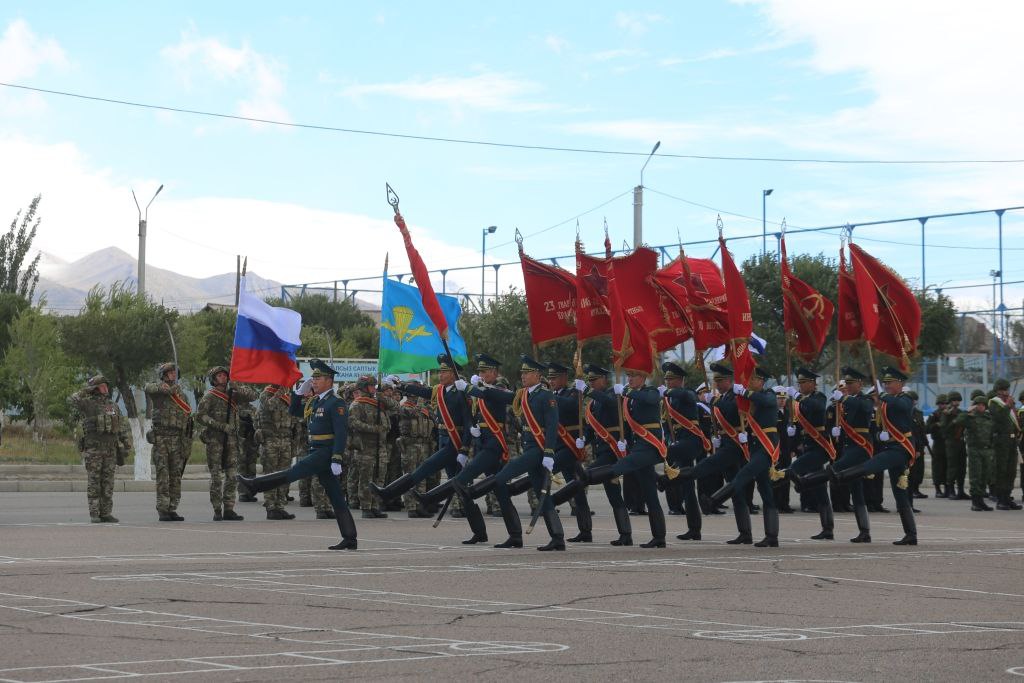
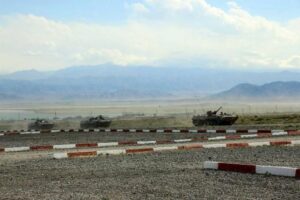
According to a statement from the Collective Security Treaty Organization (CSTO), troops from five of the organization’s six member states — Kyrgyzstan, Russia, Kazakhstan, Belarus, and Tajikistan — have convened this week at the Edelweiss military training ground in Kyrgyzstan’s Issyk-Kul region for training. The joint exercises involve over five thousand people and 900 units of military equipment, with only Armenia not represented.

“The tasks of the exercise include improving mechanisms for making and implementing decisions on the use of forces and means, as well as increasing coherence between the armies of the allied countries and the interoperability of military formations in preparing and conducting joint operations,” said Andrei Serdyukov, Chief of the CSTO Joint Staff.

The exercises combine various training components. The maneuvers include special exercises with intelligence forces, and logistics exercises. The Interaction-2024 command-staff exercise is aimed at preparing for a joint operation to resolve a potential armed conflict.

@TCA. A.Chipegin

The CSTO press service said that one of the exercise’s priorities this year is to improve the deployment of the collective forces, including managing the transit of military contingents through allied countries.

Observers from nine countries are present at the Edelweiss ground: Algeria, China, Egypt, India, Iran, Mongolia, Pakistan, Saudi Arabia, and Uzbekistan. Also observing the exercise are representatives of the UN Secretariat, the SCO Secretariat, the CIS Executive Committee, and the CIS Anti-Terrorism Center.

“In our dynamically changing world, security is becoming paramount, and this requires new approaches, effective coordination, and clear solutions… Our countries have become direct participants in the beginning reshuffle of forces in the world,” Lieutenant General Baktybek Bekbolotov, Kyrgyzstan’s Minister of Defense, commented at the opening of the exercise.

According to Bekbolotov, the main threats to the countries of Central Asia are terrorism, separatism, and extremism, as well as the arrival of radical groups from the Middle East to the region’s borders.

“With a global threat, the efforts of one country are not enough. There are regional organizations for this purpose; in our case, the main one is the CSTO,” Bekbolotov stressed.

Video Highlights: World Nomad Games Day Two

The second day of the World Nomad Games, themed as the “Gathering of the Great Steppe,” saw a host of events taking place across the Kazakh capital, and the excitement was palpable. TCA took in the scientific conference in the national museum, musical performances, kokpar, horse wrestling, archery, and more. Watch our video highlights from day two here:

Join us for day three.

Uzbekistan’s Point Man Against Russian “Chauvinism”

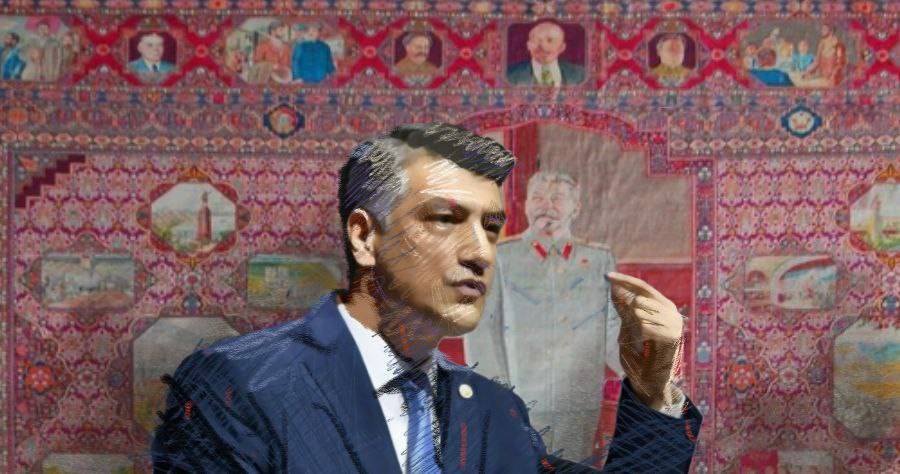
Alisher Qodirov is 49 years old, the leader of Uzbekistan’s Milli Tiklanish (National Revival) party, the deputy speaker of the lower house of parliament, and a former presidential candidate.

And Qodirov is also a leading critical voice in Uzbekistan regarding the country’s Soviet past and comments of current Russian chauvinists.

On September 4, Qodirov wrote on his Telegram account that Soviet ideological propaganda should be banned in Uzbekistan. He was responding to a court verdict earlier that day against a 74-year-old pensioner in Samarkand who was found guilty of “encroaching on the constitutional order of Uzbekistan.”

Specifically, the man advocated the restoration of the Soviet Union and said Uzbekistan’s independence was superficial.

Qodirov wrote that Uzbekistan’s time as a Soviet republic was a “sad period of our history.” The Milli Tiklanish leader said even suggesting a recreation of the USSR was a “betrayal of our people and our ancestors, who became victims of the bloody regime.”

Qodirov continued that calls for Uzbekistan‘s reincorporation into some sort of a resurrected USSR “should be considered a crime against the constitutional order of the country.” The Milli Tiklanish leader said such thinking was a “betrayal of our people and our ancestors, who became victims of the bloody regime.”

Qodirov has expressed his opinion on the Soviet Union before.

When Uzbekistan marked May Day on May 1, 2021, the Soviet flag was raised during a concert of “Songs of Victory” in Tashkent.

Posting on Telegram, Qodirov called the incident “an insult and a provocation… to the Uzbek people to raise the flag of the Soviet occupying state in the very center of the capital, which is soaked in the blood of… our ancestors.”

Russian chauvinism has been rising since the Kremlin launched its full-scale war on Ukraine, and so have irredentist remarks from people on Russian television and officials in the State Duma. Kazakhstan, which shares a 7,800-kilometer border with Russia, is usually the target, but in the last year, Uzbekistan has been mentioned.

On December 20, 2023, Russian writer, nationalist, and co-chairman of the A Just Russia – For the Truth party, Zakhar Prilepin spoke about migrant laborers at press conference in Moscow.

The majority of migrant laborers in Russia are from Central Asia and Prilepin said, “These territories, from where migrant workers come to us, should simply be annexed entirely.”

Prilepin specifically mentioned Uzbekistan, as more than half the Central Asian migrant laborers in Russia come from there.

“Uzbekistan, for example… since two million of your citizens are on our territory, we claim your territory,” Prilepin told a press conference, and added, “Who will forbid us to do anything useful on the territory of the Eurasian territory after the parade in Kyiv? No one.”

Less than one month later, on January 22, 2024, Russia’s NTV television station showed an interview with a person identified as Mikhail Smolin, a historian. Smolin absurdly claimed the Uzbek nation never existed until after the Bolshevik Revolution of 1917. Smolin said the same about Kazakhs and Azerbaijanis.

That was apparently too much for Qodirov. On January 25, he called for cutting Russian television programming to Uzbekistan.

“Lately we hear nothing but chauvinistic statements in Russian,” Qodirov said, noting that such remarks from Russia were heard often enough that “it seems [the Russian authorities] are interested in such rhetoric.”

Qodirov pointed out only some three percent of Uzbekistan’s population comprises ethnic Russians, so Russian television is disproportionately represented in Uzbekistan.

In May, Qodirov offered a slight clarification to these statements.

He said he was a “Sovietophobe,” not a Russophobe, but added that the history of the USSR should remain “in the black pages of the history” of Uzbekistan and “should not be part of our future.”

Qodirov is known for making some sensational statements. When he was running for president in 2021, he suggested taxing remittances from migrant laborers.

Since some four million citizens are migrant laborers, and millions of family members back home depend on the money they send, the proposal was widely unpopular and might have been made intentionally to help ensure the overwhelming re-election of incumbent President Shavkat Mirziyoyev.

Which brings us back to the matter of Qodirov’s comments on Russia and the Soviet Union.

With the exception of the president, Uzbekistan’s political system does not allow officials to freely voice their opinions publicly, especially on foreign policy matters, and especially concerning Russia.

Qodirov would not be saying the things he is without approval from people high up in the government.

Some Russian officials and celebrities talk about taking back land from Central Asia, or make disparaging remarks about Central Asian people. Russian authorities downplay these comments as the opinions of individual Russian citizens that do not conform with the views of the Russian government.

Qodirov is in a similar position.

What he is saying about Russia is not the official view of the Uzbek government, but it is probably the message some people in the government want sent to Russia.