• KGS/USD = 0.01144 0%
  • KZT/USD = 0.00214 0%
  • TJS/USD = 0.10508 0.48%
  • UZS/USD = 0.00008 0%
  • TMT/USD = 0.28571 0%
  • KGS/USD = 0.01144 0%
  • KZT/USD = 0.00214 0%
  • TJS/USD = 0.10508 0.48%
  • UZS/USD = 0.00008 0%
  • TMT/USD = 0.28571 0%
  • KGS/USD = 0.01144 0%
  • KZT/USD = 0.00214 0%
  • TJS/USD = 0.10508 0.48%
  • UZS/USD = 0.00008 0%
  • TMT/USD = 0.28571 0%
  • KGS/USD = 0.01144 0%
  • KZT/USD = 0.00214 0%
  • TJS/USD = 0.10508 0.48%
  • UZS/USD = 0.00008 0%
  • TMT/USD = 0.28571 0%
  • KGS/USD = 0.01144 0%
  • KZT/USD = 0.00214 0%
  • TJS/USD = 0.10508 0.48%
  • UZS/USD = 0.00008 0%
  • TMT/USD = 0.28571 0%
  • KGS/USD = 0.01144 0%
  • KZT/USD = 0.00214 0%
  • TJS/USD = 0.10508 0.48%
  • UZS/USD = 0.00008 0%
  • TMT/USD = 0.28571 0%
  • KGS/USD = 0.01144 0%
  • KZT/USD = 0.00214 0%
  • TJS/USD = 0.10508 0.48%
  • UZS/USD = 0.00008 0%
  • TMT/USD = 0.28571 0%
  • KGS/USD = 0.01144 0%
  • KZT/USD = 0.00214 0%
  • TJS/USD = 0.10508 0.48%
  • UZS/USD = 0.00008 0%
  • TMT/USD = 0.28571 0%

Kazakhstan Bans Wheat Import to Protect Domestic Market

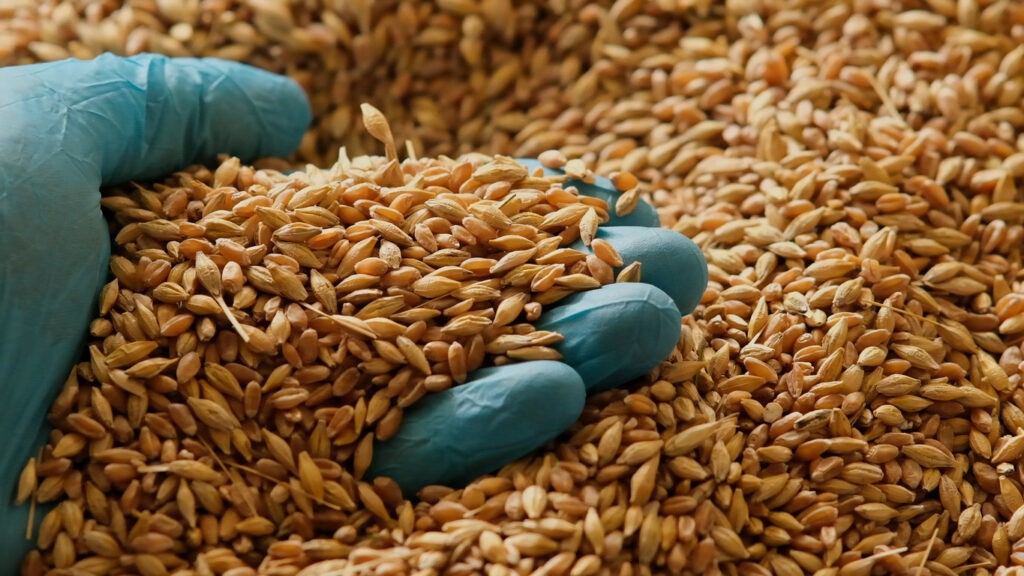
The Kazakh Ministry of Agriculture announced on August 20 a ban on importing wheat to Kazakhstan. This applies to all countries, including fellow members of the Eurasian Economic Union (Armenia, Belarus, Kyrgyzstan, and Russia).

The ban applies from August 21 to December 31, 2024, and does not apply to the transit of wheat through Kazakhstan’s territory.

The ministry explained that the move was necessary to protect the domestic market. In the first half of this year, Kazakhstan imported 1.3 million tons of wheat, which is almost equal to the import volume for the entire 2023. The country’s domestic market has sufficient wheat left over from last year’s harvest.

As of 1 July 2024, Kazakhstan had wheat reserves of 5.1 million tons, including 4 million tons for food.

Due to favorable weather conditions during this year’s growing season, the ministry expects a good grain harvest, which would create an excess supply on the domestic grain market, considering the carryover stocks.

Kazakhstan’s total area under grain crops this year is 16.7 million hectares. Regarding wheat production, Kazakhstan is in 14th place in the world, with a production volume of more than 12 million tons per year.

According to the Food and Agriculture Organization of the United Nations (FAO), Kazakhstan’s wheat production in 2023 stood at 12.1 million tons. Wheat exports in the 2023/24 marketing year (July/June) were estimated at 9 million tons.

Russia Remains Tajikistan’s Largest Trade Partner

Russian news agency TASS is reporting that, according to the Statistics Agency under the President of Tajikistan, trade between Tajikistan and Russia has exceeded $1.1 billion in 2024 so far.

During the first seven months of 2024, the trade volume between the two countries was 12.1% more than in the same period of 2023.

Russia continues to be Tajikistan’s largest trade partner, and also accounted for 26.7% of all imports entering the country during this period.

In terms of bilateral trade, China remains in second place, with turnover to and from Tajikistan of almost $1 billion.

Rather surprisingly, Switzerland has now became Tajikistan’s leading export partner. In the first seven months of 2024, Tajikistan sent 26.6% of its products to Switzerland. In January-July of this year, the trade volume between the two countries amounted to more than $641 million, and compared to the same period in 2023, it increased almost 110 times.

Doctors in Turkmenistan Ordered Not To Perform Abortions

Turkmenistan has imposed severe restrictions on conducting abortions, effectively banning them. In recent weeks, government officials have been visiting hospitals and clinics, and warning doctors that they will be stripped of their diplomas if they do.

According to Radio Azatlyk, sources from different regions of the country say that doctors have been forced to refuse women seeking abortions, even though the law allows it within the first five weeks of pregnancy.

The authorities have not commented on the reasons for yet another tightening of measures to prevent abortions. However, according to several doctors in Ashgabat, it may be due to a sharp increase in teenage pregnancies. At the same time, doctors note that many young girls, unable to have a legal abortion, resort to dangerous methods of terminating pregnancy, resulting in serious risks to their health.

Despite the bans, there are still doctors who continue to perform abortions clandestinely. The cost of such services has increased significantly, and varies depending on the term of the pregnancy.

Kazakhstan to Construct Seven New Offshore Vessels

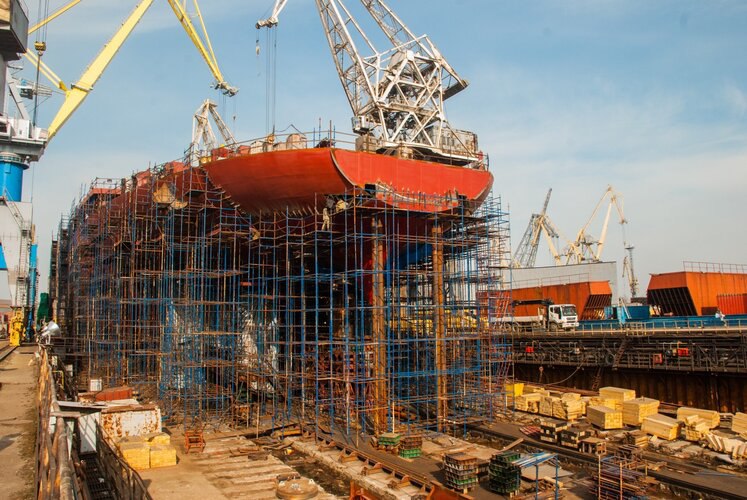
Kazakhstan plans to expand its maritime fleet by building seven new vessels on the Caspian Sea. These vessels will be three tankers, two ferries, and two container ships.

The construction of the vessels is part of a broader strategy to develop Kazakhstan’s transportation and logistics infrastructure, which will strengthen its position on the Caspian Sea. Today, Kazakhstan’s merchant fleet consists of 17 vessels: 10 tankers, four dry bulk carriers, and three container ships.

In December 2023, KazMunayGas and Abu Dhabi Ports Group signed an agreement to establish a ship repair and shipbuilding yard in Kazakhstan. This project will provide the necessary base for the repair and construction of new vessels, which will increase the competitiveness of Kazakhstan’s fleet on a global level.

In addition, Kazakhstan continues to strengthen its ties with Azerbaijan. Tankers have already been purchased to transport oil from Kazakhstan to Azerbaijan for subsequent shipment via the Baku-Tbilisi-Ceyhan oil pipeline. This cooperation will diversify export routes and ensure the stability of supplies.

Turkey has become another significant partner of Kazakhstan in shipbuilding. Under an agreement with Turkish companies, new vessels will be built, providing the country with additional opportunities to develop trade relations in the region. This project will also reduce Kazakhstan’s dependence on Russia in shipbuilding, and strengthen its position in the Caspian Sea.

Free Solar Panels for Uzbekistan’s Low Income Households

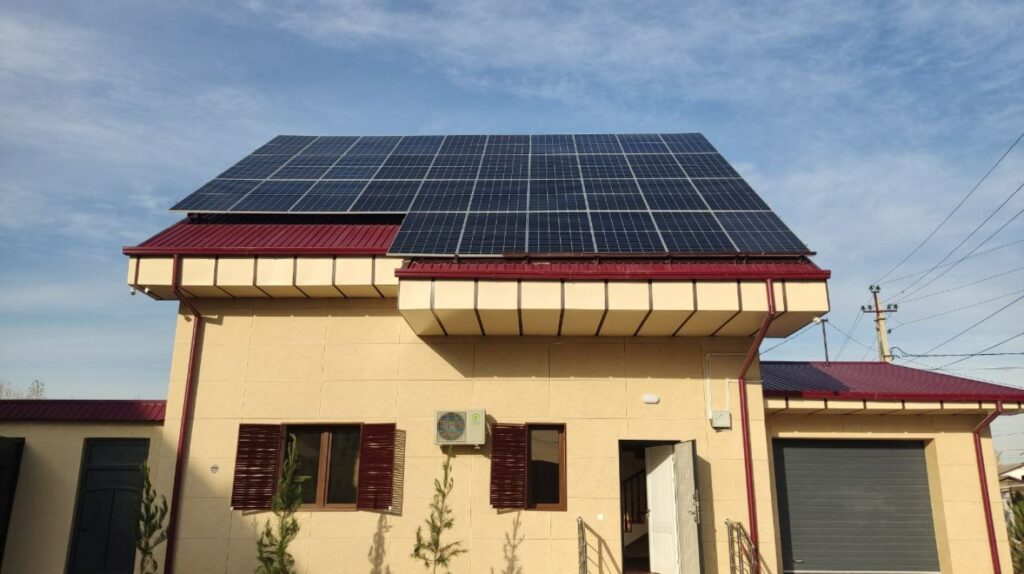
Uzbekistan has launched a program to install solar panels  in the homes of low-income families in the Tashkent Oblast.

The key aim of the initiative, implemented with the participation of ACWA Power, an enterprise engaged in regional energy projects, is to reduce electricity costs for vulnerable sectors of the population.

Under the plan, some 20,000 low-income households, especially those with air conditioning, will receive free photovoltaic panels with a 1.5 to 2 kW capacity, to reduce energy costs during the summer.

The project is part of the government’s broader strategy to transition to renewable energy. The country has already taken steps in this direction, including the construction of solar and wind farms, which in recent years, have enabled Uzbekistan to reduce its electricity imports from more than 4 billion kWh to less than 3 billion kWh and even begin to export electricity.

The initiative is also a continuation of the Solar Home Program which was introduced in 2023 to encourage the installation of solar panels in private households across the country.

Uzbekistan Targets Economic Growth and Poverty Eradication

According to a report newly published by the US Department of State, titled “2024 Investment Climate Statements: Uzbekistan”, the country aims to develop its economy, work towards eliminating poverty and  achieve above-average income status by 2030.

The government regards foreign direct investment as key to attaining its goals, and increasing interest has been expressed by American investors. Although challenges remain, Uzbekistan has the potential to become a regional economic leader thanks to its large and growing population, rich natural resources, and developed infrastructure.

Bilaterally landlocked, the economy largely depends on trade with regional neighbors and thus, Uzbekistan cannot provide stable employment for its rapidly growing population of 37 million. State policy aims to ensure social stability and stabilize growth rates by directing public and private investments to areas that will create new jobs and strengthen the country’s economic sovereignty.

The Government of Uzbekistan (GOU) manages investment flows through annual and mid-term investment programs, mainly concerning developments in infrastructure, industrialization, and natural resource projects. The current National Investment Program for 2023-2025 comprises nearly 800 projects worth $55.4 billion. Medium-term targets for 2030 are eradicating poverty and becoming a high-middle-income country.

Foreign ownership and the control of airlines, railways, long-distance telecommunication networks, and other sectors related to national security require special GOU permission. By law, because foreign nationals cannot obtain a license or tax permit for individual entrepreneurship in Uzbekistan, they cannot be self-employed and must be employed by a legally recognized entity.

The law in Uzbekistan states that local companies with at least 15% foreign ownership can qualify as having a foreign investment. The minimum fixed charter-funding requirement for a company with foreign investment is 400 million UZS (USD 1 equals 12,500 UZS as of March 2024). Minimum charter funding requirements can differ for business activities subject to licensing. For example, that for banking activities is 100 billion UZS; for microcredit organizations, 2 billion UZS; for pawnshops, 500 million UZS; for production of ethyl alcohol and alcoholic beverages,10,000; for lotteries, 200 million UZS; and for tourism operators, 400 BCRs; Base Calculation Rates (BCR) (one BCR equals 340,000 UZS or about $27, as of March 2024). Foreign investment in media enterprises is limited to 30%.

The government closely monitors foreign investment in strategic sectors such as mining, energy, transport, banking, and telecommunications. There is no straightforward screening process, and some laws are designed to protect domestic industry and limit foreign competition, such as banning 529 imported goods in 2021. The ban applies when there are at least two domestic suppliers but no restrictions are imposed on US investors.

Uzbekistan has laws to protect entrepreneurs and investors, including “On Competition” and “On Investments.” However, the rules can be complex and sometimes contradictory. In some cases, businesses must comply with government decisions that are unavailable to the public. Foreign investors often seek benefits through Presidential Decrees to avoid such issues, though these can be easily revoked.

The regulatory system reform is still in progress. The government’s “Uzbekistan 2030” development strategy includes a range of reforms to further improve the business environment, suppress unlawful interference by government authorities in the activities of businesses, decentralize and democratize the public administration system, and expand public-private partnerships. Meanwhile, current legislation still contains unclear or incomplete definitions and references, which leave room for misinterpretation. In some cases, private businesses may face difficulties associated with legislation enforcement.

By way of providing guidance, the World Bank’s Global Indicators of Regulatory Governance offers further information on Uzbekistan’s regulatory system.