• KGS/USD = 0.01144 0%
  • KZT/USD = 0.00194 -0%
  • TJS/USD = 0.10877 -0%
  • UZS/USD = 0.00008 0%
  • TMT/USD = 0.28571 0%
  • KGS/USD = 0.01144 0%
  • KZT/USD = 0.00194 -0%
  • TJS/USD = 0.10877 -0%
  • UZS/USD = 0.00008 0%
  • TMT/USD = 0.28571 0%
  • KGS/USD = 0.01144 0%
  • KZT/USD = 0.00194 -0%
  • TJS/USD = 0.10877 -0%
  • UZS/USD = 0.00008 0%
  • TMT/USD = 0.28571 0%
  • KGS/USD = 0.01144 0%
  • KZT/USD = 0.00194 -0%
  • TJS/USD = 0.10877 -0%
  • UZS/USD = 0.00008 0%
  • TMT/USD = 0.28571 0%
  • KGS/USD = 0.01144 0%
  • KZT/USD = 0.00194 -0%
  • TJS/USD = 0.10877 -0%
  • UZS/USD = 0.00008 0%
  • TMT/USD = 0.28571 0%
  • KGS/USD = 0.01144 0%
  • KZT/USD = 0.00194 -0%
  • TJS/USD = 0.10877 -0%
  • UZS/USD = 0.00008 0%
  • TMT/USD = 0.28571 0%
  • KGS/USD = 0.01144 0%
  • KZT/USD = 0.00194 -0%
  • TJS/USD = 0.10877 -0%
  • UZS/USD = 0.00008 0%
  • TMT/USD = 0.28571 0%
  • KGS/USD = 0.01144 0%
  • KZT/USD = 0.00194 -0%
  • TJS/USD = 0.10877 -0%
  • UZS/USD = 0.00008 0%
  • TMT/USD = 0.28571 0%
16 December 2025

Is TAPI Just ‘TA’ for Now?

The idea for the 1,800-kilometer Turkmenistan-Afghanistan-Pakistan-India (TAPI) natural gas pipeline project has been around for 30 years. There has not been much progress in building the pipeline during those decades.

The chances of seeing TAPI realized seem far away at the moment, considering Pakistan and India were involved in fighting in May of this year, and in October, there were battles along the Pakistan-Afghanistan border.

However, Turkmenistan and Afghanistan are still interested in TAPI, and top officials from those two countries just met along the border to inaugurate a new section of the pipeline, and it looks like, for now, these two countries are enough.

Another Ceremony

Gurbanguly Berdimuhamedov, the chairman of Turkmenistan’s Halk Maslahaty (People’s Council), went to the Turkmen-Afghan border on October 20 to meet with Afghanistan’s Deputy Prime Minister for Economic Affairs, Mullah Abdul Ghani Baradar, for an event inaugurating a new section of TAPI.

The ceremony for the Serhetabat-Herat section of TAPI took place just inside Afghanistan, not far from where top officials from the four countries involved, including Berdimuhamedov, gathered in February 2018 to launch construction of the Afghan section of TAPI. Berdimuhamedov made his only previous visit to Afghanistan during that ceremony, when he, the Afghan president, Pakistani prime minister, and Indian minister for state and external affairs, briefly flew to Herat to continue celebrations marking the launch.

The location of the October 20 inauguration was also not far from the Islim Chesme border crossing, where Berdimuhamedov met with Afghan officials in September 2024 to again launch construction of the Afghan section of TAPI. Baradar and Berdimuhamedov spoke about the project’s importance in fostering greater regional cooperation, the economic benefits of which include creating jobs and providing energy to areas that greatly need it.

Similar remarks were made by Berdimuhamedov and others at previous TAPI launches. Work did finally start after the 2024 launch.

Afghanistan’s Tolo News reported that according to the country’s Ministry of Mines and Petroleum, 14 kilometers of the pipe have been laid, and 70 more kilometers of the route are set for pipeline installation.

Turkmen state media always refers to Berdimuhamedov as “Arkadag,” which means “protector” in the Turkmen language. According to Turkmen state media, the Serhetabat-Herat section of the pipeline is called “Arkadagyn Ak Yoly,” or “Arkadag’s White Road.”

Tolo News also reported that, “Recently, a large quantity of gas transmission pipes was imported from Turkmenistan into Afghanistan.“ It appears the Serhetabat-Herat section of TAPI is making progress, but it could be years before the pipeline goes any farther.

A More Modest Goal

For nearly the entire history of the TAPI project, the major obstacle to actually building the pipeline was the security problem inside Afghanistan. That problem is not over, but it is significantly reduced now that the Taliban are again imposing brutal control over the country.

Military conflicts in recent months between Pakistan and both the other partners in the TAPI project shine a spotlight on another problem that has always raised questions about the viability of the TAPI project.

TAPI aims to carry 33 billion cubic meters (bcm) of gas, 14 bcm each for Pakistan and India, and 5 bcm for Afghanistan. While Berdimuhamedov and other leaders say TAPI promotes regional cooperation, it could just as easily become a weapon. If Pakistan and India again become involved in open hostilities, will Pakistan continue to allow TAPI gas to flow to India?  If Afghan and Pakistani military forces clash again, will Afghanistan let TAPI gas pass into Pakistan?

None of that was mentioned at the October 20 gathering, but there was a hint that Turkmenistan and Afghanistan are immediately only interested in the pipeline shipping gas to Afghanistan.

The deputy spokesman for the Afghan government, Handullah Fitrat, said, “With the completion of this project, or at least its arrival in Herat, Afghanistan will gain access to Turkmen gas, and we will be able to provide gas to the people.”

Terminus Herat

From Herat, the pipeline’s route runs southeast to Kandahar, then east to Pakistan and India, but for the moment, Turkmenistan and Afghanistan might only be interested in seeing the pipeline reach Herat. Afghanistan’s fourth-largest city, Herat has a population of somewhere around 750,000 people. Herat Province is the second-largest province in Afghanistan with a population approaching four million.

Access to a reliable source of energy would be a huge benefit for the province.

The problem is that TAPI is being built to carry 33 bcm of gas, and Afghanistan, with its primitive domestic pipeline infrastructure, can consume only a modest amount of that.

However, Turkmenistan is quickly running out of options for exporting its gas, and it has reached the point where, for Turkmenistan, something is better than nothing.

When China and Russia signed a deal in early September for the construction of the Sila Sibiri-2 (Power of Siberia-2) gas pipeline, it almost certainly meant that the proposed Line D pipeline from Turkmenistan to China will not be built. Line D would carry 30 bcm of Turkmen gas, but Sila Sibiri-2 will bring 50 bcm of Russian gas to China, greatly reducing, if not totally eliminating, China’s need to buy additional Turkmen gas.

China already purchases around 35 bcm of Turkmen gas annually via Lines A, B, and C of the Central Asia-China pipeline network, leading from Turkmenistan.

Turkmenistan had an agreement in 2024 to sell Iraq 10 bcm of gas annually, but that involved a swap deal with Iran, and U.S. sanctions on Iran eventually scuttled the plan.

The Trans-Caspian Gas Pipeline project to bring some 30 bcm of Turkmen gas to Europe has been around as long as TAPI. The only progress on that has been the construction of the 773-kilometer East-West pipeline inside Turkmenistan, completed in 2015, that connects gas fields in the interior to Turkmenistan’s Caspian coast.

Turkmenistan has the fourth-largest gas reserves in the world, some 17 trillion cubic meters. But currently, Turkmenistan is only selling 35 bcm to China, and much smaller amounts to Turkey, some 1.3 bcm this year, but 2 bcm starting in 2026, up to 2 bcm to neighbor Uzbekistan, and 1 to 2 bcm to Azerbaijan.

Curiously, the sales to Turkey and Azerbaijan are both swap arrangements involving Iran, though neither faced the complications of the similar swap deal with Iraq.

So, there are no new customers for Turkmen gas on the horizon. There is a 214-kilometer pipeline inside Turkmenistan that connects to Afghanistan, and there are 14 more kilometers of pipeline on the other side of the border.

International financing for TAPI has always been an issue, so Turkmengaz, the operator of the TAPI project, presumably paid for the pipeline segments recently delivered to Afghanistan.

The fact that Halk Maslahaty Chairman Berdimuhamedov, who was Turkmenistan’s president from 2006-2022, made what was only his second visit to Afghan territory – albeit only a few meters inside Afghanistan – on October 20 further underscores Turkmenistan’s anxiousness to see some progress, anywhere, in selling its gas.

Realistically, Afghanistan can only take volumes of gas that, at most, similar to the amount Turkmenistan ships to Azerbaijan, Turkey, or Uzbekistan.

The good news is that the Taliban government has been able to pay Turkmenistan and its Central Asian neighbors for the electricity they all ship to Afghanistan, so the Taliban government can probably pay for the Turkmen gas also.

If this is not all the Turkmen government hoped for, there is potential consolation at least, as even shipping gas solely to Herat would demonstrate TAPI is viable, and that could convince organizations and countries that have been wary about investing that the project can be realized.

Maria Timofeeva Switches Tennis Allegiance to Uzbekistan

The Women’s Tennis Association (WTA) has officially listed 21-year-old Maria Timofeeva as representing Uzbekistan, marking a change in her sporting nationality. The update, first reported by Championat, now appears on the WTA’s official website, where the Uzbek flag is displayed next to her name.

Born in Moscow, Timofeeva had not made any public statements about a possible change of federation. Speculation arose earlier this year after comments by Russian Tennis Federation President Shamil Tarpishchev, who said several Russian players were considering switching national representation because of ongoing restrictions on tennis events in Russia.

“We have a difficult situation in Russian tennis: no domestic tournaments, no functioning league, and no funding for player development,” Tarpishchev told TASS. “Around a thousand of our players are competing abroad, and about 20 may soon start playing for other nations.”

Timofeeva’s move appears to reflect this broader trend. Although she began her career in Russia, much of her training took place overseas, initially in Slovenia, and more recently in Germany. Her exposure to international academies and competition likely facilitated her transition to the Uzbek Tennis Federation.

Currently ranked 146th in the world, Timofeeva reached a career-high of No. 93 in spring 2024. Her breakthrough performance came at the Australian Open, where she advanced to the fourth round after qualifying, defeating top-tier players including Caroline Wozniacki, Alizé Cornet, and Beatriz Haddad Maia.

The move represents a significant gain for Uzbekistan’s national tennis program, which has been steadily raising its international profile. Timofeeva’s inclusion may enhance the visibility and competitiveness of Uzbek women’s tennis as the country continues to invest in sports infrastructure and athlete development.

Neither Timofeeva nor the Uzbek Tennis Federation has issued an official statement on the change, but her WTA registration signals the start of a new chapter in her professional career.

Kazakhstan Proposes Cash Rewards for Citizens Who Report Drug Crimes

Kazakhstan’s Ministry of Internal Affairs is developing a plan to financially reward citizens who provide information leading to the resolution of drug-related crimes. The initiative was announced by Kuandyk Alzhanov, Deputy Chairman of the Committee on Combating Drug Crime, during a press conference in Astana.

“We are constantly improving legislation related to drug enforcement. Penalties for drug trafficking have been strengthened, and the list of controlled substances is regularly updated,” Alzhanov said. “We are now working with the Prosecutor General’s Office and the National Bank to design a mechanism for converting seized criminal assets into state revenue, and to establish a reward system for citizens who assist in uncovering drug crimes.”

Alzhanov noted that regional and city akims of republican significance will now be personally accountable for the drug situation in their jurisdictions.

The Ministry has also launched a public testing initiative called Test in Every Home, encouraging Kazakhstani parents to use rapid drug tests to monitor their children. “These tests can identify drug use within minutes and help detect addiction at an early stage,” Alzhanov explained.

From January to September 2025, law enforcement agencies seized over 26 tons of narcotics, marking a 35% increase compared to the same period last year. The seizures included more than nine tons of marijuana, over one ton of synthetic drugs, and more than 600 kilograms of hashish. The remainder consisted of raw cannabis plants.

Authorities also reported a sharp rise in illicit indoor drug cultivation. In 2025, police shut down 93 illegal greenhouse “phytolaboratories”, a fivefold increase compared to 2024.

Alzhanov highlighted tougher penalties for synthetic drug production, including new legislation introduced earlier this year mandating life imprisonment for producers. In 2024, 29 synthetic drug labs were dismantled and 419 kilograms of synthetic drugs were seized. In the first nine months of 2025, authorities closed 12 labs and seized over one ton of synthetic substances, almost three times last year’s amount. These seizures prevented nearly 3 million single doses from entering the illegal market.

During the same period, more than 6,000 drug-related offenses were documented, including 1,700 cases of drug sales and 300 cases of large-scale drug storage. Police also dismantled 16 organized criminal groups, three of which operated transnationally. Sixteen group leaders and 60 active members were detained. Authorities also seized roughly 24 tons of chemical substances, including 17 tons of precursors, as well as equipment used in synthetic drug manufacturing.

In addition, officials recorded 379 cases of cultivation of narcotic plants, 117 smuggling incidents, and 170 cases of drug-related propaganda. Volunteer-supported raids removed over 25,000 graffiti and online drug resource links, while more than 35,000 bank cards tied to drug trafficking were blocked. Approximately $4.6 million in related funds were frozen.

As reported previously by The Times of Central Asia, Kazakh authorities seized about six tons of drugs in the first half of 2025 and 21 tons over the entire previous year. This year’s escalation in enforcement underscores a marked intensification of the government’s anti-drug efforts.

300 OSCE Observers to Monitor Kyrgyzstan’s Parliamentary Elections

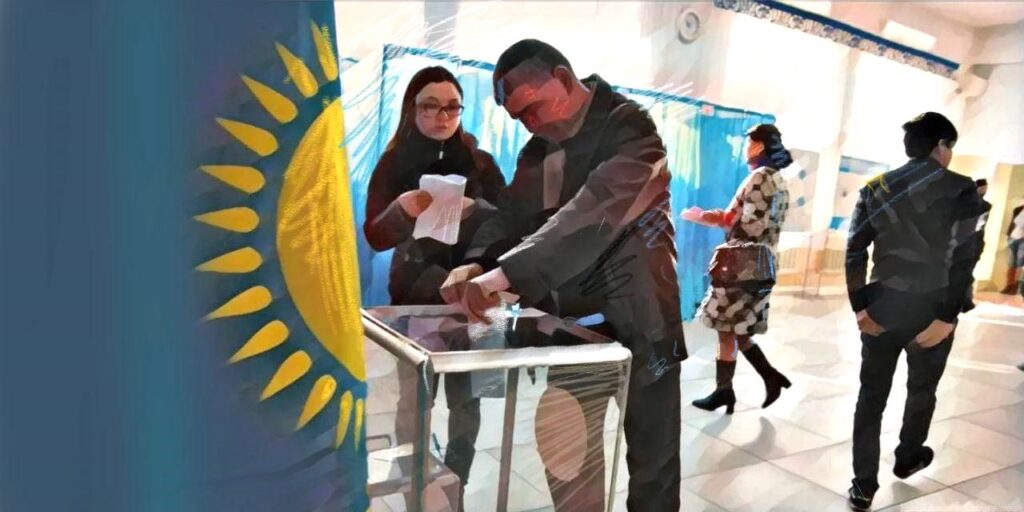
The Organization for Security and Co-operation in Europe (OSCE) will deploy 300 observers to monitor Kyrgyzstan’s upcoming parliamentary elections. The country’s Central Election Commission (CEC) confirmed the news in a statement published on its official website.

According to the CEC, 30 long-term observers will begin work next week, monitoring the electoral process across all regions of Kyrgyzstan. An additional 300 short-term observers will arrive closer to election day to assess voting procedures and the vote count.

Ahead of the vote, CEC Chairman Tyntyk Shainazarov met in Bishkek with representatives from the OSCE’s Office for Democratic Institutions and Human Rights (ODIHR). Mission head Tamás Mészáros stated that the team had arrived in full and was ready to begin its work.

The CEC noted that OSCE representatives expressed interest in attending meetings of the election commission and its working groups, both prior to and following the elections. Both sides affirmed their commitment to open and comprehensive cooperation.

Shainazarov highlighted that Kyrgyzstan’s revised electoral system is designed to ensure fair representation of all regions in parliament, uphold gender balance, and facilitate remote voting.

For the first time, a remote voting system will allow citizens to vote in any district without needing absentee ballots or additional paperwork. Ballots will be generated at polling stations, listing candidates from the relevant constituency.

“We have achieved our goal: voters will vote only once and only for one candidate. This eliminates the possibility of fraud and other violations. I believe this is a great achievement,” Shainazarov said.

The OSCE mission also showed particular interest in the technical details of the new system. Observers were briefed on the equipment and voting procedures ahead of the election, which will take place on November 30.

As previously reported by The Times of Central Asia, the parliament voted on September 25 to dissolve itself, setting the stage for early elections. The decision was approved by 84 deputies, with five abstentions and one absence.

The upcoming vote will be conducted under revised rules. The country has been divided into 30 constituencies, each of which will elect three deputies.

Herat Tribal Peace Paves Way for Central Asian Connectivity Projects

In Herat province, a long-standing conflict between the Timuri and Achakzai tribal communities has officially ended. With the mediation of local authorities, religious scholars (ulemas), and community elders, peace was sealed by a public handshake. While the event may seem local in scope, it carries wider significance for Afghanistan and the broader Central Asian region.

The Timuri-Achakzai feud is emblematic of a broader pattern across Afghanistan’s periphery: limited resources and the absence of effective distribution mechanisms. Disputes over land and water, exacerbated by droughts, shifting river courses, and inadequate irrigation infrastructure, had long fueled tensions over pastures and access to irrigation ditches. Compounding the problem, the disputed areas serve as a critical logistical junction, with both groups vying for control over transit routes.

By the early 2020s, the conflict had calcified into a cycle of blood feuds. Traditional mediation efforts had collapsed, and the return of refugees from Iran, along with internal migration, further inflamed tensions as undocumented land claims surged. Weak central governance and legal ambiguity deepened the divide.

A turning point came in 2023-2024, when Herat’s provincial leadership, working with ulemas and tribal elders, revived dialogue. The key to de-escalation was the realization of mutual dependence. Both groups faced declining agricultural yields, shrinking incomes, and reduced access to state and international aid. Their shared losses laid the groundwork for a symbolic public reconciliation, restoring a platform of trust.

This reconciliation has practical implications for Central Asia. The proposed Turgundi, Herat-Kandahar-Spin Boldak railway, a critical trans-Afghan infrastructure project, passes through Timuri and Achakzai territories. Until recently, their rivalry posed a major risk from land disputes to construction security. Now, with both communities demonstrating their readiness to cooperate, political and transactional risks are receding.

Herat’s peace agreement offers lessons for regional stakeholders invested in trans-Afghan corridors.

First, infrastructure projects in Afghanistan require social engagement. Tribal structures must be included at every stage. Second, economic interdependence can be a catalyst for peace. When communities understand the tangible benefits of cooperation, they are more inclined to compromise. Third, local reconciliation creates what might be called a “social corridor.” The Achakzai and their related kin are present not only in Herat but also in Kandahar and Spin Boldak, spanning the planned railway’s route. Their buy-in transforms the line from a logistical corridor into a corridor of trust.

This development is a strategic signal for the region. Localized Afghan conflicts can either block or enable integration efforts. Every grassroots peacebuilding success strengthens the region’s broader architecture of stability.

Uzbekistan is eyeing the Trans-Afghan Highway. Turkmenistan is seeking to develop its connection through Turgundi. Kazakhstan is exploring how to link its rail networks with South Asia. All of these initiatives depend on the stability and cooperation of Afghan communities along the routes.

The reconciliation between the Timuri and Achakzai should not be dismissed as a minor episode. It sets a precedent. Transitioning from high-level political declarations to the technical implementation of cross-border transit projects becomes more plausible when social dynamics are respected.

If Central Asian states integrate social engagement into their infrastructure diplomacy, these transport corridors can evolve into pathways of trust. Such “small reconciliations,” driven by economic incentives, may ultimately reframe Afghanistan, not as a source of instability, but as a strategic bridge between Central and South Asia.

First Uzbek Genome Project Reveals High Rate of Hereditary Mutations

Uzbek scientists have completed the country’s first full-scale human genome study, marking a significant milestone in both national science and global genomics. Conducted by researchers at the Center for Advanced Technologies, the study identified dozens of previously undocumented genetic mutations unique to the Uzbek population.

The findings have been submitted to international genomic databases and signal Uzbekistan’s growing contribution to global biomedical research. The study revealed that 50% of children examined carried a hereditary mutation, and 86% were carriers of at least one defective gene, roughly double the global average. Experts linked the elevated rate to consanguineous marriages, which occur in up to a quarter of all unions in certain regions.

Professor Shakhlo Turdikulova, Director of the Center for Advanced Technologies and head of the “1,000 Genomes of Uzbekistan” project, emphasized the significance of the findings. “For the first time, we have a clear picture of the genetic makeup of our people,” she said. “If most children carry hidden hereditary mutations, we cannot reverse this trend without a system of genetic counseling and preventive screening. That is why implementing premarital genetic testing programs is essential.”

Beyond rare inherited conditions, the study found strong correlations between genetic mutations and common diseases such as diabetes, cardiovascular disorders, and cancer. More than half of the participants received precise genetic diagnoses, allowing physicians to tailor treatments more effectively. Roughly one-third of the mutations identified were previously unknown to global science.

The “1,000 Genomes of Uzbekistan” project is part of a broader initiative to establish a national biobank and genetic map. Its goals include advancing personalized medicine, supporting pharmaceutical development, and enabling early disease detection.

The Center for Advanced Technologies, which co-developed the ZF-UZ-VAC 2001 vaccine during the COVID-19 pandemic, continues to solidify Uzbekistan’s role as a regional leader in biotechnology and genetic science.

Researchers believe the project’s results will help shape nationwide preventive healthcare strategies and improve the health outlook for future generations.