• KGS/USD = 0.01144 0%
  • KZT/USD = 0.00210 0%
  • TJS/USD = 0.10438 0%
  • UZS/USD = 0.00008 0%
  • TMT/USD = 0.28490 0%
  • KGS/USD = 0.01144 0%
  • KZT/USD = 0.00210 0%
  • TJS/USD = 0.10438 0%
  • UZS/USD = 0.00008 0%
  • TMT/USD = 0.28490 0%
  • KGS/USD = 0.01144 0%
  • KZT/USD = 0.00210 0%
  • TJS/USD = 0.10438 0%
  • UZS/USD = 0.00008 0%
  • TMT/USD = 0.28490 0%
  • KGS/USD = 0.01144 0%
  • KZT/USD = 0.00210 0%
  • TJS/USD = 0.10438 0%
  • UZS/USD = 0.00008 0%
  • TMT/USD = 0.28490 0%
  • KGS/USD = 0.01144 0%
  • KZT/USD = 0.00210 0%
  • TJS/USD = 0.10438 0%
  • UZS/USD = 0.00008 0%
  • TMT/USD = 0.28490 0%
  • KGS/USD = 0.01144 0%
  • KZT/USD = 0.00210 0%
  • TJS/USD = 0.10438 0%
  • UZS/USD = 0.00008 0%
  • TMT/USD = 0.28490 0%
  • KGS/USD = 0.01144 0%
  • KZT/USD = 0.00210 0%
  • TJS/USD = 0.10438 0%
  • UZS/USD = 0.00008 0%
  • TMT/USD = 0.28490 0%
  • KGS/USD = 0.01144 0%
  • KZT/USD = 0.00210 0%
  • TJS/USD = 0.10438 0%
  • UZS/USD = 0.00008 0%
  • TMT/USD = 0.28490 0%

Kazakhstan President Pinpoints Flaws in Tourism Development

On June 13, Kazakhstan President Kassym-Jomart Tokayev chaired a government meeting on the development of the country’s tourism industry.

He opened by noting that despite its favorable geographical location, the diversity of its nature, and its rich historical and cultural heritage, Kazakhstan’s wide-spanning tourism potential remains largely unexploited.

“Tourism as an important sector of the economy is not yet effective, which is a big omission of the government. Over the past four years, the share of tourism in the economic structure has decreased from 3.7% to 3.2%, almost threefold lower than the world average. According to this indicator, Kazakhstan falls below neighboring countries with similar climates and culture. It is obvious that a qualitative breakthrough in the development of the tourism industry requires urgent systemic measures,” said the president.

Tokayev then outlined areas in need of urgent improvement, beginning with problems posed by the country’s weak transport infrastructure for domestic tourism:

“The quality of railway transportation in the country is beyond criticism. Most of the rail carriages are worn out, and some do not even have air conditioning. The government needs to renew the fleet of rail carriages in the next five years. In addition, it is important to improve railway stations. Their appearance and infrastructure must meet international standards. In summer, the flow of railway passengers increases sharply. It is therefore necessary to increase the number of trains with comfortable carriages to the most popular destinations. The quality of our roads also leaves much to be desired, making it very difficult to reach remote recreation areas by car. There are practically no fully serviceable highways. The reconstruction of the Astana-Almaty highway, connecting the south and center of Kazakhstan, has been ongoing since 2021. There are many similar unfinished roads across the country and it is imperative that the government completes these road projects this year.”

The President emphasized that the poor logistics connectivity of holiday destinations affects not only domestic tourism, but also the influx of guests from abroad.

“Almost 90% of foreign tourists come to Kazakhstan from neighboring CIS [former Soviet] countries. There are still few tourists from non-CIS countries. International studies show that over 70% of travelers prefer to visit vacation destinations within a 4-hour flight, making Kazakhstan  very attractive to tourists from China, India, East Asia, and the Middle East. It is also necessary to consider, specific issues related to the national mentality of foreign tourists, their interests, and requests. Within 5 years we can double and even triple the number of foreign tourists but to do so, we need to develop air transport, firstly by expanding the presence of low-cost airlines on popular air routes. Their current share in passenger air transportation in Kazakhstan is only 21%.”

The head of state criticized the Government’s plans to simultaneously develop 20 tourist zones across the country, claiming the approach ineffective regarding the dispersion of the state’s limited resources. Instead, he recommended that efforts focused on the development of the most promising locations, in the shortest possible time, as hallmarks of Kazakhstan’s projection of its international tourist industry.

Citing examples, Tokayev continued: “The most promising destinations are the mountain cluster of the Almaty region, [Caspian Sea] beaches in Mangistau region, and the Shchuchinsk-Borovoye resort area. Almaty is the main center for tourism development in Kazakhstan. The city accounts for a quarter of the total tourist flow, including half of our foreign tourists. But the city’s tourism infrastructure cannot withstand the growing influx. In Shymbulak [ski resort], the flow of visitors on weekends and holidays exceeds its capacity 2.5-fold. Hence the importance of further development of the ski cluster, and especially, the construction of an all-season mountain resort in the Turgen gorge in the Almaty region.”

Moving on, the president instructed the government and the administration of the Mangystau region to join forces in attracting hotel and restaurant global brands and franchises to establish businesses in the Caspian Sea region to improve the quality of its tourism infrastructure. He also recommended, with reference to developments in Dubai and Baku, a revision of Aktau’s master plan for a resort along its coastline, in addition to an increase in flights to Aktau from Almaty, Aktobe, Shymkent, and Atyrau.

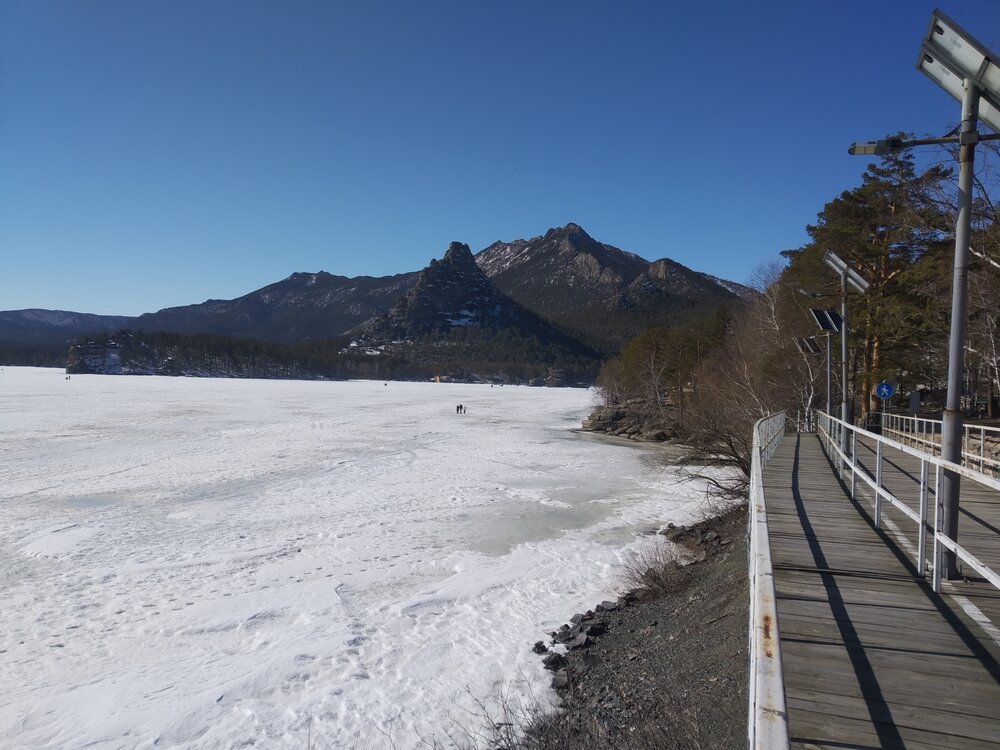
Praising the Shchuchinsk-Borovoye region as one of Kazakhstan’s unique assets in terms of its rich natural landscape, history and culture, the head of state stated:

“The proximity of Burabay [Borovoye] to Astana ensures a constant and ever-increasing influx of residents and tourists from the capital. However, progress on the construction of the area’s infrastructure is far too slow and plans for the development of the Shchuchinsk-Borovoye resort, adopted back in 2012, have yet to be fully implemented. Although promised 126 billion tenge, just 35 billion tenge has been allocated for its development and for over 10 years, the resort has been unable to install sewer treatment facilities. It is now crucial that the Government, the Presidential Administration, and the regional administration complete these projects as soon as possible.”.




Famous Tajik Blogger Subjected to Domestic Violence

In Tajikistan, the husband of famous blogger Rukhshona Rakhmatulloeva has been arrested after she complained of domestic violence, Asia-Plus reports. According to the Dushanbe City Department of Internal Affairs, Rukhshona Rakhmatulloyeva, known on Instagram under the nickname Sofi_1111 where she has more than 400,000 followers, appealed to the authorities through an e-mail in which she complained of beatings and rough treatment by her 32-year-old husband, Umed Rakhmatulloyev.

Earlier, followers circulated screenshots of the blogger’s post on her page, where she reported that her husband abuses her and threatens her with a knife. In the posts, it is reported that her husband sleeps and sits at home all day while she has to work and support the family. In addition, it is claimed that their children suffer psychologically due to frequent conflicts at home.

“The investigation, which included interrogations of the suspect, the victim, and witnesses, confirmed the facts of violence and misunderstanding in the family. The Shohmansur district court sentenced him to administrative arrest for seven days,” the Ministry of Internal Affairs said in a statement.

The problem of domestic violence is acute in Tajikistan. According to the Bureau for Human Rights and Rule of Law, 50 to 80% of women and children in the country are subjected to violence. According to the UN, every fifth woman in this country is a victim of domestic violence perpetrated by their husband, mother-in-law, or other family members. Nevertheless, only 1 in 10 women seek help to remedy the situation.

Uzbekistan to Establish International Financial and Technology Center

On June 13, Tashkent hosted the inaugural meeting of the Working Groups on the development of Uzbekistan’s capital market and creation of the International Financial and Technology Center.

The event which also addressed the development of the Law on Alternative Investments, was organized within the framework of the Foreign Investors Council under the President of Uzbekistan.

Representatives of international financial organizations and Uzbekistan’s business community joined heads of Uzbek ministries and foreign investors in discussions on the establishment of an International Financial and Technology Center, with an emphasis on attracting financial technology companies to Uzbekistan.

The Uzbek Ministry of Investment, Industry and Trade reported that the agenda also included the development of a law governing the Center’s operations as well as the creation of a strategy to promote opportunities offered by the center to entice foreign investment in Uzbekistan.

According to experts, the launch of the Center will ensure long-term sustainable investment growth, increase the country’s GDP by 1% annually, and attract portfolio investments amounting to $7-$8 billion by 2028. It is also expected to create 15-20 thousand new highly skilled jobs over the next ten years.

The meeting also reviewed draft amendments to the Law of the Republic of Uzbekistan “On Joint Stock Companies and Protection of Investors’ Rights” and the concept of the law “On the International Financial and Technology Center”.

Uzbekistan Purchases High-Speed Electric Trains

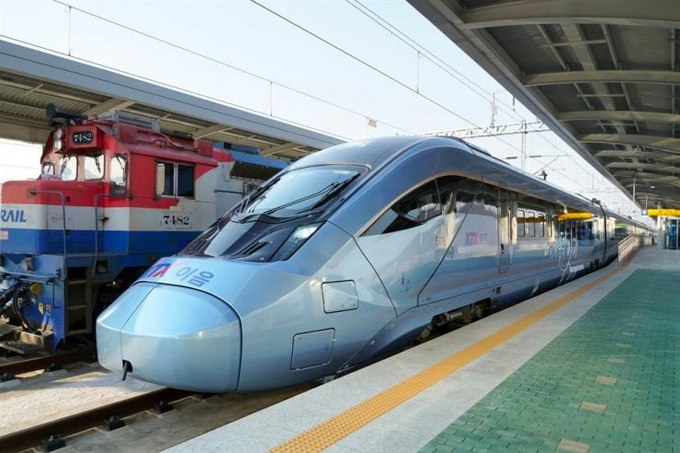
As reported by the press service of Uzbekistan Railways, during the visit of the South Korean president to Uzbekistan, Uzbekistan Railways and Hyundai Rotem held a bilateral meeting on the initiative of a presidential decree on railway reforms.

In line with these reforms, a project to purchase six high-speed passenger electric trains was launched, supported by the Korea Economic Cooperation Development Fund, Uzbekistan Railways, Temiryo’lekspress, and Hyundai Rotem. An agreement was signed for the supply and maintenance of these electric trains.

During the meeting, it was announced that Hyundai Rotem’s electric train would be named “Jalaluddin Manguberdi” and operate on the Tashkent-Urganch-Khiva route. The meeting concluded with the signing of a tripartite memorandum between Uzbekistan Railways, Temiryo‘lekspress, and Hyundai Rotem.

Kazakh Chess Player Wins World Junior Title in India

Kazybek Nogerbek of Kazakhstan has become the FIDE world junior chess champion, winning the title in Gandhinagar, India even though he was only the ninth seed.

An emotional Nogerbek, 20, briefly rested his head on his forearm on the table on Thursday after the tournament victory.

“It feels very good,” said Nogerbek, who won the rapid and blitz titles in the World Youth U18 Championship.

The Kazakh player is an international master (IM), which is the second most difficult title to secure after grandmaster (GM). A number of grandmasters were among those participating in the U20 World Junior Chess Championship, which started at the beginning of June.

Divya Deshmukh, the 18-year-old top seed from India, won the girls’ section.

Nogerbek’s victory was tight. He scored 8.5/11 points, as did grandmaster Emin Ohanyan of Armenia. But Nogerbek did better under a tiebreak system designed to determine a winner in such a scenario. Grandmaster Kuja Budisavljevic of Serbia won bronze with eight points.

“Going into the final round, GM Mamikon Gharibyan from Armenia was in sole lead with eight points, half a point ahead of four players, including Nogerbek,” chess.com reported. “The two faced in the final round, with the Armenian making a crucial mistake in time trouble, while trying to defend a difficult ending.”

Chess.com said the world junior championship has a prestigious history but fewer top players are participating because “more attractive tournaments” are available.

FIDE is the International Chess Federation, which is the translated name of Federation International des Echecs, founded in Paris in 1924.

Radicalism Attracts Disenfranchised Youth in Tajikistan

On June 11th, eight natives of Tajikistan were detained in the United States suspected of attempting to organize terrorist attacks and belonging to ISIS. Previously, citizens of Tajikistan were arrested in Russia, accused of participating in the attack on the Crocus City Hall near Moscow. In just the past few years, natives of Central Asian states have been involved in ten attempted terrorist attacks. Zamir Karazhanov, a Kazakhstani political scientist and director of the Kemel Arna Public Foundation, believes that the deteriorating economic situation in the country is behind such radicalization.

As reported by TCA, eight citizens of Tajikistan taken into custody in Los Angeles, New York, and Philadelphia are suspected of having links to the terrorist group, ISIS. The detentions were made by U.S. Immigration and Customs Enforcement (ICE) in close coordination with the FBI’s Joint Terrorism Task Force. Initially, it was stated that those arrested were Russian citizens of Tajik origin, but now their nationality has now been clarified. Citing sources from law enforcement agencies, media in the U.S. has reported that officially the migrants were held in connection with the violation of immigration laws. At the same time, they have not yet been charged with making preparations for a terrorist attack. According to sources, FBI agents have been following those detained for several months, and audio picked up by a bug allegedly has one of the suspects talking “about bombs.”

Several days have now elapsed, but the U.S. authorities are still to release an official comment. The authorities in Tajikistan, meanwhile, are glossing over the incident. However, a Radio Ozodi source in New York said that the detentions of citizens from Central Asian countries began two months ago, since when 20 people have been detained, including 16 natives of Tajikistan, though “some of them were later released,” the source stated.

According to the political scientist and Russia expert, Malek Dudakov, 50,000 Central Asians illegally entered the U.S. in 2023 alone: 17,000 from Uzbekistan, 7,000 from Kyrgyzstan, and 3,000 from Tajikistan. “Republicans blame Biden for artificially creating an explosive situation inside the United States, which could lead to a wave of terrorist attacks. And U.S. law enforcers fear that the U.S. may also expect an October 7th scenario in Israel with simultaneous attacks by Islamists in different cities,” he wrote on the Telegram.

Following the terrorist attack on the Crocus City Hall, several countries, including Russia and Turkey, have tightened their migration policies toward people from Tajikistan.

Kazakhstani political scientist, Zamir Karazhanov, told The Times of Central Asia that terrorist movements are influencing Tajik citizens because of the dire economic situation in the country. “During the 1990s and the civil war, a severe Islamicization of society began. Families were Islamiziced, and the economic factor, poverty, was superimposed on this. Similar processes were observed in all Central Asian countries, where religious young people began to come into contact with various radical extremist organizations. They are then processed and brainwashed into believing that everything they do is for the good of the faith. It is necessary to take such actions and be taught to see secular regimes as the enemies of Islam. Religious feelings and material demands are exploited, and destructive organizations provide the funding,” said Karazhanov, adding that the entire country should not be blamed or its citizens persecuted because of the activities of a few individuals.

“Tajikistan itself is fighting extremism and terrorism, and is a victim of these phenomena,” Karazhanov told TCA. “The authorities cannot be blamed for anything in this regard, much less condoning the actions of terrorists. Such regimes have been and still are, but this does not apply to Tajikistan. I was in the country recently, and I can assure you that law enforcement agencies are actively working in this direction. On the contrary, it is necessary to help Tajikistan cope with this threat and provide material, personnel, and technical support,” the political scientist explained, adding that it is both illegal and unfair to persecute migrants in general.

One of the most remittance-based countries in the world, according to the World Bank, in 2022 remittances made by migrants – largely from Russia – accounted for 51% of the Tajikistan’s GDP, and in the wake of the Crocus City Hall attack and rising xenophobia in Russia, many of these migrants are returning home. Meanwhile, as of 2023, Tajikistan had the lowest average wage of all CIS countries, just $183 a month – almost half that of second-lowest Turkmenistan and Uzbekistan.