• KGS/USD = 0.01144 0%
  • KZT/USD = 0.00194 -0%
  • TJS/USD = 0.10877 -0%
  • UZS/USD = 0.00008 0%
  • TMT/USD = 0.28571 0%
  • KGS/USD = 0.01144 0%
  • KZT/USD = 0.00194 -0%
  • TJS/USD = 0.10877 -0%
  • UZS/USD = 0.00008 0%
  • TMT/USD = 0.28571 0%
  • KGS/USD = 0.01144 0%
  • KZT/USD = 0.00194 -0%
  • TJS/USD = 0.10877 -0%
  • UZS/USD = 0.00008 0%
  • TMT/USD = 0.28571 0%
  • KGS/USD = 0.01144 0%
  • KZT/USD = 0.00194 -0%
  • TJS/USD = 0.10877 -0%
  • UZS/USD = 0.00008 0%
  • TMT/USD = 0.28571 0%
  • KGS/USD = 0.01144 0%
  • KZT/USD = 0.00194 -0%
  • TJS/USD = 0.10877 -0%
  • UZS/USD = 0.00008 0%
  • TMT/USD = 0.28571 0%
  • KGS/USD = 0.01144 0%
  • KZT/USD = 0.00194 -0%
  • TJS/USD = 0.10877 -0%
  • UZS/USD = 0.00008 0%
  • TMT/USD = 0.28571 0%
  • KGS/USD = 0.01144 0%
  • KZT/USD = 0.00194 -0%
  • TJS/USD = 0.10877 -0%
  • UZS/USD = 0.00008 0%
  • TMT/USD = 0.28571 0%
  • KGS/USD = 0.01144 0%
  • KZT/USD = 0.00194 -0%
  • TJS/USD = 0.10877 -0%
  • UZS/USD = 0.00008 0%
  • TMT/USD = 0.28571 0%
16 December 2025

U.S. Company to Process Medical Waste in Uzbekistan

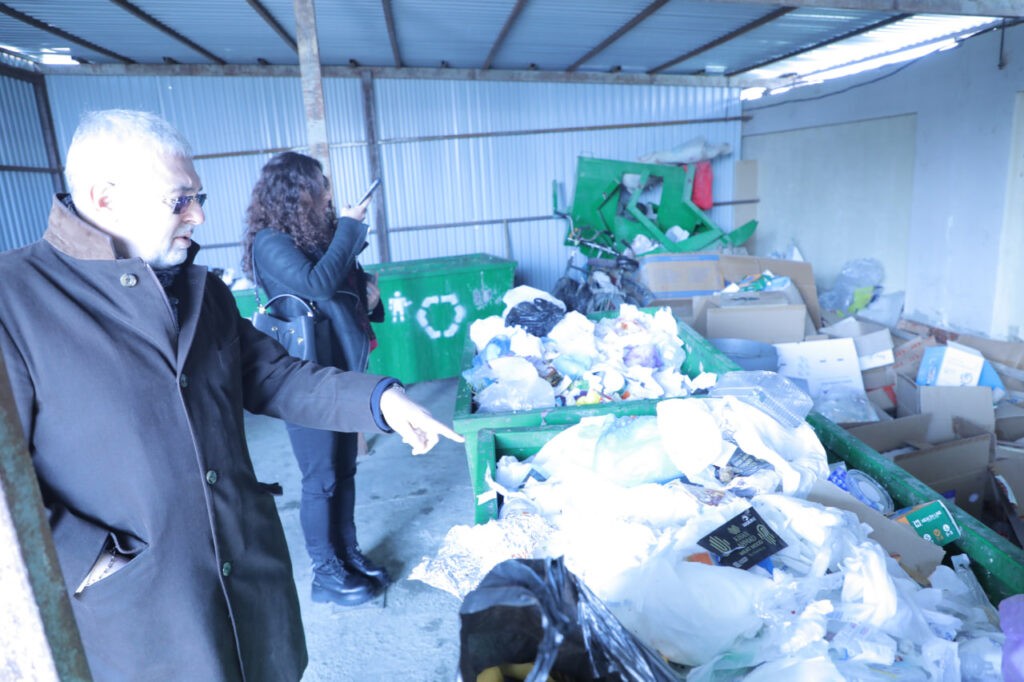
Uzbekistan’s Ministry of Ecology, Environmental Protection and Climate Change announced on February 23rd that a U.S. company, SAYAR LLC, will begin the processing of medical waste in a test mode in the city of Tashkent and the Samarkand Region.

An agreement on the project was reached with the American company following its delegation’s visit to the Samarkand Region, where company representatives inspected local medical institutions and examined the storage conditions and quantity of medical waste.

The disposal of medical waste will produce thermal energy which will be used to heat hospitals; special filters will be installed to prevent harmful emissions into the atmosphere.

Tashkent to Introduce Monthly ‘Car-Free Day’

One working day each month will now be “Car-Free Day” in the capital of Uzbekistan.

The plan is to reduce the environmental impact of vehicles and encourage people to use bicycles to get around the city. Restrictions will not apply to public transportation, or emergency vehicles. Government officials have been instructed to “set a personal example by arriving at the workplace on public transportation.”

The idea for car-free days originated in Switzerland in 1973, during a fuel crisis, before spreading to other European countries. In 1998 the European Union initiated a campaign called “In town, without my car!,” which is held from September 16 to 22 every year.

The need to reduce air pollution in Tashkent is especially acute. The Uzbek capital is among the five cities worldwide with the worst air quality — and often tops the ranking. This was the case on February 21, for example, when the content of fine particulate matter (PM2.5 measurement) in the city’s air amounted to 140.3 µg/m3 (micrograms per cubic meter) — which exceeded the WHO recommendations by a whopping 28.1 times (5 µg/m3). The public is sounding the alarm and calling on the Tashkent authorities to take urgent measures to prevent an ecological disaster.  Specialists believe that single actions are not enough to preserve clean air in big cities; comprehensive work is needed to address the root causes of the pollution.

This critical situation has prompted the government to include measures to improve the country’s ecology in the large-scale state program for implementing the “Uzbekistan-2030” strategic roadmap. For example, it plans to phase out vehicles from the capital and regional centers that do not meet Euro-5 standards by 2030, and to ban trucks weighing more than 10 tons from driving through Tashkent — except for those of the Armed Forces and municipal services.

From March 1, the population will be notified about excessive content of fine particles in the local atmosphere, and measures will be taken to protect against dust at large construction sites (500 square meters and larger) in the country. Special attention will be paid to persons with diseases of the cardiovascular system and respiratory tract.

In addition, Uzbekistan plans to abandon the production of 80-octane (AI-80) gasoline by 2026, in part to help popularize the use of electric cars and electric urban transport. Currently, the only countries that still produce AI-80 gasoline are Uzbekistan and Afghanistan. Medical experts believe that automotive exhaust is one of the main causes of lung cancer in humans. Yahye Ziyayev, Secretary General of the Uzbekistan Oncology Association, noted that “when AI-72 and AI-76 were banned in Uzbekistan, the incidence of lung cancer decreased over the course of ten years.”

Ninety-Nine Kyrgyz Citizens Brought Home From Syria

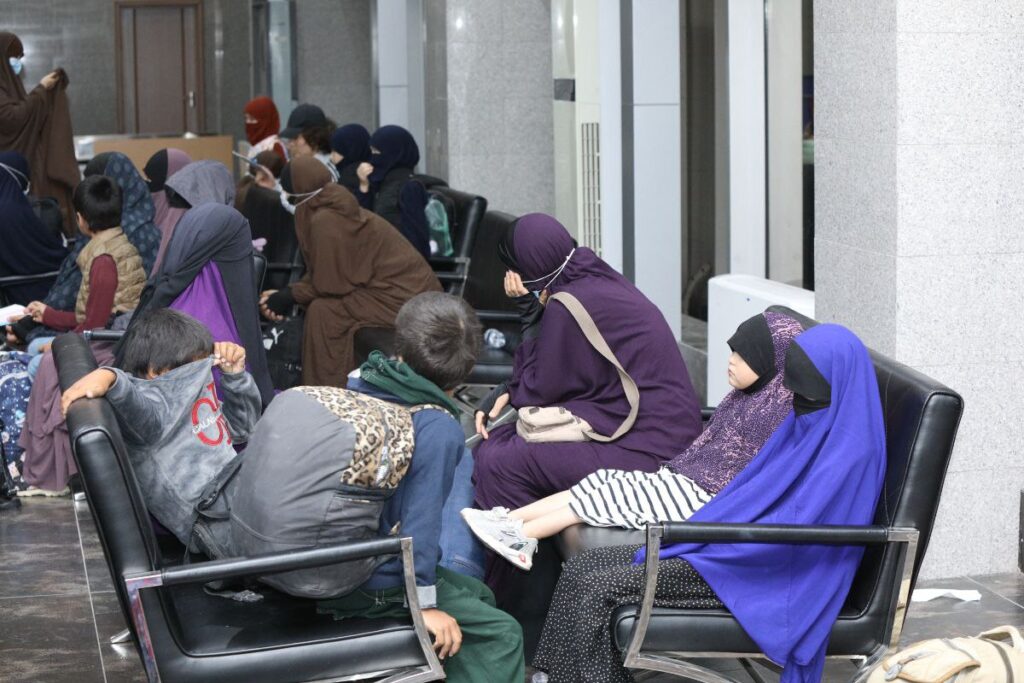
The Kyrgyz Foreign Ministry has reported that 99 citizens of Kyrgyzstan – 28 of women and 71 children – have been brought home from Syria. The mission to return them from special camps in the north-east of the country was organized with the support of the U.S. government.

The ministry said: “The Kyrgyz side expresses its special gratitude to the American side and international partners for their full assistance in the special operation and logistical support for the successful implementation of the fifth major campaign for the repatriation of citizens left in a difficult situation.”

This is the fifth mission to repatriate Kyrgyz citizens from the combat zone in Syria. The first stage of repatriation was carried out a year ago. In total, about 130 women and 300 children have returned home on special airplanes. According to authorities, all Kyrgyz arriving from Syria are being accommodated in a rehabilitation center to receive appropriate services to help them adapt to life in a peaceful environment.

According to the latest public data from Kyrgyzstan’s State Committee for National Security, more than 850 Kyrgyz have traveled to the combat zone in Syria — 150 of whom have died in fighting. Active recruitment of Kyrgyz citizens began at the beginning of the war in Syria, mainly in the south of the country, where the influence of extremist Islamic movements was strong. Both men and women were recruited.

After arriving in Syria, Kyrgyz women married jihadists and lived there, while Kyrgyz men joined militant groups. At the same time, some men returned from the ATS and recruited members for terrorist groups on the instructions of the Syrian jihadists. On many occasions Kyrgyz intelligence officers have found large quantities of banned extremist literature and propaganda materials in the possession of men who came home to recruit.

Today the Kyrgyz special services are still searching for those Kyrgyz who fought in Syria and haven’t returned home. Investigations focusing on those people are ongoing, and if it’s proven that they took part in extremist activities abroad, criminal cases will be brought against them.

Turkmenistan Again Takes First Place as World Leader of VPN Searches

The digital technologies information platform Techopedia has published data about virtual private network (VPN) usage around the world. At the end of 2023, 77% of users used a VPN for work, and 51% did so to maintain privacy on public Wi-Fi networks.

Forty-four percent did so to protect their anonymity online, while 37% used a VPN for secure communications, and 20% used it to hide their activities from authorities.

The countries whose authorities restrict human rights and freedom of speech in one way or another are in the lead in terms of online searches for VPNs. The ranking of countries where VPN use was most popular is based on Google Trends data and Freedom House’s 2023 Freedom on the Net report. Internet censorship in illiberal countries is widespread, often used as a way of suppressing opposition views, or creating a certain image of the country’s authorities. Consequently, the use of VPNs in some countries is limited or even totally illegal.

The outright leader in the world in terms of VPN searches in 2023, as it was in 2022, was Turkmenistan, where VPNs are illegal. Turkmenistan has only one authorized internet provider, Turkmentelecom, which controls the entire flow of information and blocks content undesirable to the authorities. In addition, it has the lowest Internet penetration rate in Central Asia (38.2%), one of the lowest connectivity speeds, and one of the highest prices. Turkmenistan is one of the five countries — along with Oman, North Korea, Belarus and Iraq — where the use of a VPN is prohibited.

When buying a new or used phone in Turkmenistan, buyers immediately ask staff to install a VPN for them, which can be done for about $5. However, under such restrictions, VPNs never work for long — only until the next blocking by the authorities.

Artificial Intelligence in Central Asia: Applications and Regulation

The debate on the need for worldwide regulation of artificial intelligence (AI) is gaining momentum, given that over the past year AI has become a key tool for millions of people. With a growing number of organizations applying AI in various fields, including medicine, politics and judicial decisions, the urgent question is how to integrate AI into legislation.

In Central Asia, in 2020 the National Bank of Kyrgyzstan authorized remote identification of individuals at banks using AI, machine learning and other predictive algorithms to process customer biometric data. Bishkek also introduced a facial recognition system based on artificial intelligence which allows data about wanted persons to be entered, and cameras to automatically identify them and transmit information to law enforcement.

Artificial intelligence has also found its application in the political process. In 2020, the Mekenim Kyrgyzstan Party used a digital bot farm during the elections which generated approximately 150 profiles a day, automatically wrote comments and then self-liquidated.

In Tajikistan, where the use of AI is not widespread, MegaFon stands out for its introduction of the Dono chatbot in 2019. This artificial interlocutor interacts with around 14,000 subscribers per day, freeing humans from routine tasks and allowing them to deal with more complex issues.

In Uzbekistan, meanwhile, the government is taking active measures to stimulate the development of AI technologies. A presidential decree has established comprehensive steps towards the digitization of the economy and the social sphere. Digitization of government data in various sectors, such as justice, communications, finance, education and healthcare are becoming an integral part of the development strategy. The application of AI technologies, starting with image recognition and navigation systems, has already become a tangible part of task-solving in large enterprises, and the country is actively working to create an enabling environment to further expand the use of AI.

In Kazakhstan, AI is being actively introduced in the judicial system, and over the past two years AI systems have been used to analyze court cases and predict their outcomes. The authorities believe that this approach helps minimize errors and improves the quality of justice. In the field of healthcare, since 2022 Kazakhstan has been successfully operating the PneumoNet program based on artificial intelligence. This program makes it possible to detect 17 of the most pathogenic lung diseases, including pneumonia, tuberculosis, and cancer.

Currently, Kazakhstan, Kyrgyzstan and Tajikistan do not have specific laws regulating the creation and use of AI. Despite this, the Strategy for the Development of Artificial Intelligence in the Republic of Tajikistan until 2040 notes that during the implementation of the first and second stages of said strategy, legal, institutional and infrastructural frameworks will be developed, and the necessary specialists will be trained.

Unlike its neighbors, Uzbekistan adopted a presidential decree “On measures to create conditions for the accelerated introduction of artificial intelligence technologies” as early as 2021. This document has become the legal foundation for the further development of AI in the country, defining its main directions. The resolution emphasizes the need to develop a legal framework that defines uniform requirements, responsibility, safety and transparency in the development and use of AI technologies in various sectors of the economy and the social sphere, as well as in the system of public administration.

World Bank Says Central Asia Natural Gas Supply-Demand Dynamics Unbalanced

The World Bank released a report on February 22nd entitled “Achieving Carbon Neutrality by 2060: A Sustainable Energy Future for Europe and Central Asia.” The report states that the countries of Central Asia will soon have to address a widening gap between the supply and demand of natural gas, as well as challenging decisions on a number of energy and environment fronts.

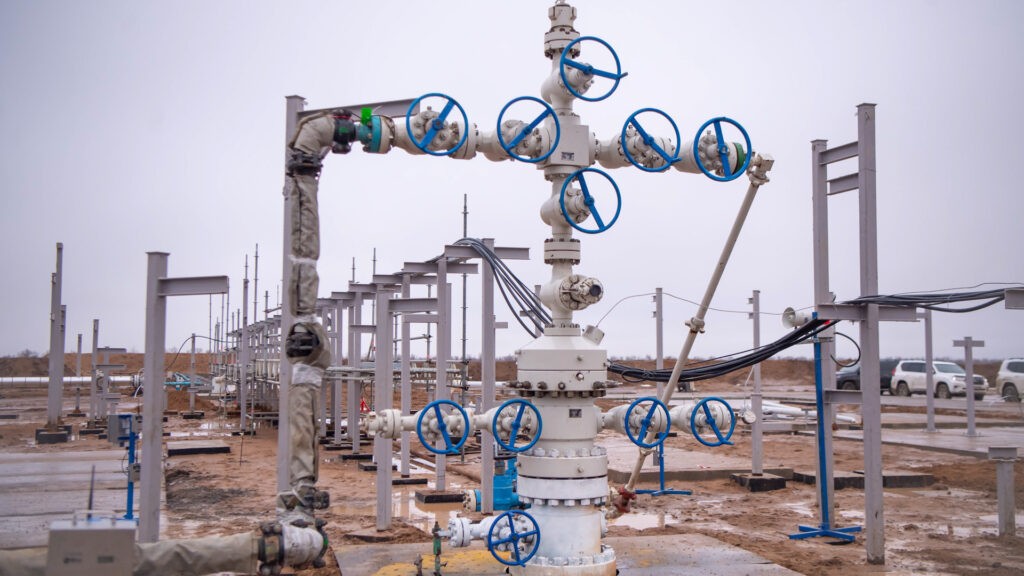
China is the primary destination of Central Asia’s substantial net gas exports, but it is becoming increasingly difficult for countries in the region to meet their own high domestic winter demand and fulfill their export obligations due to Central Asia’s increasing demand and stagnant gas production – especially in Kazakhstan and Uzbekistan.

The natural gas supply and demand balance in Central Asia could be improved by the formation of a “gas troika,” which Russia has proposed to Kazakhstan and Uzbekistan, to move gas volumes between the three countries and to export to China. However, there are concerns about the dependability of Russian gas supplies, and the appalling condition of the countries’ Soviet-era gas pipeline infrastructure.

Furthermore, the report says, it’s feasible to replace coal in Kazakhstan and close the supply gap in Uzbekistan by boosting gas imports from Turkmenistan and launching a regional gas trade in Central Asia. The report also states that increasing demand in Central Asia will be met with increased gas volumes.