• KGS/USD = 0.01144 0%
  • KZT/USD = 0.00212 0%
  • TJS/USD = 0.10432 -0.29%
  • UZS/USD = 0.00008 0%
  • TMT/USD = 0.28490 0%
  • KGS/USD = 0.01144 0%
  • KZT/USD = 0.00212 0%
  • TJS/USD = 0.10432 -0.29%
  • UZS/USD = 0.00008 0%
  • TMT/USD = 0.28490 0%
  • KGS/USD = 0.01144 0%
  • KZT/USD = 0.00212 0%
  • TJS/USD = 0.10432 -0.29%
  • UZS/USD = 0.00008 0%
  • TMT/USD = 0.28490 0%
  • KGS/USD = 0.01144 0%
  • KZT/USD = 0.00212 0%
  • TJS/USD = 0.10432 -0.29%
  • UZS/USD = 0.00008 0%
  • TMT/USD = 0.28490 0%
  • KGS/USD = 0.01144 0%
  • KZT/USD = 0.00212 0%
  • TJS/USD = 0.10432 -0.29%
  • UZS/USD = 0.00008 0%
  • TMT/USD = 0.28490 0%
  • KGS/USD = 0.01144 0%
  • KZT/USD = 0.00212 0%
  • TJS/USD = 0.10432 -0.29%
  • UZS/USD = 0.00008 0%
  • TMT/USD = 0.28490 0%
  • KGS/USD = 0.01144 0%
  • KZT/USD = 0.00212 0%
  • TJS/USD = 0.10432 -0.29%
  • UZS/USD = 0.00008 0%
  • TMT/USD = 0.28490 0%
  • KGS/USD = 0.01144 0%
  • KZT/USD = 0.00212 0%
  • TJS/USD = 0.10432 -0.29%
  • UZS/USD = 0.00008 0%
  • TMT/USD = 0.28490 0%

Kyrgyzstan to Launch Unified Digital Tourism Platform to Attract Foreign Visitors

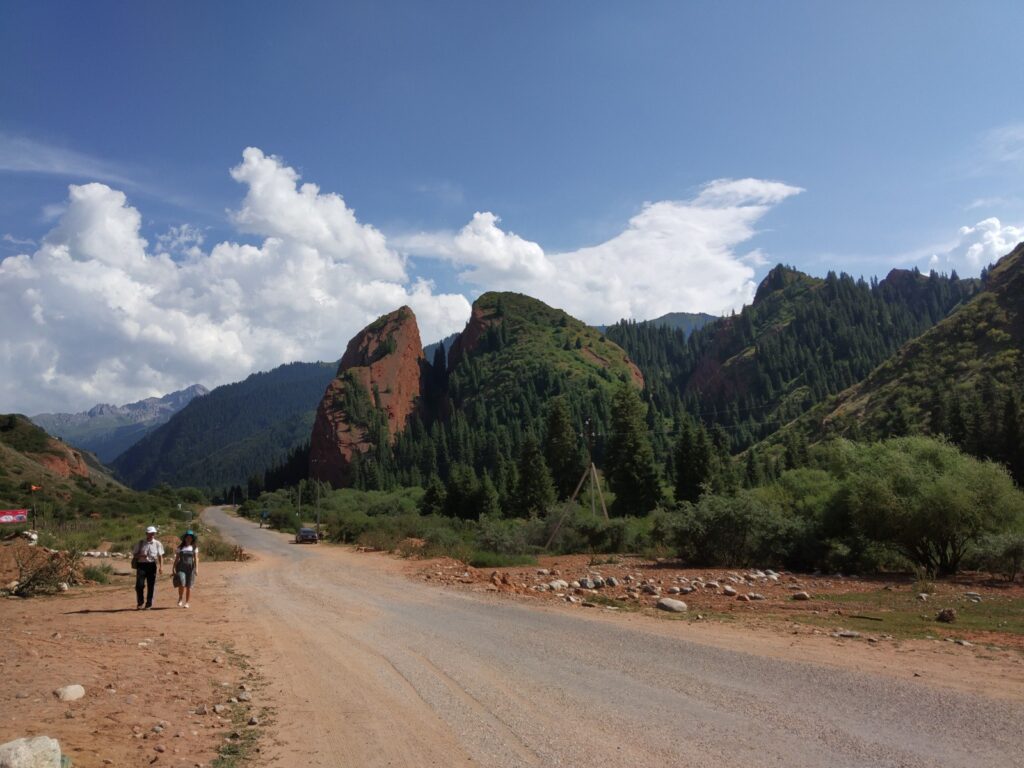
Kyrgyzstan is preparing to launch a unified Digital Tourism Platform designed to simplify travel procedures and strengthen the country’s appeal to foreign tourists.

At a government meeting on January 26, Chairman of the Cabinet of Ministers Adylbek Kasymaliev pointed to long-standing structural challenges in the tourism sector, including fragmented services for visas, logistics, and insurance, as well as the absence of a centralized coordination mechanism.

“Tourists should not face bureaucracy and language barriers at every stage. A single-window platform must integrate government services, private-sector offerings, and payment instruments from entry to exit,” Kasymaliev stated.

He directed the Department of Tourism, the Ministry of Digital Development, and the Ministry of Finance, in coordination with the Tunduk State Portal of Electronic Services, to secure funding and oversee the platform’s technical implementation.

Tourism’s economic contribution is steadily increasing. In 2025, the sector accounted for 4.3% of Kyrgyzstan’s GDP, with nearly 10 million tourist arrivals, according to Adilet Januzakov, Director of the Tourism Support and Development Fund, speaking on Sputnik Radio.

Januzakov noted a shift in government policy from maximizing tourist numbers to improving infrastructure and service standards. The aim is to create comfortable conditions for a wide range of travel experiences, from ecotourism and camping to premium hospitality.

Key initiatives include the construction of an Olympic village on Lake Issyk-Kul, the development of ski resorts and amusement parks, and the continued digitalization of tourist routes, such as integrating eco-trails into the 2GIS navigation system.

Authorities also plan to implement a national classification system for hotels and guesthouses, designed to increase market transparency and provide consistent service quality for visitors.

According to the National Statistical Committee, revenue from foreign tourists exceeded $813 million between January and September 2025, making tourism one of Kyrgyzstan’s key non-resource sectors.

Electricity Generation in Kyrgyzstan Stagnates as Demand Surges

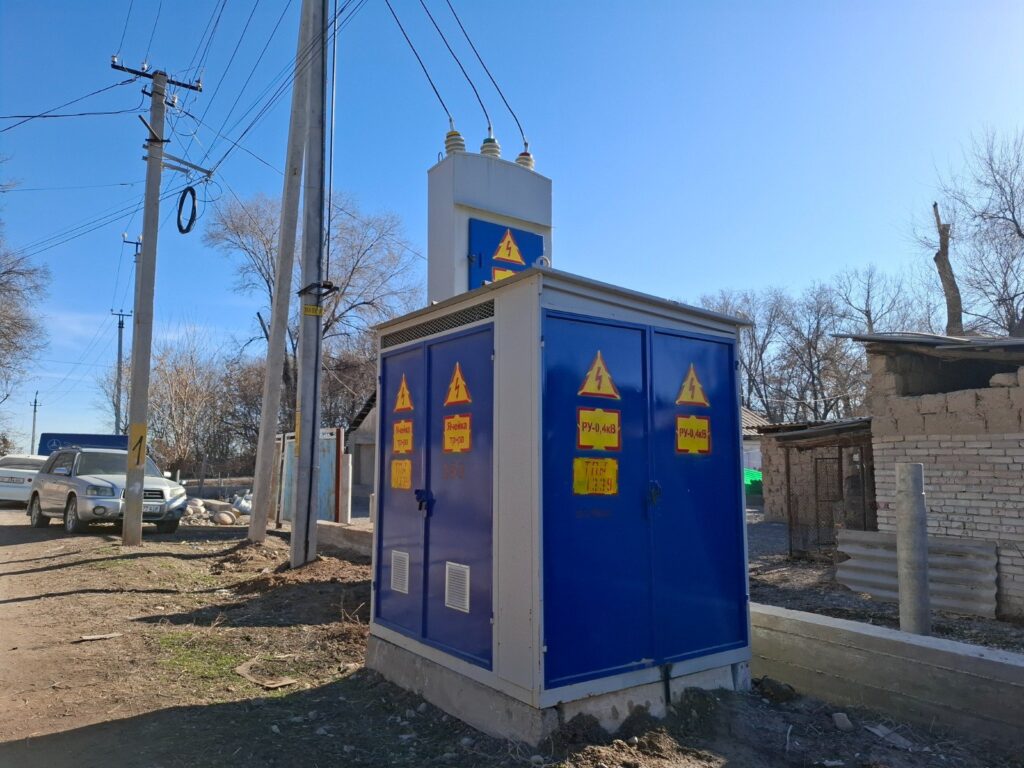
Electricity consumption in Kyrgyzstan has surged by nearly 25% over the past five years, rising from 15.4 billion kWh in 2020 to 19.3 billion kWh in 2025. However, electricity generation has remained virtually flat, increasing by just 0.1 billion kWh during the same period, according to data presented at the Ministry of Energy’s board meeting on January 23.

The widening gap between supply and demand is attributed to sustained economic growth, the launch of new industrial facilities, and delays in commissioning new power infrastructure. Compounding the issue, hydropower output, the backbone of Kyrgyzstan’s energy mix, is increasingly constrained by declining water levels linked to climate change.

In 2025, Kyrgyzstan’s electricity generation structure was as follows:

  • 12.9 billion kWh – large hydropower plants
  • 0.223 billion kWh – small hydropower plants
  • 0.234 billion kWh – mini-hydro, solar, and wind power plants
  • 2.01 billion kWh – thermal power plants

To meet domestic demand, the country imported 3.8 billion kWh of electricity from neighboring states.

A key long-term solution lies in the construction of the Kambarata-1 hydropower plant, a strategic regional project being developed in cooperation with Kazakhstan and Uzbekistan. Once completed, the plant is expected to have a capacity of 1,860 MW and generate 5.6 billion kWh annually.

In 2025, Kyrgyzstan updated the project’s feasibility study, originally prepared in 2014, finalized the dam type, and signed a contract with the tender winner. The World Bank is considering up to $1.5 billion in financing, while nine international donors have expressed interest in contributing an additional $2.5 billion.

In parallel, the country is expanding its renewable energy portfolio. Eight small hydropower plants with a combined capacity of 44.6 MW and solar plants totaling 102 MW were commissioned in 2025. Investment agreements have also been signed for the construction of five solar plants and one wind farm with a total capacity of 3,150 MW. These projects represent a planned investment of approximately $4.2 billion.

Additionally, on January 23, the Cabinet of Ministers signed a memorandum of understanding with China’s Kyrgyzstan Reclaim Co. Ltd. to build a 200 MW cascade of small hydropower plants on the Tar River in the Osh region. The investment is projected at around $300 million.

Officials say these projects are aimed at boosting generation capacity and enhancing Kyrgyzstan’s long-term energy resilience amid growing domestic consumption.

Olympic Boxing Champion Serik Sapiyev Assaulted by Deputy

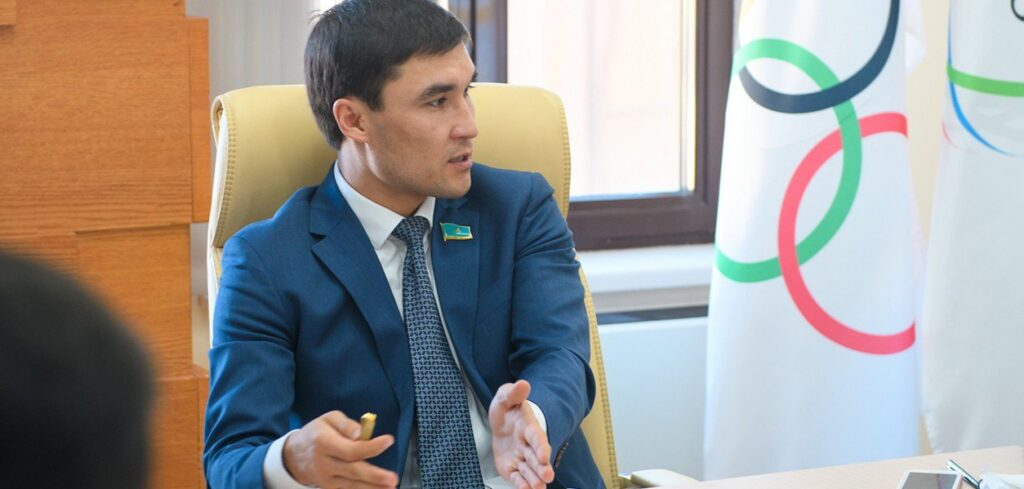
A criminal case has been opened in Kazakhstan following the assault of Olympic boxing champion Serik Sapiyev by his deputy, Dauren Esimkhanov, in the Karaganda region’s Department of Physical Culture and Sports. The incident has triggered public outcry and intensified scrutiny of internal dynamics within the regional sports administration.

Sapiyev, who currently heads the department, stated that the altercation was work-related. While the regional administration urged the public and media not to draw premature conclusions, it acknowledged that Esimkhanov had committed an offense and must be held accountable.

A native of Karaganda, Sapiyev rose to prominence after winning gold in the 69 kg weight category at the 2012 London Olympics, where he was also awarded the Val Barker Trophy for most technical boxer. A two-time world amateur champion and two-time Asian champion, Sapiyev retired from professional boxing in 2012. He launched a political career the following year, becoming a UNESCO Goodwill Ambassador in 2013 and later serving as a deputy in the Mazhilis, Kazakhstan’s lower house of parliament, in 2017.

In 2018, Sapiyev stepped down from parliament to lead the Committee on Sports and Physical Culture under the Ministry of Culture and Sports. He left the ministry in 2021 and, in late 2024, assumed his current position in Karaganda.

The altercation reportedly took place on January 21 at a sports complex in Karaganda and was confirmed by local police. The Karaganda Region Police Department announced a criminal case based on a statement from the 42-year-old Sapiyev, citing grounds of assault. Esimkhanov, a sambo champion with accolades at both the Asian and world levels, has not denied involvement.

Sapiyev addressed the incident on Instagram, asserting that the conflict stemmed from attempts to interfere with staffing decisions in the region’s sports institutions without his knowledge.

“I want to clarify: what happened was not a personal or domestic conflict, but rather resistance from certain individuals who have unofficial influence in the region,” Sapiyev wrote. “Without my knowledge, an attempt was made to illegally rotate the heads of sports organizations in the region. When I discovered this, I tried to stop it peacefully. I want to openly state that no provocations will shake my determination to implement systemic reforms in Kazakhstani sports, which the head of state has repeatedly spoken about.”

In response, Esimkhanov claimed on social media that misinformation was being spread.

“Currently, information that does not reflect the objective reality is being circulated. I ask you not to succumb to provocations and attempts to destabilize the situation by unscrupulous individuals,” he wrote.

Ermaganbet Bulekpaev, the Akim of the Karaganda region, whose office oversees the department, called for caution and restraint while the investigation is underway. He confirmed that the Department for Civil Service Affairs will conduct a full inquiry, including a comprehensive audit of the department’s operations.

“There has been a violation, and responsibility must be taken for it,” Bulekpaev stated during a staff meeting. “An investigation is underway, and each action will be given a legal assessment.”

The scandal comes on the heels of another high-profile case involving Kazakhstani boxer Zhanibek Alimkhanuly, who was recently implicated in a doping violation.

Astana and Tashkent Engage Washington’s Central Asia Vector

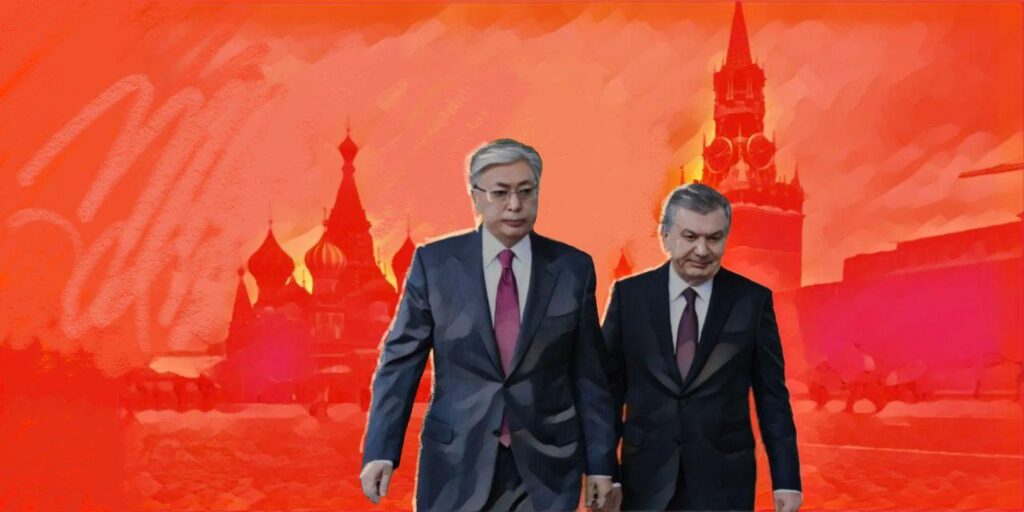
On January 22 at the World Economic Forum in Davos, Kazakhstan’s President Kassym-Jomart Tokayev and Uzbekistan’s President Shavkat Mirziyoyev signed President Donald Trump’s new Board of Peace charter. The document matters less than what their participation signifies: recognized access to the White House and a willingness to be publicly associated with a U.S.-led initiative. This is all the more significant as Washington’s relations with several long-standing partners have recently become more fraught and publicly contested. The Central Asian response is part of that story. Their participation indicates that the Trump White House regards them as interlocutors of consequence, and that both Central Asian capitals are embracing that status.

On December 1, Washington assumed the G20 presidency for 2026 and set three priorities: limiting regulatory burdens, strengthening affordable and secure energy supply chains, and advancing technology and innovation. It has also scheduled the leaders’ summit for December 14–15, 2026, in the Miami area. On December 23, Trump said that he was inviting Tokayev and Mirziyoyev to attend as guests. That invitation places Kazakhstan and Uzbekistan inside a host-defined agenda whose working tracks overlap with their strongest external bargaining assets, including energy, critical minerals potential, and transport connectivity. Trump publicly tied the invitations to discussions of peace, trade, and cooperation, which is in line with his subsequent Board of Peace invitations.

Diplomatic Logic and Multi-Vectorism

It is worthwhile situating these developments in the context of Central Asian cooperation, which Kazakhstan and Uzbekistan have driven as the regional core. At the August 2024 Consultative Meeting in Astana, all five leaders signed a Roadmap for the development of regional cooperation for 2025–2027, and adopted a “Central Asia 2040” conceptual framework. Tokayev and Mirziyoyev referenced their 2022 allied-relations agreement and announced plans to adopt a strategic partnership program through 2034, including large-scale joint economic and energy projects.

Moscow’s preoccupation with the war in Ukraine has widened the room for maneuver by other external actors, and Central Asian capitals have pursued these opportunities selectively. For example, the EU’s then foreign-policy chief Josep Borrell visited Kazakhstan and Kyrgyzstan in early August 2024, Japan has pursued its “Central Asia plus Japan” line as a counterweight to China’s influence, and Azerbaijan has been building an energy bridge between Central Asia and Europe via the South Caucasus with Kazakhstan and Uzbekistan.

Washington’s main channel into this complex is the C5+1, and the current U.S. emphasis is to create routines that survive individual summits. The U.S. Special Envoy for South and Central Asian Affairs Sergio Gor and Deputy Secretary of State Christopher Landau travelled to Kazakhstan and Uzbekistan in October 2025 ahead of the Washington summit that Trump hosted the following month for the five leaders. Such formats can concentrate attention on the implementation of standardized procurement procedures and regularized dispute resolution that new supply-chain corridors require for interoperable paperwork and predictable customs treatment.

Kyrgyzstan is scheduled to host the second B5+1 forum (the business counterpart to C5+1) on February 4–5, 2026. This has already been prepared by a joint briefing in Bishkek on December 12 that established an agenda linking transport and logistics to sectors such as information technology, agriculture, and critical minerals. In mid-January 2026, Gor was appointed as U.S. Ambassador to India, while remaining Special Envoy for South and Central Asian Affairs. In the latter role, he thereupon immediately undertook, according to the State Department, further discussions with senior officials and business leaders in Turkmenistan about stability and economic collaboration, underscoring U.S. outreach beyond the two largest states in the region.

Minerals, Energy, and Routes

Astana, Tashkent, and Washington have begun turning Central Asian resources into projects that can reach financing and construction. Kazakhstan has been expanding exploration for critical minerals and updating its resource forecasts. The Eurasian Resources Group has said it plans to produce gallium in Kazakhstan beginning in 2026, with a view toward markets in OECD countries. A newly completed analysis by the U.S. Geological Survey, an agency of the Department of the Interior, has reassessed Uzbekistan’s tungsten endowment in particular. In Uzbekistan itself, policy statements have leaned toward building value chains rather than just exporting raw materials. Recent U.S.–Uzbekistan agreements refer to a dedicated investment package for “critical and rare earth” supply chains.

Energy is the second pillar. It includes nuclear fuel and technology as well as hydrocarbons. Washington appears to be treating energy security and energy transition as a single integrated agenda, and Astana and Tashkent are offering project leads in both domains. Kazakhstan’s role in U.S. uranium supply has increased amid U.S. efforts to reduce reliance on Russian inputs on a defined timeline. Civil nuclear cooperation between the U.S. and Kazakhstan has also expanded, with the U.S. emphasizing small modular reactors and responsible-use standards. Uzbekistan’s track is distinct, as it seeks to expand power supply while shifting part of the new capacity toward renewables. Solar and wind output for 2025 was reported as 9 billion kWh, with foreign partners and capital playing a major role.

Transport connectivity is the third pillar. Kazakhstan is working to reduce Trans-Caspian bottlenecks, including the implementation of capacity upgrades at Kuryk port. Operational risks still constrain throughput, however, especially on the maritime segment. Uzbekistan’s interest in the Middle Corridor centers on such procedural issues as trade facilitation, border management, logistics harmonization, and documentation standards. The U.S.–Kazakhstan locomotive and services package between Wabtec and KTZ illustrates how U.S. industrial participation can contribute to corridor performance over time. A U.S. objective is to make east–west routes reliable by institutionalizing routine operating procedures and compliance with expeditious documentation norms.

What Makes This Cycle Different?

Trump’s Board of Peace and G20 invitations to Kazakhstan and Uzbekistan are best understood as part of Washington’s effort to rebuild leverage through economic governance at a time when alliance politics have become noisier and more contested. In the context of its G20 presidency for 2026, the U.S. has chosen to frame its priorities in growth terms, with deregulation, energy supply chains, and technology and innovation put forward as organizing themes. The choice to hold the 2026 summit in the Miami area at Trump National Doral Miami adds an unmistakably transactional cast to the host year, also heightening the salience of who is invited and why.

In this setting, Kazakhstan and Uzbekistan are valued for what they can bring or facilitate in line with the host’s defined priorities. What follows from that is not so much a new doctrine as a method. The most plausible way for Washington to stay present in Central Asia, without offering security guarantees at scale, is to make cooperation self-reproducing. The C5+1 becomes a diplomatic driver of that approach, treated in U.S. policy language as a platform of strategic value, not just a scheduling calendar.

Its business track matters for the same reason. As Bishkek is preparing to host the second B5+1 forum on February 4–5, 2026, the December preparatory briefing made it clear that the agenda is designed to tie transport and logistics to investable sectors, including critical minerals and information technology: thus, the focus on procedures, dispute handling, and documentation discipline. The forum’s own Center for International Private Enterprise describes B5+1 as a long-term public-private platform meant to complement C5+1.

Washington is testing whether economic follow-through can create influence, while Astana and Tashkent are testing whether regional cooperation can support external engagement without narrowing their options. The common interest of all three is in regularizing procedures for implementing projects through financing and construction, and in improving corridor performance through routinization.

Nani Transfer to FC Aktobe Signals Kazakhstan Football Clubs’ Bet on Aging Stars

The Kazakhstan Premier League (KPL) is emerging as a destination for veteran European footballers in the twilight of their careers, as local clubs invest in high-profile transfers to boost visibility, attract sponsorships, and reignite fan interest.

The most notable example comes from western Kazakhstan, where FC Aktobe was transferred to private ownership less than a month ago. On January 8, the regional government sold the club to businessman Nurlan Artikbayev, owner of the construction firm Qazaq Stroy, for $730,000. Artikbayev pledged to modernize the stadium, develop youth football, and rebuild the squad after the club’s failure to win the championship or qualify for European competitions.

Aktobe’s first move was signing Kazakhstan national team goalkeeper Alexander Zarutsky, formerly of Almaty’s FC Kairat and a key figure in their historic UEFA Champions League appearance. However, the headline transfer was the acquisition of 39-year-old Luís Nani, the former Portuguese international and ex-midfielder for Manchester United, Fenerbahçe, Lazio, and Sporting.

The club announced Nani’s signing on January 25, highlighting the move as a symbol of its renewed ambitions. Nani most recently played for Portuguese side Estrela, appearing in 10 matches and scoring once. In a statement, he expressed enthusiasm for helping to develop both the club and Kazakh football more broadly.

Earlier negotiations between Aktobe and Thomas Müller fell through, with the 36-year-old German reportedly turning down a proposed loan from MLS club Vancouver. Rumors of interest in Brazilian forward Hulk were denied by his agent, while talks with 35-year-old Miralem Pjanić, formerly of Barcelona and Juventus, collapsed over financial terms. The Kazakh transfer window remains open until April 3, leaving open the possibility of further signings.

Elsewhere in the league, FC Kaisar of Kyzylorda announced the signing of 35-year-old Victor Moses, the former Chelsea and Inter Milan midfielder. These moves signal a clear strategy: use marquee names to elevate the league’s status and attract new audiences.

This new approach coincides with a major policy shift. As of 2025, Kazakhstan has implemented a legislative ban on the use of public funds to pay foreign athletes, meaning that such transfers must now be financed entirely through private investment.

Whether this strategy pays off on the pitch remains to be seen. But one thing is clear: Kazakhstani football is pivoting toward a market-driven model, where fan engagement and media visibility are becoming as valuable as tournament points.

Tokayev Proposes a New Constitutional Architecture

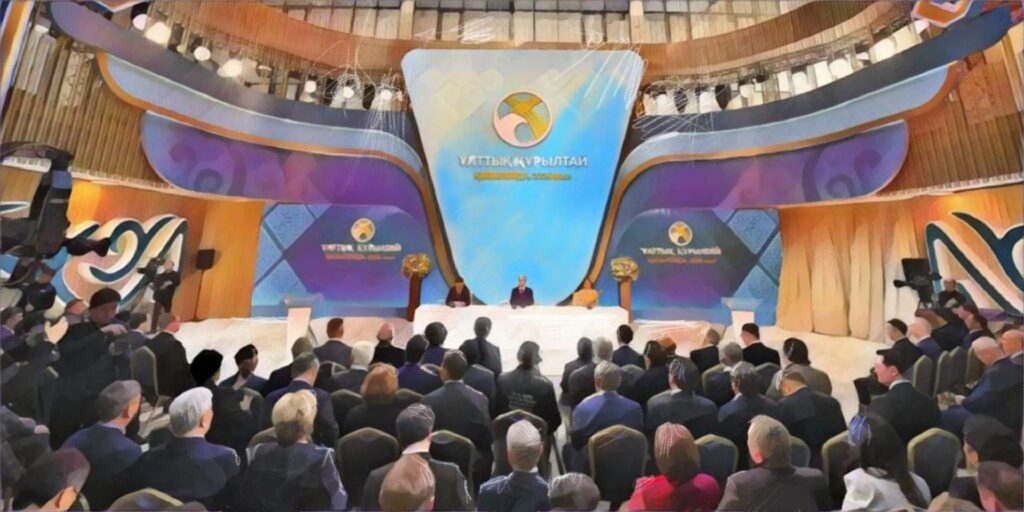
In mid-January 2026, President Kassym-Jomart Tokayev moved Kazakhstan’s parliamentary reform agenda onto a deeper constitutional track. He framed the emerging package as comparable, in substance, to adopting a new constitution rather than making a bounded set of amendments. He also presented it as a further move away from the institutional logic of the 1995 framework and as the logical next step after the 2022 referendum changes, with the legislative branch identified as the main site of redesign.

Tokayev laid out a two-stage pathway. First, a Constitutional Commission of more than 100 members is to consolidate proposals and draft a coherent text. The work is organized through the Constitutional Court leadership, and the participant pool is expected to include representatives of the National Kurultai, legal experts, media figures, maslikhat chairs, and regional public councils. The commission was established by decree shortly after Tokayev’s public rollout of the initiative, with early reporting identifying its chair and senior officers as part of the process’ initial institutionalization.

Second, the resulting draft is to be submitted to a nationwide referendum, with timing to be set once the commission produces an implementable package. This is an architecture exercise before it is a policy program. The direction is clear enough to describe, but the operative meaning will depend on still-undetermined details, including how headline concepts are translated into constitutional language and how the referendum track shapes that drafting process.

The Kurultai Plan and the Lawmaking Design

Tokayev’s central institutional move is to abolish the current bicameral parliament and replace it with a single chamber, the Kurultai, combining functions now divided between the Mazhilis and the Senate. The change is publicly presented as consolidation, with unicameralism framed as a simplification of legislative structure that still keeps parliament as the focal representative institution within a presidential system.

The package also sketches a streamlined internal design. Tokayev stated that the new chamber should comprise 145 deputies, with up to three deputy speakers and no more than eight committees. Public reports on the working-group discussions remark that earlier concepts ranged more widely before converging on 145; the current Mazhilis and Senate total 148 members. Tokayev indicated that deputies would be elected by proportional representation at the national level, while majoritarian rules would be retained at the regional level. He also signaled the removal of quota and appointment mechanisms associated with the existing system, including the elimination of a small number of presidentially appointed seats.

A unicameral legislature raises a predictable design problem. Consolidation can increase legislative throughput unless procedures are structured to preserve deliberation. Allies of the reform have therefore emphasized a shift to a three-reading format, presented as a way to make lawmaking more deliberative. In practice, the decisive criteria here are implementation choices that are not yet public. These include final electoral rules, the internal allocation of committee jurisdiction, and procedural requirements governing readings, hearings, and amendments. Those choices will determine whether the Kurultai becomes a stronger site of relatively autonomous bargaining and scrutiny or a more efficient transmission channel for executive-initiated legislation.

Appointment Power and the Vice Presidency

Tokayev’s package does more than redesign the legislature’s internal structure. It also reallocates how key constitutional, judicial, audit, and election-management institutions are staffed. In the current system, responsibilities for the formation of the Constitutional Court, the Supreme Audit Chamber, and the Central Election Commission are divided among the Mazhilis, the Senate, and the presidency. Under the proposed design, members of all three bodies would be appointed exclusively with the consent of Parliament. In addition, Parliament would elect all Supreme Court judges on presidential recommendation, shifting the decisive vote from the Senate to the single chamber.

The reform strengthens the legislature’s checking function in formal terms, but it does not automatically represent a transfer of substantive constraint from the executive to Parliament. The presidency would retain control over the nomination chokepoint for the Supreme Court, while parliamentary “consent” for other bodies could function as either real screening or routine ratification. Here again, the operative effects will be determined by implementing rules that are not yet public. These rules include nomination pathways, committee vetting authority, hearing requirements, voting thresholds, and the extent to which party discipline and informal executive leverage reduce parliamentary discretion.

The other main constitutional revision is the creation of a vice presidency and the associated succession rewrite. Tokayev proposes establishing the post of Vice President in the Constitution, appointed by the president with the consent of Parliament through a simple majority vote, with the scope of authority determined by the head of state. Public descriptions of expected functions include representing Kazakhstan internationally, representing the president’s interests in Parliament, and engagement with domestic and international organizations, alongside other duties assigned by the president. In parallel, Tokayev proposes removing the “remainder of term” logic for early presidential departure and requiring a new presidential election within two months. This design is presented as an unambiguous procedural script for crisis succession, tying any incoming head of state to direct electoral legitimation rather than to replacement through internal political arrangements.

From 1995 to 2026 and the Reform’s Systemic Meaning

The 1995 constitutional order consolidated a strongly presidential system with a bicameral parliament. The presidency held dominant agenda-setting authority and broad appointment prerogatives, while the Senate served as an additional institutional layer for legislation and for certain appointments and confirmations. This arrangement produced a recognizable super-presidential equilibrium even when formal “checks and balances” language remained present in the text.

The 2022 referendum package modified that equilibrium without redesigning it. It introduced constraints and symbolic breakpoints associated with the post-January 2022 reset, including the re-establishment of a Constitutional Court and other adjustments framed as reducing hyper-presidential concentration. The institutional form, however, remained bicameral, and the reform did not introduce a vice presidency or a revised crisis-succession script of the kind now proposed.

The 2026 initiative is a structural redesign. Tokayev’s team frames it as close to a new constitution, because it rewires the structure of the legislature, the appointment architecture, and the succession mechanism for early presidential departure, all at the same time. A unicameral legislature can increase Parliament’s formal leverage, but it can also shorten the route for executive-initiated legislation if party discipline is tight and agenda control remains concentrated. With proportional representation, it can lower formal entry barriers for parties, but it can also concentrate executive influence in the chamber if electoral thresholds and access to ballot-listing and media remain restrictive.

Outcomes will turn on nomination pathways and voting thresholds, and on whether oversight bodies acquire operational autonomy rather than remaining procedural formalities, regardless of how “balanced” executive–legislative relations look on paper. The vice presidency codifies succession continuity and timing while preserving presidential primacy through appointment control over the vice president’s mandate. This office can provide both executive–legislative coordination and succession continuity, but its practical significance for each will depend on staffing choices and on how the role is publicly framed.

What to Watch For

The central question is whether the new parliamentary checks are enforceable in practice against the presidential agenda and nomination control. The first visible tests will be concrete and near-term. They will appear in the first appointment cycle conducted under parliamentary consent rules, in the first high-salience audit and election-administration decisions taken by reconstituted bodies, and in the first major bill processed through the three-reading procedure. If Parliament can slow or block nominees without being bypassed, then “consent” starts to function as a real check rather than a formality; if not, the redesign will have clarified lines of responsibility while leaving the balance of power largely unchanged.

The referendum track deserves attention for a second reason. Since this redesign is being framed as a new constitutional foundation, a plebiscitary ratification can supply a distinct form of legitimacy that routine parliamentary passage cannot easily provide. That legitimacy can then be used in two directions. First, it can reinforce institutionalization by making the new rules harder to reverse in a casual manner. Second, it can actually reinforce executive primacy if the referendum is portrayed as a direct mandate for a presidency-centered model of “order.” As a result, how the Constitutional Commission publishes drafts, accepts criticism, and records dissent will matter for credibility even before formal voting takes place.

Tokayev’s professional formation as a political scientist and his international experience as a diplomat at the highest levels help explain the emphasis on institutional architecture and procedural scripting, including a clearer succession timetable. The longer-run meaning, however, will be revealed only under a successor presidency, when the interests of senior political actors are more likely to diverge than to align.