• KGS/USD = 0.01144 0%
  • KZT/USD = 0.00193 -0%
  • TJS/USD = 0.10811 -0.28%
  • UZS/USD = 0.00008 0%
  • TMT/USD = 0.28490 0%
  • KGS/USD = 0.01144 0%
  • KZT/USD = 0.00193 -0%
  • TJS/USD = 0.10811 -0.28%
  • UZS/USD = 0.00008 0%
  • TMT/USD = 0.28490 0%
  • KGS/USD = 0.01144 0%
  • KZT/USD = 0.00193 -0%
  • TJS/USD = 0.10811 -0.28%
  • UZS/USD = 0.00008 0%
  • TMT/USD = 0.28490 0%
  • KGS/USD = 0.01144 0%
  • KZT/USD = 0.00193 -0%
  • TJS/USD = 0.10811 -0.28%
  • UZS/USD = 0.00008 0%
  • TMT/USD = 0.28490 0%
  • KGS/USD = 0.01144 0%
  • KZT/USD = 0.00193 -0%
  • TJS/USD = 0.10811 -0.28%
  • UZS/USD = 0.00008 0%
  • TMT/USD = 0.28490 0%
  • KGS/USD = 0.01144 0%
  • KZT/USD = 0.00193 -0%
  • TJS/USD = 0.10811 -0.28%
  • UZS/USD = 0.00008 0%
  • TMT/USD = 0.28490 0%
  • KGS/USD = 0.01144 0%
  • KZT/USD = 0.00193 -0%
  • TJS/USD = 0.10811 -0.28%
  • UZS/USD = 0.00008 0%
  • TMT/USD = 0.28490 0%
  • KGS/USD = 0.01144 0%
  • KZT/USD = 0.00193 -0%
  • TJS/USD = 0.10811 -0.28%
  • UZS/USD = 0.00008 0%
  • TMT/USD = 0.28490 0%
10 December 2025

EBRD Commits to Green Investment in Tajikistan

EBRD Pledges New Resources for Green Investment in Tajikistan

The European Bank for Reconstruction and Development (EBRD) is committing fresh funds to facilitating better access to green technologies and climate adaptation for businesses and households in Tajikistan, a news release on the bank’s website states.

The US$ 50 million Tajikistan Green Economy Financing Facility II (GEFF Tajikistan II), launched by the EBRD and the Green Climate Fund (GCF), will promote higher standards of energy and resource efficiency and support the country’s transition to a greener economy. GEFF Tajikistan II will encourage residential and commercial borrowers to invest in green and innovative solutions (available through the programme’s website) that promote the efficient use of water and the sustainable management of land. It will pay special attention to the country’s agribusiness sector, which employs almost half of Tajikistan’s workforce and is responsible for more than 22.5 per cent of gross domestic product.

Up to US$ 13 million, including US$ 11 million under GEFF Tajikistan II, will be earmarked for three domestic financial institutions: Bank Arvand (US$ 4 million), microlenders Humo (US$ 5 million) and Imon International (US$ 4 million). With a joint base of more than 540,000 clients and operational even in remote mountainous parts of the country, the three institutions are well placed to bring much-needed green finance to even the smallest borrowers across Tajikistan.

The new facility builds on the US$ 25 million Green Economy Financing Facility I (GEFF Tajikistan I), which was supported by the European Union and operational from 2019 to 2023. GEFF Tajikistan I supported more than 4,600 sub-projects. Each year, these generated over 24,000 MWh of energy savings, reduced CO2 emissions by 5,195 tonnes and cut water consumption by 5.2 million m3.

GEFF Tajikistan II is supported by donor funding from South KoreaAustria and the GCF.

Kyrgyzstan: EU Holds Training Workshops on Sanctions Against Russia

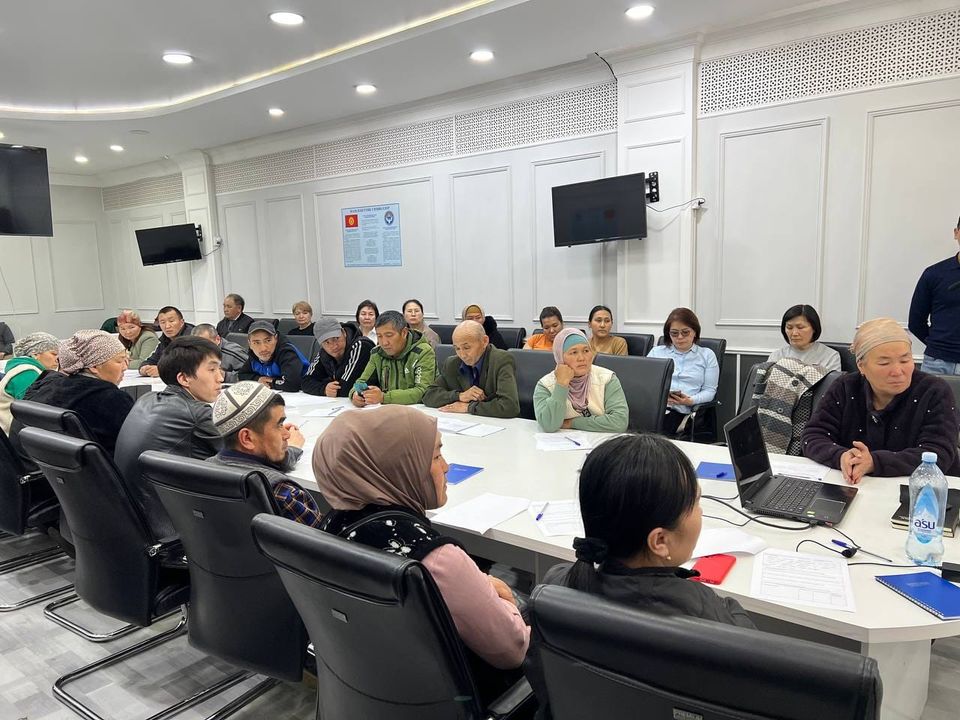
As reported by the press and information team of the Delegation of the European Union to the Kyrgyz Republic, on November 9th and 10th, the European Union organized training workshops in Bishkek, Kyrgyzstan on EU sanctions against Russia, with support from the International Science and Technology Center (ISTC), and the Association of Certified Sanctions Specialists (ACSS).

The primary aim of the workshops was to raise awareness of EU sanctions and their application, and to prevent possible circumvention of these measures. On the 9th, the meeting saw government officials gather, whilst the second day was dedicated to a workshop which targeted private operators in Kyrgyzstan interested in improving their awareness of EU sanctions.

“I am delighted that so many people from the Kyrgyz authorities and the private sector chose to attend the EU Sanctions Training Seminar this week”, said the acting Head of the EU Delegation to Kyrgyzstan, Ms Lene Volkersen. “It has been great to witness the strong Kyrgyz interest in understanding how EU sanctions work. The ultimate goal of the EU’s sanctions against Russia is to undermine its ability to continue waging war against Ukraine, and we welcome that Kyrgyzstan is not willing to be used as a platform for sanctions circumvention. We look forward to continuing this dialogue with government authorities, as well as private sector”.

The training workshops were conducted by a team of EU representatives and sanctions experts, and consisted of presentations and interactive question and answer sessions.

ADB Helps Support Privatization, Expand Lending to MSMEs in Uzbekistan

According to a press release by the Asian Development Bank (ADB), the bank, in partnership with Sanoat Qurilish Bank (SQB) have signed a $50 million senior convertible loan to support Uzbekistan’s privatization of state-owned banks, which will strengthen the banking sector, and contribute to economic growth and job creation. The International Finance Corporation (IFC) and the European Bank for Reconstruction and Development (EBRD) are parallel lenders.

The loan will be used to help SQB expand its financing to underserved micro, small, and medium-sized enterprises (MSMEs), including those owned or led by women (WMSMEs). Portfolio diversification will contribute to SQB’s transition into a fully universal commercial bank by serving a broader customer segment. ADB will also provide technical assistance to help SQB implement its transformation roadmap.

“ADB fully supports the Government of Uzbekistan in its transformation to a vibrant and inclusive market economy and its implementation of banking sector reforms”, said ADB’s Director General of the Private Sector Operations Department, Suzanne Gaboury. “This project will support the stability of the country’s banking system, capitalization and deposit levels, while strengthening resilience and lending to climate projects and underserved MSMEs and WMSMEs”.

According to ADB’s Uzbekistan Country Director, Kanokpan Lao-Araya, “MSMEs continue to struggle to secure commercial financing to fund their growth, with women-owned enterprises being the most affected. ADB is supporting an enabling environment in Uzbekistan for MSMEs gain easier access to markets, as well as providing much needed financing to close the financing gap for MSMEs. ADB’s partnership with SQB builds on those two objectives”.

MSMEs play a significant role in Uzbekistan’s economy, comprising the majority of registered businesses and employing 74% of the workforce. However, access to financing remains a challenge, with only 13% of the sector having access to commercial loans. Women-led businesses face an even greater financing gap, estimated at $2.7 billion, with loans to women-owned businesses making up just 2.5% of total bank loans.

UNDP Outlines Approach for Green Transition

As outlined in a press release on its website, the United Nations Development Programme (UNDP) has embarked on a mission to apply foresight to its programme activities, with an initial focus on the Green Transition. This approach seeks to envision alternative futures and explore their implications for policy development. UNDP aims to foster collaboration by engaging government agencies, think tanks, NGOs, and the private sector, incorporating diverse perspectives into the decision-making process, UNDP Uzbekistan said.

Matilda Dimovska, UNDP Resident Representative in Uzbekistan highlighted that “We are proud to announce the first exercise on Green Transition Foresight in Uzbekistan as a groundbreaking milestone. By uniting various stakeholders, we have fostered a collaborative environment that has yielded thought-provoking outcomes in the form of drivers of change, scenarios, and potential implications. Our objective is not to predict specific outcomes, but rather to stimulate critical thinking, question prevailing assumptions, and uncover influential forces that can shape policies for a sustainable future in the world of uncertainties”.

Through a series of engaging online and in-person interactions from 2022 to 2023, futurologists, UNDP experts, and government partners utilized the University of Houston’s Foresight Framework. This collaborative effort involved domain mapping, scanning for signals of change, generating drivers of change, modeling alternative future scenarios, and identifying actionable ideas to support ongoing government reforms. Among the identified ideas are the development of a national tariff system, prioritizing youth involvement in the green economy, focusing on internal capacity building, and fostering cross-government coordination.

Building on the insights gained, UNDP plans to continue experimentation and prototyping, allowing for the development of adaptable strategies and policies. By employing narrative scenarios, UNDP aims to ensure resilience and responsiveness to unforeseen challenges.

UNDP remains committed to providing necessary assistance in leveraging foresight and scenario-based approaches in policymaking to enable transformative change. Through these efforts, UNDP is dedicated to supporting Uzbekistan in navigating the complexities of the Green Transition and building a sustainable future.

Teen Jailed for Derogatory Post About President Mirziyoyev

A Samarkand regional court has sentenced a 19-year-old Uzbek individual to two-and-a-half years in prison for derogatory comments aimed at President Shavkat Mirziyoyev in an Instagram post featuring the presidential family, some of whom hold significant political and business positions, as per RFE/RL’s Uzbek Service.

Dilshod Iskandarov becomes the latest among at least three Uzbeks convicted within the last year under a criminal statute related to insulting or defaming the president. Iskandarov reportedly deleted the post following warnings from relatives about its potential consequences.

Kazakhstan: Convicted Former Security Chief Massimov Faces New Charges

New charges of money laundering and taking a bribe have been levelled at the imprisoned former chief of Kazakhstan’s National Security Committee (KNB), Karim Massimov. On November 14th, the KNB’s press service said that Massimov is currently in a pretrial detention center in Astana awaiting trial on the new charges. No further details regarding the charges were provided.

In April, Massimov, a close ally of former President Nursultan Nazarbayev, was sentenced to 18 years over his role in the deadly events which followed unprecedented anti-government protests in January 2022. His deputies, Anuar Sadyqulov and Daulet Erghozhin, were sentenced to 16 years and 15 years in prison in respectively. A court in Astana found all three men guilty of high treason, attempting to seize power by force, and the abuse of their offices and power. Another former deputy of Massimov, Marat Osipov, was sentenced to three years in prison on a charge of abuse of office at the same trial. Massimov’s first deputy, Samat Abish, a nephew of Nazarbayev, was dismissed from his post, but did not face any charges.

The 58-year-old Massimov was arrested days after the initially peaceful protests turned into widespread violent unrest and coordinated attacks on government installations which left at least 238 people, including 19 law enforcement officers, dead. The protests began in the southwestern town of Zhanaozen early January 2022 over a sudden hike in the price of fuel, before demonstrations quickly spread into broader unrest against corruption, and perceived injustice.