• KGS/USD = 0.01144 0%
  • KZT/USD = 0.00192 -0%
  • TJS/USD = 0.10866 0.18%
  • UZS/USD = 0.00008 0%
  • TMT/USD = 0.28571 0%
  • KGS/USD = 0.01144 0%
  • KZT/USD = 0.00192 -0%
  • TJS/USD = 0.10866 0.18%
  • UZS/USD = 0.00008 0%
  • TMT/USD = 0.28571 0%
  • KGS/USD = 0.01144 0%
  • KZT/USD = 0.00192 -0%
  • TJS/USD = 0.10866 0.18%
  • UZS/USD = 0.00008 0%
  • TMT/USD = 0.28571 0%
  • KGS/USD = 0.01144 0%
  • KZT/USD = 0.00192 -0%
  • TJS/USD = 0.10866 0.18%
  • UZS/USD = 0.00008 0%
  • TMT/USD = 0.28571 0%
  • KGS/USD = 0.01144 0%
  • KZT/USD = 0.00192 -0%
  • TJS/USD = 0.10866 0.18%
  • UZS/USD = 0.00008 0%
  • TMT/USD = 0.28571 0%
  • KGS/USD = 0.01144 0%
  • KZT/USD = 0.00192 -0%
  • TJS/USD = 0.10866 0.18%
  • UZS/USD = 0.00008 0%
  • TMT/USD = 0.28571 0%
  • KGS/USD = 0.01144 0%
  • KZT/USD = 0.00192 -0%
  • TJS/USD = 0.10866 0.18%
  • UZS/USD = 0.00008 0%
  • TMT/USD = 0.28571 0%
  • KGS/USD = 0.01144 0%
  • KZT/USD = 0.00192 -0%
  • TJS/USD = 0.10866 0.18%
  • UZS/USD = 0.00008 0%
  • TMT/USD = 0.28571 0%
12 December 2025

Kazakhstan Signs Twenty Deals Worth $4.85 Billion in Dubai

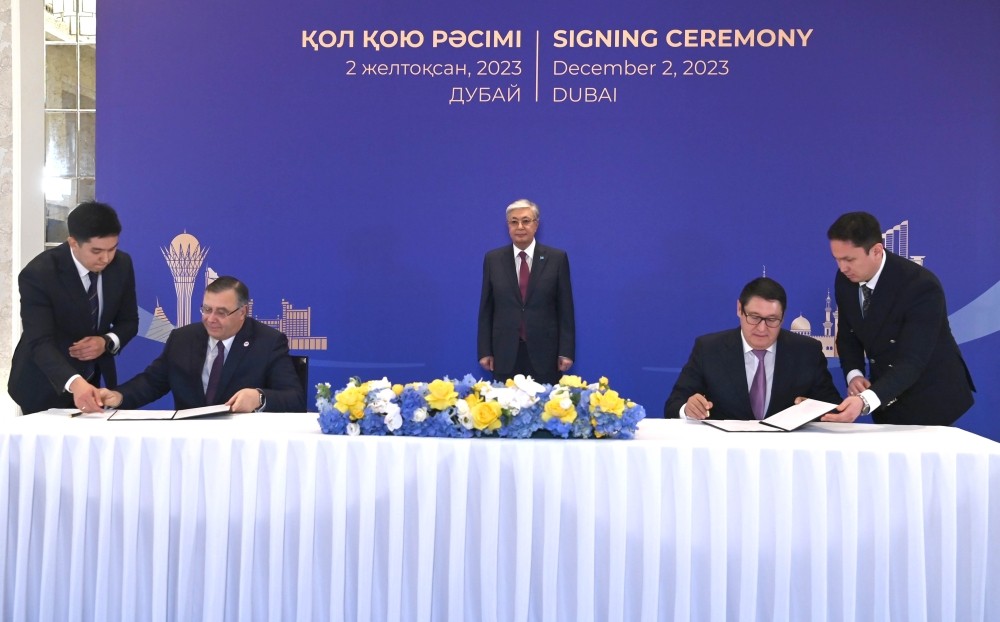
On December 2nd, during his visit to the United Arab Emirates (UAE), President of Kazakhstan, Kassym-Jomart Tokayev, oversaw the signing of twenty commercial agreements. These agreements, facilitated by the Ministry of Foreign Affairs of Kazakhstan and the National Company KAZAKH INVEST, are collectively worth $4.85 billion.

A landmark agreement was reached between the governments of Kazakhstan and the UAE for a $1.4 billion construction project of a 1 GW wind power station in Kazakhstan. The project will be implemented with the assistance of Masdar, a UAE-based renewable energy company.

Furthermore, a Memorandum of Understanding (MoU) was signed between the Ministry of Energy of Kazakhstan, JSC Samruk-Kazyna, and the Ministry of Investments of the UAE. This MoU outlines plans for implementing low-carbon energy projects with a combined capacity of 10 GW. In addition, JSC Samruk-Kazyna and ACWA Power agreed to jointly develop a project for the construction of wind power stations with a total capacity of 1 GW and an energy storage system in the Zhetysu region in Kazakhstan.

An investment agreement was also inked between the Government of Kazakhstan and French company Total Energies. This agreement pertains to the development, construction, and operation of a wind power station with a total capacity of 1 GW in the Zhambyl region of Kazakhstan.

In terms of venture funding, the Qazaqstan Investment Corporation established a co-investment platform with ADQ, an Abu Dhabi-based investment and holding company, on strategic partnership for creating a joint financing mechanism for venture projects. Moreover, a joint venture agreement was signed between JSC National Company Kazakhstan, Temir Zholy, and the Abu Dhabi Ports Group. The agreement covers collaboration in five key areas: maritime transportation, maritime and dry ports, railway logistics, digitization, and trading5.

Lastly, the JSC National Company KAZAKH INVEST and Emirati company Al Amana Power Solutions agreed to initiate the development of renewable energy projects with investments exceeding $100 million.

Overall, these agreements underscore Kazakhstan’s commitment to sustainable energy and international collaboration in pursuing green initiatives.
By 2035, the Capacity of Hydroelectric Power Plants in Central Asia Will Increase by 8,900MW

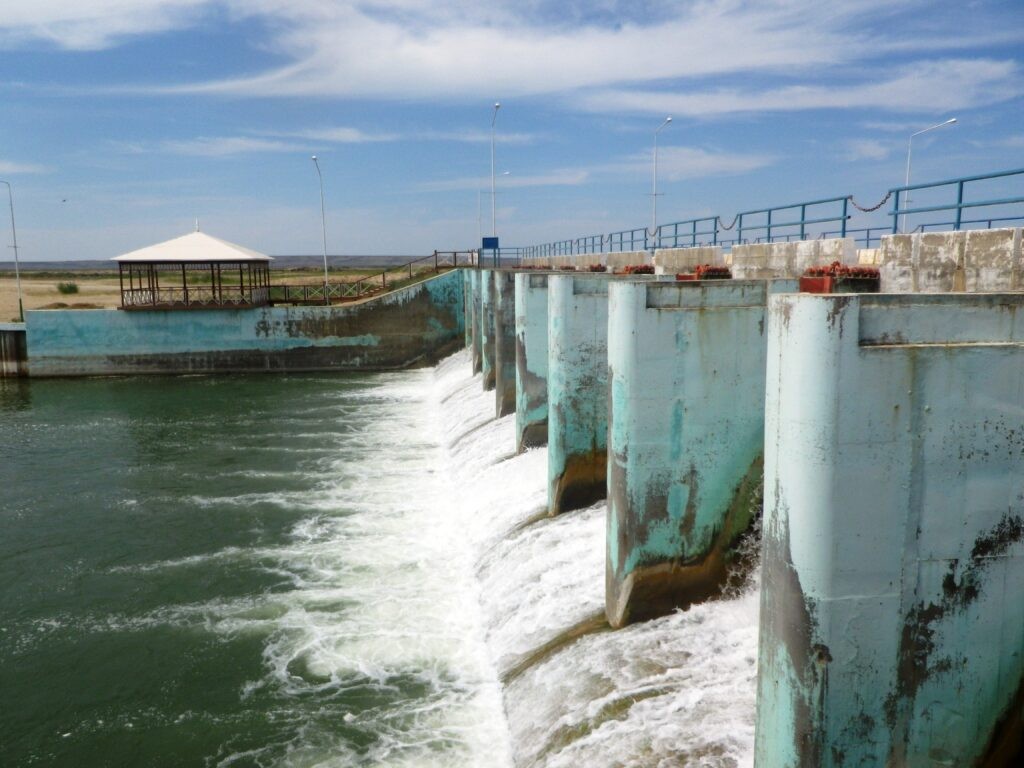
By 2028-2029, Central Asia will face a permanent and persistent water scarcity, with a deficit estimated to be between 5-12 cubic kilometers annually. At the same time, the demand for electricity in Central Asia is expected to increase significantly over the next ten years, Nikolai Podguzov, Chairman of the Eurasian Development Bank (EDB) Management Board said this week at the World Hydropower Congress in Bali.

“In the Central Asian region, hydropower plays a key role not only in generating electricity, but also in regulating river runoff for irrigation purposes,” Podguzov stated. “In this regard, the countries of the region are interested in the multipurpose use of their water resources, and wish to attract investment to develop water resources potential”.

According to Podguzov, the construction of new hydroelectric power plants with reservoirs and the modernization of already functioning HPPs will both serve to reduce the impact of climate change and ensure the steady economic and social development of the region, which is highly reliant on affordable, environmentally-friendly energy and a sustainable irrigation supply.

“According to our estimates, Central Asia is one of the few regions in the world where the hydropower potential has been developed by less than 25%”, Podguzov said. “Currently, there are more than 80 hydroelectric power plants operating in the region, with a total installed capacity of about 14,000 MW. In the period up to 2035, it is planned to increase the capacity of local hydroelectric power plants by 8,900 MW through the modernization of already functioning HPPs and the construction of new ones. The largest new projects being implemented include the construction of the 1,860 MW Kambarata HPP-1 in the Kyrgyz Republic, and the 3,600 MW Rogun HPP in Tajikistan”.

USAID Announces the Launch of Tuberculosis-Free Uzbekistan

The U.S. Agency for International Development (USAID), in partnership with Uzbekistan’s Ministry of Health and Abt Associates, is launching TB-Free Uzbekistan, a five-year initiative investing $18 million to provide comprehensive support services and increase access to key tuberculosis (TB) services across the country.

Uzbekistan is dealing with high rates of multidrug-resistant TB, which pose a significant threat to Uzbekistan’s public health system and the country’s economic development. Uzbekistan is making steady progress, but TB remains one of its most pressing public health threats. According to Uzbekistan’s Ministry of Health, in 2022, 8% of new TB cases in the country had resistance to two of the most commonly used and effective treatment drugs.

USAID leads the U.S. Government’s global TB efforts, and has been a partner to the Government of Uzbekistan in the fight against TB. As the world’s largest bilateral donor, USAID uses new innovations and research to accelerate efforts to end TB.

USAID had a robust presence at the United Nations high-level meeting on TB on September 22nd, 2023. USAID’s Assistant Administrator for Global Health, Atul Gawande, participated in multiple events, culminating in a high-level meeting at which he launched the Global Accelerator to End TB Plus, an enhanced package of interventions that will accelerate the development of strategies to achieve a more accountable, responsible, and inclusive TB response.

From 1993 to 2023, the total amount of the U.S. Government assistance to Uzbekistan in health has totaled over $155 million of which nearly $60 million was focused on TB mitigation.

Turkmenistan Strengthens Cooperation with UNODC

A significant meeting convened at the United Nations headquarters in Vienna on November 8, 2023, witnessing the collaboration between Turkmenistan’s Deputy Prosecutor General-led delegation and the leadership of the United Nations Office on Drugs and Crime (UNODC). Central to the discussions was Turkmenistan’s recent decision to become a part of the Global Operational Network of Anti-Corruption Law Enforcement Authorities, known as the GlobE system. Both parties acknowledged this step and expressed their mutual readiness to engage in robust collaboration within this network, indicating a shared commitment to combatting corruption.

The meeting delved into the comprehensive efforts under the UN Convention against Transnational Organized Crime and its three additional Protocols, signifying the mutual dedication to addressing transnational criminal activities. Additionally, discussions encompassed the implementation and impact of the UN Convention against Corruption, reflecting the shared pursuit of curbing corruption on a global scale.

Amidst the dialogue, the participants explored the future potential for collaboration between Turkmenistan and UNODC, highlighting the ongoing commitment to foster partnerships and initiatives aimed at promoting security, justice, and the rule of law.

EBRD Commits to Green Investment in Tajikistan

EBRD Pledges New Resources for Green Investment in Tajikistan

The European Bank for Reconstruction and Development (EBRD) is committing fresh funds to facilitating better access to green technologies and climate adaptation for businesses and households in Tajikistan, a news release on the bank’s website states.

The US$ 50 million Tajikistan Green Economy Financing Facility II (GEFF Tajikistan II), launched by the EBRD and the Green Climate Fund (GCF), will promote higher standards of energy and resource efficiency and support the country’s transition to a greener economy. GEFF Tajikistan II will encourage residential and commercial borrowers to invest in green and innovative solutions (available through the programme’s website) that promote the efficient use of water and the sustainable management of land. It will pay special attention to the country’s agribusiness sector, which employs almost half of Tajikistan’s workforce and is responsible for more than 22.5 per cent of gross domestic product.

Up to US$ 13 million, including US$ 11 million under GEFF Tajikistan II, will be earmarked for three domestic financial institutions: Bank Arvand (US$ 4 million), microlenders Humo (US$ 5 million) and Imon International (US$ 4 million). With a joint base of more than 540,000 clients and operational even in remote mountainous parts of the country, the three institutions are well placed to bring much-needed green finance to even the smallest borrowers across Tajikistan.

The new facility builds on the US$ 25 million Green Economy Financing Facility I (GEFF Tajikistan I), which was supported by the European Union and operational from 2019 to 2023. GEFF Tajikistan I supported more than 4,600 sub-projects. Each year, these generated over 24,000 MWh of energy savings, reduced CO2 emissions by 5,195 tonnes and cut water consumption by 5.2 million m3.

GEFF Tajikistan II is supported by donor funding from South KoreaAustria and the GCF.

Kyrgyzstan: EU Holds Training Workshops on Sanctions Against Russia

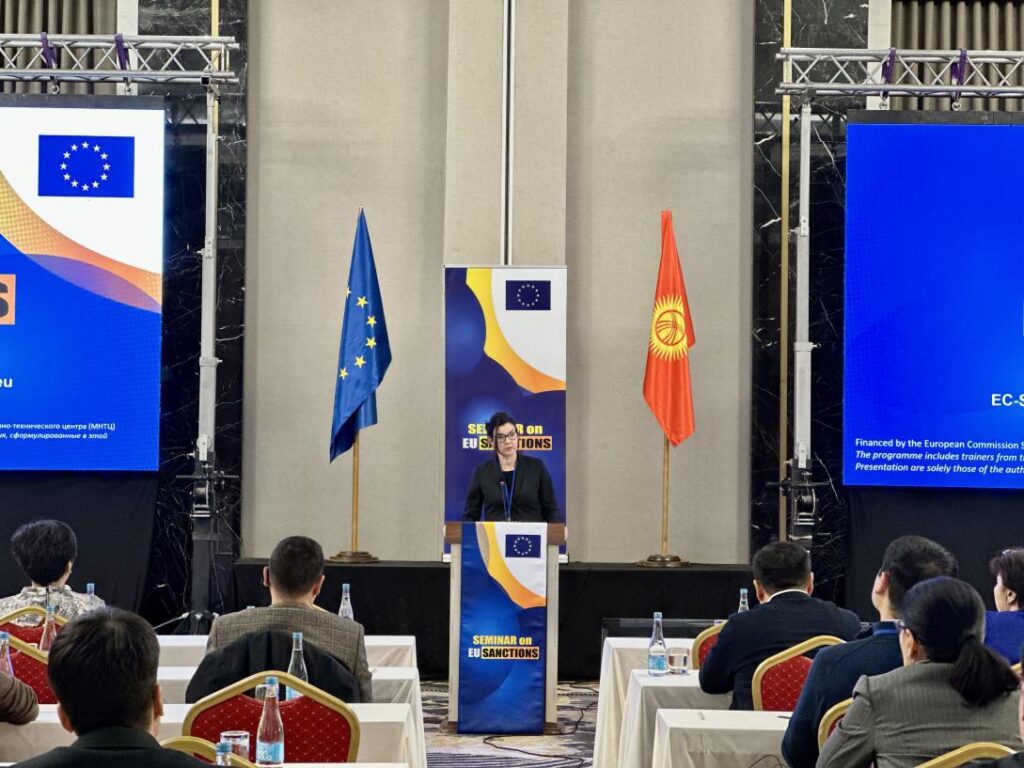
As reported by the press and information team of the Delegation of the European Union to the Kyrgyz Republic, on November 9th and 10th, the European Union organized training workshops in Bishkek, Kyrgyzstan on EU sanctions against Russia, with support from the International Science and Technology Center (ISTC), and the Association of Certified Sanctions Specialists (ACSS).

The primary aim of the workshops was to raise awareness of EU sanctions and their application, and to prevent possible circumvention of these measures. On the 9th, the meeting saw government officials gather, whilst the second day was dedicated to a workshop which targeted private operators in Kyrgyzstan interested in improving their awareness of EU sanctions.

“I am delighted that so many people from the Kyrgyz authorities and the private sector chose to attend the EU Sanctions Training Seminar this week”, said the acting Head of the EU Delegation to Kyrgyzstan, Ms Lene Volkersen. “It has been great to witness the strong Kyrgyz interest in understanding how EU sanctions work. The ultimate goal of the EU’s sanctions against Russia is to undermine its ability to continue waging war against Ukraine, and we welcome that Kyrgyzstan is not willing to be used as a platform for sanctions circumvention. We look forward to continuing this dialogue with government authorities, as well as private sector”.

The training workshops were conducted by a team of EU representatives and sanctions experts, and consisted of presentations and interactive question and answer sessions.