Just a few months ago, Uzbek President Shavkat Mirziyoyev was criticizing cotton production in Uzbekistan’s history as having turned people into “slaves of cotton.”
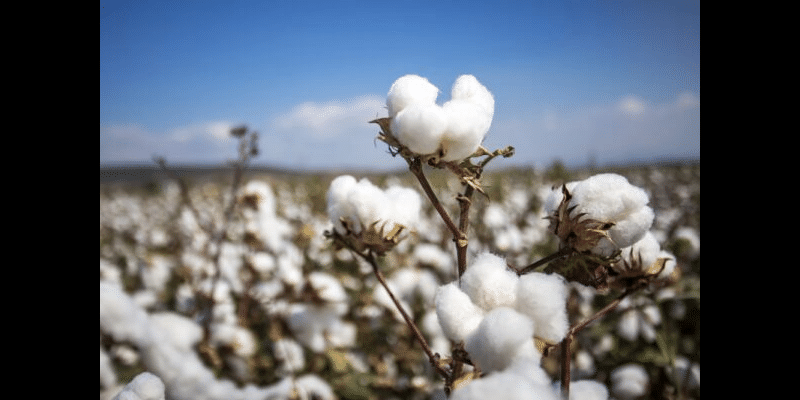
However, figures released at the start of November showed Uzbekistan gathered the largest cotton harvest in its 35 years as an independent country, some 5 million tons.
Mirziyoyev is now planning to open new cotton fields and boost cotton production using modern technology.
Controversial Legacy
Uzbekistan has long been associated with cotton. Tsarist Russian troops occupied most of what is now Uzbekistan between 1860 and 1875, coinciding with Russia’s loss of cotton imports from the United States that started with the beginning of the civil war there.
Central Asia quickly became one of Russia’s biggest suppliers of cotton.
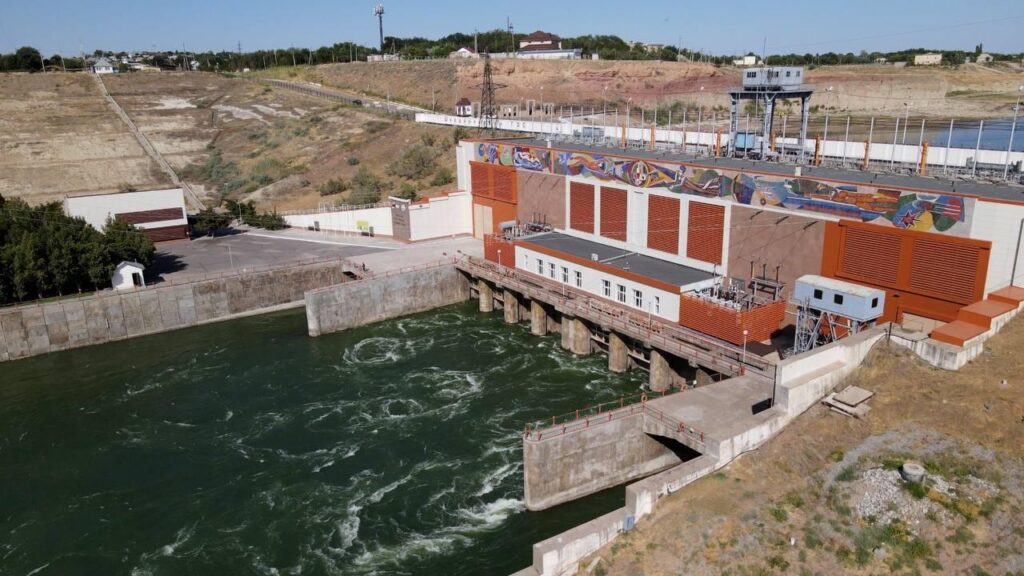
Under the Soviet government, cotton production was expanded. Canals were dug, bringing water from rivers to the ever-expanding cotton fields being planted. Eventually, this led to the desiccation of the Aral Sea, once the fourth largest lake in the world. Now, more than 90% has dried up.
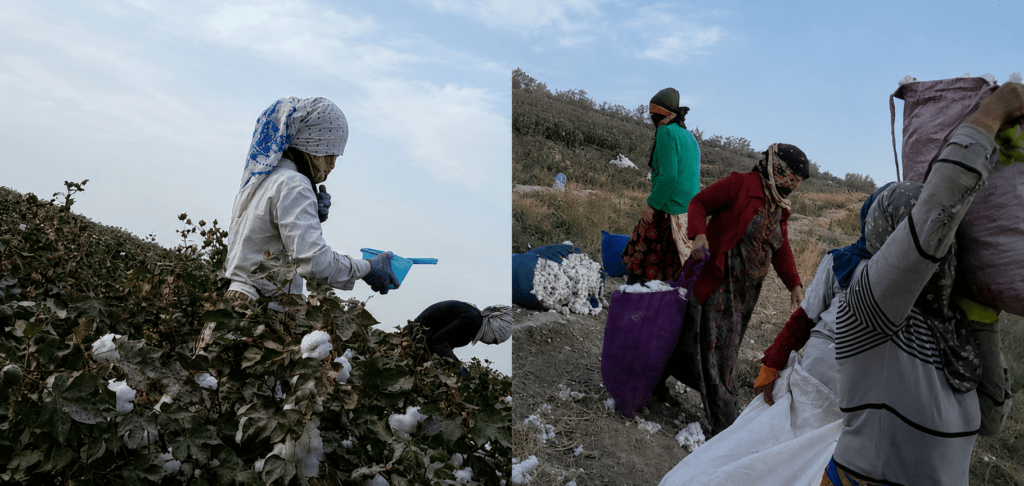
In Soviet times, gathering the cotton harvest was promoted as a patriotic duty, and citizens were expected to voluntarily go into the fields and help. Many who would not go voluntarily were forced to. This practice continued after the Soviet Union collapsed in late 1991 and Uzbekistan became independent. Cotton was “oq oltyn,” Uzbekistan’s “white gold,” and its export was an important source of hard currency for the newly-independent state.
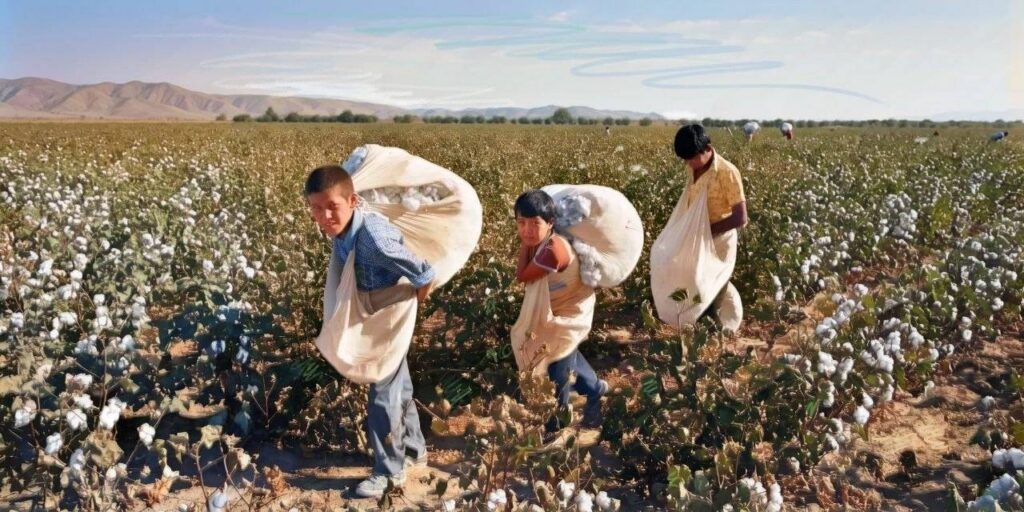
Between 1 and 2 million people were conscripted annually to pick cotton at harvest time: “schoolchildren, students, teachers, and public-sector employees.” For many soldiers, picking cotton was part of their duty.
In 2009, the international coalition Cotton Campaign started calling for a boycott of Uzbek cotton until Uzbekistan’s government stopped using forced labor. Many companies, mostly Western, honored the boycott.
Mirziyoyev was speaking about this history, and shortly after he became president in late 2016, Uzbekistan started eliminating the use of child labor, then forced labor generally, and offering people wages to pick cotton at harvest time.
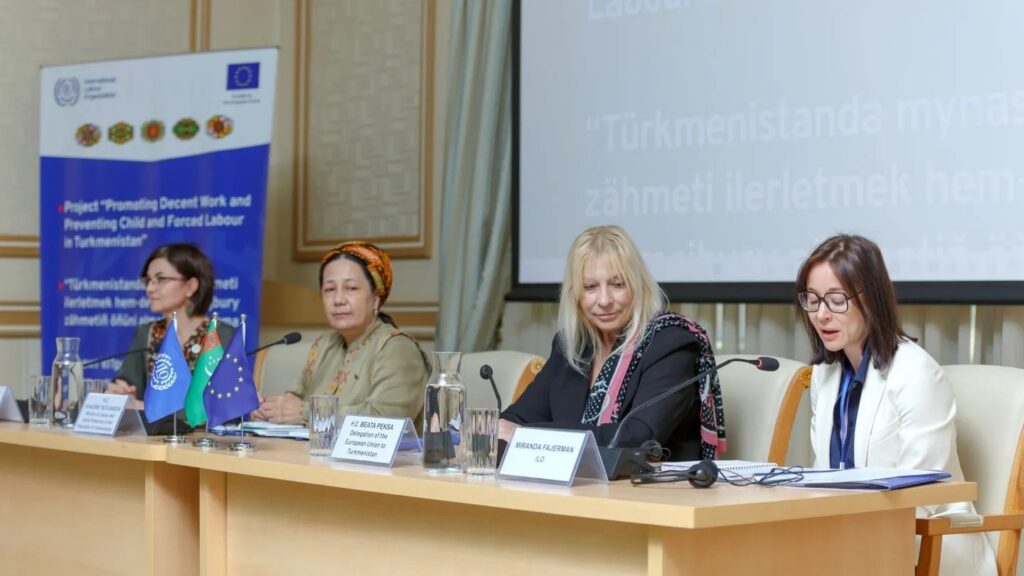
By early 2022, the International Labor Organization reported that forced labor in Uzbekistan’s cotton fields had been nearly eradicated and “99% of those involved in the 2021 cotton harvest worked voluntarily.”
Down with Cotton
In July 2017, Mirziyoyev said, “Instead of [cotton], we should grow fruit and vegetables, melons and marrows, which are more profitable.”
Later that same year, Mirziyoyev recalled the years he was put in charge of Uzbekistan’s cotton harvest, saying the government “never paid people a salary,” and that it was a humiliation for Uzbekistan.
Mirziyoyev ordered some of the country’s cotton fields to be converted into land for edible crops.
In 1990, the last year Uzbekistan harvested some 5 million tons of cotton, about 1.83 million hectares of land were used for cotton production.
Up with Cotton
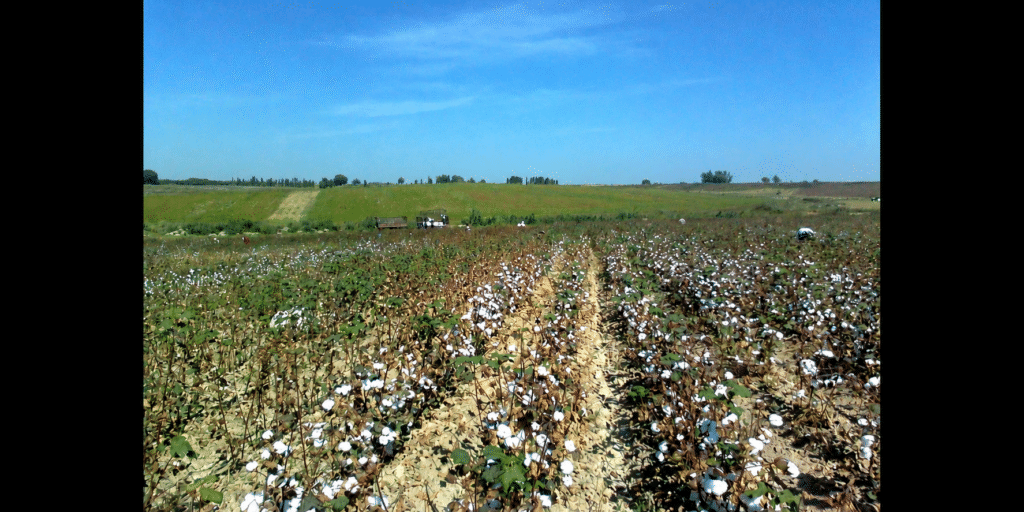
In 2026, some 890,000 hectares of land were used for cotton-growing, and during a visit to the eastern Ferghana Province in April 2026, Mirziyoyev ordered an additional 50,000 hectares of “low-yield” cotton and grain fields be changed to orchards and rice fields.
The success of this year’s cotton harvest apparently has Mirziyoyev reconsidering the gradual reduction of cotton fields, though he is looking at new techniques and new land to keep the industry producing.
On November 4, just after the news of the record cotton harvest, Mirziyoyev called for the Bukhara Province alone to be producing 1 million tons of cotton within two to three years.
Mirziyoyev said part of that would be accomplished by using reclaimed desert. The Bukhara provincial administration reported on August 3 that about 2,000 hectares of desert land had been converted to cotton-growing using so-called “Xinjiang technology” drip-farming with help from Chinese specialists.
Uzbek agricultural authorities are hoping to open up 100,000 hectares of desert land to farming in areas of western Uzbekistan. Additionally, hybrid cotton types able to thrive in “desert conditions, extreme heat, and saline or sandy soils” are being developed, and some are already being tested, notably in Bukhara Province.
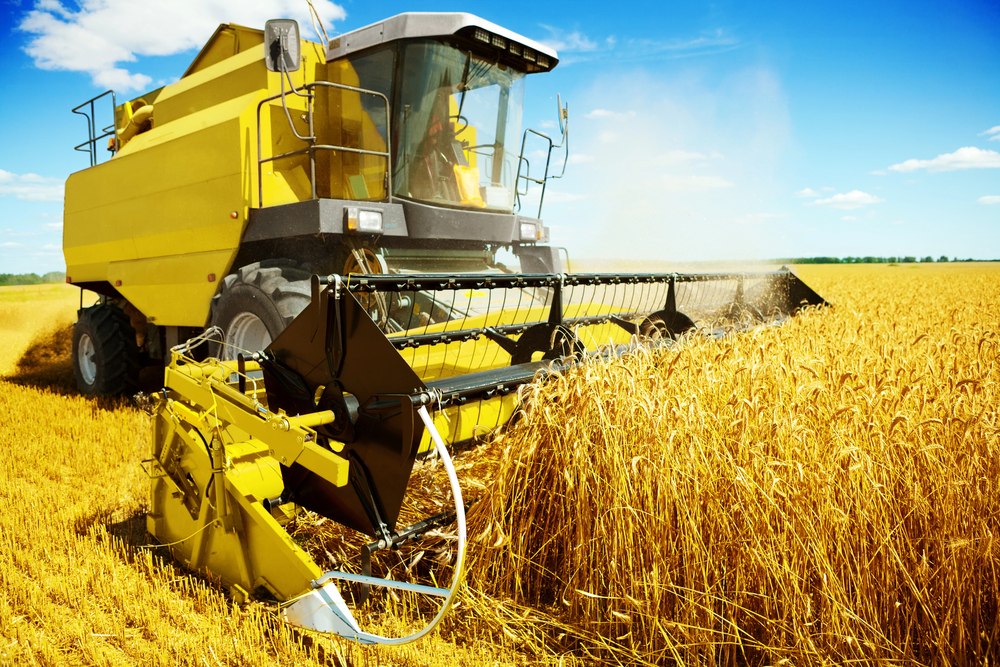
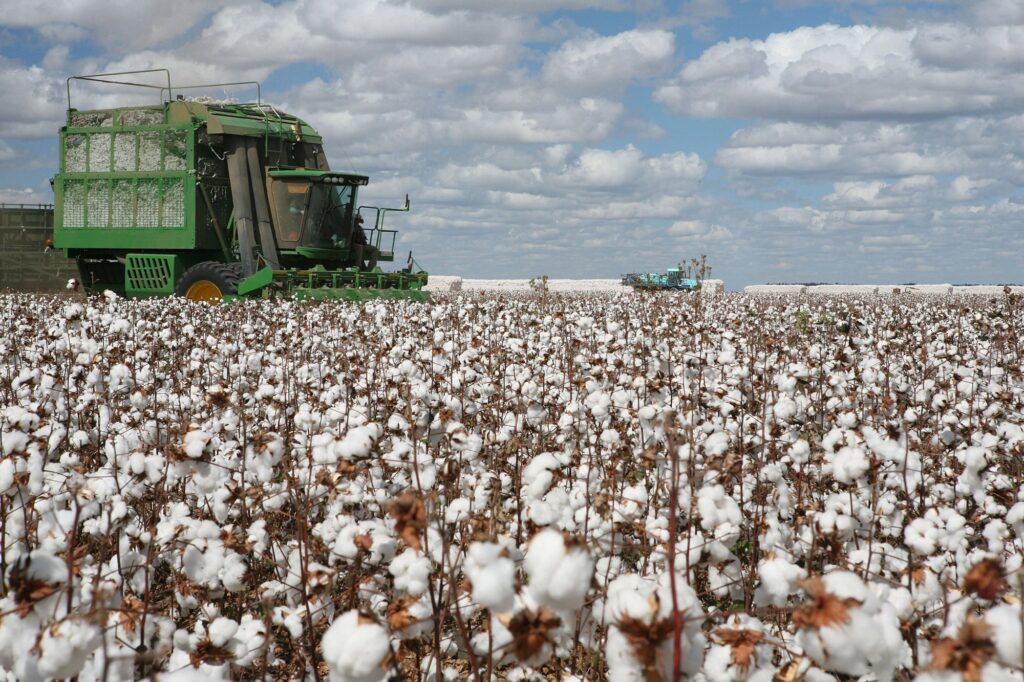
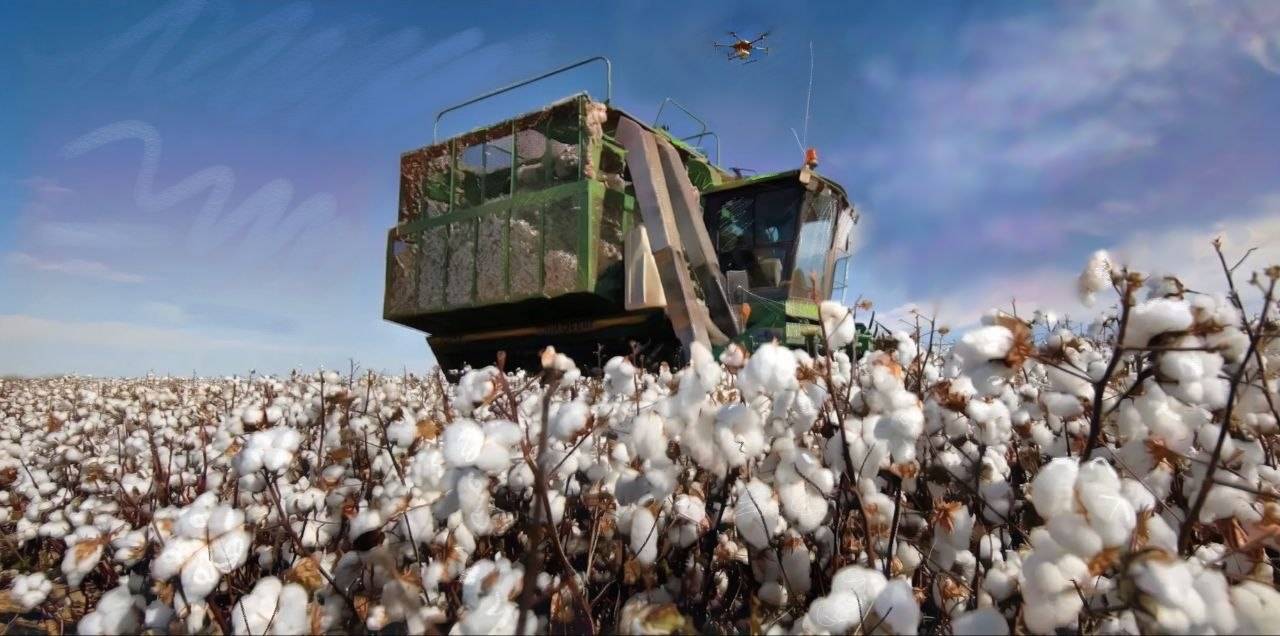
Mirziyoyev also credited the expansion of mechanized farming, saying cotton harvesters and combines accounted for around 85% of the cotton crop gathered in 2026. In Jizzakh and Syrdarya provinces, the figure was 100% of the harvest.
Mirziyoyev also mentioned the use of drones and digitalization as helping to cut losses in half. And the Uzbek president pointed out that the average yield has increased from 2.1 tons per hectare in the early years of Uzbekistan’s independence to 5.6 tons per hectare now. Mirziyoyev called for raising this to 6.5-7 tons per hectare in 2027.
The Value of Cotton
Anyone raised in Uzbekistan would understand the value the government has placed on cotton.
Cotton is on the state emblem. One of the premier football clubs in the country is “Paxtakor,” which means cotton-worker or cotton-grower. One of the Tashkent metro stations is named Paxtakor.
After Mirziyoyev became Uzbekistan’s leader a decade ago, it appeared cotton was being phased out, and there were good reasons for doing so. Besides the stigma several million people carry from being forced into cotton fields in scorching heat and sometimes working 12 hours or more a day, Uzbekistan has a rapidly growing population.
When 5 million tons of cotton was harvested in 1990, the population was about 20 million. Now, the population is more than 39.5 million and is on track to hit 40 million in early 2027.
This population needs to be fed, and that demands ever greater agricultural output.
Several years ago, the Uzbek authorities were considering leasing farmland in Russia to grow wheat and soy, and in April 2026 were discussing a deal to use grazing land in Russia’s Irkutsk region for cattle-breeding. The talks with Irkutsk officials followed the successful conclusion just days earlier of an agreement with authorities in Belarus for Uzbek investors to lease land in Belarus’ Vitsyebsk region for cattle-breeding.
Uzbekistan is using about half the amount of land it was using 30, even 20 years ago for growing cotton, and some of the land it is now using for cotton was desert just a few years ago.
There are no more patriotic campaigns to convince people to give up their free time and go pick cotton, and systemic forced labor in the cotton harvest has ended.
If Mirziyoyev is correct about the widespread use of mechanized farming, the number of people harvesting cotton is probably in the tens of thousands, whereas going back as recently as 2014, it was some 2 million.
Mirziyoyev said Uzbekistan’s farmers could expect to see 13-14 trillion som (about $1.08 – $1.17 billion) in profits from sales of this year’s cotton crop. Textile sales during the first eight months of 2026 reportedly came to $2.1 billion and accounted for 9.4% of Uzbekistan’s exports.
President Mirziyoyev and his government have resolved the key problems with Uzbekistan’s cotton industry. This year’s record harvest comes despite fewer people, less land, and less water being used.
Cotton is ingrained in Uzbekistan’s culture, and the country is turning desert into farmland to grow cotton. But the population will still be approaching 50 million by the end of the 2030s, raising questions about how cotton expansion fits alongside the increased need for food.
The big question, therefore, is how important cotton is to Uzbekistan’s future.