International experts have warned of a potential water crisis in the Tigrovaya Balka nature reserve, while Tajik authorities maintain that the situation remains stable and that systematic measures are underway to preserve the ecosystem.
At the center of the debate are the water regime of the Vakhsh River, the condition of the tugai forests, and growing anthropogenic pressure.
In November 2025, the International Union for Conservation of Nature (IUCN) published an assessment describing the state of the reserve, a UNESCO World Heritage Site, as “alarming.”
Experts link the primary risks to changes in the river’s hydrological regime. Regulation of the Vakhsh River through reservoirs and the redistribution of water for agricultural use have significantly reduced natural seasonal flooding, which historically sustained the tugai forests.
According to the IUCN, the ecosystem has become increasingly dependent on surface and drainage groundwater, volumes of which may be insufficient to maintain ecological balance. The report also notes that approximately one-third of the Vakhsh River’s flow is diverted for irrigation, while part of the remaining water contains wastewater with elevated concentrations of chemical substances.
Authorities Assert the Situation Is Stable
Tajikistan’s Environmental Protection Committee disputes the severity of the assessment.
According to data from the country’s Hydrometeorological Agency, the average annual flow of the Vakhsh River in 2025 reached 468 cubic meters per second, equivalent to 89% of the long-term average. Officials state that such fluctuations fall within acceptable limits.
Water quality monitoring, conducted across 47 chemical indicators, reportedly showed only slight exceedances in sulphates and nitrites. Authorities report no recorded cases of water shortages, mass fish die-offs, or the complete drying of lakes within the reserve.
Committee representatives argue that the international evaluation relies heavily on data from 2017-2019 and does not sufficiently account for more recent developments.
Infrastructure and Anthropogenic Pressure
Scientists also point to historical infrastructure problems as a contributing factor.
Particular concern surrounds a 13-kilometer bypass canal along the northern border of the reserve, which was reportedly not cleaned for nearly three decades following the dissolution of the Soviet Union. As a result, silt accumulation led to rising water levels in certain lakes, flooding tugai forests and rendering parts of the territory unsuitable for species such as the Bukhara deer and pheasants. Some areas reportedly became marshy and overgrown with reeds.
Additional pressure stems from the expansion of settlements along the reserve’s northern boundary. Monitoring data indicate household waste contamination along 13.2 kilometers of shoreline.
Ecological Significance
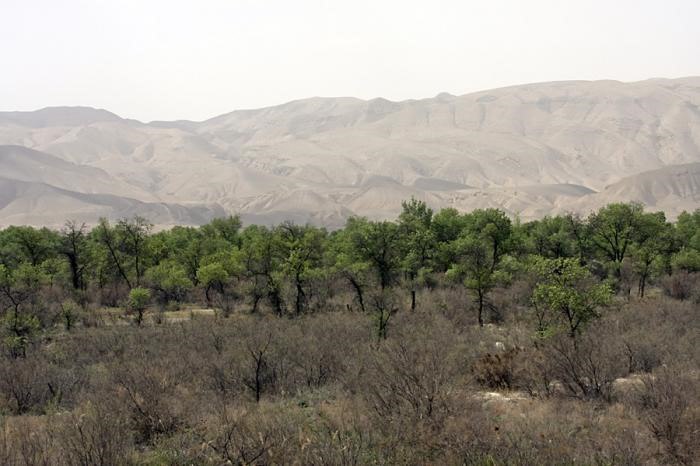
The Tigrovaya Balka Reserve was established on November 4, 1938, becoming Tajikistan’s first state nature reserve. It covers 49,700 hectares, including 21,400 hectares of wetlands and more than 24,000 hectares of tugai forest.
The reserve is home to more than 30 rare animal species, including the Bukhara deer, gazelle, striped hyena, Central Asian monitor lizard, and Amu Darya shovelnose sturgeon. Over 50 bird species winter in the reserve annually.
In 2023, the site was inscribed on the UNESCO World Heritage List as part of the “Tugai Forests of Tigrovaya Balka” property.