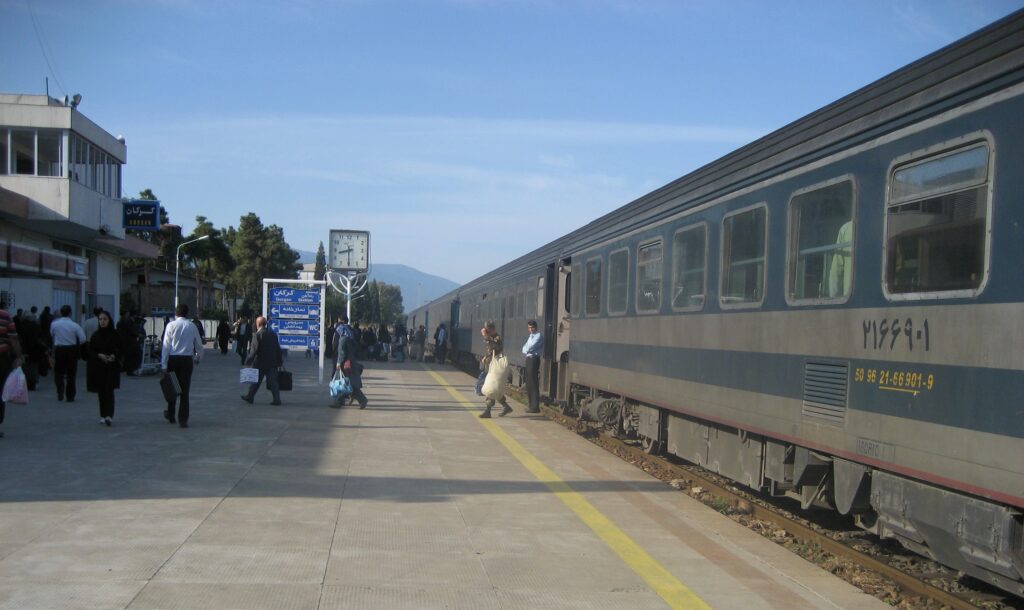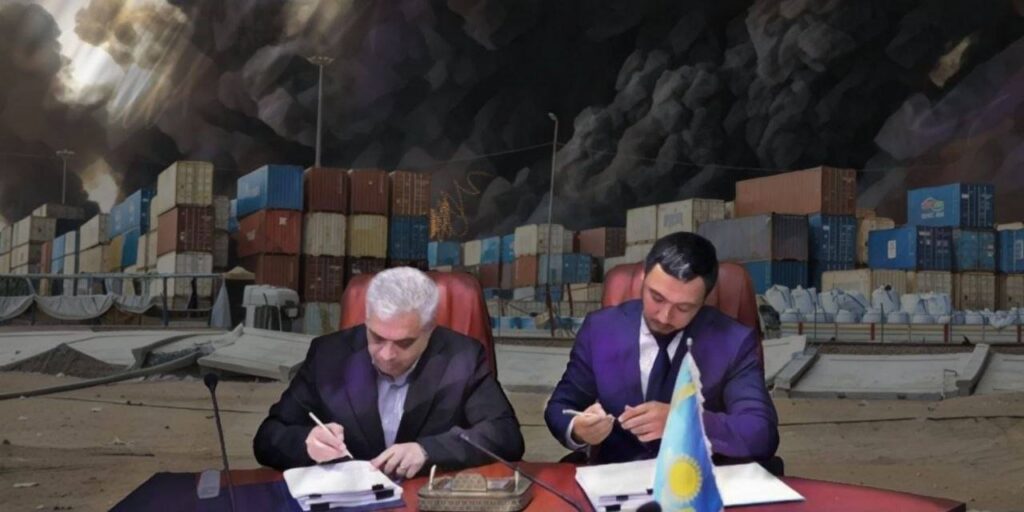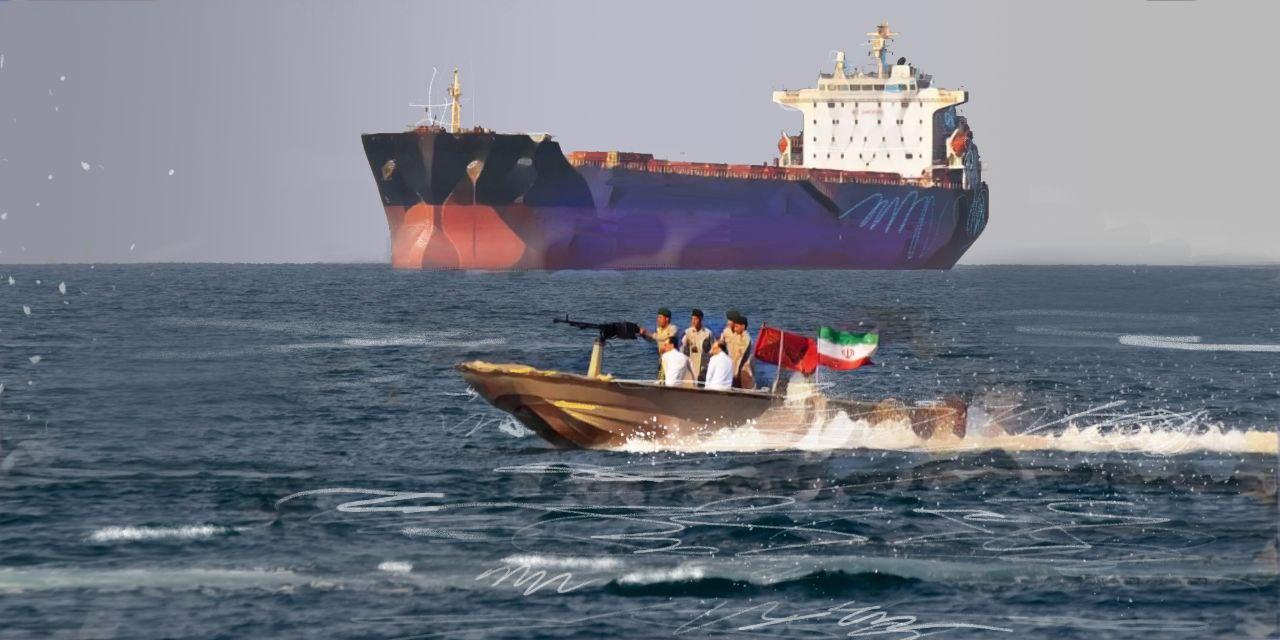
The escalating conflict between Iran, the United States, and their regional partners is raising economic concerns across Central Asia. Turkmenistan shares a long border with Iran, while other Central Asian economies depend on energy markets and trade routes that pass through or around the Persian Gulf. A wider conflict there could ripple across Central Asia through higher fuel prices, disrupted logistics, and pressure on key transport corridors.
For countries such as Kyrgyzstan and Tajikistan, the most immediate risk is rising fuel prices. Both depend heavily on imported fuel. Kyrgyz security expert Taalaibek Jumadylov has warned that Kyrgyzstan could face rising prices for food, clothing, and other essential goods.
For Tajikistan, the closure of the Strait of Hormuz would significantly increase import costs. Tajik media reports that trade between Tajikistan and Iran has grown rapidly over the past five years. Tajik-Iranian trade turnover increased from $377.7 million in 2024 to approximately $484 million in 2025, a rise of around 28%. Tajikistan’s exports totaled about $113 million, while imports from Iran exceeded $371 million, giving Iran a 4.5% share of Tajikistan’s total foreign trade turnover.
If global oil prices rise significantly, Tajikistan could also face additional pressure on its budget. There are indirect risks as well: a slowdown in the economies of Russia, China, or other major partners could affect Tajikistan through trade, investment flows, and remittances.
In Uzbekistan, analysts note that in recent years Iran has actively pursued transport diplomacy with Central Asia, seeking to strengthen its position as a regional logistics hub. Uzbek analyst Nargiza Umarova says this trend aligns with China’s Belt and Road Initiative. Iran and China signed a 25-year cooperation agreement in March 2021, a deal widely described as deepening Iran’s role in Belt and Road-linked connectivity.
Kazakh economist Almas Chukin highlighted the logistical advantages of transport routes through Iran.
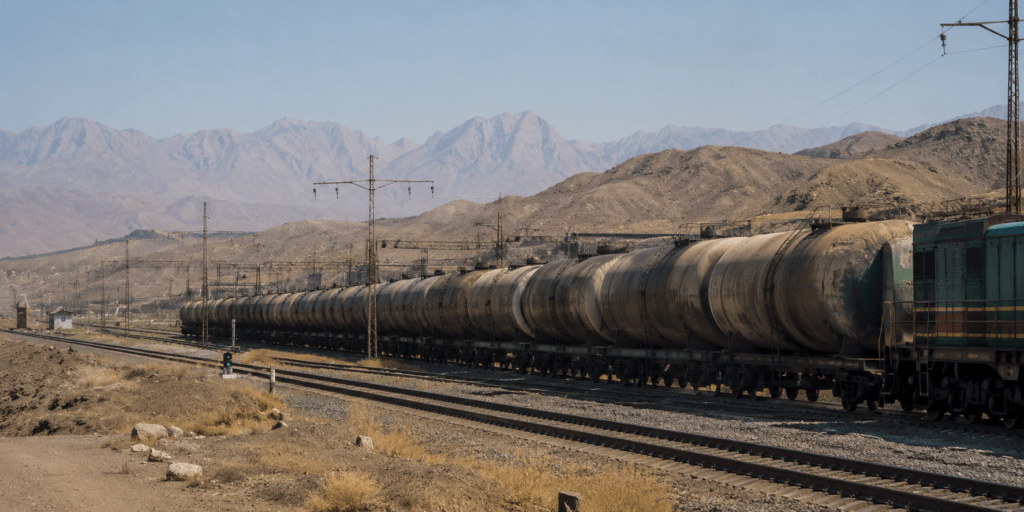
“If we take the point where the Turkmenistan railway connects with Iran and the route to the Persian Gulf, it is about 1,200-1,500 kilometers. This is comparable to the distance from Astana to Almaty. Once you cover this distance, you reach the Persian Gulf and its major ports, where you can handle anything from oil transshipment to grain shipments. From there, sea transport to Rotterdam takes about three to four weeks,” he stated.
Chukin added that such routes could simplify exports compared with transporting oil through Russia to Novorossiysk and then via the Black Sea, the Bosphorus Strait, and the Mediterranean. According to his estimates, a rail route to Europe through Iran would be about 3,500 kilometers from the Turkmen border.
The economist suggested that if Iran’s political system changes and sanctions are lifted, Central Asia could benefit significantly. “This would be a huge shift for Central Asia: a region with a population of 80 million, abundant resources, and a young workforce, but constrained by geography, suddenly gaining direct access to global markets,” Chukin argued.
Some analysts also point to emerging competition among regional transport corridors. In the South Caucasus, a proposed Zangezur corridor has been promoted as an alternative logistics route linking the Caspian region to Turkey and Europe.
Kazakh officials, however, currently see limited direct risks from the escalation in the Middle East beyond possible volatility in global oil markets.
Deputy Prime Minister and Minister of National Economy Serik Zhumangarin said Kazakhstan has historically used logistics routes to the Persian Gulf sparingly.
“The conflict between Russia and Ukraine has been ongoing for some time, and logistics have already adapted to it. As for the Persian Gulf, this direction has not been widely used. We have very rarely relied on ports in the Persian Gulf, for example, Bandar Abbas. There were shipments, but not enough to significantly affect us now, as access there has always been quite complicated,” he said.
According to Zhumangarin, the main risk for Kazakhstan is volatility in the tenge exchange rate driven by changes in global oil prices.
“Oil price fluctuations will naturally affect the exchange rate, and exchange-rate volatility is not good,” he said.
Swedish Pracademic and International Business Strategist Alex Matrsson believes that Central Asia, historically a bridge between East and West, is once again gaining strategic importance. During periods of geopolitical turbulence, land transport corridors become increasingly valuable, and Kazakhstan, the region’s largest economy and a key transit hub, plays a central role.
Matrsson noted that President Kassym-Jomart Tokayev’s recent contacts with Emir Tamim bin Hamad Al Thani of Qatar and other Gulf leaders demonstrate a strategy of diversifying partnerships and expanding trade corridors.
“By diversifying trade ties, investing in infrastructure, and strengthening diplomatic relations, Kazakhstan is protecting its economic future and securing Central Asia’s place in a fragile global economy,” Matrsson said.
Bauryzhan Iskakov, an economist and associate professor, shares this view. He believes Kazakhstan could strengthen its position as a regional transit hub, particularly through the Trans-Caspian route.
“This route runs through the Caspian Sea, Azerbaijan, Georgia, Turkey, and Europe. Given instability in maritime shipping in the Persian Gulf region and potential risks to northern routes, Central Asia, including Kazakhstan, could play an important role in shaping alternative export and logistics flows,” he said.
However, Iskakov noted that the Trans-Caspian International Transport Route still requires further development.
“The Trans-Caspian infrastructure does not yet have the scale or capacity of major sea routes or key oil pipelines, so its development must be supported by investment, technical solutions, and new logistics projects,” he said.
Taken together, these factors highlight how closely Central Asia’s economic outlook is tied to developments beyond its borders. Even without direct involvement in the conflict, the region could feel its effects through higher energy prices, disrupted supply chains, and shifting trade routes.
At the same time, the crisis may accelerate efforts across Central Asia to diversify transport corridors. As geopolitical tensions reshape trade flows between Asia, Europe, and the Middle East, the region’s position at the crossroads of Eurasia may become both a vulnerability and an opportunity.
– For a complete chronology of the crisis and its implications for Central Asia, explore our continuously updated timeline and special coverage.