Russia is tightening trade procedures in ways that could reshape how goods move across Central Asia. The changes are technical, but their impact could be significant.
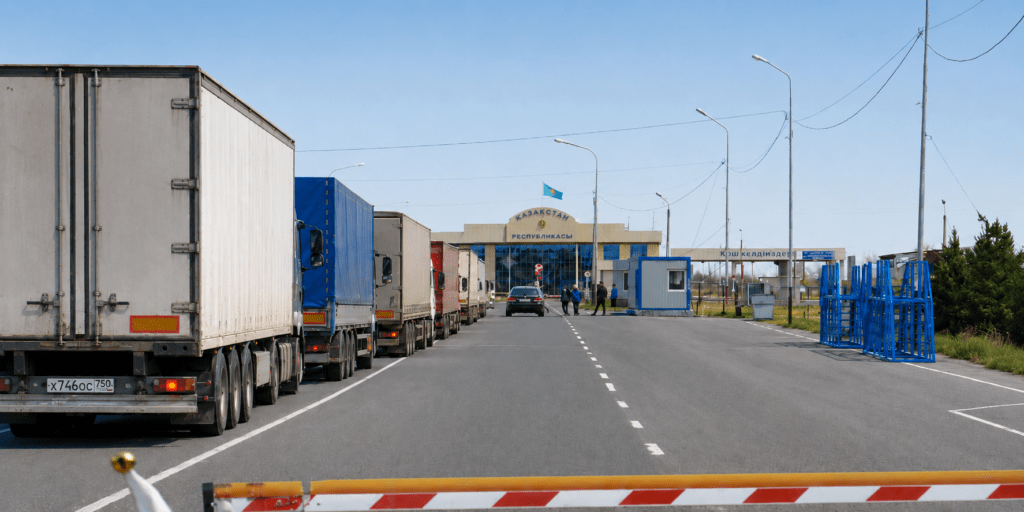
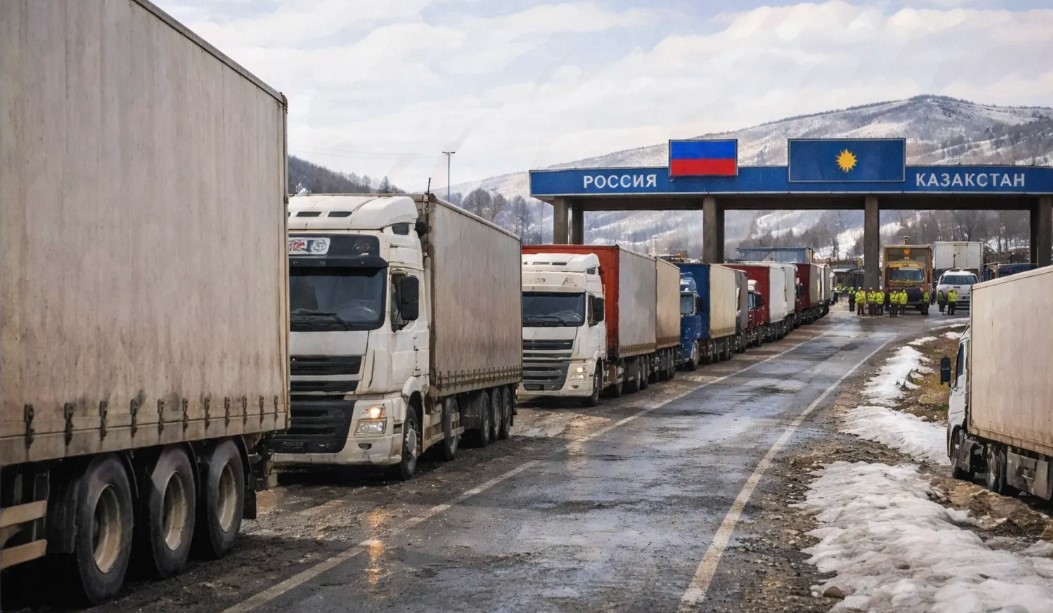
The clearest sign is Russia’s new SPOT import-control system, which takes effect for road shipments from Eurasian Economic Union countries on April 1. Under the new rules, importers must file a document on an expected shipment two days before the truck reaches the border. The Russian authorities will assign a QR code, and from July 1, the system is due to move into full operating mode, including a security payment. Moscow says the measure is designed to improve tax compliance and reduce fraud. In practice, it introduces additional control over trade flows before goods reach the border. For transport companies and exporters, that means higher upfront costs, longer planning cycles, and greater uncertainty over delivery times. Even small delays at the border can disrupt supply chains, particularly for perishable goods.
The changes are part of a broader pattern in which Moscow is relying more heavily on administrative controls to manage trade within its closest economic partners, and the timing is notable. Central Asian economies have been expanding trade with China and the European Union, while also seeking alternative transit routes that reduce dependence on Russia. The introduction of tighter Russian controls comes as those efforts gain momentum. Over time, such measures may also push Central Asian businesses to accelerate efforts to diversify trade routes and partners.
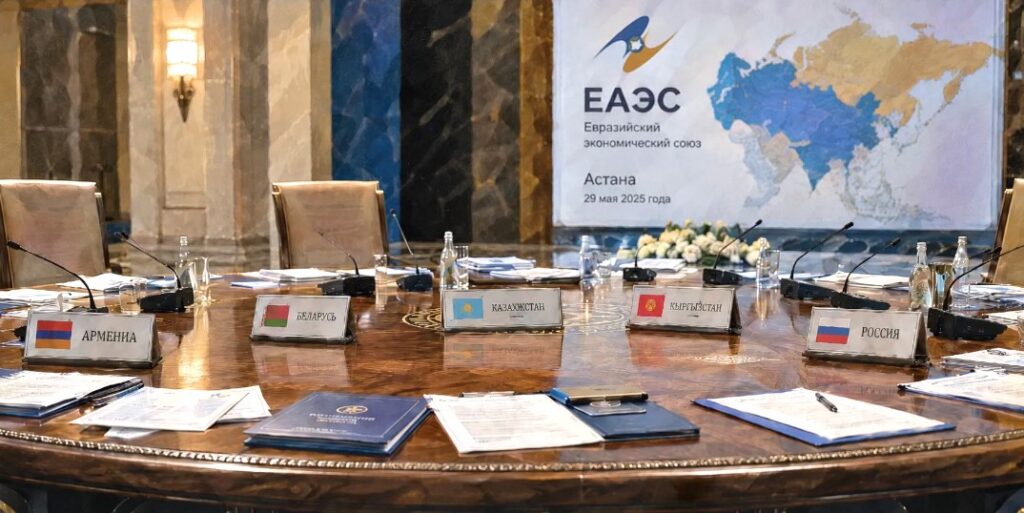
The system may also create new internal barriers within the EAEU. The requirements for advance documentation and financial guarantees could, in some cases, exceed procedures applied to imports from outside the bloc. That would mark a significant shift for a union that was designed to simplify trade among its members. It also underlines a familiar problem within the EAEU, where commitments to free movement often sit alongside recurring administrative barriers. Similar disputes have surfaced repeatedly over the past decade, particularly in relation to agriculture and food, suggesting that the gap between formal integration and practical trade conditions remains unresolved.
Russia dominates the union’s economic geography. According to Kazakhstan’s Bureau of National Statistics, mutual trade with EAEU countries reached almost $2.16 billion in January 2026, with 15.4% year-on-year growth. Russia accounted for the vast majority of that total. Kazakhstan’s imports from EAEU partners rose significantly faster than its exports; Russia supplied close to one-third of Kazakhstan’s total imports in January. That imbalance leaves Kazakhstan particularly exposed to changes in Russian trade procedures. For Kazakh businesses, that exposure is most visible at border crossings, where delays and extra checks quickly add to costs.
Tensions over regulatory controls have also resurfaced. On March 2, Russia suspended certification for high-fat dairy products from all Kazakh suppliers, affecting butter, cream, cheese, and milk powder. Kazakhstan responded with its own measures, strengthening veterinary controls and imposing temporary restrictions on the import and transit of livestock and animal products from several Russian regions because of a worsening disease situation.
Even when such steps have a real sanitary basis, they can also serve as bargaining tools in trade relations. That has been a familiar pattern in past disputes.
This pattern has appeared before. The EAEU was launched in 2015 with the aim of allowing the free movement of goods, services, capital, and labor. In practice, member states have often relied on labeling rules and sanitary controls that can slow trade. Kazakhstan and Russia have both used such measures in past disputes, even as they maintain formal commitments to integration.
Kyrgyzstan is also feeling the strain. Bishkek has asked its EAEU partners to remove import duties on socially important goods such as flour, vegetable oil, fruits, vegetables, and cocoa powder, arguing that the country is importing inflation. The proposal was presented at a Eurasian Economic Commission meeting in Moscow on March 13. The request highlights how smaller economies within the bloc are seeking relief from price pressures rather than benefiting from seamless market access.
At the same time, Kyrgyzstan is facing growing scrutiny over its trade with Russia. In late February, EU sanctions envoy David O’Sullivan said Brussels was concerned by rising imports into Kyrgyzstan of radio equipment and machine tools. O’Sullivan said the EU had reason to believe some goods were entering Kyrgyzstan for the sole purpose of re-export to Russia. This places Bishkek in a difficult position as it tries to balance economic ties with Russia against the risk of secondary sanctions.
Russia’s latest measures do not signal a break with Central Asia. The measures reflect Moscow’s priority to tighten fiscal and supply-chain control in a sanctions environment, even at the cost of adding friction to relations with its closest economic partners. The region remains an important market, transit route, and labor source for the Russian economy. Despite headline growth, Russia’s economy faces mounting structural constraints. Migrants remain indispensable for Russia, helping to fill labor shortages caused by demographic decline and the war in Ukraine, even as xenophobia rises.
The shift toward tighter administrative control is clear. Instead of sweeping policy changes, Moscow is relying on regulatory tools that can adjust the speed and cost of trade. For the Central Asian states, the effect is cumulative. New documentation rules, certification requirements, and sanitary controls can slow shipments and raise costs, even when trade continues to flow. Over time, these measures shape how companies operate and how governments plan their economic policies within a system that remains tied to Russia.