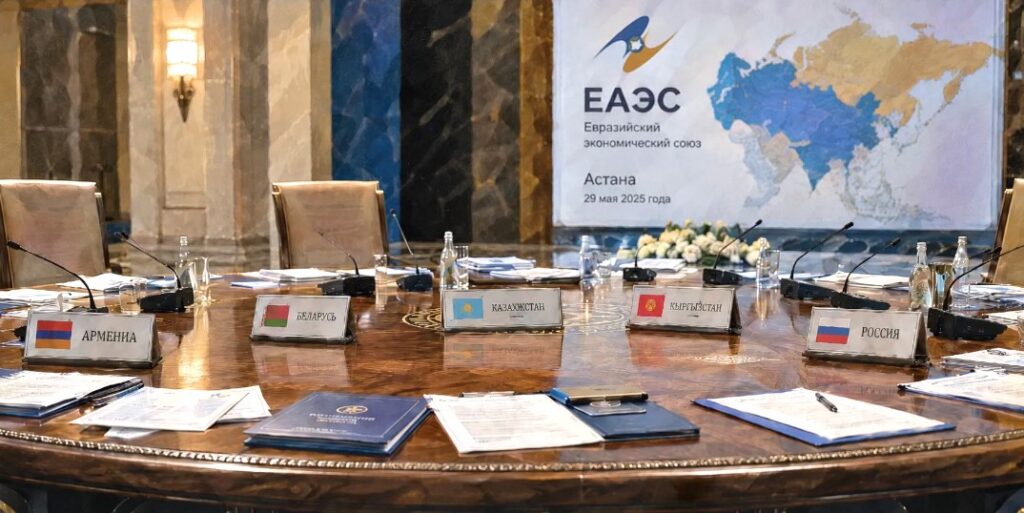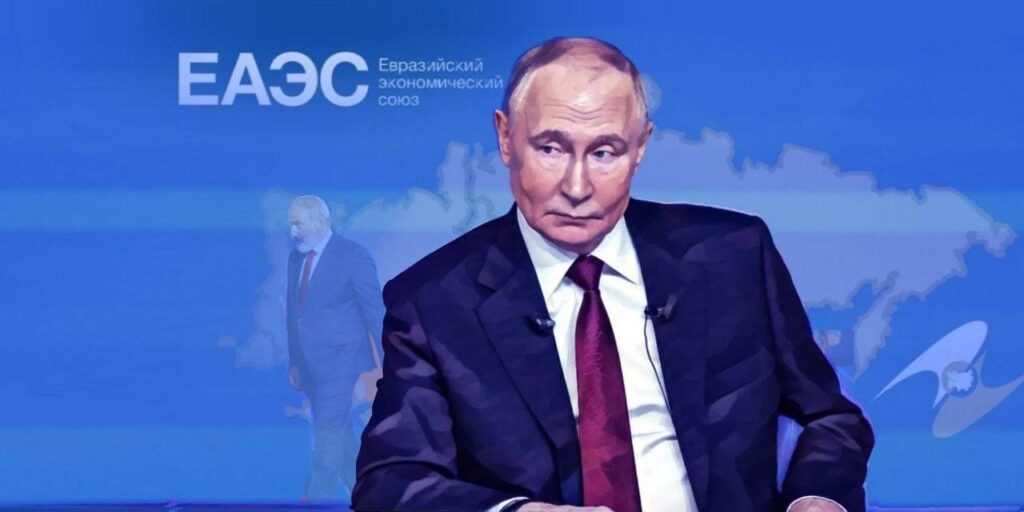
The Eurasian Economic Union (EAEU) met in Shymkent on March 26-27 with a long agenda and a familiar promise: deeper integration, smoother trade, and a more modern common market. Kazakhstan, which holds the bloc’s 2026 chairmanship, used the meeting to push artificial intelligence, digital logistics, industrial cooperation, and the removal of internal barriers. Twelve documents were signed, covering areas including industrial cooperation, transport, and digital integration.
“Kazakhstan aims to become a fully-fledged digital country. We have built a modern ecosystem, including Astana Hub and the Alem.ai AI center, and are ready to share experience with EAEU partners on digital regulation and economic transformation,” Kazakh Prime Minister Olzhas Bektenov stated.
That sounds ambitious, but it also highlights the bloc’s central weakness. The EAEU has no shortage of plans; it has a shortage of trust between its members, and that matters more. The dynamics extend across the bloc, but are most visible in Kazakhstan and Kyrgyzstan.
The EAEU was built to ensure the free movement of goods, services, capital, and labor across Armenia, Belarus, Kazakhstan, Kyrgyzstan, and Russia. But the reality keeps drifting away from the treaty. Kazakhstan’s chairmanship agenda calls for a barrier-free internal market, yet the bloc is entering a new phase of tighter controls, retaliatory measures, and disputes over who really benefits.
Shymkent made that contradiction impossible to miss. Prime Minister Olzhas Bektenov promoted an AI-based system to coordinate cargo flows across the union and speed up transit. He also backed the full electronic handling of veterinary and phytosanitary checks, all of which are practical ideas. Central Asia needs faster, cheaper, and more predictable logistics, but digital tools do not solve a political problem. A system becomes more efficient only if its members want it to be open. When they want leverage instead, technology can only make the controls smarter.
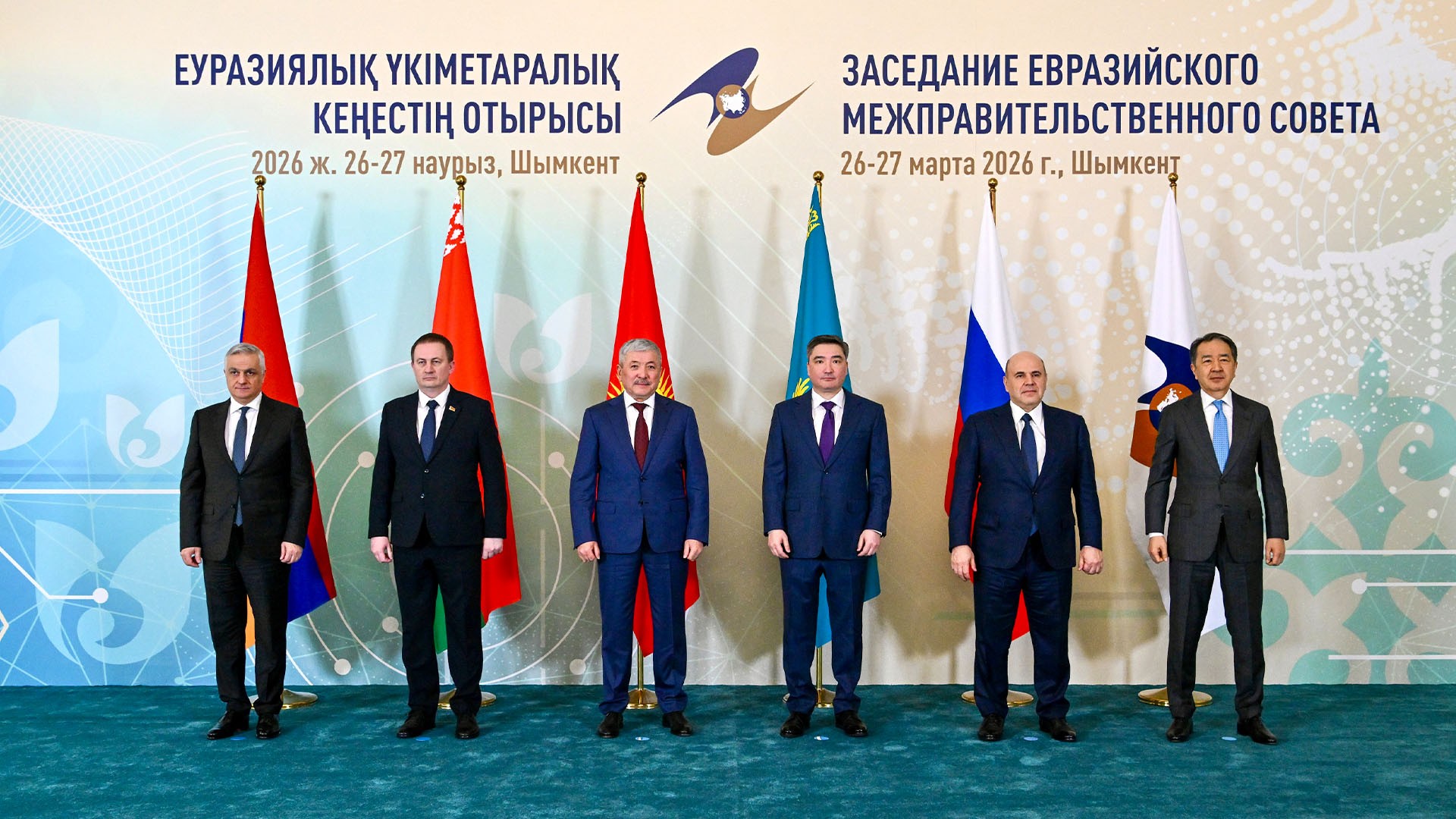
Image: primeminister.kz
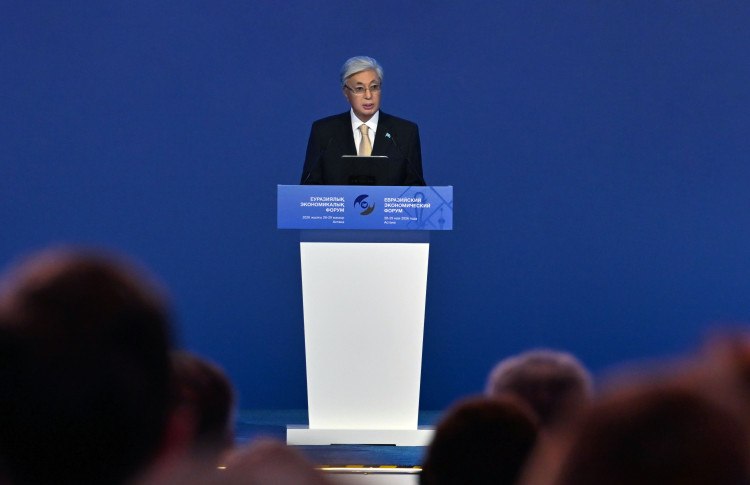
Kazakhstan’s priorities already show where the friction lies. President Kassym-Jomart Tokayev opened his chairmanship by calling for digital transformation, better transport links, and the elimination of internal trade barriers. He also pushed a stronger external profile for the EAEU, with wider links across Asia, the Arab world, and the Global South. That is a serious agenda for a bloc trying to present itself as a Eurasian logistics hub. That push for external expansion comes at a time when internal frictions are becoming harder to manage. It sits uneasily beside everyday trade practice inside the union, where growing trade disputes have become part of the EAEU’s normal life, not an exception to it.
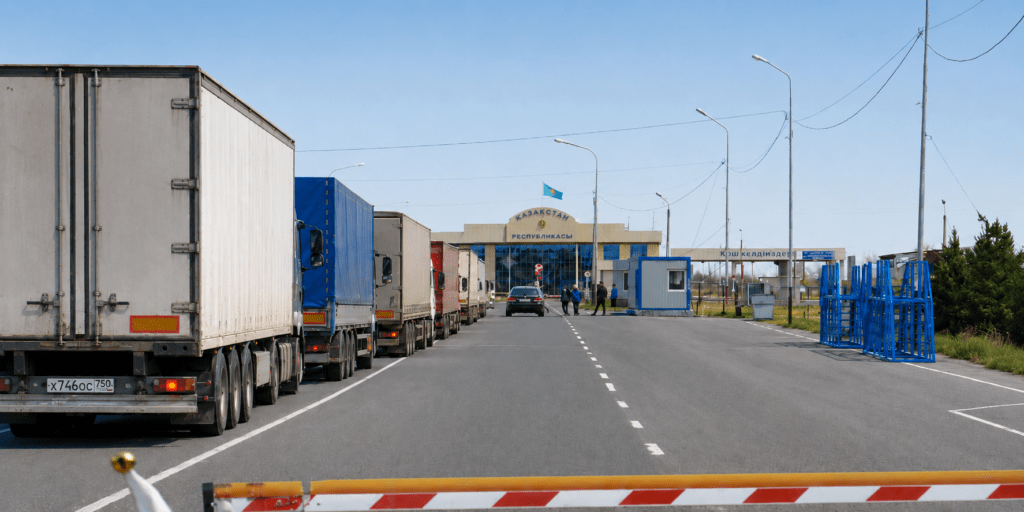
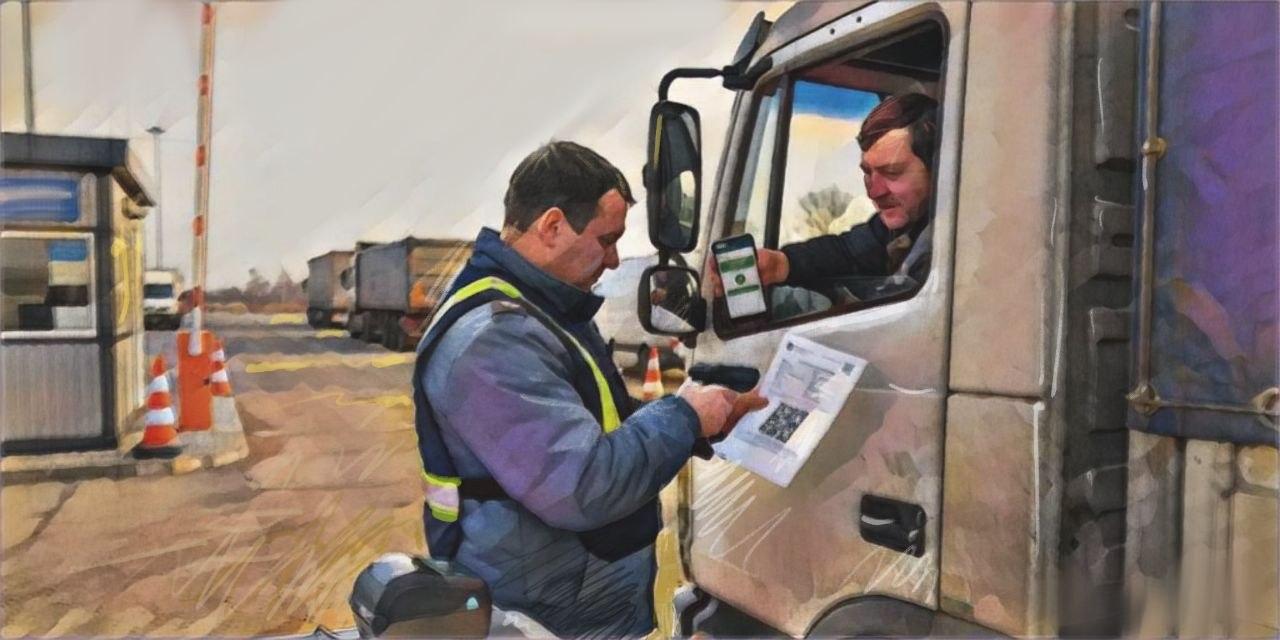
The clearest recent example is Russia’s SPOT import-control system, which takes effect for road shipments from EAEU countries on April 1. Importers must submit shipment information two days before trucks reach the border and receive a QR code. Moscow has presented the change as a tax-compliance and anti-fraud measure, with additional financial guarantees expected in later phases of its implementation. In practice, it adds cost, time, and uncertainty before goods even reach the border, the opposite of what a customs union is supposed to do. New Russian trade controls are technical on paper, but they change how power works inside the bloc.
The controls already fit into a wider pattern. Border checks and documentation controls have tightened on the Kazakhstan-Russia frontier, and scrutiny of product labeling and paperwork has grown stricter. Businesses now face a system in which “free movement” exists in law, but not in practice. That gap is politically corrosive because it hits the smaller members hardest. Russia can absorb delays and redesign procedures. Kazakhstan also faces rising costs from disruptions, while smaller economies such as Kyrgyzstan feel them more immediately.
Kyrgyzstan has been blunt about that pressure. Earlier this month, Bishkek asked the Eurasian Economic Commission to remove import duties on a group of socially important goods, including flour, vegetable oil, fruits and vegetables, and cocoa powder. The logic was simple: global inflation is still feeding into domestic prices, and smaller members of the bloc need more flexible trade tools than their larger partners. That request made economic sense for Kyrgyzstan, but it also showed how uneven the union remains. When a member needs emergency tariff relief on basic goods to manage price pressure, the common market isn’t functioning on equal terms. Kyrgyzstan’s push for lower import duties came just a week before the Shymkent meeting.
The same imbalance appears in labor. One of the EAEU’s strongest selling points has always been access to the Russian labor market, especially for Kyrgyzstan. That benefit should be real, giving migrants easier legal access to jobs, simpler registration, and better tax regimes. But labor mobility has never been as stable as the bloc’s rhetoric suggests. In January, Kyrgyzstan took Russia to the EAEU court over compulsory medical insurance for migrants’ family members. In March, the court clarified that member states do not have to issue that coverage automatically. The case exposed a basic truth: labor access inside the EAEU is still vulnerable to national limits when politics hardens. Kyrgyzstan’s experience inside the union captures that well.
Kazakhstan has its own reasons to push back more openly. On March 10, Industry and Construction Minister Yersayin Nagaspayev said Kazakhstan would mirror Russia’s higher recycling fee on imported cars as part of efforts to support the domestic industry. That is not the language of seamless integration; it is the language of reciprocal pressure. Once that logic takes hold, the EAEU stops looking like a common market and starts looking like a managed bargaining arena.
None of this means the EAEU is collapsing. Its economic weight is still large, and its members continue to find value in it. Mutual trade in goods has roughly doubled since 2015, reaching close to $100 billion in 2024, according to the Eurasian Economic Commission. In 2024 alone, mutual trade in goods rose by around 9%. The Eurasian Economic Commission says most settlements now take place in national currencies, accounting for over 90% of transactions inside the union. Those are not minor gains. They explain why no member is walking away.
But Shymkent showed where the EAEU stands in 2026. It is good at producing strategies, roadmaps, and digital concepts, but much weaker at guaranteeing that member states will restrain themselves when their interests come first. Kazakhstan’s chairmanship has chosen the right themes: logistics, digitalization, and fewer barriers. The problem is that the union’s real barriers are now political. Until members stop using trade rules, border procedures, and regulatory measures as instruments of pressure, the EAEU will keep modernizing its systems without fixing its core defect. It can integrate its platforms faster than it integrates its interests.
The next intergovernmental meeting is set for Cholpon-Ata, Kyrgyzstan, in early August.