In February, Kani TTS 2, a text-to-speech (TTS) model developed by Kyrgyzstani startup NineNineSix, ranked among Hugging Face’s top three trending TTS models, according to Kyrgyzstan’s High Technology Park. Hugging Face is sometimes described as the “GitHub for AI.” At $5 per million characters, NineNineSix’s listed price is lower than several paid TTS offerings from ElevenLabs and OpenAI, while Google’s range includes both cheaper and more expensive models. The company illustrates how rapid advances in AI are creating opportunities for entrepreneurs from Central Asia.
NineNineSix, whose name refers to the Kyrgyz Republic’s international calling code, +996, grew out of a problem its founders encountered when using third-party pre-trained models at their previous startup. Using its own data, the team fine-tuned those models but remained dissatisfied with the results.
Those models sounded robotic and were too resource-intensive and slow, creating a bottleneck. The team concluded that building its own model was the only way to achieve the quality it needed.
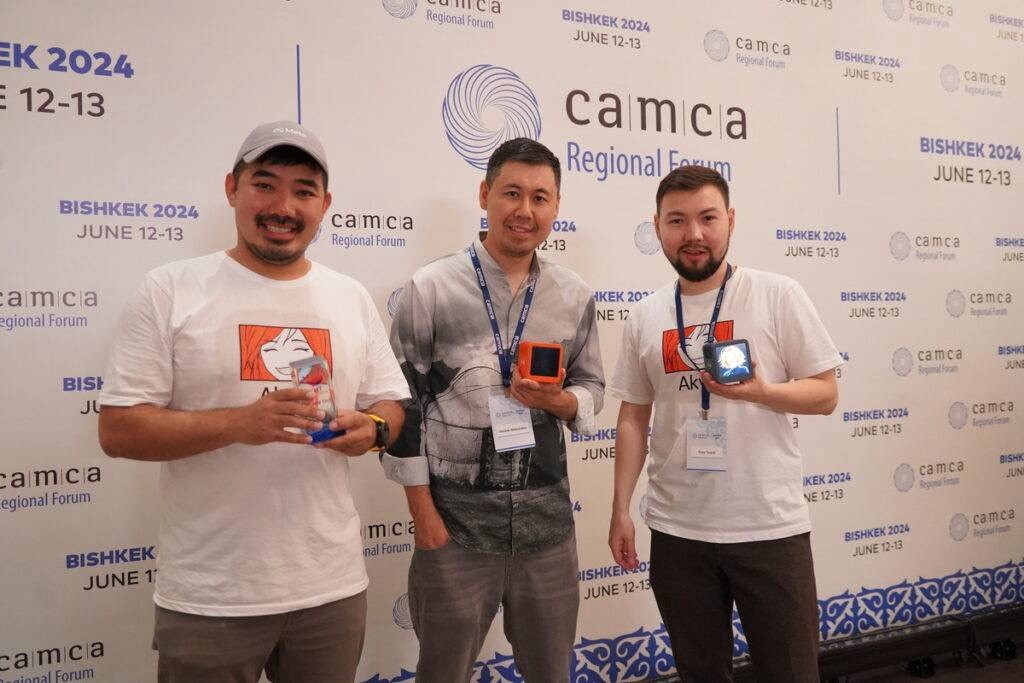
Founders Ulan Abdurazakov, Nursultan Bakashov and Denis Pavlov
Not the First Try
NineNineSix co-founder Nursultan Bakashov tells The Times of Central Asia: “Building our own models felt like the natural next chapter of the story we’d already started writing. In the age of AI, the only real choice is to do AI.”
Bakashov founded the company in 2025 with Ulan Abdurazakov and Denis Pavlov. He and Abdurazakov had previously worked together, co-founding Makers Bootcamp with a third partner in 2019 to train people for careers in technology.
Three years later, they left Makers Bootcamp to focus on AI. They became active in the Kyrgyz Republic’s AI community, organizing events and training for several years. The community now has more than 1,800 members. Their work there led to The Cramer Project, which they launched with Timur Turatali, formerly of EY and Citibank, and Pavlov, who had moved from Russia to the Kyrgyz Republic.
The company developed AkylAI, which it describes as Kyrgyzstan’s first AI-powered smart speaker. The name refers to Akylai, a common female name in Kyrgyz; the element “ai” means “moon” and often appears in Kyrgyz names.
In October 2023, AkylAI was named a winner in the Unicorn from KG program, run by the High Technology Park of the Kyrgyz Republic. It also took part in Draper University’s Hero Training incubation program in Silicon Valley.
The following year, AkylAI was selected for the European Bank for Reconstruction and Development’s first Star Venture cohort in the Kyrgyz Republic. It was also presented at KIT Forum 2024, Bishkek’s flagship annual technology event.
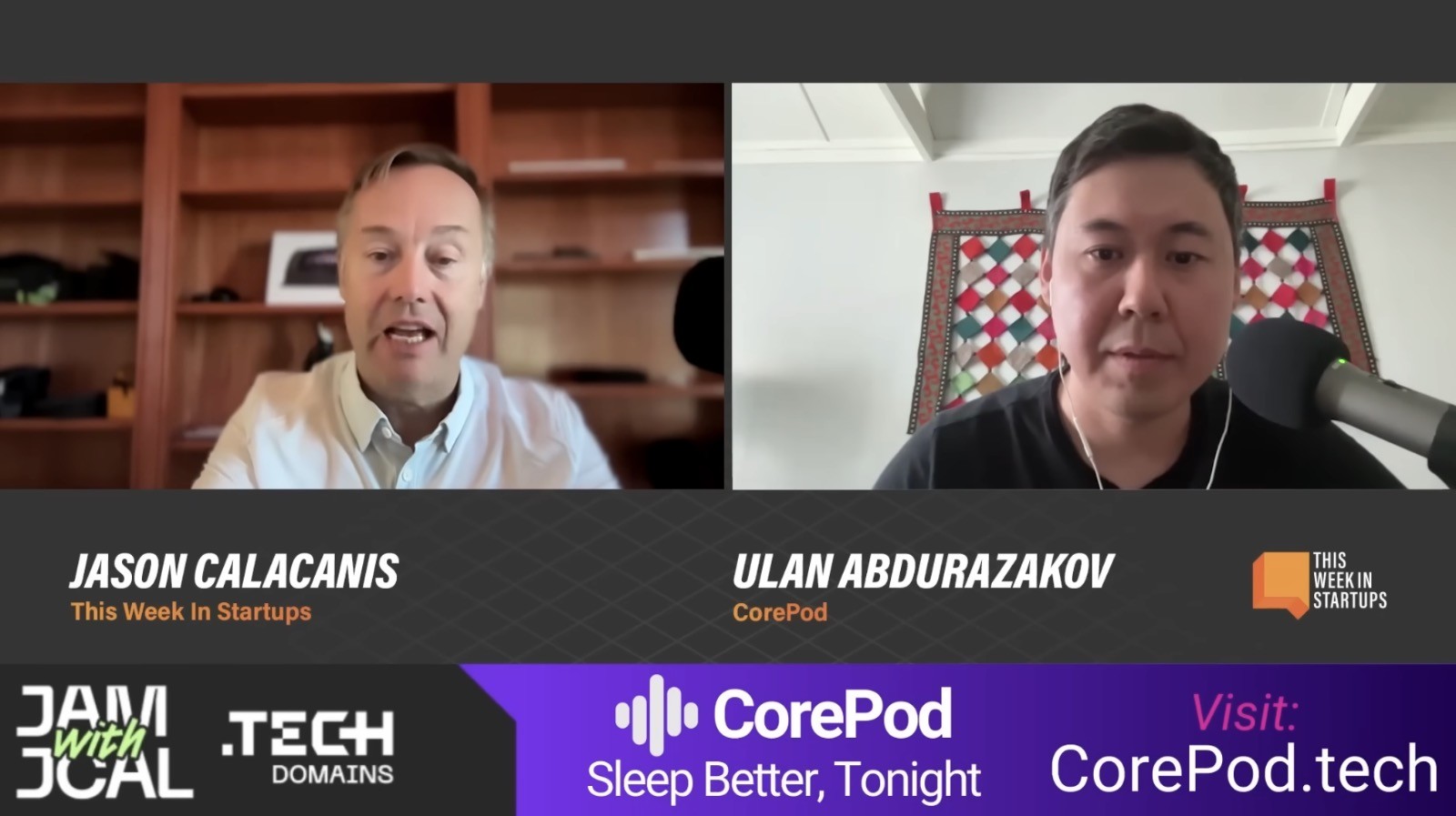
That year, The Cramer Project also tested CorePod, a smart speaker designed to support mental health and sleep. CorePod was intended as a global product, beginning with the United States market. The team says the company became the first Kyrgyzstani startup admitted to the LAUNCH incubator in May 2024. CorePod was later pitched to Jason Calacanis, a Silicon Valley angel investor, and featured on his This Week in Startups podcast.
An upgraded version of AkylAI was presented at KIT Forum 2026, with manufacturing planned for later this year.
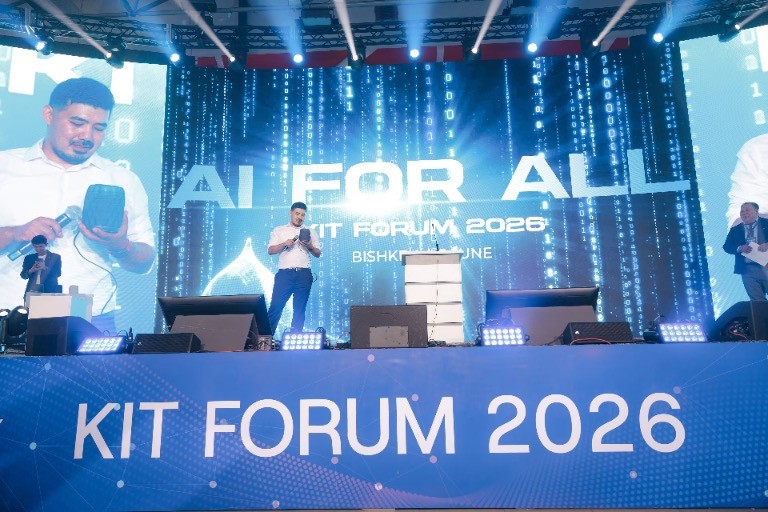
NineNineSix was presented at KIT Forum 2026.
Ambitions Beyond the Region
NineNineSix described KaniTTS, its first model, as one of the fastest models for conversational AI. The name refers to Kanykei, who provided the voice recordings and prepared the dataset for the company’s first Kyrgyz-language voice. Beginning with Kyrgyz, the company used AkylAI as its avatar and created a separate avatar for each language the model supports. The team considered Kyrgyz relatively complex and chose it as the starting point, reasoning that success with the language would make others easier to handle. English, for example, proved much simpler to work with.
NineNineSix operates as a business-to-business company, providing technology for AI voice agents used in call centers and other customer-service operations. These systems can handle calls that would otherwise be managed by human operators.
NineNineSix says it deliberately chose an open-source strategy to establish its reputation in the industry. Its models have now surpassed 200,000 downloads on Hugging Face.
Gepard: A Bet on Speed
In July 2026, the company released Gepard 1.0, its flagship model. The name comes from the German word for cheetah, and it points to what the model is built for: speed. Gepard starts speaking the moment text begins arriving, generating audio piece by piece instead of waiting for the full sentence. That is the difference between a live conversation and a recording being played back.
At 555 million parameters, Gepard runs on stock vLLM, the engine most teams working with language models already have in place, so no separate serving stack is needed. The weights are published under the Apache 2.0 license, which means a company can download the model and run it on its own servers, inside its own perimeter, with no license fees and without sending customer data anywhere. For healthcare, finance and the public sector, the ability to keep sensitive data within an organization’s own infrastructure can be particularly important.
For teams that would rather not run their own GPUs, NineNineSix also offers the same model through a cloud API at api.nineninesix.ai. Because the service was designed to be compatible with the Cartesia SDK, developers need only change the base URL in their existing code; everything else continues to work. A team with an existing voice agent can therefore switch in minutes rather than weeks.
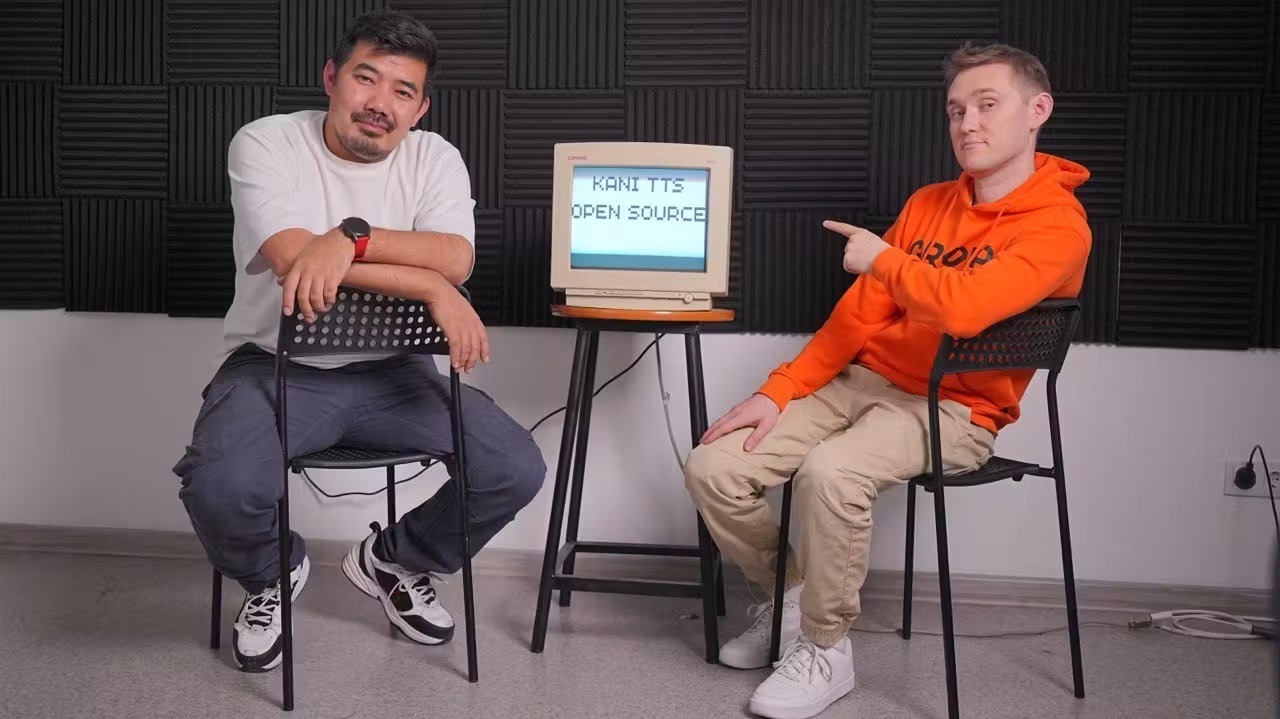
Nursultan Bakashov and Denis Pavlov
The Fastest and the Cheapest in Its Group
In August 2026, the team used a neutral Amazon-hosted server in California to compare the latency of its Gepard 1.0 model with Cartesia Sonic 3.5, ElevenLabs Flash v2.5, and Gradium, a French company. The test measured the time to the first byte of audio, indicating how long a user waits before hearing a response.
NineNineSix reported that Gepard delivered its first audio over WebSocket in 49 to 50 milliseconds. Cartesia took 95 to 123 milliseconds, compared with 175 to 187 for ElevenLabs and 219 for Gradium. Gepard’s latency was therefore roughly half that of the closest competitor. According to the company, it remained around 50 milliseconds for both a short reply and a 360-character paragraph. Across 240 measured calls, NineNineSix reported no errors from any vendor.
NineNineSix charges $5 per million characters, compared with around $37 to $39 for Cartesia and $36 to $58 for Gradium, depending on the plan. ElevenLabs Flash v2.5 costs about $50. NineNineSix’s rate is therefore roughly one-seventh of the lowest competing rate in this comparison and one-tenth of the ElevenLabs rate. For a call center handling millions of minutes a year, NineNineSix says that could mean the difference between a line in the budget and a rounding error.
Gepard currently supports English, Spanish, Portuguese, and Dutch. NineNineSix has also taken part in major international technology events, presenting KaniTTS at CES 2026 in Las Vegas in January.
Abdurazakov presents affordability as central to the company’s strategy. “Voice should not be the most expensive line in someone’s product. We want a developer anywhere to build a voice agent without asking permission or a budget.”
NineNineSix’s ability to turn its open-source downloads into customers will determine its place in the global voice-AI market.