Kyrgyzstan has opened a major mineral fertilizer plant after years of dependence on imports. The $260 million project is being developed with a Chinese investor in the country’s south. Its first production line has an annual capacity of 100,000 tons, while the capacity announced for the completed project would significantly exceed current domestic demand.
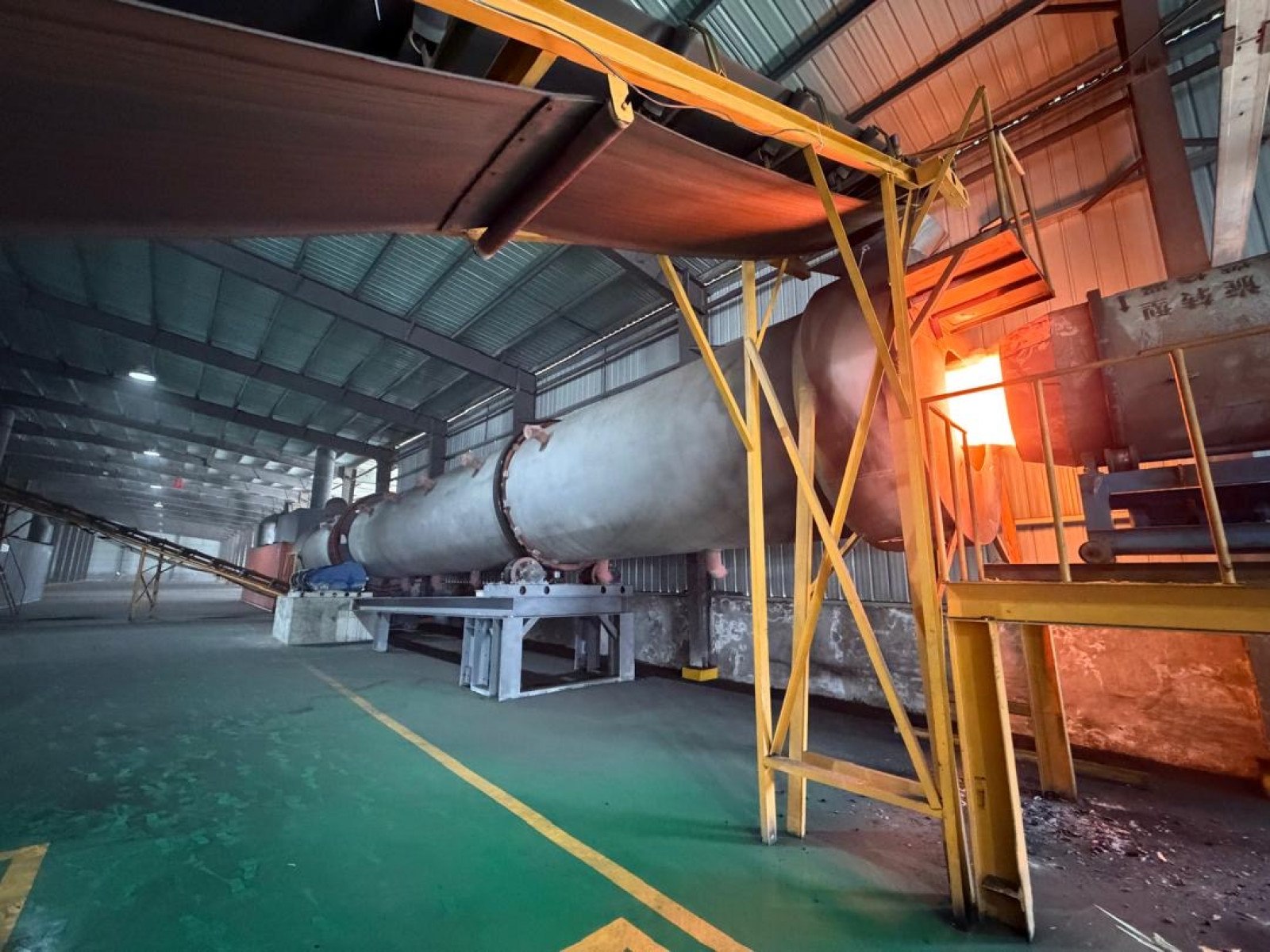
The plant opened on August 28 in the village of Torobai Kulatov in the Osh region. The first production line is currently operating in test mode. According to the Kyrgyz government, its capacity is 100,000 tons of fertilizer per year. At the next stage, capacity is expected to increase to 300,000 tons, and after completion of the project in 2028, to 1 million tons.
For Kyrgyzstan, this represents substantial capacity. In March 2025, a representative of the Ministry of Agriculture estimated the country’s annual demand for mineral fertilizers at about 287,000 tons: 163,500 tons of nitrogen fertilizers, 105,800 tons of phosphate fertilizers, and 17,200 tons of potash fertilizers. The ministry described Kyrgyzstan at the time as entirely dependent on imports.
The plant’s intermediate capacity of 300,000 tons would therefore roughly match the country’s current annual demand, although demand is split between different types of fertilizer. If it reaches the government’s stated capacity of 1 million tons, production would far exceed current domestic demand, meaning a substantial share could be exported.
According to the Kyrgyz government, the plant will produce ammophos – a fertilizer containing nitrogen and phosphorus – as well as compound fertilizers containing nitrogen, phosphorus, and potassium, the main nutrients used by agricultural crops.
The project began with the signing of a $260 million investment agreement in May 2023 between Kyrgyzstan’s Ministry of Agriculture and China’s Hebei Bai Dou Jia. Construction began in 2024. Equipment worth around $15 million was supplied from China.
The Chinese investor also plans to participate in distributing the output. A network of local dealers is expected to be established to supply products directly to farmers. Zhao Xuejun, chairman of Baidoujia Fertilizer, told China Daily that the company intends to combine Chinese fertilizer technology and production experience with local raw materials, labor, and agricultural demand.
However, figures for the plant’s eventual capacity differ. The Kyrgyz government says it will reach 1 million tons per year by 2028, while Baidoujia told China Daily that the facility will produce 500,000 tons annually once fully operational. Earlier reports from Kyrgyzstan had also put the eventual capacity at 500,000 tons. Neither side has publicly explained the discrepancy.
The scale of Kyrgyzstan’s dependence on imports is evident in trade statistics. World Bank trade data show that in 2025, the country imported approximately $44 million worth of fertilizers. Russia accounted for $20.9 million and Uzbekistan for $19 million. Together, the two countries supplied about 91% of Kyrgyzstan’s fertilizer imports by value.
The dependence continued in 2026. Between January and April, Kyrgyzstan imported 12,700 tons of mineral fertilizers worth $7.8 million. Import volumes increased by 13.5% year-on-year. Russia supplied 9,100 tons, or more than 71% of the total during the period.
The emergence of a major domestic producer could reduce that dependence, although the actual impact will depend on the range and price of its products. Kyrgyzstan imports different types of fertilizer, so the new plant’s overall capacity cannot be directly equated with the volume of imports it will be able to replace.
The Nookat plant may not be the only new production facility. In July, the state-owned Kyrgyz Agroholding signed a memorandum with China National Electrical Engineering Corporation on the construction of another plant. Its proposed capacity is up to 600,000 tons of urea per year.
China is already one of Kyrgyzstan’s largest foreign investors. In 2024, it accounted for 23.9% of foreign direct investment in the country.
Agricultural trade between the two countries has also expanded. Kyrgyzstan has gained access to the Chinese market for a range of agricultural products, including beans, wool, cashmere, and poultry. In 2025, exports of Kyrgyz dried fruit to China began.
For the domestic market, the main question now is the price of the plant’s output and its ability to replace specific types of imported fertilizer. With annual demand of around 287,000 tons, even the plant’s intermediate capacity would be comparable to the country’s entire market. If production reaches the stated 500,000 or 1 million tons, a substantial share of its output would need to find buyers abroad unless domestic demand rises significantly.