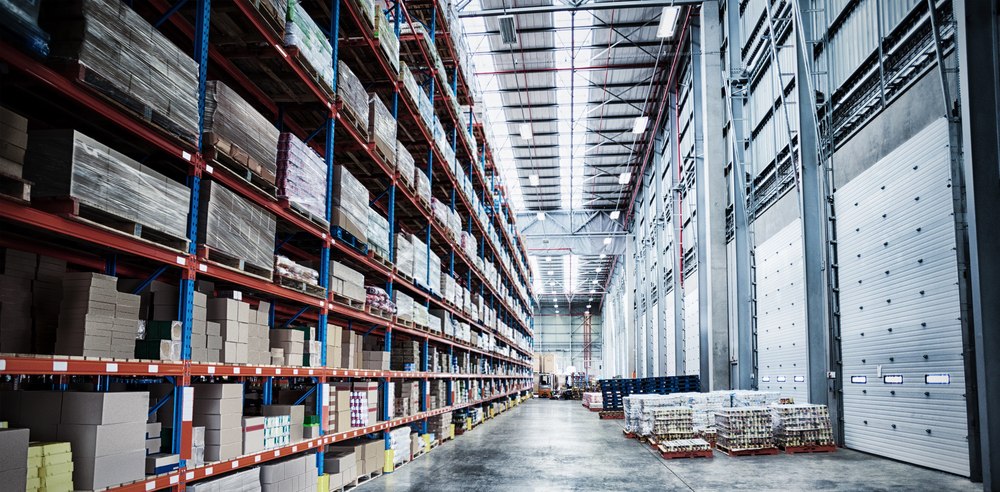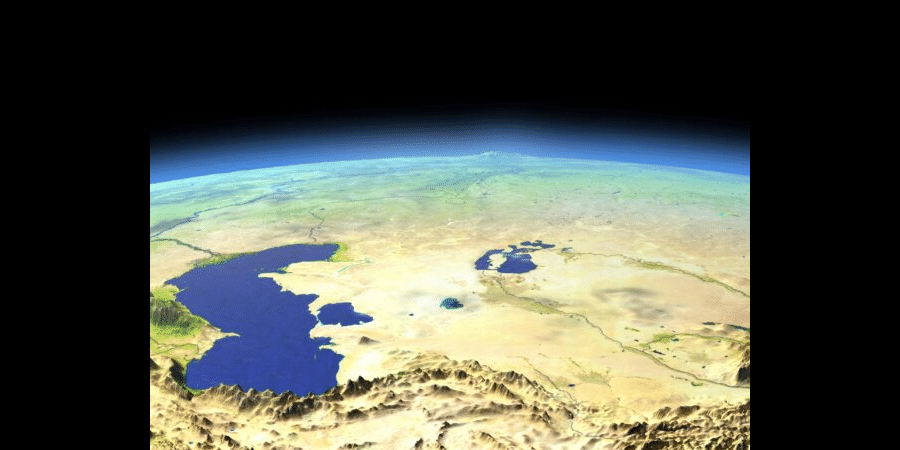
Containers are piling up on Kazakhstan’s Caspian coast as they await shipment to Azerbaijan. A shortage of vessels and weather-related restrictions are delaying cargo along the Middle Corridor, a trade route connecting China and Europe while bypassing Russia. Kazakhstan plans to acquire five vessels and has ordered another six to expand maritime freight capacity. At the same time, falling Caspian Sea levels are limiting how much cargo existing ships can carry and complicating port operations.
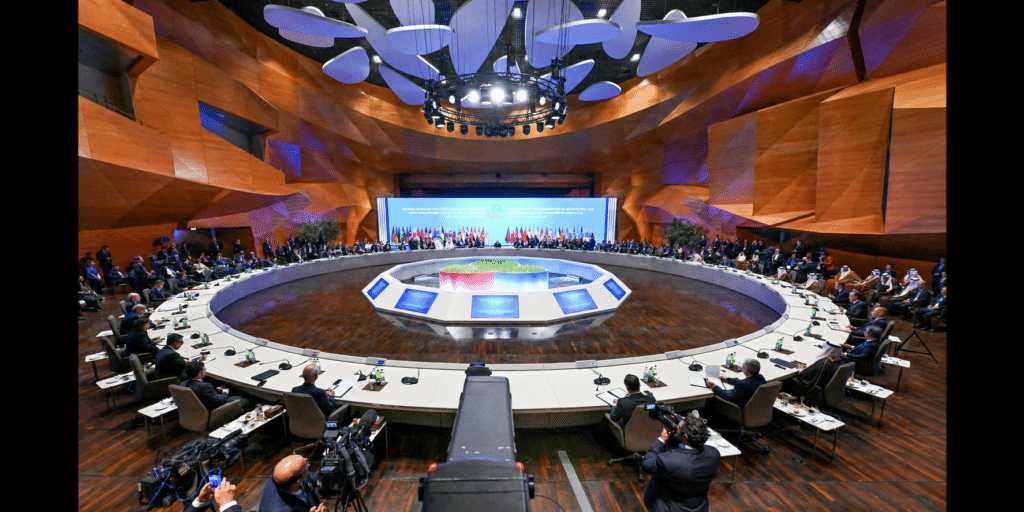
Yerkin Nygmetov, CEO of KTZ Express Shipping, described the container backlog at the New Silk Way international transport forum, held in Astana on October 15–16. According to Nygmetov, adverse weather conditions can restrict operations at Kazakhstan’s ports for a total of up to 75 days a year.
Freight Volumes Rise as Vessels Face Delays
The Middle Corridor, officially known as the Trans-Caspian International Transport Route, runs through Kazakhstan, the Caspian Sea, Azerbaijan, and Georgia. From there, cargo continues to Turkey and Europe, including via the Black Sea. Following Russia’s invasion of Ukraine in 2022, the route attracted increased interest from companies seeking to reduce their dependence on transit through Russia.
According to Kazakhstan’s national railway company, Kazakhstan Temir Zholy (KTZ), container traffic along the Middle Corridor reached 44,200 twenty-foot equivalent units (TEUs) in January–August 2026, an increase of 58% from a year earlier. A TEU is a standard measure of container capacity equivalent to one 20-foot container, approximately six meters long. During the same period, 419 container trains departed China along the route, compared with 228 a year earlier.
The maritime section requires containers to be transferred from trains onto vessels in Kazakhstan and then back onto railcars in Azerbaijan. Waiting for an available ship increases delivery times, particularly during periods of heavy cargo arrivals.
The World Bank has assessed the corridor’s potential for growth. According to a study published in September, investments in transport infrastructure and better coordination of logistics procedures could more than triple trade volumes along the Trans-Caspian Corridor by 2040 and cut delivery times in half. The bank also projects that implementing the proposed measures could increase the combined GDP of nine countries connected to the route by 3.3% and create two million jobs.
Kazakhstan Orders Vessels from China and Azerbaijan
KTZ Express Shipping, a subsidiary of KTZ, plans to acquire five container vessels in 2026. Another six multipurpose dry cargo and container ships have been ordered from shipyards in China and Azerbaijan. By 2028, the company aims to expand its own fleet to 13 vessels with a combined deadweight tonnage of 96,000 metric tons. Deadweight tonnage refers to the maximum weight a vessel can carry, including cargo, fuel, supplies, and other variable loads.
On October 15, Kazakhstan’s Samruk-Kazyna sovereign wealth fund confirmed that two dry cargo vessels would be built at the Baku Shipyard under contracts signed in April 2026.
Another four vessels have been ordered from China’s Jiangsu Haizhongzhou Shipping Industry. Each is designed to carry up to 537 TEUs, with a deadweight tonnage of 9,900 metric tons. The river-sea vessels are intended for operations on the Caspian Sea and inland waterways. The company is also considering deploying its own fleet on Black Sea routes.
Kazakhstan aims to increase annual container traffic along the Middle Corridor to 300,000 TEUs by 2029. KTZ Express Shipping also intends to charter vessels from Azerbaijani partners if necessary.
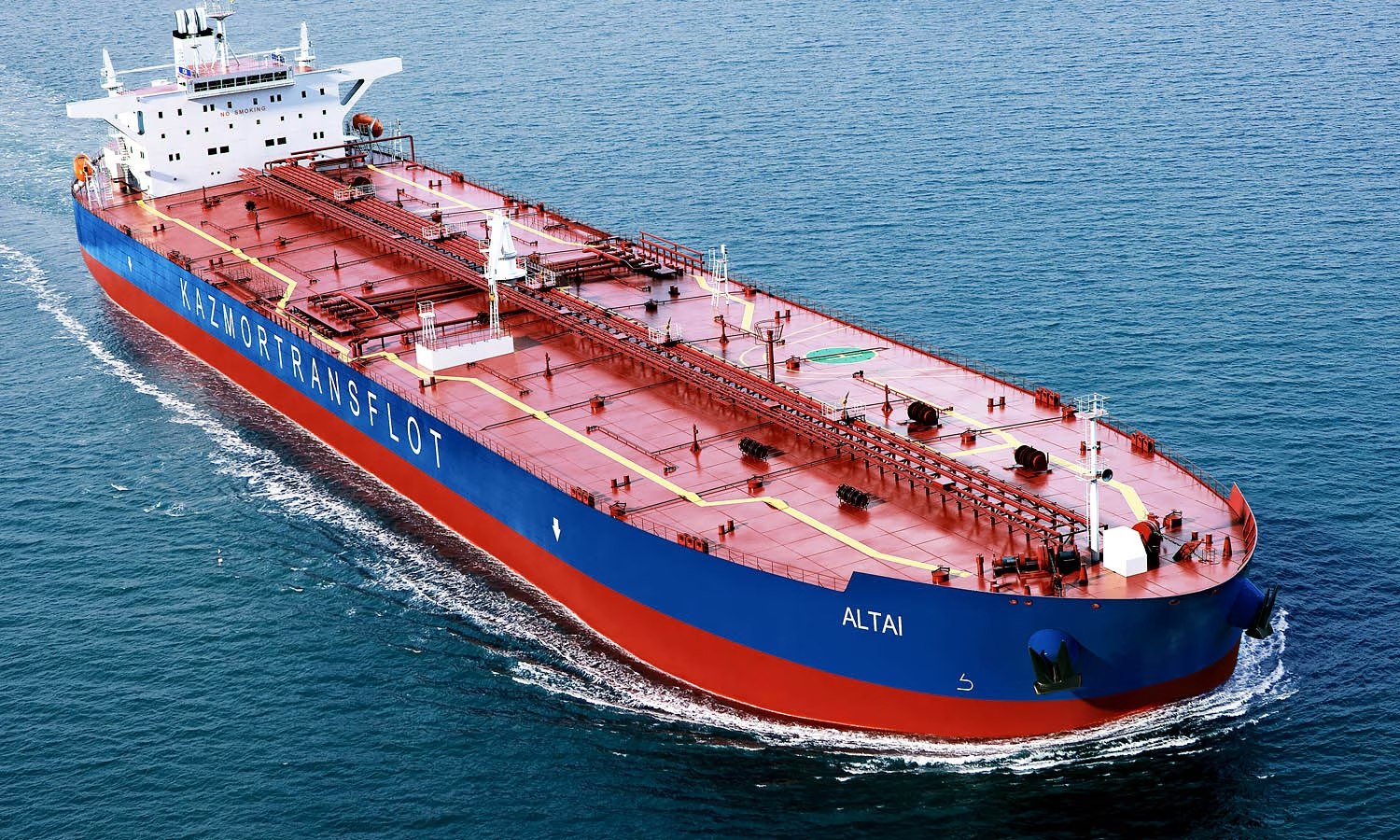
Kazmortransflot, the national shipping company within the KazMunayGas group, is also expanding its fleet. Together with AD Ports Group of the United Arab Emirates, it is building two container ships at the Baku Shipyard. Construction of the first vessel began in June 2026, with both ships scheduled for completion by the end of 2027.
Each new vessel will have a capacity of 780 TEUs, compared with 350 TEUs for existing container ships serving a similar purpose. Their length will increase from 113 to 149.5 meters, while deadweight tonnage will rise from approximately 5,200 to 9,400 metric tons. Carrying larger shipments on each voyage could reduce costs per container, provided the vessels operate with sufficient loads.
Falling Caspian Sea Levels Limit Vessel Loads
The declining water level of the Caspian Sea is reducing depths at berths and in approach channels. Shipowners must account for vessel draft when selecting routes and determining how much cargo to load.
The Organisation for Economic Co-operation and Development (OECD) has noted that falling water levels have already restricted vessel loading at Kazakhstan’s Aktau and Kuryk ports, increasing costs for freight operators.
In September, a representative of the Azerbaijan Caspian Shipping Company reported that one of its ferries could carry only about 80% of its full load from Kazakhstan because of falling water levels. Transporting the same volume of cargo therefore requires more voyages.
Dredging work has been carried out at Kuryk, while modernization of port infrastructure continues at Aktau. As The Times of Central Asia previously reported, the combined cost of several projects to deepen channels and reconstruct Kazakhstan’s ports is estimated at approximately $179 million.
Ports Prepare for Higher Freight Volumes
The European Bank for Reconstruction and Development (EBRD), together with the European Union, has announced a financing package of up to €45 million for the modernization of Aktau port. The project includes expanding container-handling capacity, upgrading berths, and purchasing cargo-handling equipment. Average container-handling time is expected to fall from four minutes to two and a half minutes.
In October, transport companies from Kazakhstan, Azerbaijan, Georgia, and China said they had introduced a unified schedule for container trains and automated exchanges of cargo information. These measures are intended to reduce delays when transferring containers between rail and maritime services.
Kazakhstan is ordering larger vessels in anticipation of growing transit traffic between China and Europe. But the Caspian Sea is getting shallower, and existing ferries are already having to sail with reduced loads. Even the newer vessels, designed for shallower waters, will face constraints if the sea continues to retreat.