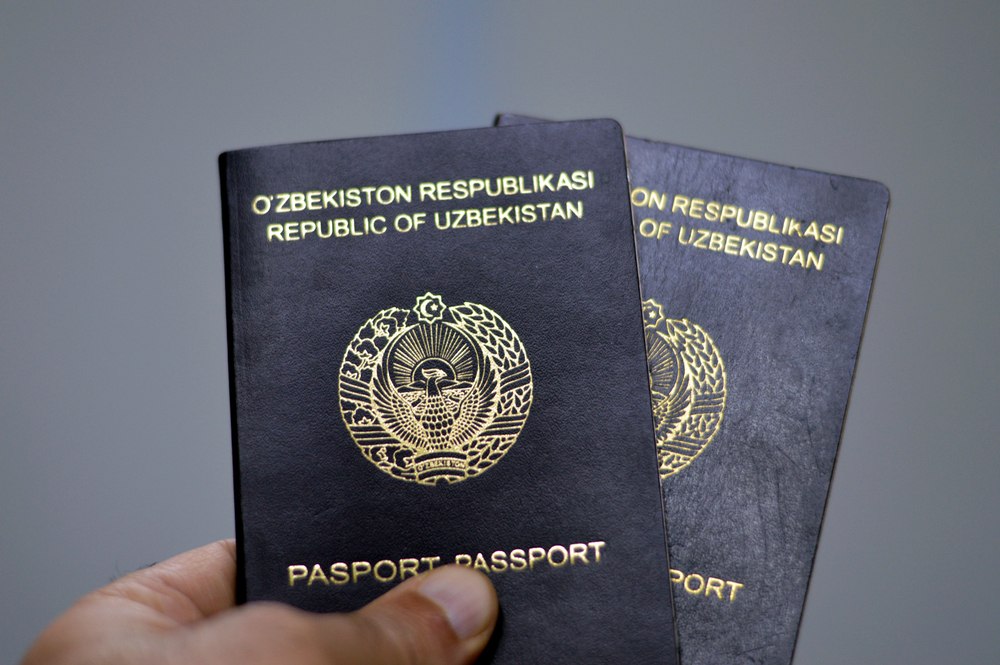
Nearly 100,000 Uzbek citizens returned from Russia between August 25 and September 5, as broader figures point to a decline in labor migration from Uzbekistan to Russia amid rising costs and tighter migration controls.
According to Uzbekistan’s Migration Agency, 96,415 people returned during the ten-day period. The agency has not published comparable figures for last year or explained why most of them came home, meaning the figure alone cannot be taken as evidence of a mass exodus.
There is, however, evidence of a broader slowdown. Between January and June, Uzbek citizens made more than 1.1 million entries into Russia declaring “work” as the purpose of their trip, down 13.2% year-on-year. Across Uzbekistan, Tajikistan, and Kyrgyzstan, work-related entries fell by about 15%, from more than 2.3 million to 1.9 million.
The figures count border crossings rather than individual workers, meaning the same person may appear more than once. But unlike the ten-day return figure, they show a decline sustained over the first half of the year.
Alexander Safonov, a professor at Russia’s Financial University, told Vedomosti that “tighter migration policy and the rising cost of work patents” were among the factors behind the decline.
Uzbek and Tajik citizens need patents to work legally in Russia. Safonov also pointed to the cost of medical examinations, housing, and travel, which reduce the amount migrants can save or send home.
At the same time, Russia has tightened migration controls. Since February 2025, foreign nationals who no longer have legal grounds to remain in the country have been placed on a register of controlled persons. Those listed face restrictions on certain banking transactions, registering property and vehicles, and other activities.
Moscow and the Moscow Region have introduced additional controls. Some visa-free foreign workers are required to use the Amina mobile application for migration registration and to provide information about their location. From September 1, 2026, the system was expanded to other categories of adult foreign nationals from visa-free countries staying in the capital region for more than 90 days.
The treatment of Uzbek migrants has also become an issue in relations between Tashkent and Moscow. In late August, Uzbek representatives discussed migration checks, the situation of citizens placed on the register of controlled persons, and the possibility of regularizing the status of some foreign nationals with Russia’s Interior Ministry, Prosecutor General’s Office, and Foreign Ministry.
Some Uzbek workers who have already left Russia describe a similar calculation.
In the spring, Azattyq Asia spoke with Uzbeks who had worked in Russia and returned home. They cited rising living costs, tougher migration rules, inspections, and concerns about their safety.
Said, from Samarkand, had worked in Russia for several years before returning and finding a job at home. He said that Russian wages appeared less attractive once rent and the cost of a work patent were taken into account.
Human rights advocate Valentina Chupik told the outlet that the return trend had begun before this year. She cited the ruble exchange rate, the war in Ukraine, and concerns about migrants’ safety among the reasons.
Uzbekistan is also seeking more employment opportunities for its citizens outside Russia. Organized recruitment programs are sending workers to countries including Germany, the United Kingdom, South Korea, and Japan. But language and qualification requirements are generally higher, while the number of jobs available remains far below the scale of the Russian labor market.
Russia therefore remains economically important for Uzbekistan. In the first quarter of 2026, Uzbekistan received $3.8 billion in cross-border transfers, up 13% year-on-year. Russia accounted for 72.4% of the total, compared with 77.6% a year earlier.
By midyear, cross-border transfers had reached $9.3 billion, also up 13% year-on-year.
Russia remains Uzbekistan’s largest foreign labor market and the source of most of its remittances, while alternative destinations remain far smaller. But work-related entries are falling, and the nearly 100,000 returns reported over ten days come against a broader backdrop of higher costs and tighter restrictions for Central Asian workers in Russia.