A young graduate of an energy college in Uzbekistan’s Syrdarya Region spent two years working with Acwa, one of the country’s largest foreign energy companies. When the company offered her a permanent job in Tashkent, her parents were reluctant to let her move to the capital. Company representatives invited the family to see where she would be working and eventually persuaded her parents to change their minds.
Stories like this help explain why women with technical training do not always make it to Uzbekistan’s power plants and other energy facilities.
A study commissioned by Acwa and the American Chamber of Commerce in Uzbekistan examined the barriers facing women in energy, particularly in the transition from technical education to employment.
Gender researcher and legal scholar Kamola Alieva interviewed women and employers in several parts of Uzbekistan, including Tashkent and Karakalpakstan. She told The Times of Central Asia that the aim was to understand why women trained in technical fields often leave their professions or move into other roles.
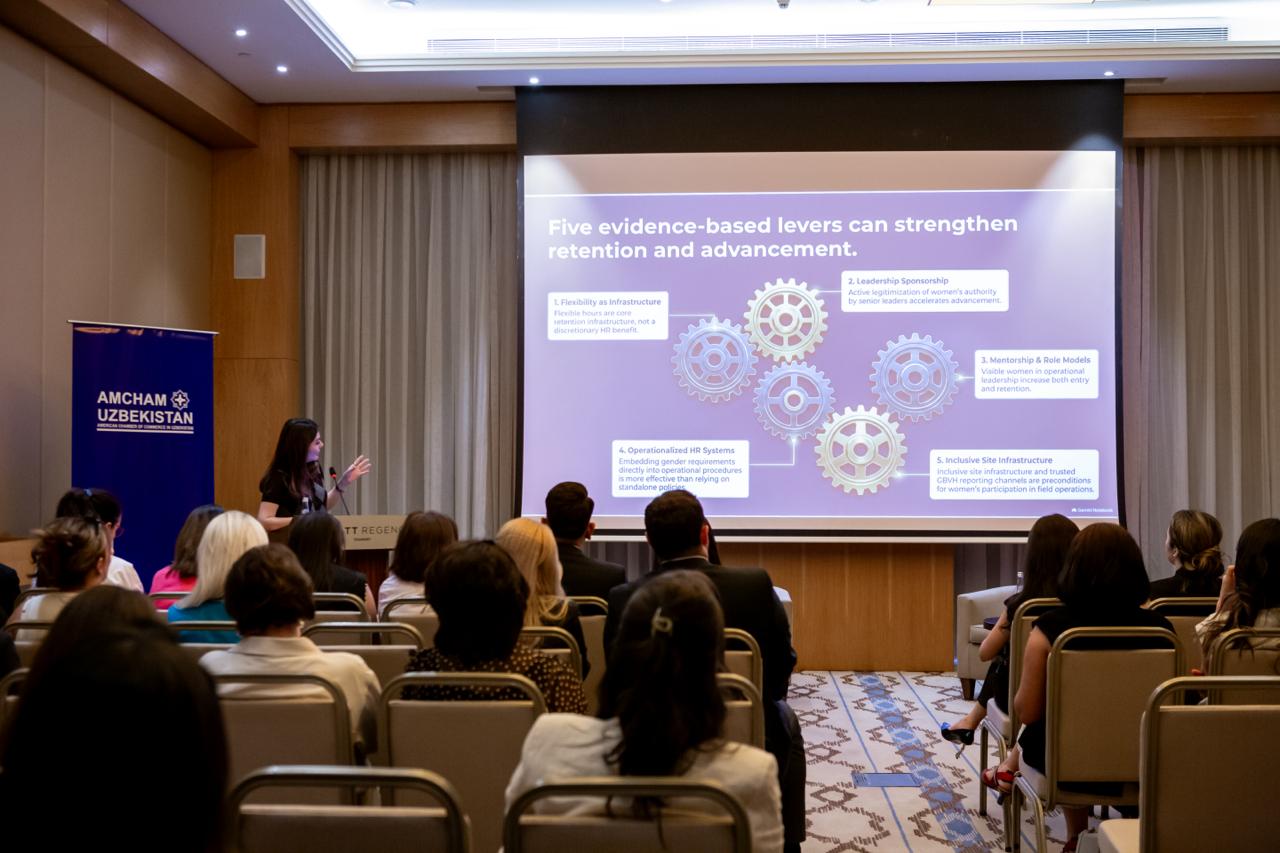
Image: Alieva, Acwa
“We wanted to understand where and why women drop out of the profession, rather than count their numbers,” Alieva said.
Two figures appeared in the presentation, around 40% for women in STEM education and around 12% for women in the energy sector. Alieva clarified that the study itself did not calculate either figure.
According to the International Labour Organization, 40.2% of female university graduates in Uzbekistan had studied STEM subjects in 2021, up from 32.6% in 2017. The figure represents the share of female graduates who studied STEM, not women’s share of all STEM students.
In some engineering programs, the number of women is far lower. At one energy college Alieva visited during the research, only 16 of more than 100 students admitted were women.
“Already at the education stage, the number of girls drops significantly,” Alieva said.
The reasons often lie outside the college or university. Parents may regard engineering as a male profession or object to their daughters moving to another city. The work itself can involve shift schedules and travel to remote energy facilities.
After graduation, some women move into procurement, administrative work, or social projects instead of engineering and operational positions. Employers told researchers that women submit almost no applications for some technical vacancies. Women are particularly scarce in equipment maintenance and plant operations. Few hold managerial positions.
This comes amid a significant employment gap between men and women across Uzbekistan’s economy. The World Bank estimated the labor-force participation gap at 28 percentage points in 2021. Unemployment among young women stood at 15.5%, compared with 10% among young men. Women earned 34% less than men on average.
At industrial sites, the barriers can be more basic than career policy.
“Conditions at industrial sites often make it clear themselves that women are not expected there,” Alieva said. She noted that many sites lacked separate toilets and showers, as well as accommodation for women.
Questions about marriage and children, including whether a husband permitted his wife to work, arose even in interviews for cleaning and catering jobs at industrial facilities. One study participant said the tone of her interview changed after she was asked about children and that the company never called her back. Other participants reported that married women were rejected. Some employers worried about paying to train a woman who might leave after marriage.
Some companies explained their caution about hiring women by citing the potential future cost of maternity leave. Since January 2026, maternity benefits in Uzbekistan have been paid through the state social insurance system and the State Social Insurance Fund rather than directly by employers.
The study’s authors propose starting with practical changes. They recommend ending questions about marriage and children and providing transportation. Workplaces should also have suitable facilities for women, while shift schedules may need to be reconsidered. Other recommendations include involving women in recruitment and establishing protected channels for reporting harassment.
Acwa’s experience shows that employers sometimes have to address barriers before a new employee even starts work.
The company hired five graduates of an energy college in the Syrdarya Region and helped them relocate to Tashkent by arranging and paying for accommodation. Even finding an apartment proved difficult because some landlords did not want to rent to young unmarried women. Acwa had to confirm that the women were genuinely employed by the company.
Two of the five graduates later became field operators at the Green Hydrogen facility in Chirchiq. Because the job involved night shifts, they were assigned to the same schedule so that neither had to work alone at night.
Women account for less than 8% of Acwa’s employees in Uzbekistan, according to Ahmed Fahad, the company’s head of operations in Central Asia. His personal goal is to raise that share to 20–25%, although there is no formal corporate quota.
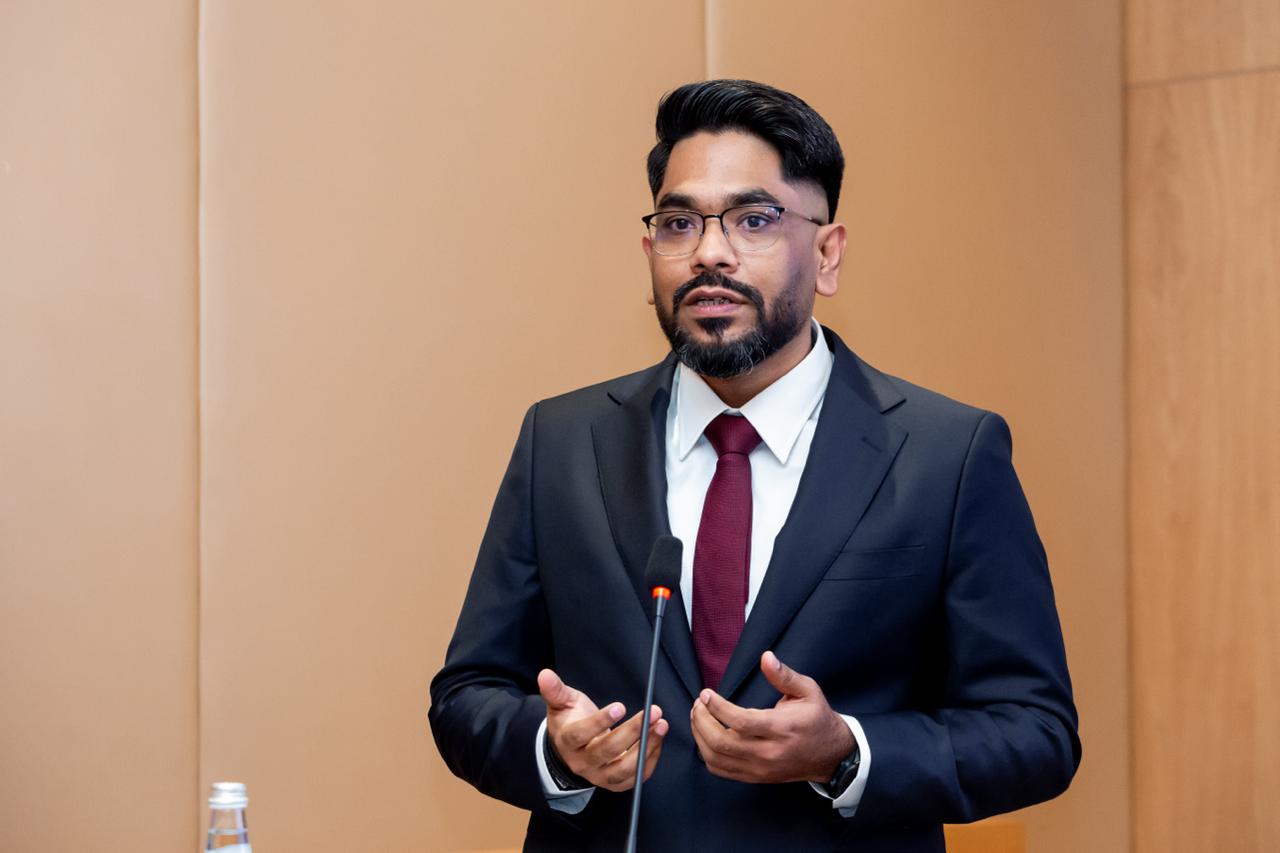
Image: Ahmad Fahad, Acwa
Most employees at energy facilities are men, and Fahad said women must establish their credibility in a professional environment where men already predominate.
“You have to prove not only your professional competence, but also that you belong here,” he said.
Despite his goal of increasing women’s representation, Fahad opposes hiring solely to meet a quota and believes professional qualifications should remain the primary criterion. Once an employee has been hired, however, gender should not affect advancement.
“Career advancement should not depend on gender,” Fahad said.
Career prospects are also influenced by relationships formed outside formal meetings. Fahad said men are more likely to stay after work for coffee or dinner with colleagues and managers, while women often hurry home to children and household responsibilities.
“They drop out of that circle of communication,” Fahad said.
The graduate from Syrdarya ultimately took the job after company representatives met her parents, who agreed to let her move to Tashkent.
“They went from ‘we don’t want this’ to ‘we trust you,’” Fahad said.
Uzbekistan is building new power plants and needs trained specialists to operate them. Yet the experience of the five graduates shows that a degree alone may not be enough. Family approval and housing can determine whether a woman is able to relocate, and workplace arrangements whether she can take the job. Some trained specialists never make it to the power plant at all.