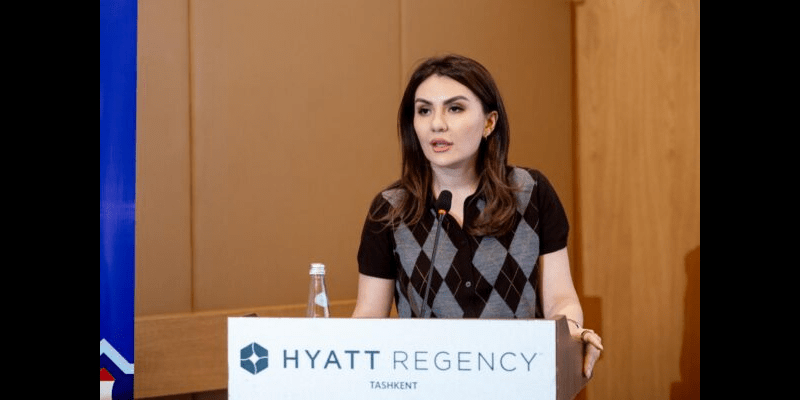
The Coalition of Women Journalists of Central Asia is preparing a multi-year program. At a conference that opened in Tashkent on September 14, more than 100 media professionals from across Central Asia are discussing common priorities through 2029 and developing a regional guide to gender-sensitive journalism. For the coalition, the program is an attempt to move from periodic conferences toward a permanent professional network.
The Second Central Asian International Conference of Women Media Professionals runs from September 14 to 15 under the theme “Regional Solidarity, Digital Security and an Inclusive Future for Journalism.” The event is organized by Uzbekistan’s Modern Journalism Development Center, with the National Coalition of Women Journalists of Tajikistan serving as its regional partner.
The coalition emerged after the first such meeting in Dushanbe. On May 3, 2024, participants signed a memorandum establishing it. A planned follow-up conference in Dushanbe in May 2025 was abruptly canceled after two venues declined to host it. No official explanation was given.
Participants are now discussing a program for 2026–2029 covering mutual support and exchanges of experience. It would also provide for coordinated responses to threats against journalism.
Digital security is a major focus of the Tashkent program. The agenda covers online harassment and how deepfakes are used to spread disinformation. Separate sessions address the psychological toll on journalists and ways to protect personal data and newsroom systems during a digital attack.
Those concerns reflect a wider problem for women working in journalism. According to a report published by UNESCO in May 2026, 45% of surveyed women journalists and other media workers said they self-censored on social media because of online violence, up from 30% in 2020. About 22% reported self-censorship in their professional work.
Roughly a quarter had been diagnosed with or treated for anxiety or depression linked to online violence, while 13% reported post-traumatic stress disorder.
Regional newsrooms are also working to improve reporting on violence against women. On September 8–9, just days before the Tashkent conference, journalists from across Central Asia gathered in Almaty for training on ethical reporting of gender-based violence. The event, held with the participation of UN Women, focused on professional and ethical standards for covering such cases.
The Tashkent meeting is also intended to make regional solidarity more practical. Participants are discussing ways to provide rapid professional support when journalists face online attacks or other pressure.
Another expected outcome is a unified regional guide to gender-sensitive journalism. It is intended to bring together recommendations for reporting on gender-related issues in a responsible and balanced way.
Tashkent will also host the Women Media Awards Central Asia, a regional award for women working in the media. The program includes an audiovisual performance, “Echo: The Power of Invisible Voices,” addressing hate speech and digital attacks involving bots and deepfakes.
After Tashkent, the test will be whether the network works between conferences, when journalists are separated by national borders and a colleague may need help that same day.